The Solemnity of the Ascension of the Lord (2021)

Wherever you go, I will follow,

Wherever you live is my home.

Though days be of blessing or sorrow,

Though house be of canvas or stone,

Though Eden be lost to the past,

Though mountains before us so vast,

You won’t be alone, I have promised

Wherever you go, I am here.

Whatever you dream, I am with you,

When stars call your name in the night.

Though shadows and mist cloud the future,

Together we bear their light.

And now together we stand

With only a promise in hand.

But lead where you dream: I will follow.

To dream with you is my delight.

And if you should fall, you will find me,

When no other friend can you claim,

If foes beat you down or betray you,

And if others desert you in shame.

If home and dreams aren’t enough,

And if you will run away from my love,

I’ll raise you from where you have fallen.

Faithful to you is my name.

And when you will die, I will be there

To sing you to sleep with a psalm,

I’ll sooth you with tales of our journey,

Your fears and your doubts I will calm.

We’ll live when this life done

Forever in mem’ry as one.

And we will be buried together,

To waken and to greet a new dawn.

Wherever you go, I will follow.

Behold! The horizon shines clear.

The possible gleams like a city:

Together we’ve nothing to fear.

So speak with words bold and true

The message my heart speaks to you.

You won’t be alone, I have promised.

Wherever you go, I am here •

Covenant Hymn by Melinda Kirigin-Voss.

El Greco, Saint John the Evangelist (1609), oil on canvas, Museo Nacional del Prado (Spain)

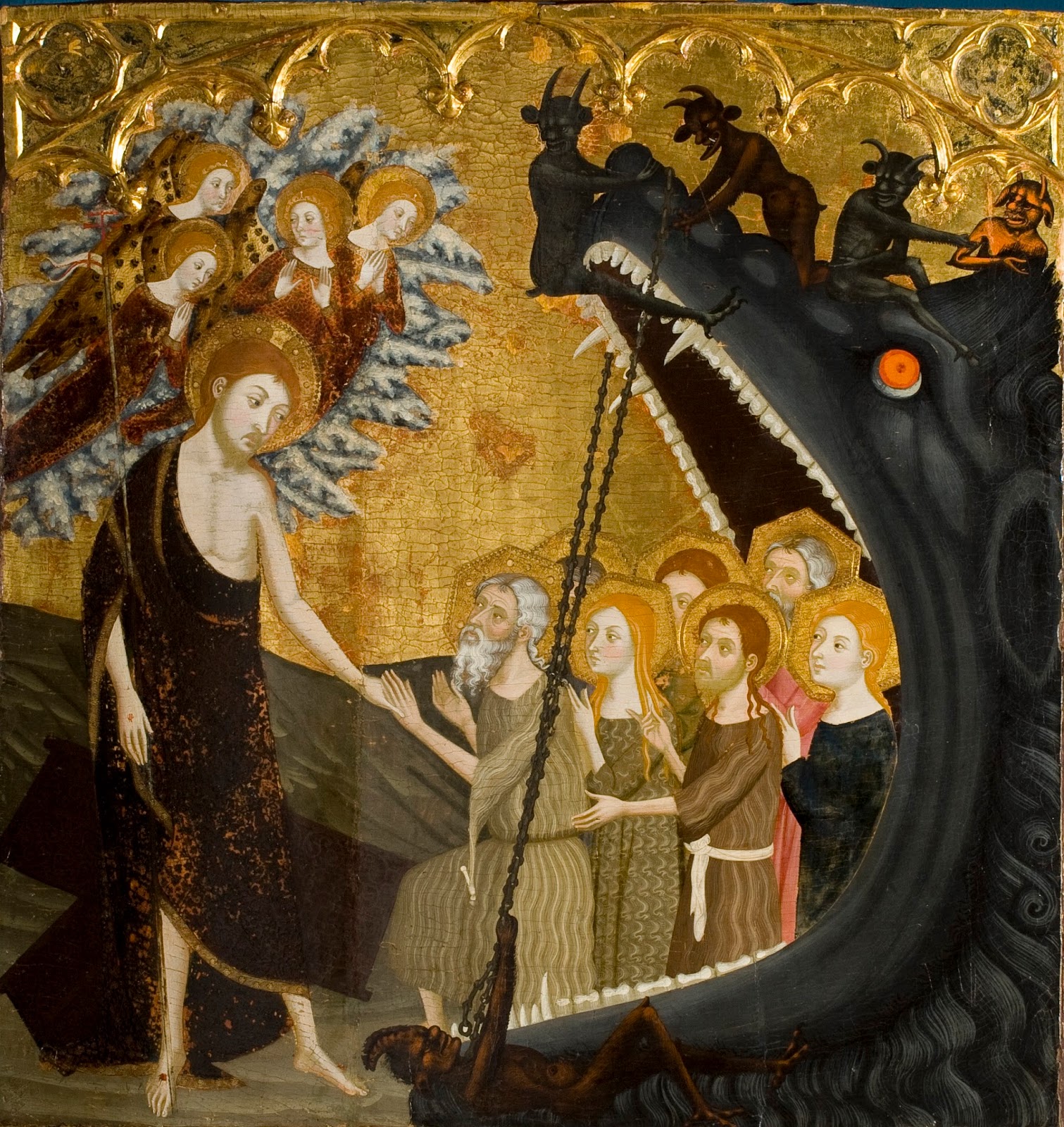
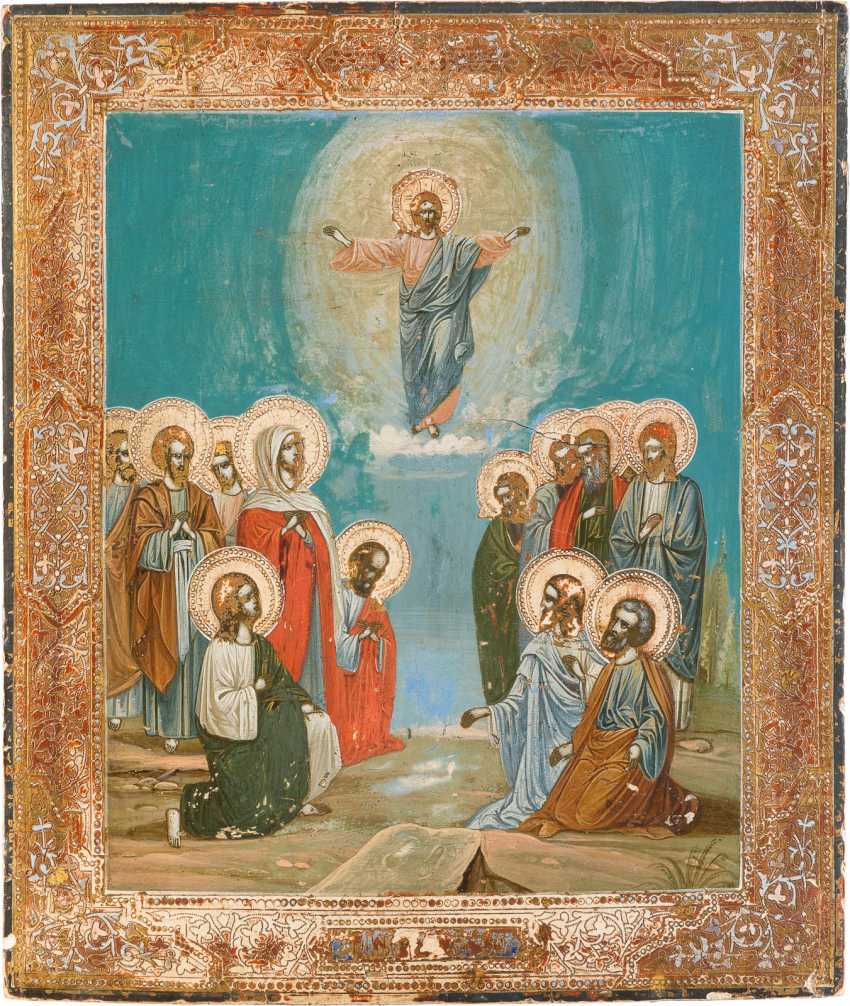
In some of the rural communities of our countries, ministers and their congregations take this passage literally.  As a test of faith some will plunge their hands into a box of rattlesnakes, pull one out and hold it in front of the congregation. Some will survive. Some will die from the poison. Now these simple rural communities view the survivors as positive examples of the faith of the entire community[1].  They view those who are bit by the snakes or who die from the poison as examples of the weakness of the community’s faith. They are incorrect in interpreting Jesus’ words literally. He doesn’t want us to challenge him to heal us, nor does he want us to put ourselves in unnecessary peril.  But they are correct in recognizing that faith in Jesus gives them the ability to conquer the evils of the world. And their communities are right when they credit success to the Lord and see failure as a result of their lack of faith. Allow me to say something brief about literal interpretations of the Bible. This form of fundamentalism demands that every word, every statement be believed exactly as it is written and read.  For example, the fundamentalists would say that the world was created some 40,000 years ago because that is the date they best determine from Genesis. If you show them a fossil they would say that it is fake. They get so bogged down in the details that they miss the point of the message: God is the Creator. So, what was the message that Jesus was giving when he mentioned the signs of those who believed?  The message was that they could fight and conquer evil in its worst forms. Jesus used snakes to represent the devil. His followers, those who believe in him, can take on and beat off the devil.  He used poison to represent the evil of the world, not just a poisonous potion, but the poison that is hatred, the poison that is materialism, prejudice, the drug culture, the sex culture, polarization, seeing all who disagree with us as enemies, and on and on.  Jesus said that his followers would be able to take on the poison of the world and defeat it. Then he ascended into heaven. Peter and the apostles didn’t grieve that he was gone. Mary Magdalene and the girls didn’t resume their crying.  No, they were too busy! Instead they got to work and proclaimed the wonders and the beauties of Jesus’s life. The devil went after them and all who followed them in full battle array.  He convinced others to torture them and expel them from their communities and friends.  He talked some into killing them, but the devil didn’t win.  He couldn’t stop the work of the Kingdom of God.  They beat off the snake.  All the evil of the world went to war against Jesus’ followers. The poisons that destroy the soul, that destroy life attacked them. The Christians didn’t go into hiding. They took on the poison of the world and found a life free of evil, a life of meaning, the Christian life. Jesus ascends to heaven and then says to us: «Get to work.  Fight off the snake, the devil.  Fight off poisons of the world.  You can win these victories.  You can win them because I really haven’t left you.  I am with you.  My spirit, the Holy Spirit, strengthens you». We all have poisons that we have to fight off in our lives.  We all have our own demons.  Some are of our own making.  Some are imposed upon us by others or by situations beyond our control.  One person wages a continual battle against alcohol.  Another against drugs.  One is fighting to be in Christian relationships with others. One must deal with the fact that her family is not what it should be.   Another is suffering the terror of abuse. All of us are fighting selfishness.  These and so many other demons and poisons of the world attack us, but they can’t beat us down.  We will win against the evil of the world because we have the greatest weapon there ever was. We possess Jesus Christ! Jesus ascends into heaven and assumes his place as Lord of heaven and earth. When Jesus ascended into heaven, his followers went on offense. They didn’t cower in a room, afraid of what the enemies of God’s kingdom would do to them.  Instead, they took the battle to the devil. They preached everywhere.  That’s what we are all called to do. We are called to take the battle to the enemy.  We are called to combat moral evil wherever it exists, within us and around us.  We are called give people the Gospel, the good News.  The Good News is this: there is a much better life than the one the world paints as ideal. There is a life where every action has meaning.  There is a life of fulfillment. This life is the life of the Lord.  That’s the Good News.  Life is infinitely better when it is lived united to Jesus Christ.   Snakes will attack for sure. But we, the people of the Ascended Lord will beat it all off. How?  Well, the gospel explains how in its last words: « while the Lord worked with them and confirmed the word through accompanying signs»[2]. We don’t wage this war alone. We fight with the might of the Lord Jesus Christ.  And with him on our side, how can we possibly lose? • AE


[1] “Snake handling”, also called “serpent handling”, is a religious rite observed in a small number of isolated churches, mostly in the United States, usually characterized as rural and part of the Holiness movement. The practice began in the early 20th century in Appalachia and plays only a small part in the church service. Participants are Holiness, Pentecostals, Charismatics, or other evangelicals. George Went Hensley (1880–1955) is often credited with introducing snake handling practices into the Church of God Holiness, an association of autonomous Christian Methodist congregations, founding the Dolly Pond Church of God in Birchwood, Tennessee, around 1910.

[2] Cf Mk 16:15-20


Fr. Agustin’s Schedule for the Solemnity of the Ascension of the Lord (2021)

Saturday, May 15, 2021

4.30 p.m. Sacrament of Reconciliation @ St. Peter Prince of the Apostles

5. 30 p.m. Mass @ St. Peter Prince of the Apostles

Sunday May 16, 2021

10.30 a.m. Mass @ Our Lady of Grace

12.00 p.m. Mass @ Our Lady of Grace

5. 30 p.m. Mass @ St. Peter Prince of the Apostles


Solemnidad de la Ascención del Señor (2021)
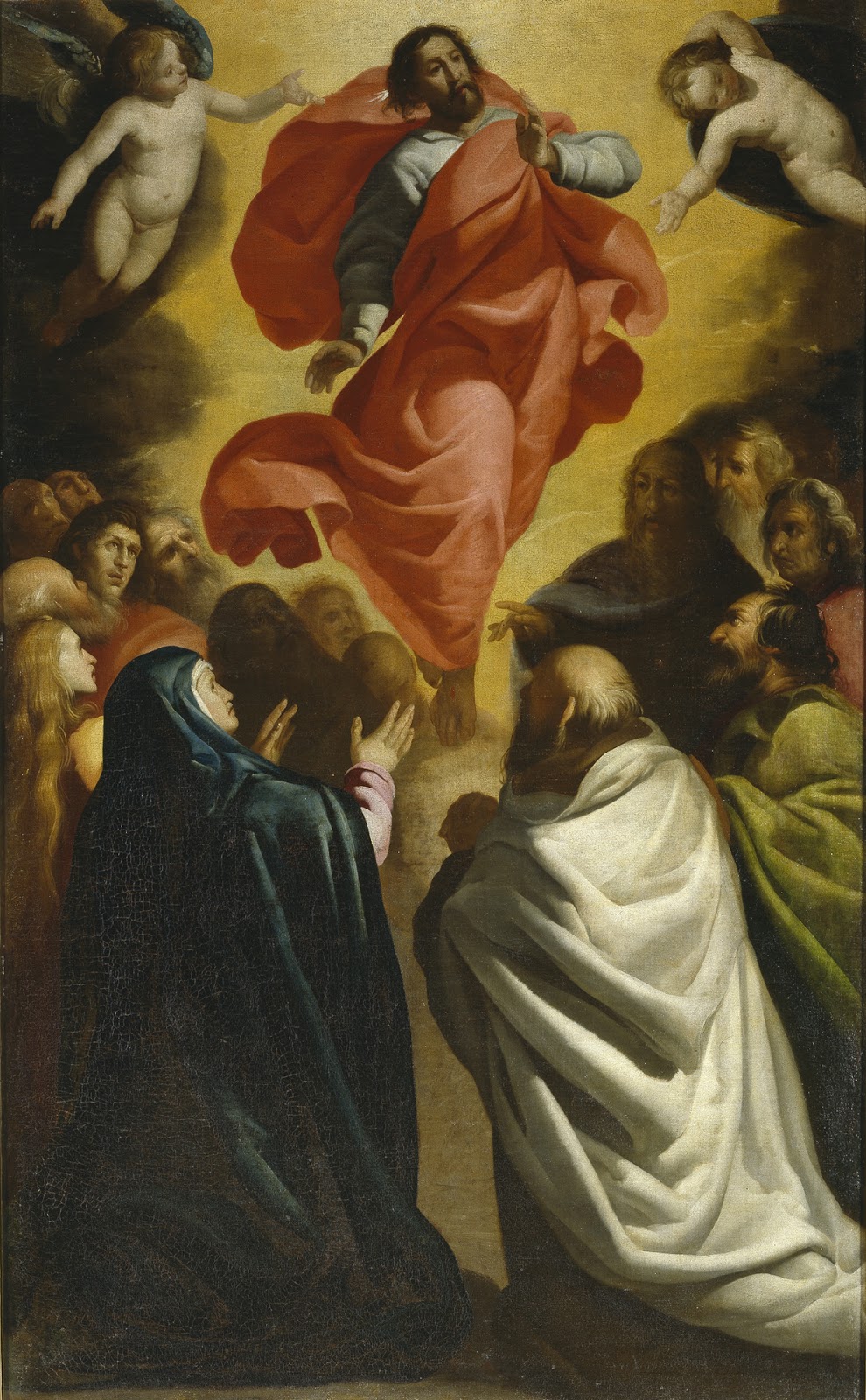
A. de Lanchares, La Ascención de Jesús (ca. 1620), óleo sobre tela Museo Nacional del Prado (Madrid)

Es tan poca la atención que le ponemos a la Ascensión de Cristo, que su hondo significado nos pasa casi desapercibido. La Ascensión nos ofrece la clave para entender la dinámica del cristianismo después de la marcha del Señor Cristo y la pedagogía para vivir la fe de manera responsable y adulta. Para entender el significado de la Ascensión, hemos de recordar el diálogo entre Jesús y sus discípulos: «Yo me voy al Padre y vosotros estáis tristes… Sin embargo, os conviene que yo me vaya para que recibáis el Espíritu Santo»[1]. La tristeza y preocupación de los discípulos tiene una explicación. Desean seguridad: tener siempre junto a ellos a Cristo para que les resuelva los problemas o, al menos, les indique el camino seguro para encontrar la solución. Es la tentación de vivir la fe de manera protegida, infantil e irresponsable. La respuesta de Jesús cobra particular importancia en estos tiempos en que parece crecer en ciertos sectores de la Iglesia la tentación del inmovilismo, el miedo a la creatividad, la nostalgia por reproducir un determinado cristianismo, esa regresión al seno materno. La pedagogía de Cristo consiste en ausentarse para que pueda crecer la libertad de sus seguidores. Sólo les dejará la impronta de su Espíritu. Así hace el buen papá y el buen maestro: han de retirarse en un determinado momento y dejar sólo su inspiración para no ahogar la creatividad, sino permitir el crecimiento responsable y adulto. Siempre es tentador vivir de manera infantil la religión, sin mediación alguna de la propia conciencia, buscando en la letra del evangelio soluciones prefabricadas para nuestros tiempos o pretendiendo que la autoridad religiosa nos dicte sin ambigüedad y con precisión absoluta la doctrina que hemos de creer y las normas morales que hemos de cumplir. Este fideísmo infantil que raya en el fundamentalismo, y en el que la persona no ejercita su propia libertad, engendra, tarde o temprano, ateísmo pues llega un momento en el que el hombre, para ser responsable y adulto, siente la necesidad de eliminar al Dios de esa religión. Hoy celebramos la Ascensión del Señor, un momento estupendo para recordar que vivimos el tiempo del Espíritu, tiempo de creatividad y crecimiento responsable, ya que el Espíritu no nos da nunca recetas concretas para los problemas, pero cuando lo acogemos, nos hace capaces de ir buscando caminos nuevos al evangelio de Cristo • AE


[1] Cf Jn 16, 7


Sacrament of Confession (Updated 5.8.2021)

Fellow parishioners and friends: these are the days and times that at this point I can offer you all to celebrate the Sacrament of Confession:

Monday from 5.00 p.m. to 5.30 p.m. @ St. Peter Prince of the Apostles (Chapel)

Tuesday from 6.00 a.m. to 6.50 a.m. @ St. Peter Prince of the Apostles (Chapel)

Tuesday from 4.30 p.m. to 5.30 p.m. @ Our Lady of Grace (Confessional)

Wednesday from 6.00 a.m. to 6.50 a.m. @ Our Lady of Grace ( see me at the Chapel)

Wednesday, from 4.00 p.m. to 5.30 p.m. @ St. Peter Prince of the Apostles (Confessional)

Thursday from 6.00 a.m. to 6.55 a.m. @ St. Peter Prince of the Apostles (Chapel)

Friday from 5.00 p.m to 5.30 p.m. at @ St. Peter Prince of the Apostles (Confessional)

Saturday at St. Peter Prince of the Apostles from 4.00 p.m. to 5.30 p.m. (Confessional)

(Sunday, sometimes beetween masses I could be available to hear confessions)

If none of these spots works for you, email me (agusestrada@gmail.com); we can arrange a

convenient time for you • Fr. AE


Sixth Sunday of Easter (Cycle B)

Chanel Dope Soup by Annie Naranian.

Our society perpetuates the great lie that love can be won through an elixir. The elixir may be becoming a professional who makes a great deal of money. Money is supposed to guarantee that happiness can be bought. Or the elixir might be that having the perfect body will attract lasting love. But the beautiful bodies of the young become the bodies of the middle aged.  Commercials try to convince us that the right perfume or cologne will do the job. That’s as close to an ancient elixir as you can come.  But a good job never won anyone love, and a beautiful body may attract another person but it isn’t going to win his or her love.  And a Chanel No. % is not going to be a love magnet. Today’s second reading from the First Letter of John, and our gospel reading is from John 15 both speak about love, Christian love. Christian love is not forced on a person. It isn’t due to an elixir, nor does it come merely from physical attraction, or any other attraction for that matter. Love, true love, lasting love, only results from the Love of Christ.  And that love becomes a magnet.  If a person loves the Lord, that love itself will attract other people who are seeking the Lord.  Perhaps it will attract a person who is looking for someone to make a life with, certainly it will attract many others who are looking for the meaning to life. St. Teresa of Calcutta. Her work among the poorest of the poor spread throughout the world.  Her religious order, the Missionaries of Charity, became the fastest growing religious order in the Church.  Why were so many people attracted to Mother Teresa? Certainly, they felt called to join her in making the gospel a reality: «…when I was hungry you gave me food to eat, when I was thirsty you gave me drink, etc.»[1]. But there was even more than this that attracted people to Mother Teresa.  They were drawn by Jesus’ love within her.  And like a magnet, that love flowed through her into them.  And then they attracted others to Christ. The love of Christ flowed through her into them.  It still does. We have been attracted by the dynamism, the magnetism of Jesus Christ.  We know that saying that we love Him is not enough.  We have to live His Love.  In the Gospel Jesus uses this phrase: “Remain in my love.”  He tells us that we remain in His Love if we keep His commandments. But Jesus doesn’t give a whole list of commandments like Moses did when he came down from Mt. Sinai.  Jesus just gives one commandment: Love one another. That is all that really matters, if we love each other, truly, in the sacrificial love of the Lord, everything else falls into place. St. Augustine put it this way: «Once and for all, a short rule is laid down for you: Love and do what you will.  If you keep silence, do it out of love. If you cry out, do it out of love. If you refrain from punishing, do it out of love. Let the root of love be within you. From such a root, nothing but good can come»[2]. So, we are concerned about this or that member of the family.  Maybe he or she is in a bad relationship, or behaving badly.  If we strike out at them, let them feel our wrath for the people they are hurting, we will accomplish nothing.  But if instead we allow the magnetism within us to be evident in our concern for them, and we seek the ways that we can we best expose them to the love of Christ, eventually, over time, Christ will prevail.  The Easter message is that Jesus is the Victor. Christ wins.  He always wins. Another example: we are invited to join an activity which is immoral; and we decline respectfully, but lovingly.  A close friend asks us to join him or her.  And we say, “I have to tell you what is happening inside of me.  I just can’t reconcile going there and doing that with the deep love for God I feel within me.  It just is not me.  It is not my style.”  And we leave it at that, then the person we are speaking to might eventually, someday, also say, “I want that deep love of God in my life.” Jesus Christ is the Elixir of Love. He is the potion that brings happiness.  Let us pray today for the courage to love His Presence so much that His Love will flow through us and attract others to love as He Loves • AE


[1] Cf Matthew 25 [2] From St. Augustine’s sermon on 1 John 7


Fr. Agustin’s Schedule for the Sixth Sunday of Easter 2021

Saturday, May 8, 2021

11.00 a.m. First Communion Mass @ Our Lady of Grace

4.30 p.m. Sacrament of Reconciliation @ St. Peter Prince of the Apostles

5. 30 p.m. Mass @ St. Peter Prince of the Apostles

Sunday, May 9, 2021

9.00 a.m. Mass @ St. Peter Prince of the Apostles

11.00 a.m. Mass @ St. Peter Prince of the Apostles

5. 30 p.m. Mass @ St. Peter Prince of the Apostles


VI Domingo de Pascua (Ciclo B)


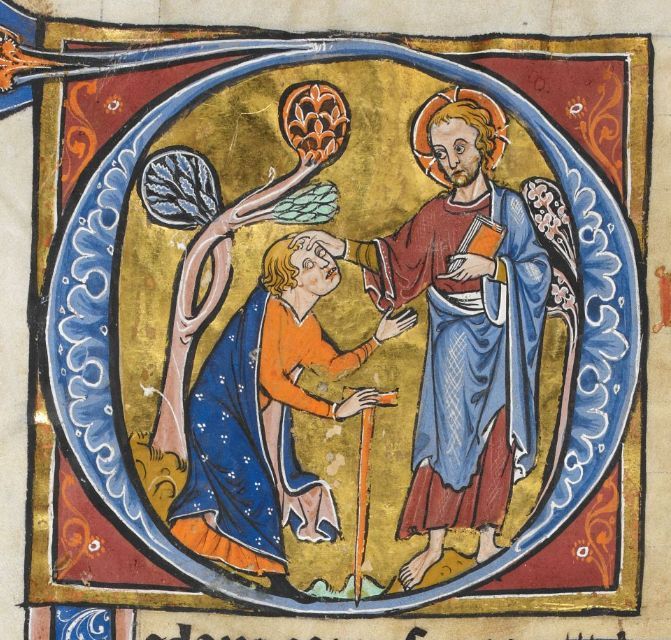
Autor anónimo, Cristo devolviendo la vista a un ciego, oro y tempera sobre papel, Salterio de Rutland (f 29v), British Library.

En el evangelio que la liturgia nos presenta este domingo, el sexto del tiempo de Pascua, Jesús se está despidiendo de sus discípulos[1]. Los ha querido apasionadamente. Los ha amado con el mismo amor con que lo ha amado el Padre. Ahora los tiene que dejar. Conoce su egoísmo y sabe que les cuesta quererse. Los ve discutiendo entre sí por obtener los primeros puestos. ¿Qué será de ellos? Las palabras de Jesús adquieren un tono solemne. Han de quedar bien grabadas en todos: «Éste es mi mandato: que os améis unos a otros como yo os he amado». Jesús no quiere que su estilo de amar se pierda entre los suyos. Si un día lo olvidan, nadie los podrá reconocer como discípulos suyos. De Jesús quedó un recuerdo imborrable. Las primeras generaciones resumían así su vida: «Pasó por todas partes haciendo el bien». Era bueno encontrarse con él. Buscaba siempre el bien de las personas. Ayudaba a vivir. Su vida fue una Buena Noticia. Se podía descubrir en él la cercanía buena de Dios. Jesús tiene un estilo de amar inconfundible. Es muy sensible al sufrimiento de la gente, a su dolor, a sus desgracias. No puede pasar de largo ante quien está sufriendo. Al entrar un día en la pequeña aldea de Naín, se encuentra con un entierro: una viuda se dirige a dar tierra a su hijo único. A Jesús le sale desde dentro su amor hacia aquella desconocida: «Mujer, no llores»[2]. Quien ama como Jesús, vive aliviando el sufrimiento y secando lágrimas. Los evangelios recuerdan en diversas ocasiones cómo Jesús captaba con su mirada el sufrimiento de la gente. Los miraba y se conmovía: los veía sufriendo, o abatidos o como ovejas sin pastor[3]. Rápidamente, se ponía a curar a los más enfermos o a alimentarlos con sus palabras. Quien ama como Jesús, aprende a mirar los rostros de las personas con compasión. Es admirable la disponibilidad de Jesús para hacer el bien. No piensa en sí mismo. Está atento a cualquier llamada, dispuesto siempre a hacer lo que pueda. A un ciego que le pide ayuda en el camino, lo acoge con estas palabras: «¿Qué quieres que haga por ti?»[4]. Con esta actitud anda por la vida quien ama como Jesús. Jesús sabe estar junto a los más desvalidos. No hace falta que se lo pidan. Hace lo que puede por curar sus dolencias, liberar sus conciencias o contagiar confianza en Dios. Pero no puede resolver todos los problemas de aquellas gentes. Entonces se dedica a tener gestos de bondad para con todos: abraza a los niños de la calle porque no quiere que nadie se sienta huérfano; bendice a los enfermos porque no quiere que se sientan olvidados por Dios; acaricia la piel de los leprosos porque no quiere que se vean excluidos[5]. Así son los gestos de quien ama como Jesús • AE


[1] Cfr. Jn 15, 9- [2] Lc 7, 11-17 [3] Cf Mt 9, 36. [4] Lc 18, 41-43 [5] Ídem 5, 12-16.


Sacrament of Confession (updated May 2021)

Fellow parishioners and friends: these are the days and times that at this point I can offer you all to celebrate the Sacrament of Confession:

Monday from 5.00 p.m. to 5.30 p.m. @ St. Peter Prince of the Apostles (Chapel)

Tuesday from 6.00 a.m. to 6.50 a.m. @ St. Peter Prince of the Apostles (Chapel)

Wednesday from 6.00 a.m. to 6.50 a.m. @ Our Lady of Grace ( see me at the Chapel)

Wednesday, from 4.00 p.m. to 5.30 p.m. @ St. Peter Prince of the Apostles (Confessional)

Thursday from 6.00 a.m. to 6.55 a.m. @ St. Peter Prince of the Apostles (Chapel)

Friday from 3.30 p.m to 4.30 p.m. at @ Our Lady of Grace (Confessional)

Saturday at St. Peter Prince of the Apostles from 4.00 p.m. to 5.30 p.m. (Confessional)

(Sunday, sometimes beetween masses I could be available to hear confessions)

If none of these spots works for you, email me (agusestrada@gmail.com); we can arrange a

convenient time for you • Fr. AE


Fifth Sunday of Easter (Cycle B)

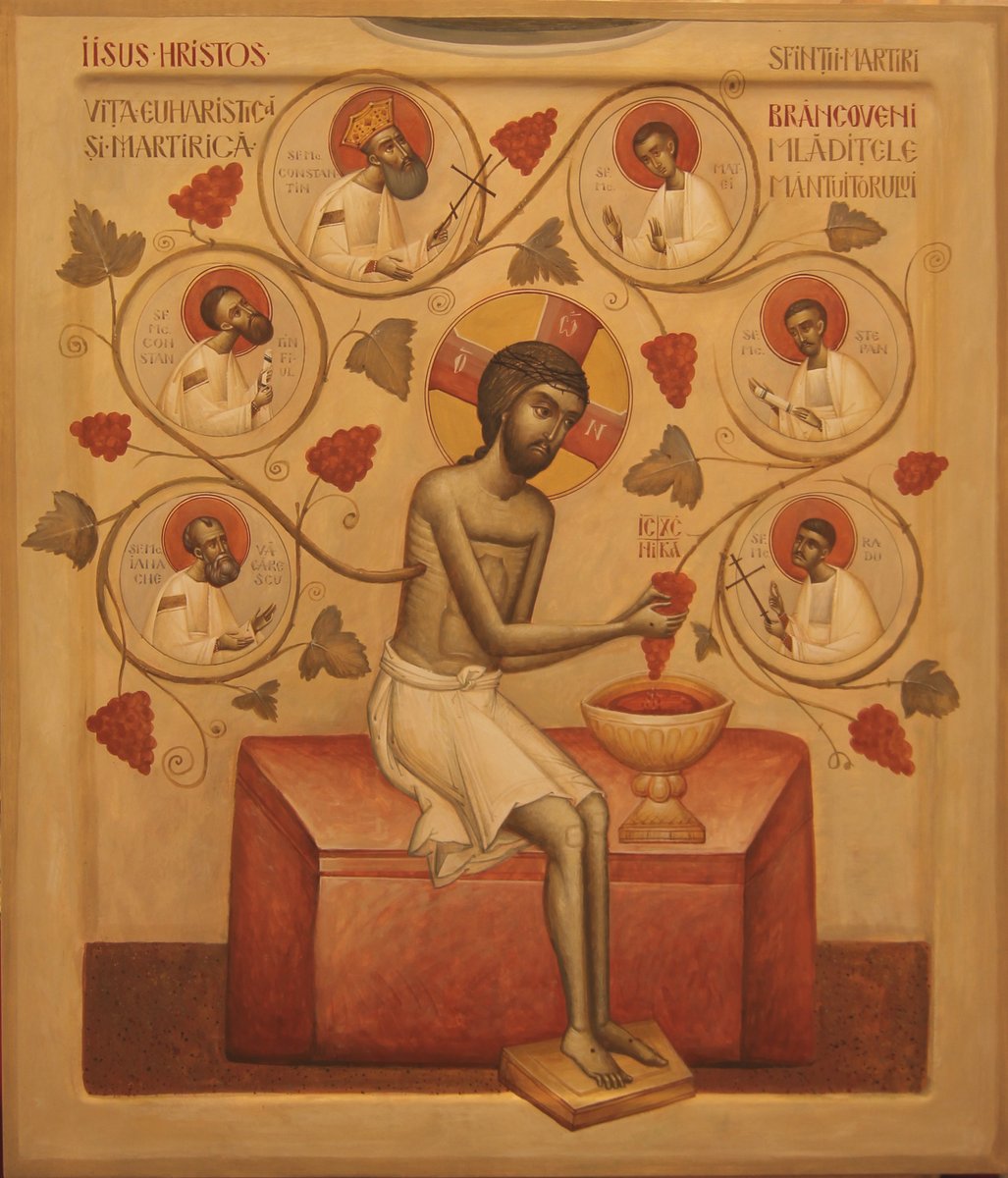
Jesus Christ as the Vine, Byzantine Orthodox Art.

The image presented by the liturgy this Sunday is simple and of great expressive force. Jesus is the true vine, full of life; We disciples are those branches that nourish ourselves with the sap that comes to us from Jesus. The Father is the vinedresser who personally cares for the vineyard so that it bears abundant fruit and so that his project of a more human and happier world for all becomes a reality. And at the same time, the image highlights where the problem lies: There are dry branches through which the sap of Jesus does not circulate, that is, disciples who do not bear fruit because the Spirit of the Risen One does not run through their veins. Christian communities that are turned off because their members are disconnected from their Lord. That is why an affirmation charged with intensity is made: «the branch cannot bear fruit if it does not remain on the vine»: the life of the disciples is sterile if we do not remain in Jesus. His words are very clear: «Without me you can do nothing.» Isn’t this the root of the crisis in our Christianity? The way many Christians live our faith, without a vital union with Jesus Christ, will not last long: it will be reduced to a kind of anachronistic folklore that will not bring the Good News of the Gospel to anyone. The Church will not be able to carry out her mission in the contemporary world, if those of us who call ourselves Christians do not become disciples of Jesus, animated by his spirit and his passion for a more human world. Being a Christian today requires a vital experience of Jesus Christ, an interior knowledge of his person and a passion for his doctrine. We Christians today live some kind worried and distracted by many issues however we must not forget the essential: We are all branches and only Jesus is the true vine. The decisive thing in these moments is to remain united to Him, to pay full attention to the Gospel. This is the only way to nurture our communities and our souls • AE


Fr. Agustin’s Schedule for the Fifth Sunday of Easter 2021.

Saturday, May 1, 2021

11.00 a.m. First Communion Mass @ Our Lady of Grace

4.30 p.m. Sacrament of Reconciliation @ St. Peter Prince of the Apostles

5. 30 p.m. Mass @ St. Peter Prince of the Apostles

Sunday May 2, 2021

10.30 a.m. Mass @ Our Lady of Grace Catholic Church

12.00 p.m. Mass @ Our Lady of Grace Catholic Church

5. 30 p.m. Mass @ St. Peter Prince of the Apostles


May, month of the Blessed Virgin Mary

The month of May (Overview – Calendar) is the «month which the piety of the faithful has especially dedicated to Our Blessed Lady,» and it is the occasion for a «moving tribute of faith and love which Catholics in every part of the world [pay] to the Queen of Heaven. During this month Christians, both in church and in the privacy of the home, offer up to Mary from their hearts an especially fervent and loving homage of prayer and veneration. In this month, too, the benefits of God’s mercy come down to us from her throne in greater abundance» (Paul VI: Encyclical on the Month of May, no. 1). This Christian custom of dedicating the month of May to the Blessed Virgin arose at the end of the 13th century. The practice became especially popular among the members of the Jesuit Order — by 1700 it took hold among their students at the Roman College and a bit later it was publicly practiced in the Gesu Church in Rome. From there it spread to the whole Church • AE


V DOMINGO DEL TIEMPO DE PASCUA (CICLO B)

E. Hopper, Compartment C Car 293 (1938), oleo sobre tela, colección privada.

La imagen de este domingo, el quinto dentro del tiempo de Pascua, es de una belleza y una fuerza extraordinarias. Jesús se presenta a si mismo como la vid y de nosotros dice que somos los sarmientos. En otras palabras: la vitalidad de los cristianos nace de él. Si la savia de Jesús resucitado corre por nuestra vida, nos aporta alegría, luz, creatividad, coraje para vivir como vivía él. Si, por el contrario, no fluye en nosotros, somos sarmientos secos. Quizá nuestro problema radica en que celebramos a un Jesús que es una vid llena de vida, pero formada, en buena parte, por sarmientos muertos. ¿Para qué seguir distrayéndonos en tantas cosas, si la vida de Jesús no corre por nuestras comunidades y nuestros corazones? Quizá nuestra primera tarea debiera ser permanecer unidos a la vid, no vivir desconectados de Jesús, sin savia, secos. ¿Cómo lograrlo? El evangelio lo dice con claridad: hemos de esforzamos para que sus palabras permanezcan en nosotros. La vida cristiana no brota espontáneamente entre nosotros. El evangelio no es una deducción racional. Es necesario meditar largas horas las palabras del Señor. Sólo la familiaridad y afinidad con los evangelios nos hará ir aprendiendo poco a poco a vivir como él. Este acercamiento frecuente a las páginas del evangelio nos va poniendo en sintonía con Jesús, nos contagia su amor al mundo, nos va apasionando con su proyecto, va infundiendo en nosotros su Espíritu. Casi sin darnos cuenta, nos vamos haciendo cristianos. La meditación personal y silenciosa de las palabras de Jesús nos cambia más que todas las explicaciones, discursos y exhortaciones que nos llegan del exterior. Las personas cambiamos desde dentro. Y no cambiamos porque con frecuencia por nuestro corazón no pasa la savia de Jesús. La vida de la Iglesia sería ¡ay! Tan diferente si los creyentes -los matrimonios cristianos, los presbíteros, las religiosas, los obispos, los educadores- tuviéramos el libro de los evangelios como nuestro libro de cabecera. Este domingo podríamos tomar esta decisión: leer, todos los días, una página de los evangelios • AE