Fourth Sunday of Lent (Laetare Sunday)

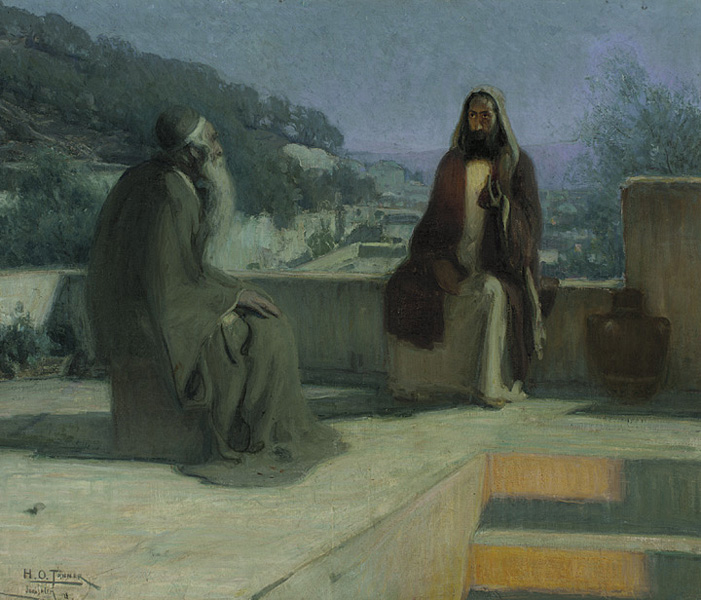
Henry Ossawa Tanner, Nicodemus Visiting Jesus (1899), oil on canvas, Pennsylvania Academy of the Fine Arts (Philadelphia)

In his conversation with Nicodemus, as we find it in this Sunday’s Gospel, you hear Jesus say: “Just as Moses lifted up the serpent in the wilderness, so must the Son of Man be lifted up, that whoever believes in him may have eternal life.” There are two other places in John’s Gospel where Jesus uses that same expression of “being lifted up”. It suggests that it was an important image for him; after all, it is mentioned three times in the same Gospel[1]. That “being lifted up”, where does that come from? It comes from the time that the Israelites were wandering in the desert[2]. They complained that God had led them out into the wilderness to die. As punishment, God sent venomous serpents among them and many die of the poisonous bite. Then God instructed Moses to make an image of the snake, put it on a pole and hold it up. Anyone who was bitten and who looked upon the image would recover and be healed. Now Jesus uses that image of Moses and the serpent to speak of his own death on the cross and the salvation that comes from God through him. So what is it about the cross that draws us, that reveals the divine presence…, that heals us when we gaze upon it? For Jesus, the cross is his hour, the cross is his glory, the cross is the ultimate expression of how God so loved the world. The cross is the face of God as we know God through Jesus Christ. By making himself a total offering Jesus expresses the radiant light of divine love. His glory is in his self-emptying. So, have you ever forgiven someone for something really serious, and done so freely and completely, as pure gift? Have you ever given yourself over to another’s need so completely that thoughts about yourself vanished entirely? Have you ever experienced love of God so completely that you seemed to disappear and what remained seemed only divine? If you answered yes to any of these, you know something of the mystery of the cross. Let us pay attetion, this holy season of Lent is the grace-filled season in which we are urged to progress on knowing the great mystery of the cross, so there is alwaysa one more chance • AE


[1] Cfr. 8:28 and 12:32 [2] Numbers 21:4-9


Fr. Agustin’s Schedule for the Fourth Sunday of Lent (Year B)

On the occasion of the Spring Break of 2021, Fr. Agustín will be out of town. Our three parish communities continue their usual schedule for the weekend for the celebration of the Eucharist and the Sacrament of Confession.


IV Domingo de Cuaresma (2021)
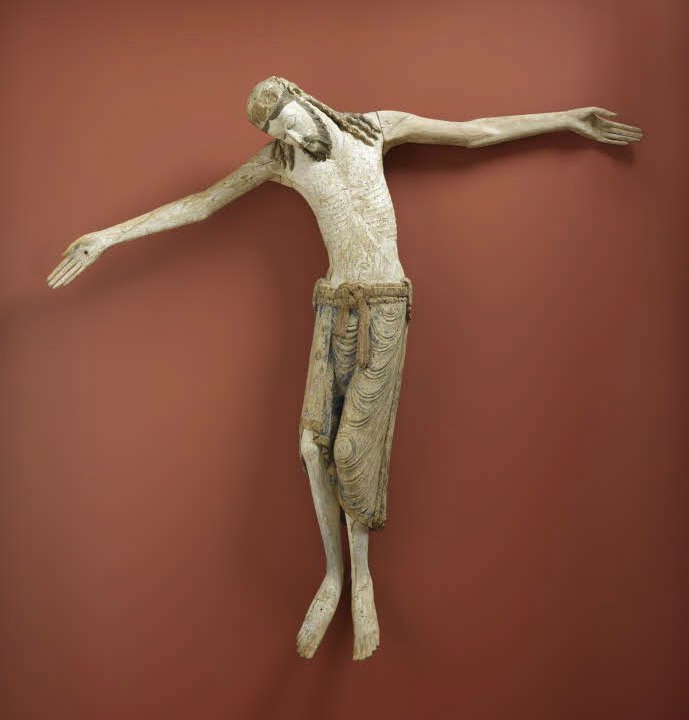
Autor anónimo, Le Christ décloué de la Croix (segunda mitad del siglo XII), Museo de Louvre (Paris)

San Juan nos habla de un extraño encuentro. Son Jesús y un fariseo llamado Nicodemo. Según el relato es Nicodemo quien toma la iniciativa y busca a Jesús, pero de noche. Intuye que Jesús es un hombre venido de Dios, pero se mueve entre tinieblas. Jesús lo irá conduciendo hacia la luz. Nicodemo representa en el relato a todo aquel que busca sinceramente encontrarse con Jesús. Por eso, en cierto momento, Nicodemo desaparece de escena y Jesús prosigue su discurso, para terminar con una invitación general a no vivir en tinieblas, sino a buscar la luz. Según Jesús, la luz que lo puede iluminar todo está en el Crucificado. La afirmación es atrevida: «Tanto amó Dios al mundo que entregó a su Hijo único para que no perezca ninguno de los que creen en él, sino que tengan vida eterna»[1]. ¿Podemos ver y sentir el amor de Dios en ese hombre clavado en una cruz? Acostumbrados desde niños a ver la cruz por todas partes quizá no hemos aprendido a mirar el rostro del Crucificado con fe y con amor. Nuestra mirada distraída no es capaz de descubrir en ese rostro la luz que podría iluminar nuestra vida en los momentos más duros y difíciles. Sin embargo desde la cruz el Señor nos envía constantemente señales de vida y de amor. En esos brazos extendidos que no pueden ya abrazar a los niños, y en esa manos clavadas que no pueden acariciar a los leprosos ni bendecir a los enfermos está Dios con sus brazos abiertos para acoger, abrazar y sostener nuestras pobres vidas, rotas por tantos pecados y sufrimientos. Desde ese rostro apagado por la muerte, desde esos ojos que ya no pueden mirar con ternura a pecadores y prostitutas, desde esa boca que no puede gritar su indignación por las víctimas de tantos abusos e injusticias, Dios nos está revelando su amor por la Humanidad. Podemos acoger a ese Dios, pero también corremos el peligro de rechazarlo.  Somos libres. La gran pregunta es por qué tantas veces rechazamos la luz que nos viene del Crucificado. Quizá en un momento de silencio y meditación podríamos respondernos y, al mismo tiempo, pedir perdón y fortaleza para cambiar • AE


[1] Cfr. Jn 3, 14-21


Third Sunday of Lent (2021)

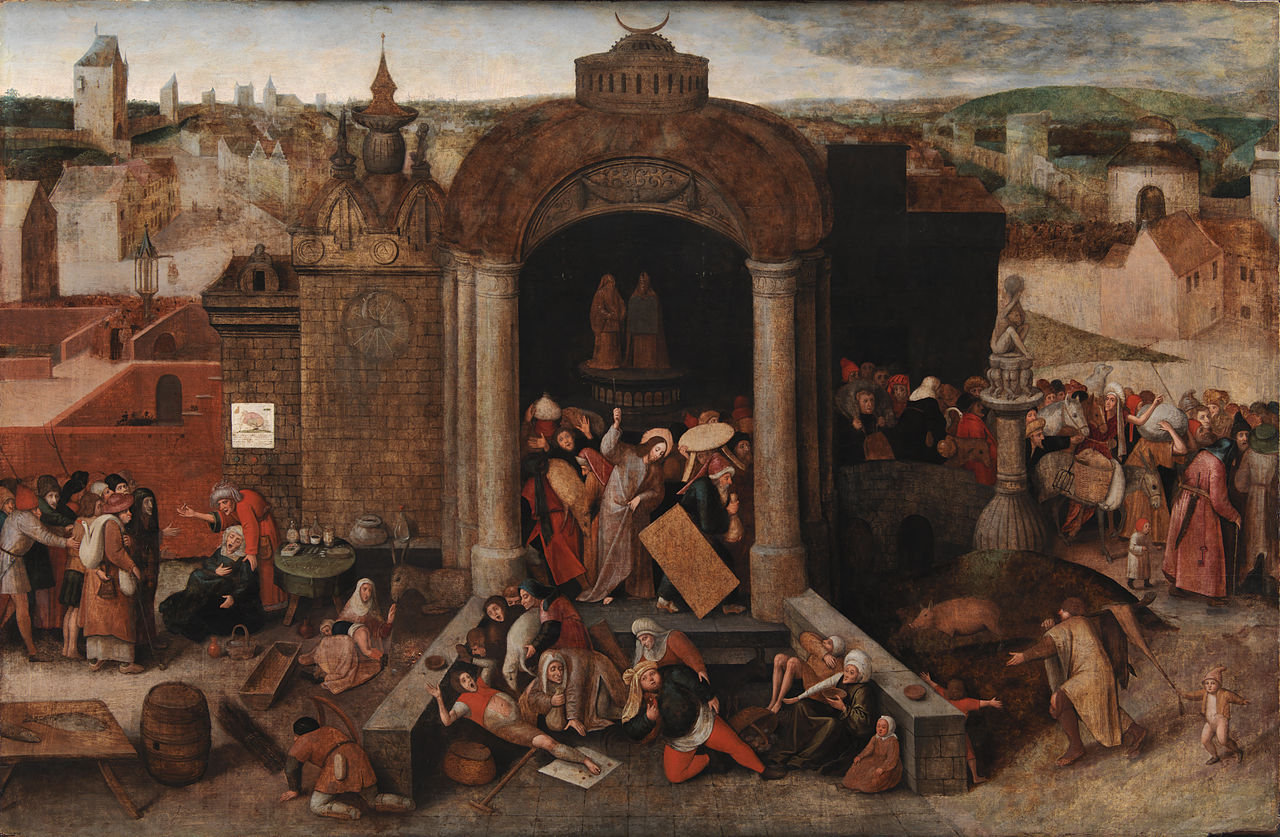
All the Gospels speak of this bold and provocative gesture of Jesus within the temple grounds of Jerusalem. It was probably not very spectacular. He ran over a group of pigeon sellers, overturned the tables of some money changers and tried to interrupt the activity for a few moments. He couldn’t do much more. Yet it was that specific gesture, charged with prophetic force, that triggered his arrest and his swift execution. To attack the temple was to attack the heart of the Jewish people: the center of their religious, social and political life. The Temple was untouchable. There dwelt the God of Israel. What would the town be without his presence among them? How could they survive without the Temple? For Jesus, however, it was the great obstacle to welcoming the kingdom of God as he understood and proclaimed it. His gesture called into question the economic, political and religious system sustained from that «holy place.» What was that temple? Was it a sign of the kingdom of God and its justice or a symbol of collaboration with Rome? A house of prayer or a storehouse for the tithes and first fruits of the peasants? A sanctuary of God’s forgiveness or justification of all kind of injustices? This was a «den of thieves.» While in the surroundings of the «house of God» wealth accumulated, in the villages the misery of his children grew. No. God would never legitimize a religion like that. The God of the poor could not reign from that Temple. With the arrival of his reign, he lost his reason for being. So, this act of the Lord in this third Sunday of Lent is an invitation to meditate about the religion we are cultivating in our assemblies. If it is not inspired by Jesus, it can become a «holy» way of closing ourselves to God’s project that Jesus wanted to promote in the world. The first thing is not religion, but the kingdom of God. So, what religion is ours? Does it increase our compassion for those who suffer or allow us to live calmly in our well-being? Does it feed only our own interests or does it put us to work for a more human and livable world? If our faith and our spirituality resemble that of the Jewish Temple, we could be sure that Jesus would not bless it. Let us think about it • AE


Fr. Agustin’s Schedule for the Third Sunday of Lent (2021)

Saturday, March 6, 2021.

2.00 p.m. Sacrament of Matrimony for Martha & Angel @ St. Peter Prince of the Apostles Catholic Church.

4.00 p.m. Sacrament of Confession @ St. Peter Prince of the Apostles Catholic Church.

5.30 p.m. English Mass @ St. Peter Prince of the Apostles Catholic Church.

Sunday March 7, 2021.

On the occasion of Spring Break 2021, Fr. Agustin will be out of town for a few days.

Parishes continue their Sunday liturgies on their regular schedule.


Tercer Domingo de Cuaresma (2021)

Cuando Jesús entra en el templo de Jerusalén se encuentra con un comercio religioso. Su actuación no es sino la reacción del Profeta que ve la religión convertida en mercado. Aquel templo llamado a ser el lugar en que se había de manifestar la gloría de Dios y su amor fiel al hombre, se ha convertido en lugar de engaño y abusos donde reina el afán de dinero y el comercio interesado. No es de extrañar la indignación del Señor. Jesús siempre habla de la gratuidad con la que Dios que ama a los hombres, por eso una vida convertida en mercado donde todo se compra y se vende, incluso la relación con el misterio de Dios, es la perversión más destructora de lo que Jesús quiere promover entre los hombres. Es cierto que nuestra vida sólo es posible desde el intercambio y el mutuo servicio. Todos vivimos dando y recibiendo. El riesgo está en reducir todas nuestras relaciones a comercio interesado, pensando que en la vida todo consiste en vender y comprar, sacando el máximo provecho a los demás. Casi sin darnos cuenta, nos podemos convertir en vendedores y cambistas que no saben hacer otra cosa sino negociar. Hombres y mujeres incapacitados para amar, que han eliminado de su vida todo lo que sea dar. Es fácil entonces la tentación de negociar incluso con Dios. Se le obsequia con algún culto para quedar bien con él, se pagan misas o se hacen promesas para obtener de él algún beneficio, se cumplen ritos para tenerlo a nuestro favor. Lo grave es olvidar que Dios es amor y el amor no se compra. Por algo repetía Jesús que Dios quiere amor y no sacrificios[1]. Hoy podríamos meditar, aunque fuera solo un momento, en la gratuidad de del amor y la compasión de Dios. En un mundo convertido en mercado donde nada hay gratuito y donde todo es exigido, comprado o ganado, sólo lo gratuito puede seguir fascinando y sorprendiendo pues es el signo más auténtico del amor. Los creyentes hemos de estar más atentos a no desfigurar a un Dios que es amor gratuito, haciéndolo a nuestra medida, tan triste, egoísta y pequeño como nuestras vidas mercantilizadas. Quien conoce la sensación de la gracia y ha experimentado alguna vez el amor sorprendente de Dios, se siente invitado a irradiar su gratuidad y, probablemente, es quien mejor puede introducir algo bueno y nuevo en esta sociedad donde tantas personas mueren de soledad, aburrimiento y falta de amor • AE


[1] Mt 12,7


SACRAMENT OF CONFESSION

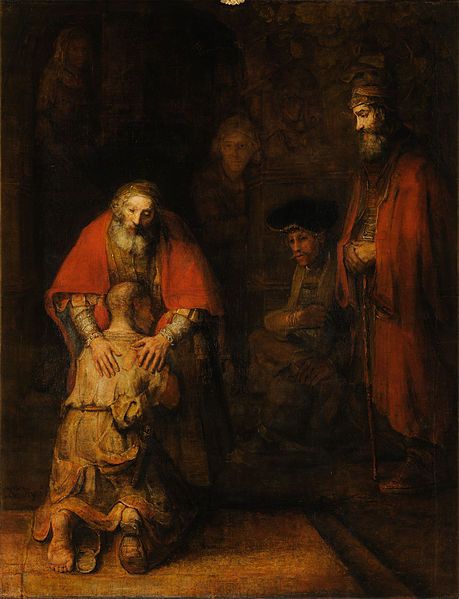
Rembrandt Van Rijn, The Return of the Prodigal Son (1662), oil on canvas, Hermitage Museum (St Petersburg)

My fellow Parishioers:
I am available to celebrate the Sacrament of Confession at the following places and times:


Monday at Our Lady of Grace from 6.00 a.m. to 6.50 a.m. (@ Eucharistic Chapel)
Tuesday at St. Peter Prince of the 6.00 a.m. to 6.50 a.m. (@ Eucharistic Chapel)
Wednesday at Our Lady of Sorrows from 7.30 a.m. to 8.00 a.m. (@ Confessional)
and at St. Peter Prince of the Apostles from 4.00 p.m. to 5.30 p.m. (@ Confessional)
Friday at Our Lady of Grace from 4.00 pm to 6.00 pm (@ Confessional)
Saturday at Our Lady of Grace from 7.00 a.m. to 8.00 a.m. (@ Confessional)
Saturday at St. Peter Prince of the Apostles from 4.00 p.m. to 5.30 p.m. (@ Confessional)

If none of these spots works well for you, please send me an email (agusestrada@gmail.com) to arrange a convenient day and time for you. Peace! Fr. AE

Second Sunday of Lent (2021)

Caravaggio, The Sacrifice of Isaac (1603), oil on canvas, Uffizi (Florence)

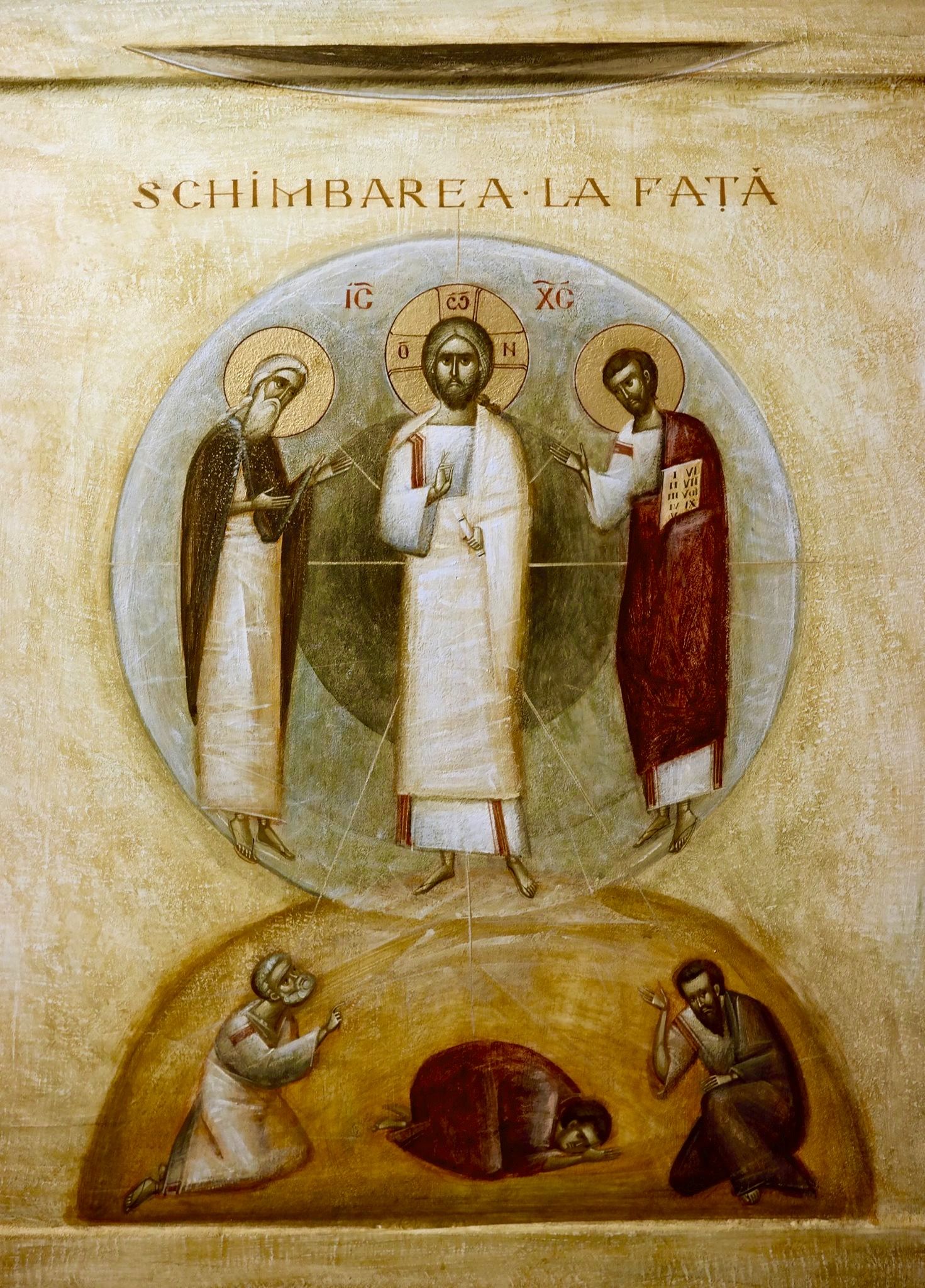
The teachers of Jesus’ time compared Isaac to the Jewish martyrs who died for their faith during the Maccabean revolt against the Syrians.  Second Maccabees tells the story of the seven sons and the esteemed elder who would rather die than deny their faith and defile themselves[1].  The scholars taught that like those martyrs, Isaac did not value his life over the completion of God’s plan. Later, Christians would see in Isaac’s carrying the wood for the sacrifice up the mountain a prophecy of Jesus carrying the cross up to Golgotha.  It is in this light that we can relate the story of Abraham and Isaac with the Transfiguration, today’s Gospel. On that mountain of mystery, Jesus met with Moses and Elijah. Why Moses and Elijah?  Moses was the lawgiver. During the Exodus he showed the Hebrews how they could serve God. He told them they were God’s chosen people. God had a plan for them, one by which He would deliver them out of slavery and to the place He set aside for them. Elijah was the greatest of the prophets. The time had come on the mountain of the Transfiguration. Jesus was there on that mountain. He was ready and willing to sacrifice himself for His Father’s plan to become a reality. He would die for the good of all. His sacrifice would lead to the glory of the Kingdom of God. His life, obscure in the eyes of the world, and His death, which the world would view as dishonorable, freed others, freed us, to live and die in grace. What does all this mean to us? It means that as followers of Christ we also must offer ourselves up for the good of others.  When Jesus said that we cannot be His followers unless we were ready to take up our crosses[2], He was not using symbolic imagery. He meant it. As Christians, we are called to sacrifice ourselves for others. That means that we have to reject the world’s diabolical egocentricity. Egocentricity is putting ourselves first before all others, the “It’s all about number one, me.” That is the way of the world.  It is diabolical because the devil is determined to fight God’s plan for us by using us against ourselves. Something wonderful happens when we step out of ourselves and give ourselves to others.  We receive more than we give.  We have all realized that whenever we are truly charitable, we feel a huge joy, a joy so real that we are convinced that what we did was insignificant to what we received. In those moments of joy, we become one with the Lord. We are transfigured with Him.  We become people completely different because we are happier, infinitely happier. Just as the Transfiguration of the Lord was a touch of heaven and a foreshadowing of the glory to come, our own transfigurations are a touch of heaven and a tangible prediction of the eternal joy to come. Lent is a time for us to take a close look at ourselves and consider what we have to do to conquer selfishness and sin in our own lives. The various exercises of Lent help us to dive deeper into our commitment to the Lord. Lent helps us to take those steps we need to be bound to God’s plan. We pray today for the grace to be part of the plan, part of the sacrifice, and part of the Glory • AE


[1] Cf 2 Maccabees 7 [2] Matthew 16:24-26


Fr. Agustin’s Schedule for the Second Sunday of Lent 2021

Saturday, February 27, 2021.

4.00 p.m. Sacrament of Confession

5.30 p.m. English Mass @ St. Peter Prince of the Apostles Catholic Church.

Sunday February 28, 2021.

9.00 a.m. English Mass @ St. Peter Prince of the Apostles Catholic Church

11.00 p.m. English Mass @ St. Peter Prince of the Apostles Catholic Church

5.30 p.m. English Mass @ St. Peter Prince of the Apostles Catholic Church.


II Domingo de Cuaresma (2021)

La tentación de hacer tres tiendas como sugiere Pedro está y estará siempre presente[1]. Es curioso: nos preocupamos siempre por construir una casa a Dios ¡y la realidad es que él mismo ha bajado a la tierra para vivir en las casas de los hombres![2] Hoy podrimos volver a meditar con calma que Dios no tiene tanta necesidad de metros cuadrados para iglesias como de acogida en el corazón humano. Él querría vivir en familia con los hombres, andar entre nuestros pucheros, como decía la santa Madre Teresa. El Dios-con-nosotros no es un producto de un mercado al que se acude cuando se necesitan servicios religiosos. Dios no es un objeto de consumo. Él es la vida misma del hombre, pero nosotros nos empeñamos en confinarlo en su casa, en lugar de tenerlo como compañero continuo en el camino de la vida. El Padre de Jesús no se mantiene en alturas celestiales, sino que nos señala, a través del Hijo, en la dirección al mundo en la que quiere que nos encarnemos. Además de nuestra condición de hombres, hay algo que refuerza nuestro interés por el mundo: nuestra fe y el servicio a los demás. El Concilio Vaticano II lo dijo de una manera maravillosa: «Los gozos y las esperanzas, las tristezas y las angustias de los hombres de nuestro tiempo, sobre todo de los pobres y de cuantos sufren, son a la vez los gozos y las esperanzas, tristezas y angustias de los discípulos de Cristo»[3] • AE


[1] Cfr. Mc 9, 2-10 [2] Cfr Jn 1,1 [3] Constitución Gaudium et Spes, 1.


First Sunday of Lent (2021)

Michelangelo Buonarroti, The Torment of Saint Anthony (1487), Tempera on panel, The Kimbell Art Museum (Forth-Worth, Texas)

Lent begins this year with a reading from the Noah section of Genesis[1].  The Noah story begins with a notice of the depravity of the people. And how God protected Noah’s family and his creation from the flood.  At the end of the story, to demonstrate that he would never destroy man again, God sets his bow in the sky. The main point is that God will not give up on man. This is the covenant with Noah and us.  God will not give up on us. And we can’t give up on ourselves! That is the real problem: very often we give up on ourselves. We have fallen in the past, and we convince ourselves that we do not have the power to fight off sin when temptation shows up. The question arises, though, «In the face of temptation, are we powerless?» If a person allows himself or herself to be exposed to an intense temptation, then his or her ability to withstand it is greatly reduced.  For example, an alcoholic is tempted to drink every day of his or her life, even if it has been years since he or she had a drink.  But if that person is alone on a business trip, is lonely, and goes to a bar, the temptation may be far more than the person can withstand.  The person, though, is not powerless because the person can choose not to go to that bar. Although we have the power to withstand temptation, the greatest source of our power is not within us as much as it is in the strength we receive from the Lord.  People who fight off temptations do so due to the power of God. God promised Noah and us that he will never give up on us. He loves us too much to give us up. No matter what our particular temptation in life is, we can withstand it as long as we face up to it with the Lord. We have to take responsibility for our actions. We have to recognize that we can do evil and we can hurt others.  We have to pray continually. The rainbow, the sign given to Noah, is God’s promise that he knows our weaknesses but will never let us go. Although we are tempted continually, and although we may have failed in the past, we have no right to give up on ourselves.  We have no right to beat our personalities into submission and consider ourselves unfit to do the right thing.  No matter what mistakes we may have made, God still is there trying to keep us from falling into the same hole the third, fourth or fifth time, or seventy-seventh time.  If God refuses to give up on us, then what right do we have to give up on ourselves? Jesus was out in the desert with the wild beasts[2].  During Lent we reflect on what the wild beasts are in our lives.  What are the particular things that devour our spiritual life?  Big question! This passage of the Gospel always reminds me of the great Saint Anthony of the desert and how Christian iconography represents him in the desert surrounded by demons. With the help of the angels, with God’s love we can and will fight them off. True, we have to want to fight.  We have to want to change for the better. That is what Lent is all about: spending forty days putting up the fight, fighting off the beasts, preparing to announce the Kingdom. We can do it. If we reflect on how easy it is for us to slip into our old habits, and have that negative thought that we have no chance of changing, then we have only to look at the rainbow and know that God will never give up on us. We can change.  We must change. His mission for us demands it. His love for us makes it possible.  Together let us pray that this holy season of Lent we allow God to work his wonders in us as we struggle against those elements of our lives that would keep us from fulfilling God’s mission for us.  Let us look at the rainbow. God has not given up on us. We cannot give up on ourselves • AE


[1] Gn 9:8-1 [2] Mk 1:12-15.


Fr. Agustin’s Schedule for the First Sunday of Lent (2021)

Saturday, February 20, 2021.

4.00 p.m. Sacrament of Confession 5.30 p.m. English Mass

@ St. Peter Prince of the Apostles Catholic Church.

Sunday February 21, 2021.

8.30 a.m. English Mass @ Our Lady of Grace Catholic Church (Outdoors mass)

10.30 p.m. English Mass @ Our Lady of Grace Catholic Church (Outdoors mass)

5.30 p.m. English Mass @ St. Peter Prince of the Apostles Catholic Church. RCIA Rite of Sending


I Domingo de Cuaresma (2021)


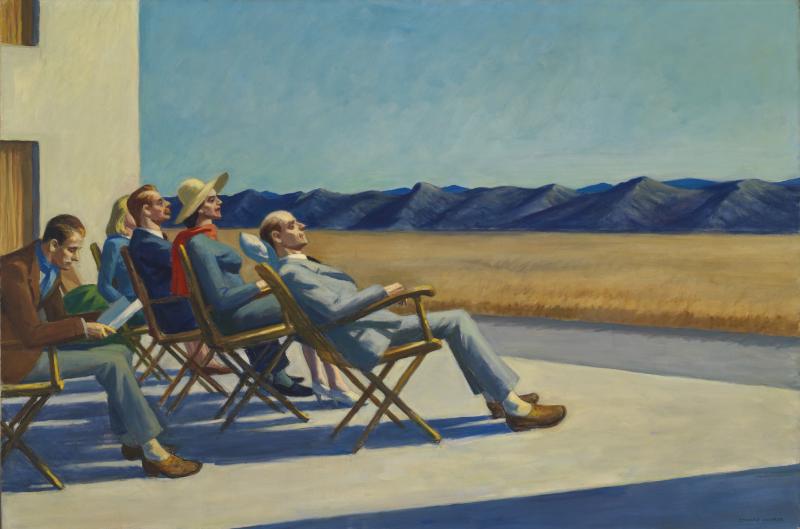
E. Hopper, People in the Sun (1960), óleo sobre tela, Smithsonian American Art Museum (Washington)

Lo mejor que tiene la noche es la esperanza del amanecer. Pero es necesaria la noche: sin ella, la luz del nuevo día no tendría ese sabor a victoria. Sería como un vaso de agua sin sed; o como un descanso que no ha sido deseado largamente desde la fatiga. El diluvio fue una larga noche. ¿Noche, o muerte? Noche, porque una débil esperanza -el arca de Noé- se negaba a morir. Al final de aquella noche, el arco iris fue, para aquella familia que se salvó, como un amanecer de victoria, como una señal de alianza con el Señor. El pecado es noche también. Y el bautismo, para Pedro, es como el arca; una señal de que esa noche tendrá también su amanecer. ¿Quién lo garantiza? Cristo, pasando de la noche de su muerte al alba de su resurrección: «Como Cristo era hombre, lo mataron; pero como poseía el Espíritu, fue devuelto a la vida»[1]. El desierto era, para el pueblo judío, como otro nombre de la noche. Lugar de paso hacia una tierra que un día sería su tierra, pero que aún quedaba lejos. Lugar de purificación y de esperanza. Buen lugar para las grandes batallas y para los grandes encuentros. Por eso Jesús, que quería entrar hasta el fondo de nuestra noche, quiso vivir la experiencia del desierto. «El Espíritu impulsó a Jesús a retirarse al desierto», dice el evangelio de hoy[2]. Y en el desierto entró como un hombre más, empezó a librar su gran batalla. A solas con su limitación y con su miedo; cercado por una naturaleza que se hacía difícil, sin seguridades en que apoyarse, desgastado por el hambre y por la sed. Una batalla que no será vencida de una vez para siempre, sino que habrá que continuar ganando cada día, palmo a palmo, cada vez más dura y más dramática, hasta el acoso de Getsemaní, hasta el fracaso de la cruz. Con la Cuaresma entramos pues en el desierto. En él, junto con la sed y el silencio, nos vamos preparando para saborear un día el agua viva de la Pascua. En él nos vamos convenciendo de la inutilidad de tantas cosas que antes creímos necesarias, de lo débiles que eran nuestros puntos de apoyo. En él, al ver nuestra radical pobreza, podríamos acabar descubriendo que Dios es nuestra única esperanza. Entremos, pues, sin miedo en ese desierto. Dispuestos a aguantar la sed y el hambre. Dejando pesos inútiles que nos impedirían caminar: comodidades que nos acaban enmoheciendo la disponibilidad, consumismo que pone en peligro toda nuestra escala de valores, seguridades que nos tientan a que apartemos los ojos del que es nuestra única seguridad: el Señor[3]. Entremos en la Cuaresma sin miedo al silencio. Sin miedo a lo que el Señor nos diga en la oración. Sin miedo a vernos tal cual somos, como cuando el sol, implacable, acabe derritiendo nuestros complicados maquillajes • AE


[1] 1 Pt 3, 18-22. [2] Mc 1, 12-15 [3] J. Guillén García, Al hilo de la Palabra, Comentario a las lecturas de domingos y fiestas. Ciclo B, Granada, 1993, p. 38 ss.