
Ash Wednesday (2021)

Braggers are so…let’s say… annoying! You know, those folks who always seem to do things better than the rest of us; they always know the answer to the issue – ‘Oh, I wouldn’t have done it that way!’. Braggers get you down. I’m sitting in a meeting that’s coming to an end. The leader says we must make a date for the next one. Pockets and cases are rifled, and we all stare intently at our smart phones or diary tablets. “How about …?” “Oh No, I can’t make that. A terrible week, so busy.”. Well, Lent is a time to bring some reality and some humility into our lives, and not to brag about it. If you’re trying to put some extra effort into this business of living the life of faith that’s great but please do not advertise your self-denial, your self-examination, your striving after what you know you’ve missed. So, says Jesus: if you’re going to fast, wash your face, slap on the oil so you look as if you’re blooming, and smiling don’t let on what a struggle such a discipline is. Don’t even mention it. That way what you’re doing won’t be seen by anyone, only your Father who is in secret; and your Father who is in secret will reward you[1]. And if that’s true about fasting, it’s also true about every religious practice like giving and praying, but also silence and study and reflection and meditation and compassion and practical encouragement, and whatever else you might do to develop and test your faithfulness. What does Jesus make such a big thing of this secret action and thought? Well, three reasons mainly. First, to emphasize the fact that real faith is not about outward differences but inward differences. It’s about intention, motivation, love and the rest; and these things are inward things. Second. Self-denial isn’t self-denial when its object is to be talked about. Being talked about doesn’t contribute one little thing to what you as a person really are. You may enjoy being talked about but what does it do for your personal growth? What does it do to your nearness to God? What does it do to your strengthening as a person? And third, the encouragement to secrecy is not an encouragement not to do these things. Jesus doesn’t say “don’t fast; don’t pray, don’t give alms”.  No, he says, “when you …, when you give alms, when you pray, when you fast….” Do these things and more, but don’t do them ostentatiously. Be quiet about them and you’ll find that some of the quiet of God will rub off on you! Do something. There’s wisdom in taking something on in Lent; in giving something up in Lent; and in giving more away in Lent, but that wisdom isn’t found in show and flamboyance. It’s found in a quite blessedness: and your Father who sees in secret will reward you • AE


[1] Cf Mt 6:1-6, 16-18


Fr. Agustin’s Schedule for Ash Wednesday 2021 (2-17)
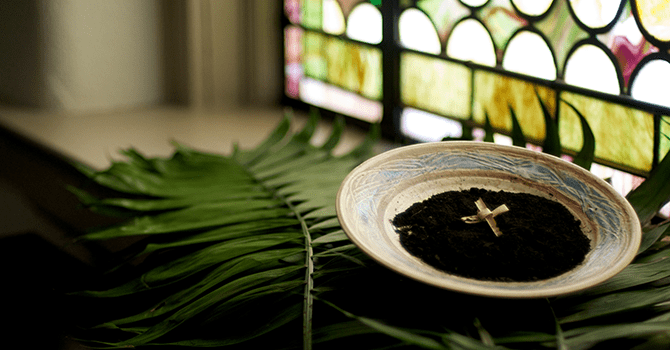
Ash Wednesday is a Christian holy day of prayer, fasting, and repentance. Ash Wednesday derives its name from the placing of repentance ashes on the foreheads of participants to either the words «Repent, and believe in the Gospel» or the dictum «Remember that you are dust, and to dust you shall return.» The ashes may be prepared by burning palm leaves from the previous year’s Palm Sunday celebrations •

8.00 a.m. Holy Mass with imposition of ashes @ St. Peter Prince of the Apostles Catholic Church (School Mass)

12.00 p.m. Imposition of ashes @ St. Peter Prince of the Apostles Catholic Church

4.00 p.m. to 5.30 p.m. Sacrament of Reconciliation @ St. Peter Prince of the Apostles Catholic Church

5.30 p.m. Holy Mass with imposition of ashes @ St. Peter Prince of the Apostles Catholic Church

7.00 p.m. Imposition of ashes @ St. Peter Prince of the Apostles Catholic Church


Miércoles de Ceniza 2021

Exposicion retrospectiva de Elisabeth Louise Vigée Le Brun en el Grand Palais (Paris)

Con sencillez y alegría la liturgia de este día nos invita a reconocer nuestra debilidad. ¡Cuánta distancia hay entre nosotros y el Evangelio y entre nosotros y la fidelidad del Señor! Hoy, si volvemos la mirada sobre nosotros mismos, sobre nuestra manera de vivir, de actuar, brotarán desde lo más hondo de nuestro corazón aquellas palabras que decíamos en el salmo: Misericordia, Dios mío, por tu bondad, por tu inmensa compasión borra mi culpa; lava del todo mi delito, limpia mi pecado[1]. La invitación de hoy es pues a ser sinceros con nosotros mismos. Si nos ponemos ante Dios no podremos gloriamos de nada. ¡Cuánto nos dominan nuestros deseos y nuestros intereses! ¡Cuántas ganas tenemos de imponer nuestro criterio y nuestra voluntad! ¡Qué poca capacidad de renuncia (de dinero, de tiempo, de tranquilidad) para el servicio a los demás! ¡Qué poco nos esforzamos por comprender a los que no son o piensan como nosotros! Y además de reconocer la propia infidelidad también hoy es un buen momento para levantar los ojos a Dios con confianza, con fe: ¡Misericordia, Dios mío, ¡por tu bondad! En este inicio de la Cuaresma, podríamos intentar mirarnos por dentro y reconocer nuestro pecado, y al mismo tiempo, mirar hacia Dios, nuestro Padre, y reafirmar nuestra confianza en su amor. Hoy, la imposición de la ceniza sobre nuestra cabeza será esta señal de reconocimiento. Será como decir: somos débiles, somos pecadores, no acabamos de salir de esta situación, de este estado. Pero no será decírnoslo a nosotros mismos, no será decirnos que no hay nada que hacer, que no hay salida. Será decirlo ante Dios, reconocerlo delante de él. En realidad, es el único camino para llegar, llenos de gozo, a la noche de la celebración de la Pascua • AE


[1] Salmo 50, Miserere.

Sixth Sunday in Ordinary Time (Cycle B)

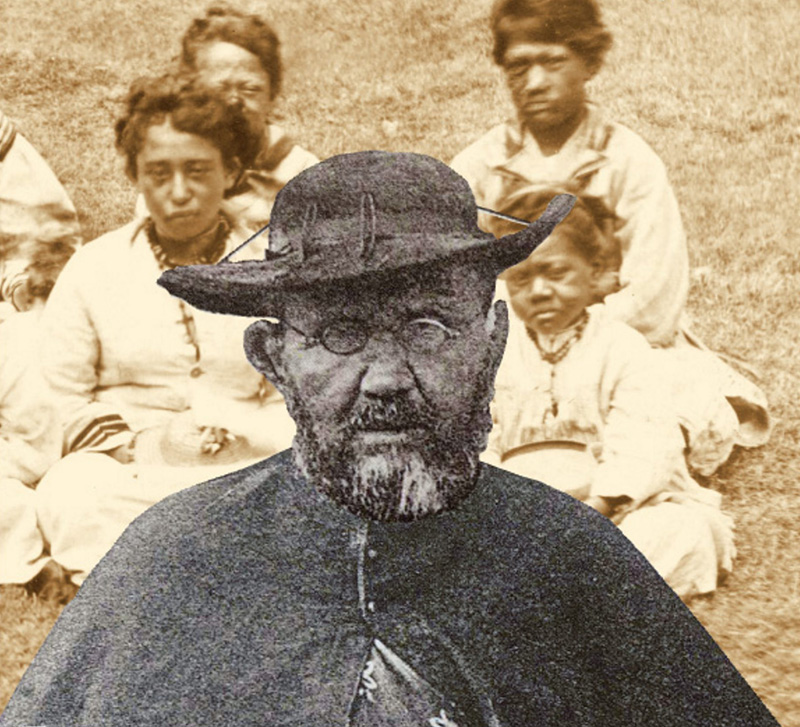
Up to seventy years ago, leprosy was feared and treated with a form of superstition. The people afflicted with leprosy were treated as though they were criminals.  In Hawaii, as in other places throughout the world, hospitals would not treat lepers. Instead, the lepers were forced to live in colonies with laws separating them from society similar to those laws we heard in the first reading for today. In Hawaii the lepers were put into cages, shipped off to Molokai, and dumped into the ocean. Only those well enough to swim to shore would live. Once on shore, the lepers faced total chaos. Everyone was sick. There was no medicine, no doctors, no shelters, no blankets. Now, on the big island of Hawaii, there was a young priest from Belgium named Damien de Veuster.  He had been a carpenter before he became a priest.  Fr. Damien had built numerous small churches on the Big Island. The Bishop asked Fr. Damien to go to Kaluapapa and reassemble the little church that had been sent there.  Fr. Damien was to have no contact with the lepers. The bishop did not have many priests, and he did not want to lose Fr. Damien. He told him that he was not to anoint or hear confessions of the lepers or to bury them or to have any contact with them at all. When Fr. Damien first saw the lepers, he was frightened. But he was different. He did not see the disease. He saw the people who were suffering. Fr. Damien was the first non-leper to stay overnight on Kaluapapa. He immediately began building shelters for the people. He constructed the Church and began saying Mass. He was the first to show Christ’s love to them. A ship came to pick up Fr. Damien after his 30-day medical visa expired, but the story goes that the lepers fought off the crew preventing them from landing and taking Fr. Damien. After six months, no one wanted Fr. Damien to leave the leper colony.  The medical people in Honolulu were convinced that after being there that long, he probably already had contracted leprosy. So, Fr. Damien stayed. He built shelters, a water system, and turned Kaluapapa into a little functioning community.  He planted over a thousand trees to protect the people from the elements. He built the Church and prayed for the people and with the people. Although leprosy is not as contagious as feared, Fr. Damien contracted leprosy, probably because he did not pay much attention to caring for his own health.  Towards the end of his life Mother Marianne, St. Marianne Cope, and a group of sisters from Utica, New York, joined him on the island to continue his work and to build a hospital right there in Kaluapapa.  On a little hill of Kaluapapa there is a cross with a few words from scripture that sums up what was at the heart of Fr. Damien’s work. The words are from St. Paul’s First Letter to the Corinthians «Love never fails». In 1864 the United States Congress invited each state to erect two statues of prominent citizens in Statuary Hall and throughout the Capital building in Washington D. C. Since then, all the states have followed this custom, some replacing statues with others such as California replacing one of its statues with one to honor Ronald Regan and Michigan doing the same to honor Gerald Ford. The State of Hawaii erected a statue of its unifying king, King Kamehameha, and a statue of its greatest citizen, St. Damien. What he and St. Marianne Cope did, their heroism, was extraordinary. They brought Jesus Christ to outcasts of society. Who are the outcasts of our society? Are the outcasts people with AIDS or other terrible illnesses? Are the outcasts the immigrants?  Are we willing to reach out to them? Are we willing to touch the outcast, or are we afraid that we might become unclean? Perhaps, if we resume friendship with that difficult cousin, the rest of our family will have nothing to do with us.  Or if we become advocates for migrants who work hard to send money to their impoverished families, then we will be accused of being aligned with the few bad among them who have done horrible things, even if the percentage of bad people among them is far less the percentage of evildoers who are American citizens.  Still, some will say to those who reach out to the immigrants. The example of St. Damien and the message of our gospel, is that we can reach out to those who are suffering and touch them with the healing power of Jesus Christ. Yes, by doing this we may open ourselves up to insult and attack from those around us. But we have been empowered with the healing touch of Jesus Christ. And that healing touch can conquer the pain around us. The point is that Love never, ever fails • AE


Fr. Agustin’s Schedule for the Sixth Sunday in Ordinary Time

Saturday, February 13, 2021.

4.30 p.m. Sacrament of Confession @ St. Peter Prince of the Apostles Catholic Church

5.30 p.m. English Mass @ St. Peter Prince of the Apostles Catholic Church

Sunday, February 14, 2021

9.00 a.m. English Mass @ St. Peter Prince of the Apostles Catholic Church

11.00 a.m. English Mas @ St. Peter Prince of the Apostles Catholic Church

5.30 p.m. English Mas @ St. Peter Prince of the Apostles Catholic Church


VI Domingo del Tiempo Ordinario (Ciclo B)

La confianza del leproso es extraordinaria: «Si tú quieres, puedes curarme»[1]. Es exactamente la misma fe de la cananea, del centurión, del padre del muchacho epiléptico[2]. Hoy vemos a Jesús conmovido por esta fe, en un diálogo breve e intenso. Dos palabras le bastan al leproso para para revelar su fe y una palabra para señalar el efecto de esta fe. En este diálogo se encuentran frente a frente la terrible situación de un hombre y la fuerza del amor. La lepra inspiraba tanto miedo en aquella época que era considerada como un castigo de Dios y un contagio terrible; lo que importaba era no tocar a aquellos malditos. Y el evangelista nos dice que Jesús lo toca. Y lo cura. Eso es precisamente lo que pensaba el leproso: él puede todo lo que quiere. Al Señor no hay miseria alguna que lo escandalice, pero él espera nuestro «Si tú quieres…» que debería ser casi tan poderoso como el amor con que está dispuesto a acogernos. Hoy pienso en los leprosos de nuestros días, en los despreciados, en los marginados, en aquellos que se sienten avergonzados de su cuerpo, de su corazón, de su vida, de sus afectos. Y pienso también – ¡y pido perdón! – en mí mismo: ¿Acaso estoy sano? ¿De verdad estoy Limpio? Quizá mis encuentros con Jesús han sido inútiles porque nada me impulsaba a suplicarle: «Si tú quieres, puedes curarme», y es que para decir esto, con una fuerza capaz alcanzar un milagro, es necesario sentirnos leprosos y necesitados de su gracia. Este doble despertar de nuestra vergüenza y de nuestra fe es sin duda la mejor preparación para un encuentro[3]. Como cuando decimos, al inicio de la celebración de la Eucaristía: «Para celebrar dignamente éstos sagrados misterios reconozcamos humildemente nuestros pecados». Hoy podríamos pedir al Espíritu de Dios esa gracia tan particular de prepararnos para encontrarnos con el Señor Jesús reconociéndonos leprosos delante de Él, y esperando con alegría su bendita misericordia • AE


[1] Cfr. Mc 1, 40-45. [2] Cfr. Mt 15, 21-28; Lc 7, 1-10; Mt 17, 14-27. [3] Cfr. A. Seve, El Evangelio de los Domingos, Edit. Verbo Divino (Estella). 1984, p. 78, ss.


Fifth Sunday in Ordinary Time

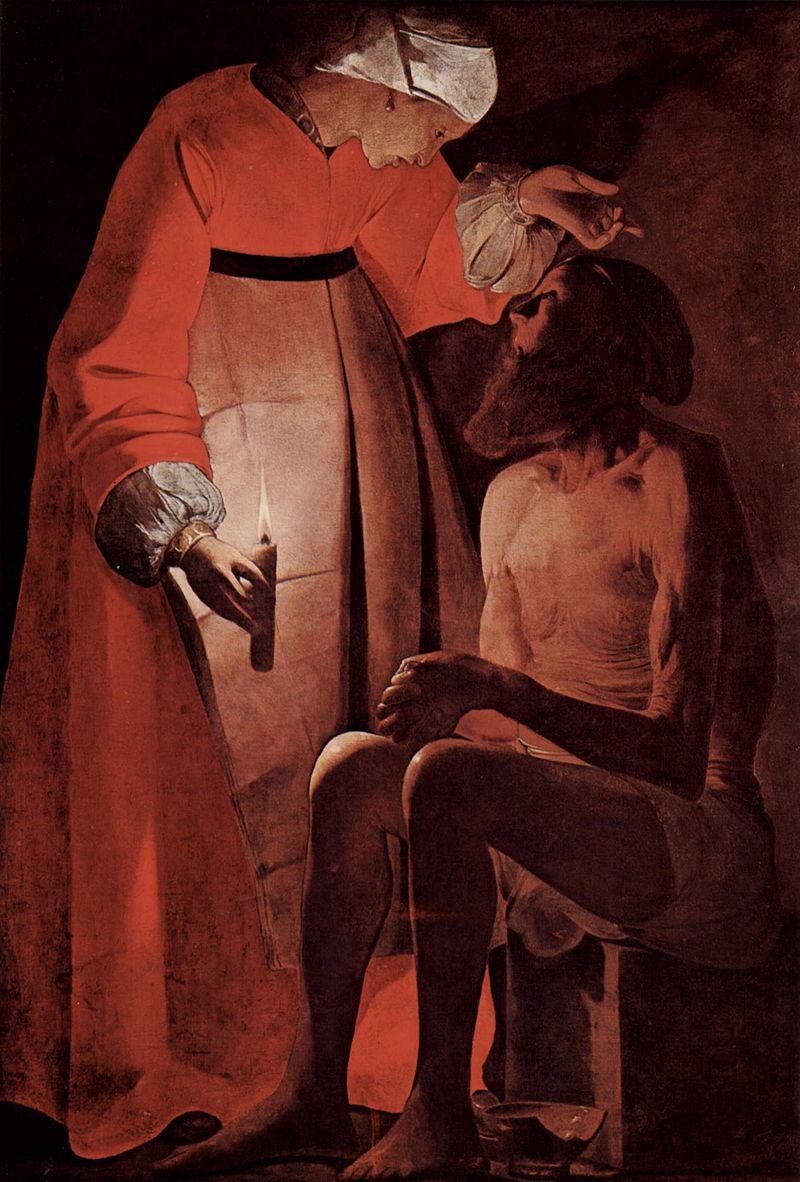
Georges de La Tour, Job Taunted by his Wife (1630), oil on canvas, Musée départemental d’art ancien et contemporain of Épinal (France)

Like Job in the first reading, we all come upon times of chaos, times of stress.  There are so many aspects to life for which there are no solutions.  People have lost a loved one.  Who has a solution to make the pain go away?  Some members of our parish have chronically ill children.  Parents are exhausted as their hearts are being torn to pieces. In some families, alcohol, drugs, psychological problems, or infidelity have broken up a marriage and a home. How can the family return to its state before it was devastated?  It cannot.  There is no solution.  Chronic sickness and pain become the focus of a person’s mind. How can he or she make believe it is not there?They cannot. Like Job we all experience what he called months of misery and nights of terror. Perhaps, we do not suffer to the extent that Job suffered, but life brings with it many challenges, including challenges to our faith that God will get us through the crisis. The Lord is aware of our difficulties.  He sees our turmoil.  He wants to heal us, just as he healed all those people in the today’s Gospel.  He will help us pilot our ship through the chaos to the safe harbor, the Lord shows us that the way to the safe harbor is through our Devotion to the Blessed Sacrament and to the Virgin Mary. We need the Lord’s presence in the Eucharist.  We need to feed on His flesh and drink His blood, as He tells us to do in the sixth chapter of John. We need the spiritual strength of the Eucharist to help us meet the challenges of life.  We need to receive communion at least once a week.  If we can, we should receive communion more often, daily if possible. And we need to have a deep devotion to our Mother, the Blessed Virgin. She is, as Pope Francis calls her, the one who untangles knots. She cares for us with a mother’s love and continually intercedes with her son for us.  She will not stop asking for help for her children.  We say the rosary, and should say it daily, because we trust her to bring our needs to her Son. In today’s Gospel, Jesus comes upon Simon Peter’s mother in law in bed with a terrible fever. She, like all of us, are important to the Lord. He has work for her. He reaches out to her, cures her, and she waits on the disciples. Then Jesus comes upon many people suffering the results of evil in our world, for all pain and suffering and death is due to mankind’s original and continual turning away from the Lord of Life.  He sees these poor people reaching out to Him, and He reaches out to them. Today all of us are told that when we are suffering, in any manner whatsoever, we must trust in the presence of God.   We believe that He is with us through all the turmoil.  We believe that he cries out with us sharing our pain.  He gives us the gift of the Eucharist and the gift of His Mother, to guide us from the chaos into the calm harbor. Today we ask God, «When the difficulties of our human condition weigh heavily upon us, dear Lord and Divine Lover, help us pray» • AE


Fr. Agustin’s Schedule for the Fifth Sunday in Ordinary Time

Saturday, February 6, 2021.

4.00 p.m. Sacrament of Confession

5.30 p.m. English Mass @ St. Peter Prince of the Apostles Catholic Church.

Sunday February 7, 2021.

8.30 a.m. English Mass @ Our Lady of Grace Catholic Church (Outdoors mass)

10.30 a.m. English Mass @ Our Lady of Grace Catholic Church (Outdoors mass)

12.00 p.m. English Mass @ Our Lady of Grace Catholic Church (Main church)

5.30 p.m. English Mass @ St. Peter Prince of the Apostles Catholic Church.


V Domingo del Tiempo Ordinario (Ciclo B)

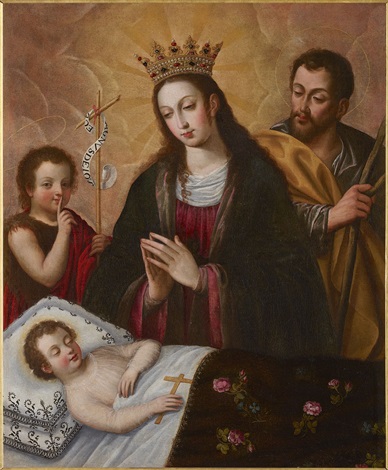
Anónimo, Virgen del Silencio con San Juan Bautista y San José (S. XVI), óleo sobre tela, colección particular.

Dice el evangelio de éste Domingo que Jesús se marchó al descampado[1]. El Señor no se ha dejado destruir por el activismo. No se ha vaciado en la actividad agotadora de cada jornada. Rodeado de personas que se agolpan sobre él, incluso, después de anochecer, sabe encontrar tiempo para reavivar su espíritu. Cuando, al amanecer, los discípulos lo llaman de nuevo, Jesús se levanta con nuevas fuerzas, dispuesto a continuar su servicio generoso e incondicional. El cansancio es algo con lo que tiene que contar todo hombre o mujer que se esfuerza por cumplir su tarea diaria con entrega y responsabilidad. Un día las fuerzas se desgastan y el agobio se apodera de nosotros. Quedan atrás la euforia y vitalidad de otros tiempos; de la juventud. Ahora sólo sentimos la falta de aliento, la impotencia, el hastío. Las raíces del cansancio pueden ser muy diversas. Las ocupaciones nos dispersan, la actividad constante nos desgasta, la mediocridad misma de nuestra vida y nuestro trabajo nos aburre. Perdemos energías en las mil contrariedades y roces de cada día y no sabemos cómo ni dónde reparar nuestras fuerzas. Nos vaciamos quizás generosamente a lo largo del día, pero no cuidamos el alimento de nuestro espíritu. ¿Qué hacer cuando la alegría interior se nos escapa y sentimos el alma cansada y sin aliento? Quizás lo primero sea aceptar con paciencia el cansancio como compañero de camino, pero al mismo tiempo cosa buena es recordar que la soledad y el silencio pueden sanar de nuevo nuestras raíces. En el silencio siempre hay un manantial. Esa oración callada, humilde y confiada puede devolvernos el aliento y la vida en las horas bajas del cansancio y el agobio. Todos necesitamos saber retirarnos a un lugar solitario para enraizar de nuevo nuestra vida en lo esencial[2]. Necesitamos más silencio y soledad para reconocer con paz las pequeñas cosas que hemos agrandado indebidamente hasta agobiarnos, y para recordar las cosas realmente grandes e importantes que hemos descuidado día tras día. Esa oración no es huida de los problemas. Es renacimiento, es reencuentro, es renovación del espíritu. Es sentirse vivo de nuevo y dispuesto para el servicio. La criatura sobre la tierra que más y mejor ha sabido recogerse en oración fue y es la Santísima Virgen María. Si le pedimos ésta mañana su ayuda e intercesión para encontrar ése espacio de silenciosa conversación con su Hijo, con toda seguridad seremos escuchados y reconfortados y alentados • AE


[1] Mc 1, 29-39

[2] J. A. Pagola, Buenas Noticias, Navarra 1985, p. 189 ss.

Fourth Sunday in Ordinary Time (Year B)

On this Fourth Sunday of ordinary time, the liturgy of the Church continues to encourage us to listen attentively to Christ. He is our teacher who speaks with authority. Unfortunately, today there are many who claim to be God’s prophets. God knew this beforehand that such false prophets will arise. So, He was clear about their fate: “Those who presume to say in my name what I have not commanded them to say, shall die” The question is, how do we know and distinguish false prophets? Matthew gives us a clue: “Beware of false prophets…You will know them by their fruits”[1]. So, this calls for vigilance, discernment and paying attention the Church´s teachings. In today’s gospel, Jesus was passionate to his people. He never deceived them or made false claims. Rather, in contrast to the scribes and Pharisees, He taught with authority. This was not based on worldly credentials, or his ability to cite precedents. His only credential was that he is the Son of God. His authority came from his father. Hence, a true prophet should rely principally on God. Therefore, it is important that we discern every prophecy and evaluate them based on the word of God in the scriptures. Whatever is against the plain sense of the scripture, or any prophesy that promotes unhealthy life style and shallow spirituality, obviously cannot be from God. As simple as this. Unfortunately, even an authentic prophet can also err. Surely, he can, when a he loses focus, and becomes very proud. When he stops listing to Christ, he begins to listen to himself. Then, in order to make up for his emptiness, he gives his own word in God’s name. Let us continue to listen to Jesus and, pay attention only to his authentic prophets who speak for God, mainly the Magisterium of the Church, and may the Psalm be a reality in our life: “O that today you listen to his voice, harden not your hearts”[2] • AE

[1] Cf 7: 15-20 [2] Cf Ps 95


Fr Agustin´s Schedule for the Fourth Sunday in Ordinary Time.

SATURDAY JANUARY 30, 2021

4.30 p.m. Sacrament of Confession @ St. Peter Prince of the Apostles Catholic Church

5.30 p.m. English Mass @ St. Peter Prince of the Apostles Catholic Church

SUNDAY JANUARY 31, 2021. 

9.00 a.m. English Mass @ St. Peter Prince of the Apostles Catholic Church

11.00 a.m. English Mas @ St. Peter Prince of the Apostles Catholic Church

5.30 p.m. English Mas @ St. Peter Prince of the Apostles Catholic Church


IV Domingo del Tiempo Ordinario (Ciclo B)

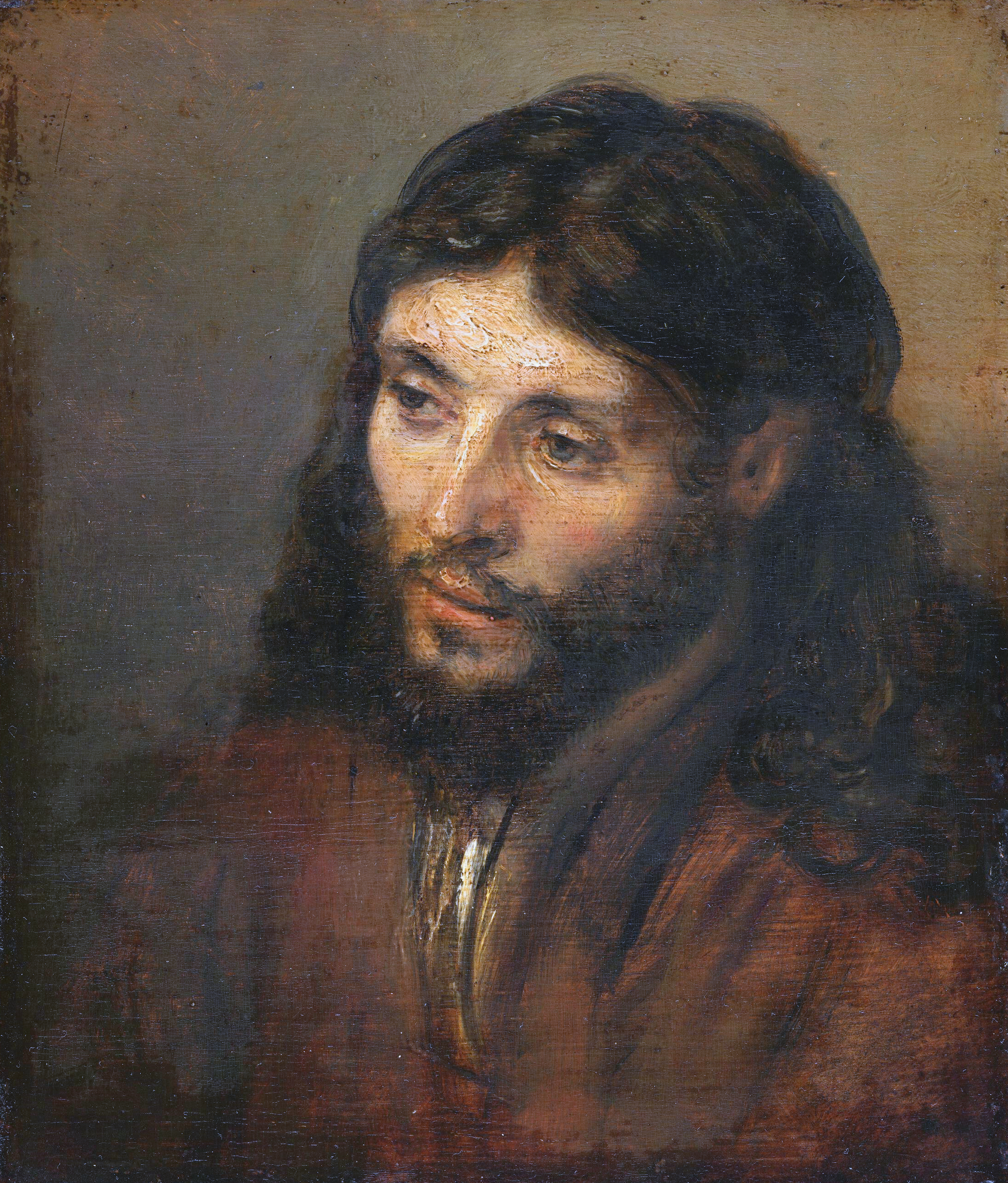
Rembrandt Harmenszoon van Rijn, Rostro de Cristo (ca. 1648), óleo sobre tela, Gemäldegalerie (Berlin)

Jesús no fue un maestro de la ley, era más bien un predicar itinerante que, con su palabra clara, directa, auténtica, explicaba los misterios de Dios al pueblo sencillo que rápidamente comprendió la autoridad con la que hablaba. En muchos esa palabra encontró eco y así nació la fe. La palabra del Señor era ¡es! una llamada, un mensaje vivo que provoca impacto y se abre camino en el corazón de las personas. El pueblo quedaba asombrado «porque no enseña como los letrados sino con autoridad». Esta autoridad no está ligada a ningún título o poder social. No proviene tampoco de las ideas que expone o la doctrina que enseña. La fuerza de su palabra es él mismo, su persona, su espíritu, su libertad. En menos palabras: el Señor no es un vendedor de ideologías, ni un repetidor de lecciones aprendidas de antemano. Es un maestro de vida que coloca al hombre ante las cuestiones más decisivas y vitales, enseñándole a vivir. Hoy las nuevas generaciones no sólo no se encuentran con Jesús, sino que tampoco encuentran maestros de vida a quienes poder escuchar. ¿Qué autoridad pueden tener las palabras de muchos políticos, dirigentes o responsables civiles y religiosos, si no están acompañadas de un testimonio claro de honestidad y responsabilidad personal? Por otra parte, ¿qué vida pueden encontrar nuestros jóvenes en una enseñanza mutilada, que proporciona datos, cifras y códigos, pero no ofrece respuesta alguna a las cuestiones más vitales? Difícilmente ayudará a crecer a los alumnos una enseñanza reducida a información científica. Nuestra sociedad necesita profesores de existencia, hombres y mujeres que enseñen el arte de abrir los ojos, maravillarse ante la vida e interrogarse con sencillez por el sentido último de las cosas, maestros que, enamorados del Maestro y con su testimonio personal de vida, siembren inquietud, contagien vida y ayuden a hacerse preguntas. Hace tiempo A. Robin, escribía algo que debería hacernos pensar: «En nuestra sociedad se suprimirá la fe en nombre de la luz; después se suprimirá la luz. Se suprimirá el alma en nombre de la razón; después se suprimirá la razón. Se suprimirá la caridad en nombre de la justicia; después se suprimirá la justicia. Se suprimirá el espíritu de verdad en nombre del espíritu crítico; después se suprimirá el espíritu crítico»[1]. El Evangelio de Jesús, su Palabra y por ende su autoridad, no es algo superfluo e inútil para una sociedad en la que corremos estos riesgos. ¿Qué vamos a hacer para que ese evangelio, el que escuchamos domingo a domingo en la celebración de la Eucaristía, sea conocido por todos? • AE


[1] J. A. Pagola, Buenas Noticias, Navarra, 1985, p. 187 ss.


Third Sunday in Ordinary Time

Today’s first reading invites us to consider God’s call and the exigency, the necessary immediacy of our response. The Ninevites didn’t need to hear Jonah’s prophecy for three days, as soon as they heard Jonas words, they repented. In the Gospel, they leave their boats and follow him immediately. The strongest message of demanding an immediate response, though, flows from our second reading. It is very clear that we must make the best use of the time that the Lord gives us. This is a stunning contrast to the attitude of so many who set aside an hour a week for the Lord feeling that somehow or other they have kept God happy in a mere 60 minutes. God does not need our prayers for an hour a week.  We do not pray to keep God happy. We pray to keep ourselves happy, and we pray for others to be happy. We need to pray, and we need to pray continually.  We have to make the best use of our time. Our time is not our own. It belongs to God. Time is part of creation. Time only exists in the physical world.  It is entrusted to us to be used wisely. We have to set aside time for many different activities–for sleeping, for working, for exercising and, especially, for praying. In fact, we should all have a schedule for prayer in our daily lives, a schedule that we keep. It is important also that we set aside time for relaxing. Some of us live in a state of continual stress. We need to fight off stress usually through physical activity. Either we take care of stress or stress takes care of us–and everyone around us.  We have to set aside time for others, sometimes that means caring for others, but usually we simply need to be with others. Sadly, we often waste time. My great fear is that God looks at me and says, “Is that the best you can do with your day?” We have a responsibility to use whatever time we have left well.  Most of us do not know when our days on earth are coming to an end.  We can live another 50 years, or just another 50 days. That is why we have to live our lives in a way that we are always ready to give an account for how well we use the time the Lord has given us to all this we have to add that when the Lord gives us a particular call, a particular mission, He calls us to address this Grace immediately.  There is an exigency to His call.  When we put off responding to this grace, then the unheeded call can very well dissipate and an opportunity to further the Kingdom of God will be lost. The earth is the Lord’s and its fullness thereof, we pray in Psalm 24. This world belongs to God. He has set us in this world to do his work, but He only gives us a brief time to accomplish His tasks. We pray today that we make the best use of the time He gives us • AE


Fr. Agustin’s Schedule for the Third Sunday in Ordinary Time.

Saturday, January 23, 2021.

4.00 p.m. Sacrament of Confession

5.30 p.m. English Mass @ St. Peter Prince of the Apostles.

Sunday January 24, 2021.

8.30 a.m. English Mass @ Our Lady of Grace (Outdoors mass)

10.30 a.m. English Mass @ Our Lady of Grace (Outdoors mass)

12.00 p.m. English Mass @ Our Lady of Grace (Main church)

5.30 p.m. English Mass @ St. Peter Prince of the Apostles.


III Domingo del Tiempo Ordinario (Ciclo B)

Muchos cristianos quedarían un tanto sorprendidos si escucharan con atención que el cristianismo consiste fundamentalmente en descubrir una Persona y sus buenas noticias. Para ellos, las cosas han sucedido de otra manera. Se han encontrado en la vida siendo «cristianos», sin que se hayan planteado nunca por qué creen y sin que la fe les haya ayudado a experimentar nada especialmente gozoso en la vida. Su fe no ha crecido. Ha quedado embotada y vacía. Más bien, la religión ha sido un peso del que se han ido desprendiendo poco a poco, más que por razones convincentes, por comodidad, cansancio o aburrimiento. Sí, es verdad: es fácil abandonar la fe, abandonándose uno mismo a la superficialidad y al olvido, pero no supone más coraje, más verdad ni más alegría. Otros han reducido la fe al mínimo. Su religión está impregnada de desconfianza y sospecha, más que de fe gozosa y entregada. Para ellos, Dios es cualquier cosa menos una Buena Noticia capaz de alegrar su existencia. ¿Es posible descubrir bajo un cristianismo aparentemente complejo, complicado, sobrecargado, desfigurado y triste, algo sencillo, elemental y bueno, que pueda iluminar nuestro corazón fatigado y triste? ¡Vaya pregunta! Karl Rahner en ese libro tan bonito titulado ¿Crees en Dios?, escribía así: «Dios es y sigue siendo el misterio inefable. Lo único que se sabe de Dios es la experiencia del misterio obtenida en la adoración. El único medio de acercarse a Él es la humildad, es decir, la verdad de nuestra existencia humana»[1]. ¿No estará ahí la clave para entender? Cuántos hombres y mujeres sencillos saben de Dios más que teólogos y dogmáticos ilustrados. Personas que no hacen gala de una fe grande y pura, pero que se confían humildemente al misterio de Dios. Personas que viven el amor al prójimo sin aspavientos ni ostentación alguna. Cristianos humildes, conscientes de su limitación y su pecado pero que se saben en la presencia bondadosa de Dios[2]. No sabrán decirnos cosas demasiado elaboradas o teológicas de Él, pero han acertado en lo más importante: Lo han acogido como gracia, como regalo, y saben vivir delante de Él con sencillez y alegría, han respondido a la llamada de Jesús de creer en la buena noticia ¡Ay quien nos regalara el vivir asín! • AE


[1] Karl Rahner S.J. (Friburgo de Brisgovia, Imperio Alemán, 5 de marzo de 1904 – Innsbruck, Austria, 30 de marzo de 1984) fue un teólogo católico alemán considerado como uno de los más importantes del siglo XX. Su teología influyó al Segundo Concilio Vaticano. Su obra Fundamentos de la fe cristiana (Grundkurs des Glaubens), escrita hacia el final de su vida, es su trabajo más desarrollado y sistemático, la mayor parte del cual fue publicado en forma de ensayos teológicos. Rahner había trabajado junto a Yves Congar, Henri de Lubac y Marie-Dominique Chenu, teólogos asociados a una escuela de pensamiento emergente denominada Nouvelle Théologie, los elementos de que se había criticado en la encíclica Humani Generis del papa Pío XII .

[2] J. A. Pagola, Buenas Noticias, Navarra 1985, p. 185 ss.