Second Sunday of Ordinary Time

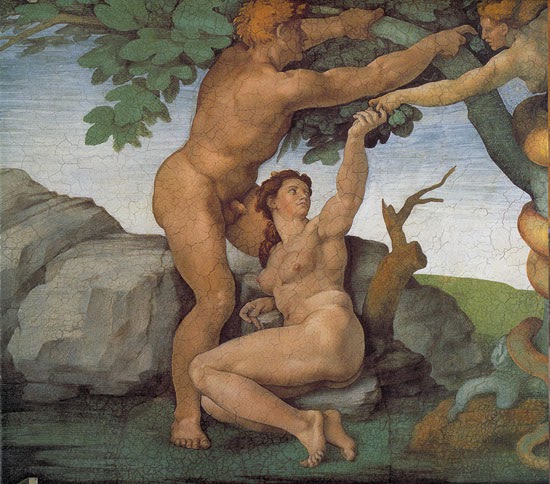
Michelangelo, The Falen of Adam and Eve, Sistine Chapel, Vatican City.

Corinth was the ancient equivalent of Sin City.  Most of the people of the pagan world engaged in blatant immorality, but some of the worst were those in Corinth. They even had their own saying to justify their behavior.  No, it was not, “What happens in Corinth stays in Corinth.”  It was, “Food is for the stomach and the stomach for food.”  It was like saying, “You have no choice: you gotta eat, and you have no choice: you’ve got to behave immorally.” Paul tells them and us that we are so much better than that. Our bodies belong to the Lord.  We are members of the Body of Christ. We are far more than animals with nothing but animal instincts.  We share in the Body of Christ. He goes on to use a very important phrase: our bodies are Temples of the Holy Spirit.  If we are immoral, we are sinning against our own bodies, sinning against our union with Christ. That is a beautiful concept: we are Temples of the Holy Spirit. That is why we avoid immorality, particularly sexual immorality. It is not a matter of some sort of Catholic no no, rules that a person might not understand but does his or her best to follow. This whole area of morality is far more important than that.  It goes to the heart of whom we are. We are Christ and He is ours.  So, we do our best to fight off our temptations because we are united to Christ.  He flows through us.  We are not animals.  We are so much better than that. Let us take a mental tour of Rome, specifically the most beautiful chapel in the world, the Sistine chapel. The chapel is beautiful not because on its architecture, it is rather plain that way.  It is beautiful because of the artwork inside it. Here in this relatively small building attached to St. Peters Basilica in the Vatican complex in Rome, we come upon frescos by Michelangelo, Botticelli, Ghirlandaio, Perugino, and others. The cardinals who meet in conclave to pick a new pope also do so under these magnificent frescos. The paintings are often shocking to people who depict Catholics as sexually inhibited prudes.  The frescos are, as you know, nudes. They emphasize the beauty of the human body with God himself as the source of this beauty.  In the frescos, the creation of man begins with God touching Adam’s hand and concludes with the creation of Eve.  Adam needed Eve and Eve needed Adam to overcome the loneliness of the human condition. They needed to give themselves totally to each other.  And here is the message behind these frescos: the only way that we can find ourselves is by giving ourselves away. We are made in the image of God. God is a Trinity of Love, Father, Son and Spirit, forming a community of self-giving love for all eternity. We are created in the image of this love, in the image of God. When Adam and Eve gave themselves to each other, they felt no shame.  They could be naked.  Shame came when they began to use each other. St. John Paul II spoke about this in the lectures that make up the Theology of the Body.  He said that human happiness depends on self-giving, not self-assertion.  That is the difference between love and lust.  Love makes a gift of oneself to another for his or her good.  Lust is taking from another for personal pleasure.  For us Catholics, sexual morality is more than self-control.  It is self-mastery.  For us sexual morality is the mastery of the desire that allows us to give ourselves to another in a way that affirms the other. Married love is the human reality that best images the commitment, the intensity and the passion of Christ’s love for the Church, for whom He laid down His Life. Using others to fulfill selfish wants is no different than the sexuality of animals. We have been created for love, love freely given and freely received, love which is based on a commitment for life.  Chastity is a virtue that frees us to love another person as a person, not an object. We are called to holiness, to be separated from the world.  Sexual morality itself is one of the many ways that we express this holiness.  It takes a lot of determination and courage to be a Catholic. It takes determination and courage to love • AE


Fr. Agustin’s Schedule for Second Sunday in Ordinary Time.

Saturday, January 16, 2021.

4.30 p.m. Sacrament of Confession

5.30 p.m. English Mass @ St. Peter Prince of the Apostles Catholic Church

Sunday, January 17, 2021.  

9.00 a.m. English Mass @ St. Peter Prince of the Apostles Catholic Church

11.00 a.m. English Mas @ St. Peter Prince of the Apostles Catholic Church

1.00 p.m. Funeral Mass for Eduardo Altamirano @ St. Peter Prince

of the Apostles Catholic Church.

5.30 p.m. English Mas @ St. Peter Prince of the Apostles Catholic Church


II DOMINGO DEL TIEMPO ORDINARIO

M. Chagall, El jóven Samuel con Elías el sacerdote (1958), grabado a color.

Samuel, en el silencio de la noche y en la quietud nocturna del santuario, oye que pronuncian su nombre y, como era de esperar, cree que es Elí el que llama; pero se equivoca. No es Elí, es el Señor. Esfuerzo le cuesta a a Samuel reconocerlo, pero cuando lo hace la respuesta fue perfecta: “Habla, Señor, que tu siervo escucha”. Y el Señor le habló. Surgió así el profeta Samuel. Aunque no lo creamos eso puede sucedernos a cada uno de nosotros. Vivimos tan inmersos en un mundo masificado, igualitario y unidimensional, que hemos olvidado algo impresionante: nuestra llamada personal por parte de Dios. Hemos olvidado el sentido de nuestra identidad, hemos olvidado eso tan maravilloso que es estar convencido de que hemos sido llamados personalmente por Dios, elegidos por Él para caminar un camino muy específico, un camino que no será igual al de ningún. El problema está en que seamos capaces de discernir la llamada, y es que estamos tan llenos de cosas, tan entretenidos, tan preocupados por tantos problemas, tan inquietos por tantos desasosiegos, que difícilmente encontramos un rato de silencio y tranquilidad para que la voz del Señor nos llegue a lo más profundo del corazón y nos despierte del sueño que nos invade. Pero la llamada existe. Esto es lo importante y puede quedar sin respuesta a causa de nuestra pertinaz sordera. Pero si respondemos, si somos capaces de decir como Samuel, con toda la sinceridad del corazón, «habla, Señor, que tu siervo escucha», se producirá el milagro de convertirnos en hombres y mujeres de Dios, en hombres capaces de hacer que el Reino de Dios que tanto anunciamos sea una realidad. Si respondemos, puede realizarse el milagro de convertirnos en hombres pacíficos, que reparten bondad, que se empeñan conscientemente en quitar las tinieblas que rodean el mundo para invadirlo de luz, una luz que hoy aparece nítidamente en el Jordán y que, si respondemos a la llamada de Dios, nos puede invadir para siempre • AE


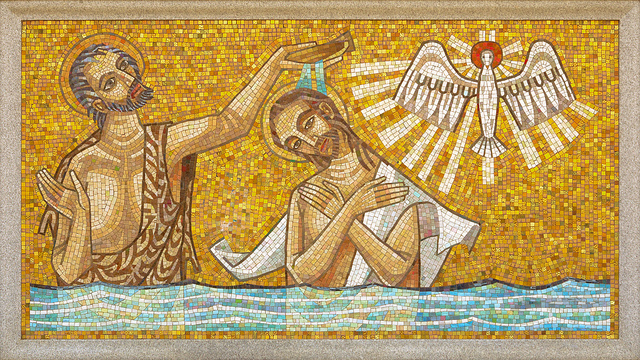
The Baptism of the Lord

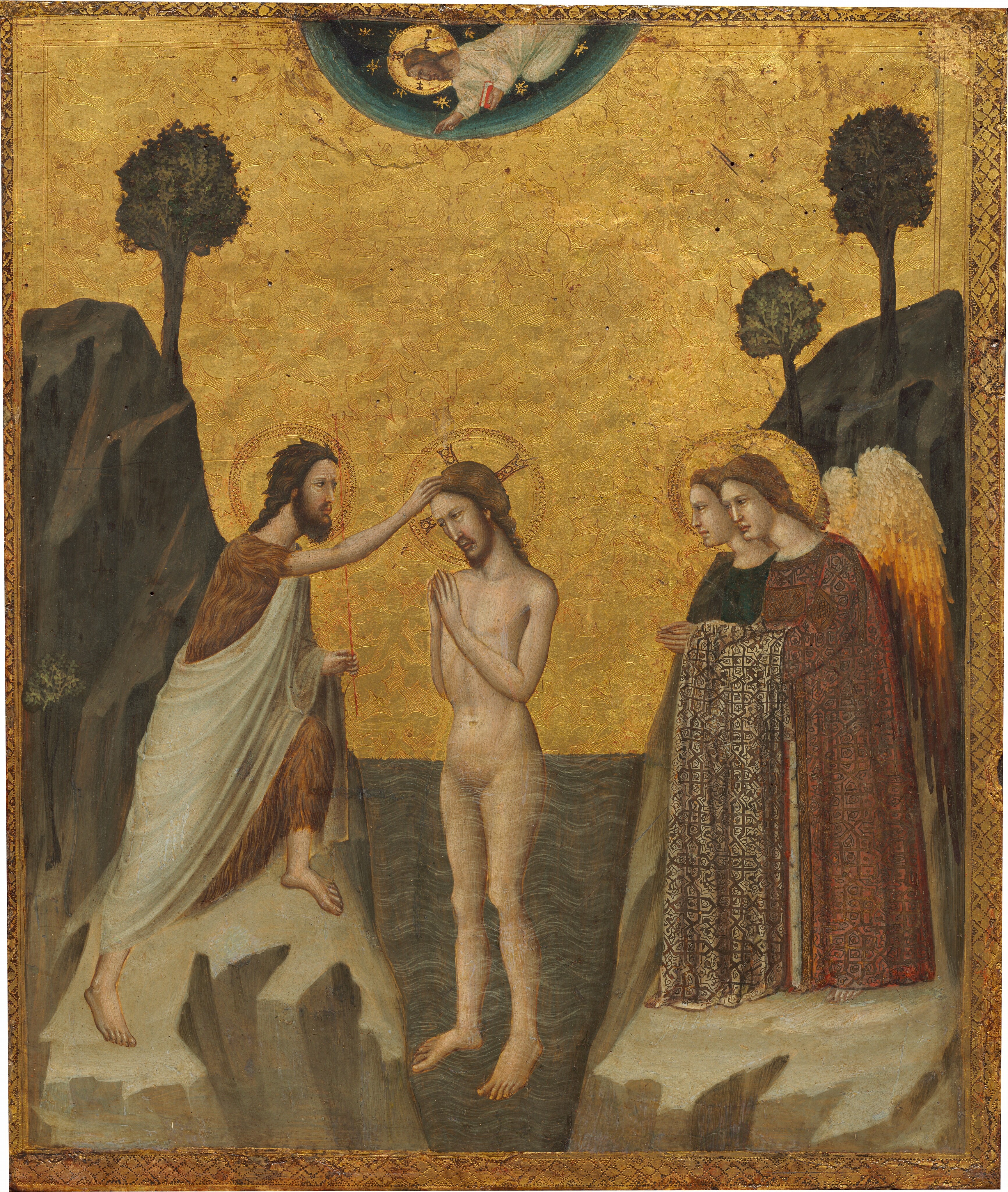
G. Baronzio, The Baptism of Christ (c. 1335), tempera on panel, The National Gallery of Art (Washington)

The Christmas season ends today with the Feast of the Baptism of the Lord.  On Christmas, we celebrate God becoming one of us, taking upon himself a human nature.  On the Feast of the Baptism, we celebrate the public proclamation that Jesus is more than just one of us.  He has more than a human nature.  He has a Divine Nature.  He is the Son of God, in whom the father in well pleased. Today’s Gospel, from the Gospel of Mark, advances the story 30 years.  We come upon John, teaching and baptizing at the Jordan River.  He is demanding an end to evil in the world and calling the people to accept his baptism as a sign that they will join him in the fight for the Kingdom of God.  He also speaks about the one to come.  And, suddenly, Jesus chooses to be baptized by John to show that he is one with all those who are fighting against evil and fighting for the Kingdom of God.  John says that he himself does not deserve to unfasten Jesus’ sandals, but Jesus demands he be baptized.  The people of the world who long for the Kingdom must see that their King is one of them.  So, what does this mean to us? It means that our union with Jesus is a union with God.  It means that Jesus is not just another man, not even another extraordinary man. He is God.  He has a human nature given to him through Mary, and a divine nature eternally at one with the God.  The One who is our brother is also the Second Person of the Holy Trinity.  We don’t just give him the title God.  He is God. When we call upon Jesus to help us, we are praying to God.  When we receive communion, we receive God within us.  When we seek forgiveness, we are forgiven not by the priest but by God. Do you remember the disciples on Lake Gennesaret, being tossed about in the storm?  Like the disciples, in the middle of these storms, we can call on Jesus to bring calm, serenity, and peace of mind. So, when we think our situation is hopeless — we need to call on Jesus. When we cannot see our way through — we need to call on Jesus. When we feel totally overwhelmed — we need to call on Jesus. When we feel that we are the worst person on the earth — we need to call on Jesus. When we feel that no one loves us and nobody care for us — we need to call on Jesus. Jesus is not just another human being.  He is God.  Yet he is one of us.  He knows all the emotions that we feel.  He has felt them in his human nature.  Through His divine nature, he can and does heal us.  We go down into the water with John the Baptist, determined to fight for the Kingdom of God, and we leave the water with Jesus Christ, our Divine Champion. The Feast of the Baptism of the Lord is an Epiphany.  God is manifested to us in Jesus Christ.  We need to pray to Him.  We need to trust in Him • AE


Fr. Agustin’s Schedule for the Feast of Baptism of the Lord (First Sunday in Ordinary Time)

Saturday, January 9, 2021.

4.00 p.m. Sacrament of Confession

5.30 p.m. English Mass @ St. Peter Prince of the Apostles Catholic Church.

Sunday January 10, 2021.

9.00 a.m. English Mass @ St. Peter Prince of the Apostles Catholic Church.

11.00 a.m. English Mass @ St. Peter Prince of the Apostles Catholic Church.

5.30 p.m. English Mass @ St. Peter Prince of the Apostles Catholic Church.


El Bautismo del Señor

El Señor baja al rio Jordán y se hace bautizar por Juan para que quede bien claro quién es Él y a qué viene. El bautismo de Jesús, que diríamos en el lenguaje taurino, es como un espaldarazo, es algo así como su presentación solemne como Mesías, como Ungido. Ante Juan, que bautiza en el Jordán, va desfilando todo tipo de personas: soldados que han aceptado la consigna de no abusar de su poder, publicanos que están dispuestos a no robar; gente sencilla que ha llegado a descubrir una manera diferente de vivir: compartiendo el pan y la mesa. Pero hay también algunos -los fariseos- que se van saliendo de la fila: la dura palabra de Juan, que invita a dar frutos de conversión, rebota en sus corazones obstinados. Llega Jesús, y entra en la fila. Como queriendo subrayar la importancia de esa ceremonia tan sencilla que está haciendo Juan con la gente: moverlos, con el agua, a que se arrepientan de sus pecados. Jesús, que no tiene pecado, entra en la fila de los que buscan el perdón de los suyos. Entra en la fila, y recibe ese bautismo. Y lo hace como uno más. Y ahí precisamente le espera el Padre, para presentarlo con toda solemnidad ante la historia. «Tú eres mi Hijo amado, mi preferido». Toda esta manifestación de Jesús -una auténtica epifanía- ya había sido anunciada por el profeta Isaías: «No gritará, no clamará, no voceará por las calles. La caña cascada no la quebrará…» Estas palabras, unidas al gesto sencillo de Jesús esperando su turno para ser bautizado nos hablan de una salvación que nos va a llegar por una puerta inesperada y que va a realizarse de una manera un tanto original. ¿Cómo? Cristo viene a salvar, pero no viene a imponer esa salvación. No quiere reinar sobre un pueblo que no le haya aceptado primero, libremente, en su corazón. No quiere escoger el camino fácil de obligar; prefiere el de ofrecer. Sabe que es un camino más lento, menos triunfalista. Pero sabe también que, a la larga, es el único camino auténtico. Por eso Cristo se abaja, conviviendo con sus hermanos. Entra en la fila de los necesitados, del pueblo llano, de los que tienen que esperar su turno en todas las ventanillas del mundo, de los que nada pueden exigir ¡Entra en la fila de los pobres! Jesús viene a salvar, sí, pero no con una salvación postiza; sino desde dentro, tomando en serio al hombre, con toda su oculta grandeza[1]. Asumiendo -para elevarnos- ese rescoldo que queda todavía, medio escondido, en nuestros corazones. Soplando sobre esas brasas. Pacientemente, amorosamente. Así es el hijo de Dios que quiso habitar entre nosotros[2] • AE

[1] J. Guillén García, Al Hilo de la Palabra. Comentario a las lecturas de domingos y fiestas, ciclo B, Granada, 1993, p. 35 ss. [2] Cfr. Jn 1, 14. 


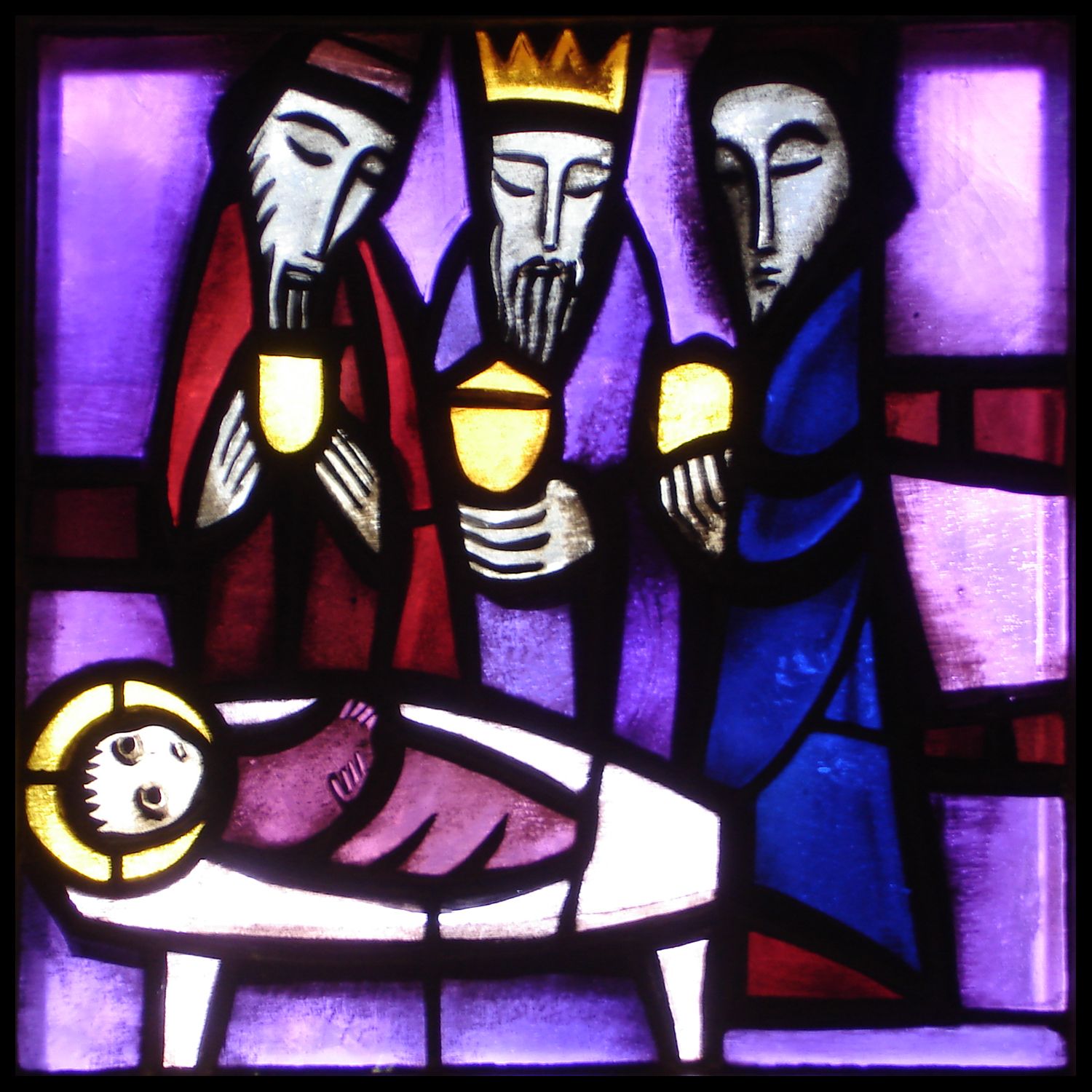
The Epiphany of the Lord

The Adoration of the Magi, stainless steel window, Community of Taizé (France)

The solemnity of the Epiphany celebrates Jesus showing himself (that is what Epiphany means) to those whose faith lead them to him, to those who wish to see him. The wise men who did not know God were searching for him. They found him. The Jewish scholars who had the help of scripture were not searching for him, and they missed his presence on earth. So, this feast leads us to ask ourselves about our own attitudes in life.  Are we really searching for God?  Do we really want to find him?  That is a very important question, because finding God necessitates changes in our lives. Let us remember the Confessions of St. Augustine.  Augustine wrote that before his conversion he practiced every kind of immorality. He did not want to convert to Christianity because he was afraid, he might take it too seriously. He figured he would probably end up forcing himself to change his ways, and he did not want to do that. Every experience of God demands a change in the status quo of our lives. If on Christmas we feel drawn closer to the Lord, then we have to refine our lives so we can enjoy his presence. If we are not willing to come closer to Christ, then Christmas is just a week full of empty sentiment. Jesus is calling all of us to come before his presence! This presence is not just in Bethlehem, but in the many places of our everyday lives. His is present in the members of our family who are hurting depressed or going through difficult times in their lives. He is present in all who are struggling to get by in difficult times. He is present in each of us as we stop to listen to our consciences rather than just go with our emotions. “The wise still seek him,” the Christmas cards say.  if we really want the Lord in our lives, we will continue the search, the journey towards a new experience of his presence. May our Lady the Virgin Mary be our inspiration and our intercessor before the Lord! • AE


Fr. Agustin’s Schedule for the Solemnity

of Epiphany of the Lord

Saturday, January 2, 2021.

4.00 p.m. Sacrament of Confession

5.30 p.m. English Mass @ St. Peter Prince of the Apostles.

Sunday January 3, 2021.

8.30 a.m. English Mass @ Our Lady of Grace (Outdoors mass)

10.30 a.m. English Mass @ Our Lady of Grace (Outdoors mass)

12.00 p.m. English Mass @ Our Lady of Grace (Main church)

5.30 p.m. English Mass @ St. Peter Prince of the Apostles.


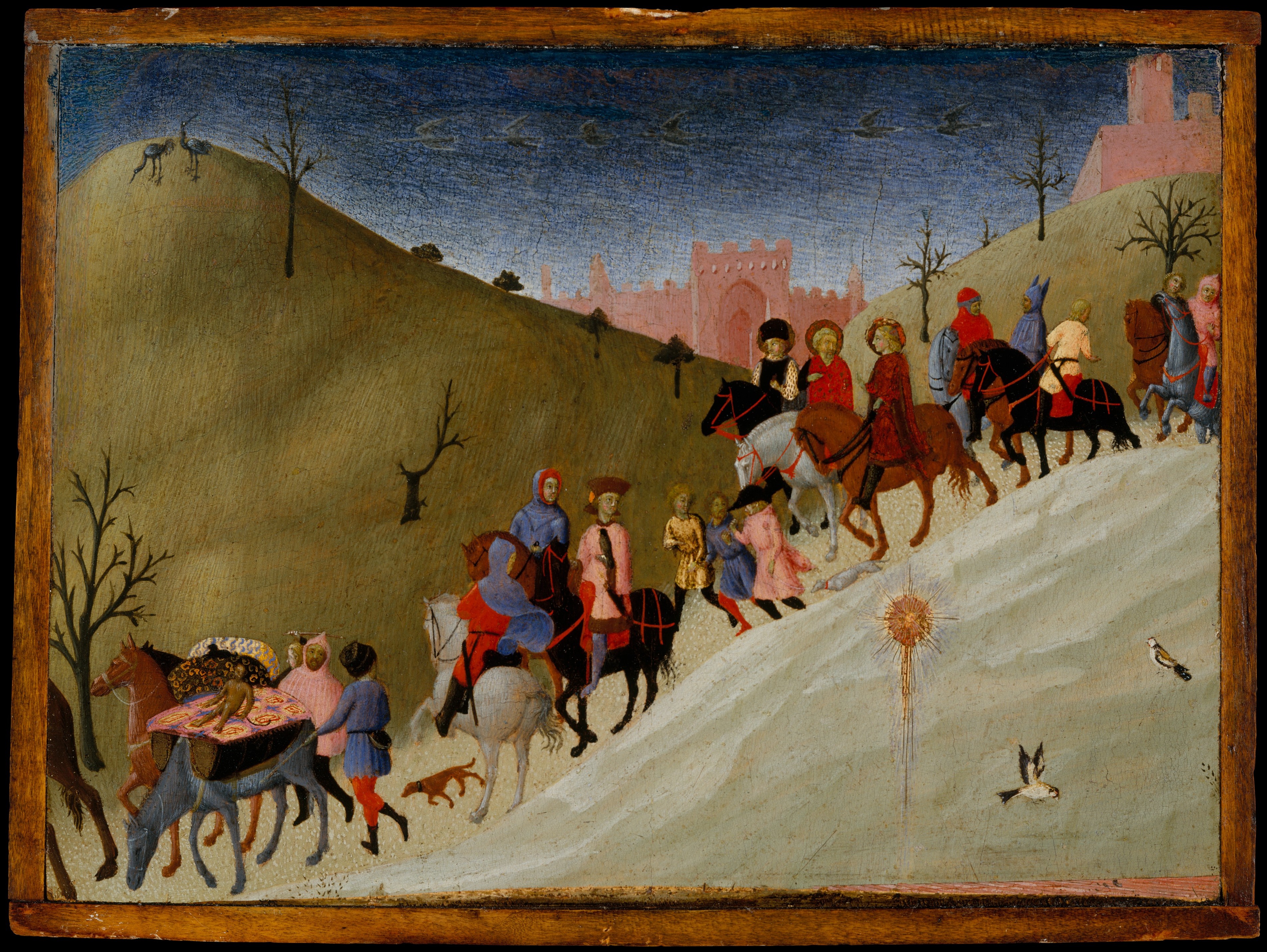
Solemnidad de la Epifanía del Señor

Stefano di Giovanni, El viaje de los Magos (1433), tempera y oro sobre madera, Metropolitan Museum of Art (New York)

Decía Paul Tillich que nuestra gran tragedia es haber perdido la dimensión de profundidad: ya no somos capaces de preguntar de dónde venimos ni a dónde vamos ni qué debemos hacer en el tiempo que va del día en que nacemos al día en que morimos[1]. Los jóvenes se plantean cada vez menos estas cuestiones con la seriedad y hondura con que lo han hecho las generaciones pasadas, y muchos prefieren seguir caminando en tinieblas. Hoy más que nunca hemos de volver a recordar que ser creyente es, antes que nada, preguntarnos apasionadamente por el sentido de la vida y estar abiertos a una respuesta, aun cuando ésta tarde en llegar y caminemos en medio de la oscuridad. El relato de los magos que la liturgia nos presenta en esta solemnidad de la Epifanía es el de unos hombres que, aun viviendo en las tinieblas del paganismo, fueron capaces de responder fielmente a la luz que los llamaba a la fe. Nuestra vida transcurre con frecuencia en la corteza de la existencia: trabajos, reuniones, encuentros, ocupaciones diversas nos llevan y traen, y la vida se nos va pasando, llenando cada instante con algo que hemos de hacer, decir, ver o planear. Corremos el riesgo de perder nuestra propia identidad, convertirnos en una cosa más entre otras y no saber ya en qué dirección caminar. ¿Hay una luz capaz de orientar nuestra existencia? ¿Hay una respuesta a nuestros anhelos y aspiraciones más profundas? Ciertamente esa respuesta existe. Esa luz brilla ya en ese Niño nacido en Belén: Jesucristo, redentor de la humanidad. Lo importante es descubrir que vivimos en tinieblas. Que hemos perdido el sentido fundamental de la vida. Quien descubre esto se encuentra ya muy cerca del verdadero camino. El Señor Jesús nos regale esta mañana de enero la luz y la fortaleza que necesitamos para vivir sin perder la capacidad de estar abiertos a toda luz que pueda iluminar nuestra existencia, a toda llamada que pueda dar profundidad a nuestra vida, y que María Santísima interceda por nosotros • AE


[1] Paul Johannes Tillich (1886- 1965) fue un filósofo existencialista cristiano y teólogo protestante luterano germano-estadounidense ampliamente considerado como uno de los teólogos más influyentes del siglo XX. Entre el público general es mejor conocido por sus obras The Courage to Be (1952, El coraje de ser) y Dynamics of Faith (1957, Dinámica de la fe) que introdujeron temas de teología y cultura moderna entre los lectores.


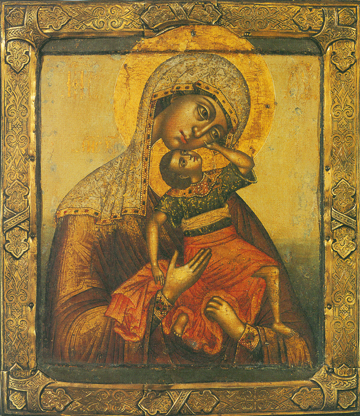
Solemnity of Mary, Mother of God

Icon of the Theotokos “Frohlocken” of Child (Russian, 17th c.)

Mary, is not just the mother of God, she is also our mother.  Jesus entrusted her to us and us to her on Calvary when he told St. John to behold his mother and Mary to behold her son.  St. John represented the faithful disciple of the Lord.  He represented you and me. But what does it mean when we say that Mary is our mother?  A mother nurtures life. A woman’s body is built to nourish a baby.  Her nurturing does not end when the baby is weaned.  As the child grows, she finds new ways to care for her child.  Mary nurtures us.  She does this by leading us to her Son, the Bread we need to sustain our spiritual lives. “Bake us some bread, O Mary, O Mary, bake us some bread, we need to be fed,” the children sing in the Advent hymn, The Baker Woman. A mother continually teaches her child.  Most of us learned to walk while our mothers held our arms.  Our mothers did most of the work teaching us to talk.  More important, most of our mothers taught us our first prayers. They taught us about God and how much we need Him in our lives.  Mary teaches us.  Her life is one of sacrificial love for God in union with her son.  Jesus always comes first, even when it is painful to observe how the world responded to his love with hate.  Simeon said to her in the Temple that a sword would pierce her heart, and it did, particularly as she stood under the cross.  But her union with her Son would not allow her to turn away from His sacrifice.  She joined him in sacrifice.  She teaches us not to turn away from the sacrifice of the Lord, but to join Him in sacrifice. Mary teaches us that Christianity demands that we empty ourselves of all so we can be thoroughly united to her son. A mother nurtures, a mother teaches, but mostly, a mother loves. We began life just under our mothers’ hearts. We were cared for not out of obligation, but out of love. On this Solemnity of Mary, Mother of God, we are reminded that Mary is our mother too.  We call out to her to protect us from the enemy who would destroy the life of her son within us and among us.  We ask her as her children, to nurture us, to teach us and always to love us. So, does our devotion to Mary distract us from our devotion to Jesus? At all! It strengthens our devotion to God.  He gave us Mary to be our mother so that we might always be guided by her to her Son • AE


Fr. Agustin’s Schedule for the Solemnity of Mary, Mother of God

Thursday, December 31, 2020

5.30 p.m. Vigil Mass @ St. Peter Prince of the Apostles Catholic Church.

Friday January 1, 2021

10.00 a.m. English Mass @ St. Peter Prince of the Apostles Catholic Church.


Solemnidad de María Santísima, Madre de Dios

Maestro hispano-flamenco, La Virgen con el Niño (ca 1500), óleo sobre tela, Museo de El Greco (Toledo)

El primer día del año civil la Iglesia lo dedica a contemplar a María a en su misterio de Madre de Dios, y lo hace recordándonos la asombrosa cercanía de lo humano y lo divino tal como se dio en esta mujer sencilla[1]. Esta mañana la Liturgia celebra que Dios se entrañó en María y María quedó totalmente entrañada de Dios, y que a la vez que la madre alimentaba al hijo que llevaba en las entrañas, estaba siendo ella alimentada por el Espíritu del propio Hijo y que María preparaba al hijo un vestido de carne, pero el hijo le bordaba a ella un vestido de divinidad. Lo que hoy podríamos recordar es que en el misterio de la maternidad divina se produce también una simbiosis entre Dios y ella; simbiosis progresiva que no dura sólo nueve meses sino toda su vida: María no fue madre de Dios por los meses de gestación y lactancia, sino que se fue haciendo madre de Dios según se iba ella alimentando de la palabra y del Espíritu de su hijo. Como todos los misterios de María, también éste es motivo de esperanza para nosotros: nosotros podemos llegar a esa misteriosa cercanía, a esa maravillosa unión con Dios «Mi madre y mis hermanos son los que oyen la palabra de Dios y la hacen», nos dijo Jesús[2]. Vivimos junto a Dios si escuchamos y acogemos su palabra si la entrañamos en nosotros y la consustanciamos, si la hacemos crecer y la vivimos, si ofrecemos los frutos que vaya produciendo; si acogemos su Espíritu y nos dejamos impregnar por él, si llegamos a sintonizar con sus deseos y mociones, si nos comunicamos íntimamente con él, y sobre todo si ponemos nuestra voluntad su disposición, como María Santísima, la esclava del Señor. Que la Virgen María, la Theotokos[3], nos ayude a vivir lo más cerca de Dios que nos sea posible • AE


[1] Cfr. Gal 4, 4. [2] Cfr. Lc 8, 21.

[3] Theotokos (en griego antiguo, Θεοτόκος, en latín, Deīpara o Deī genetrix) es una palabra griega que significa Madre de Dios (literalmente, ‘la que dio a luz a Dios’).1 Su equivalente en español, vía latín, es Deípara. Theotokos es el título que la Iglesia cristiana temprana le dio a María en referencia a su maternidad divina, título que se definió dogmáticamente en el Concilio de Éfeso de 431.