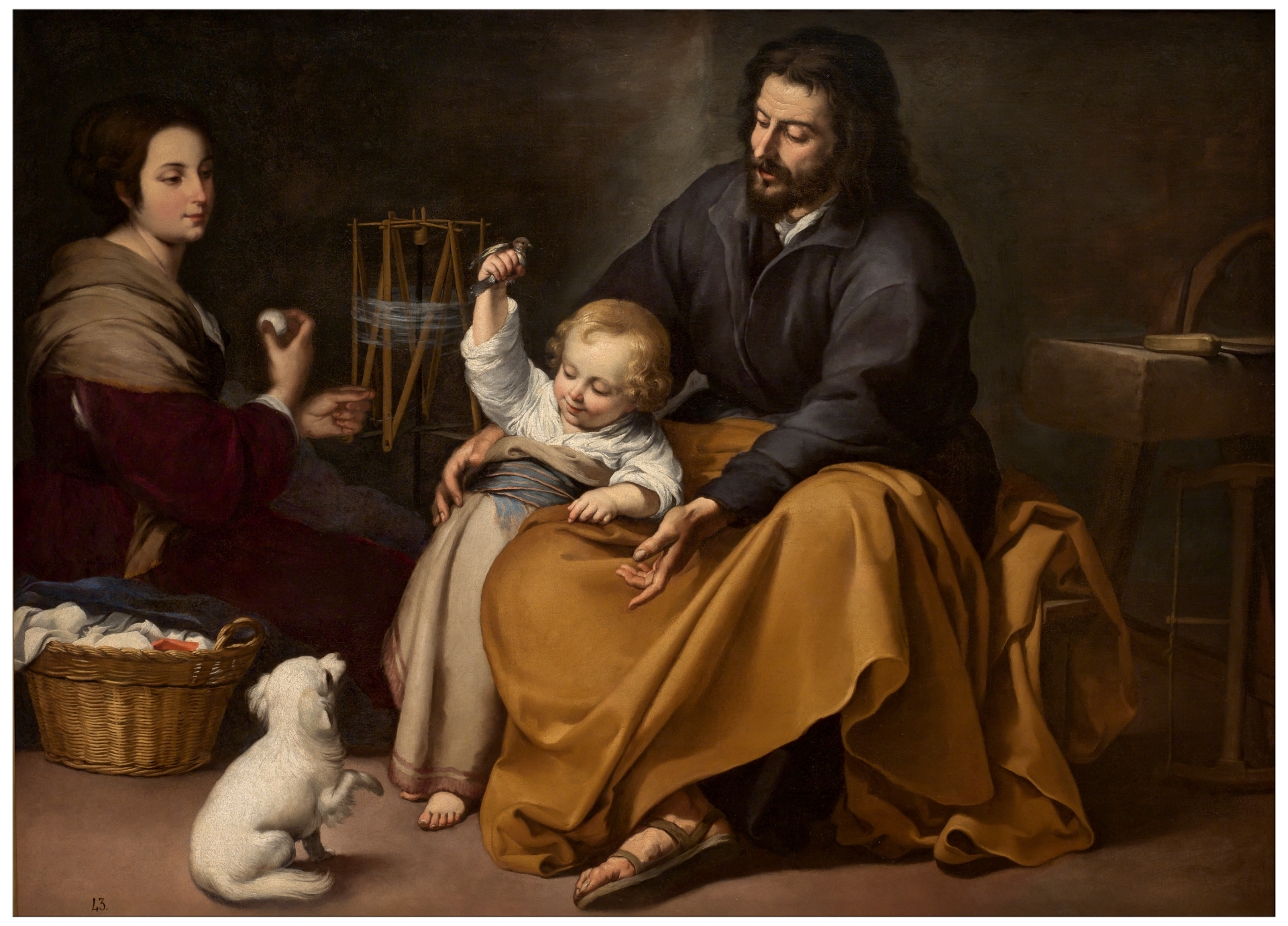
The Holy Family of Jesus, Mary and Joseph


B. E. Murillo, The Holy Family with a Little Bird (1650), oil on canvas, Museo del Prado (Madrid)

Today, we celebrate the Feast of the Holy Family. In our natural competitive attitude, we are tempted to look at the Holy Family as an ideal we cannot realize in our families.  But, Jesus, Mary and Joseph had their share of struggles. The trust which is fundamental to a marriage was challenged by the pregnancy. Joseph was forced to bring Mary to Bethlehem when she was nine months pregnant. He must have felt terrible when they had no choice but to have the child in a stable. Then they had to get up in the middle of the night and escape Herod by moving to a foreign land, Egypt, away from family and traditions. Still, the Holy Family made it through the difficulties of their family life for one reason only: they had great faith.  Joseph had faith in the angel of his dreams and treated the pregnant Mary in an honorable way.  He had faith that God would help him protect the child, and he moved the family to Egypt.  Mary had faith both in the angel and in God’s working through Joseph. Jesus, having emptied himself of his divinity, had faith in his parents to care for him. The Holy Family conquered their struggles through their faith-life.  This must be the primary concern of our families. Sometimes parents wish they had the financial resources of their neighbors to be able to provide more for their children. That is a great ideal, but do not forget, what children really need is a Christian home, not the things that the neighbor’s kids have. Some may say, “I can’t do this.  I can’t be the mother, the father my children need me to be.” If you ever had that thought, put it out of your mind.  You can be all that your children need as long as your love for your children remains the love of Christ, sacrificial love. Then, do your best, and trust God to do the rest • AE


Fr. Agustin’s Schedule for the Feast of the Holy Family (2020)

Saturday, December 26, 2020.

4.00 p.m. Sacrament of Confession

5.30 p.m. English Mass @ St. Peter Prince of the Apostles Catholic Church.

Sunday December 27, 2020.

9.00 a.m. English Mass @ St. Peter Prince of the Apostles Catholic Church.

11.00 a.m. English Mass @ St. Peter Prince of the Apostles Catholic Church.

5.30 p.m. English Mass @ St. Peter Prince of the Apostles Catholic Church.


Domingo dentro de la Octava de Navidad

La Sagrada Familia
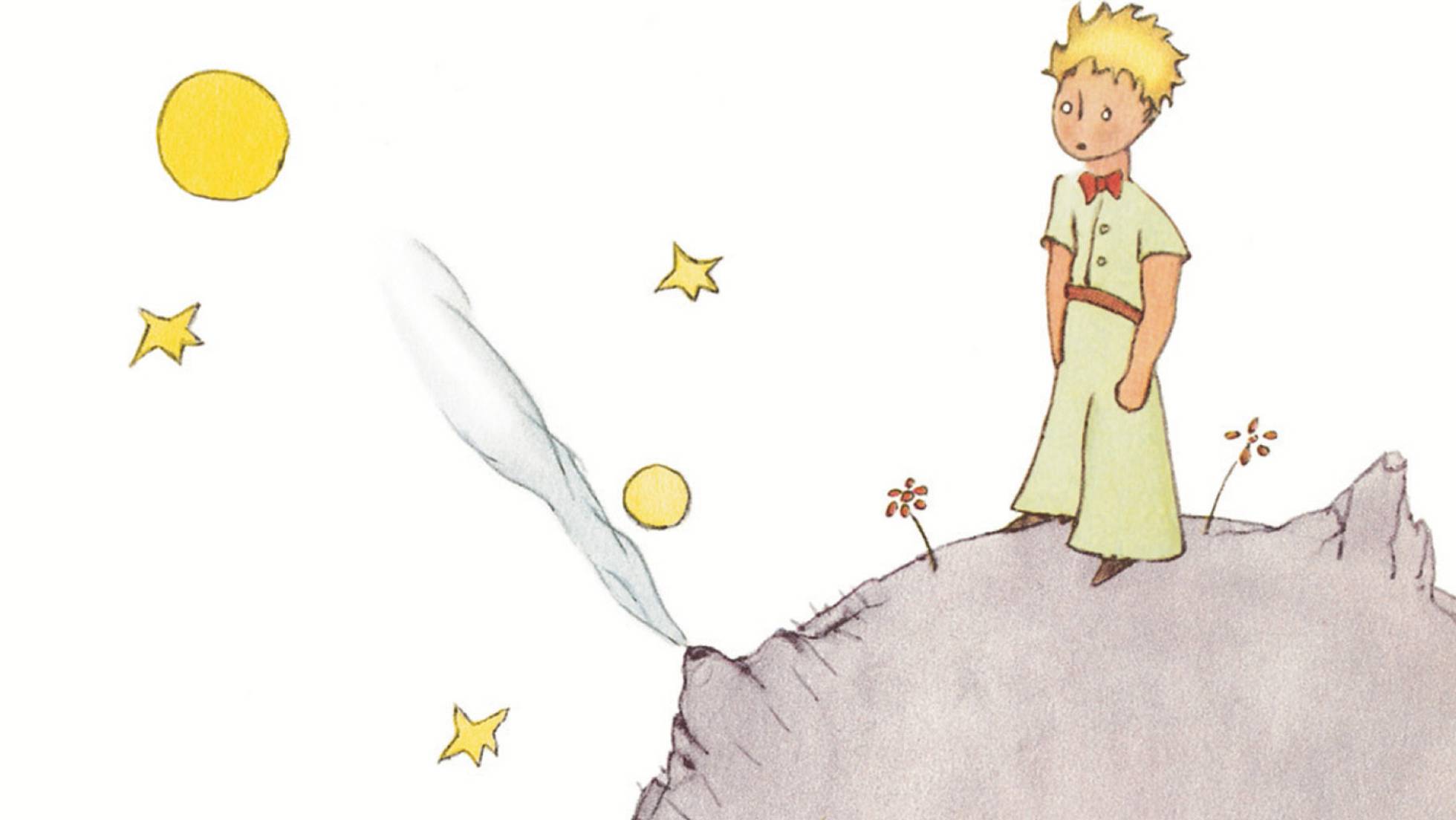
Los seres humanos terminamos por acostumbrarnos a casi todo. Con frecuencia la costumbre y la rutina van vaciando de sentido nuestra existencia. Decía Péguy que «hay algo peor que tener un alma perversa, y es tener un alma acostumbrada». Es cierto. Por eso que no nos extrañe que la celebración de la Navidad, envuelta en superficialidad y consumismo alocado, apenas diga nada nuevo ni gozoso a tantos hombres y mujeres que quizá tenemos el alma acostumbrada a escuchar que Dios se hizo como uno de nosotros. Ya no nos sorprende ni conmueve que incluso se nos ofrece como niño. Como decía Saint-Exupery: «Todas las personas mayores han sido niños antes. Pero pocas lo recuerdan»[1]. Se nos olvida lo que es ser niños. Y se nos olvida que la primera mirada de Dios al acercarse al mundo ha sido una mirada de niño. Pero ésa es justamente la noticia de la Navidad. Dios es y sigue siendo misterio. Pero ahora sabemos que no es un ser tenebroso, inquietante y temible, sino alguien que se nos ofrece cercano, indefenso, entrañable desde la ternura y la transparencia de un niño. Y éste es el mensaje de la Navidad. Hay que salir al encuentro de ese Dios, hay que cambiar el corazón, hacerse niños, nacer de nuevo, recuperar la transparencia del corazón, abrirse confiados a la gracia y el perdón. A pesar de nuestra aterradora superficialidad, nuestros escepticismos y desencantos, y, sobre todo, nuestro inconfesable egoísmo, siempre hay en nuestro corazón un rincón íntimo en el que todavía no hemos dejado de ser niños. En este día en que recordamos a la Sagrada Familia podríamos hacer un poco de silencio a nuestro alrededor, apagar el televisor o el celular, olvidarnos de nuestras prisas, nerviosismos, compras y compromisos y volver a lo esencial, a nuestros recuerdos de la infancia, y escuchar dentro de nosotros ese corazón de niño que no se ha cerrado todavía a la posibilidad de una vida más sincera, bondadosa y más confiada en Dios. Es posible que comencemos a ver nuestra vida de otra manera. «No se ve bien sino con el corazón. Lo esencial es invisible a los ojos»[2], dice el zorro. Es posible que escuchemos una llamada a renacer a una fe nueva. Una fe que no envejece, que no nos encierra en nosotros mismos, sino que nos abre e ilumina; una fe que no teme, sino que ama • AE

[1] Antoine de Saint-Exupéry, El Principito, prólogo. [2] Ídem, cap. XXI.


The Nativity of the Lord (Christmas)

AWAY IN MANGER

Away in a manger

No crib for His bed

The little Lord Jesus

Lay down His sweet head

The stars in the sky

Look down where He lay

The little Lord Jesus

Asleep on the hay

The cattle are lowing

The poor Baby wakes

But little Lord Jesus

No crying He makes

I love Thee, Lord Jesus

Look down from the sky

And stay by my side

‘Til morning is nigh

Be near me, Lord Jesus

I ask Thee to stay

Close by me forever

And love me, I pray

Bless all the dear children

In Thy tender care

And take us to Heaven

To live with Thee there

Jesus was born, and everything changed. Mankind was no longer be in the grips of evil. The devil would be defeated through the sacrificial love of the one born in Bethlehem. Pride would be defeated with humility, disobedience with obedience, and hatred with love. And just as the young mother and young father look at their infant and know that their lives have to change, and just as the shepherds looked at the infant in the manger knowing that somehow through this child the world was changing, so we look at the baby in the manger and agree: everything must change. We are Christians. We must walk in the Presence of the Lord. With the birth of Jesus, the spiritual has become physical and the physical has joined the spiritual. This is a very hard concept for us to grasp, in fact, it is a mystery, one of the great mysteries of our faith.  The Word became flesh and dwelt among us, as the gospel says[1]. We have been called to accept the Eternal Lord into our lives. If we have the courage and the humility to do this, then we ourselves will become children of God.  Everything must change in our lives. We need to bring the spiritual into the physical. We need to be counter cultural, people who value the spiritual over the material. We need to join the Lord in creating a new culture, one where the work of the Kingdom takes precedence over the work of the world.  We need to be kind.  We need to be loving.  We need to be Christian. We need to be Catholic. Mother Teresa summed this up in a beautiful prayer she would say every day: «Dear Jesus, help me to spread your fragrance everywhere I go. Flood my soul with your Spirit and love.  Penetrate and possess my whole being so utterly that all my life may only be a radiance of your life. Shine though me and be so in me that every soul I come in contact with may feel your presence in my soul.  Let them look up and see no longer me but only Jesus.  Stay with me and then I shall begin to shine as you shine, so to shine as to be a light to others. Amen». We need to join that first Nativity scene, with Mary and Joseph and the shepherds, and later on with the three kings. We need to join them and with wonder and awe proclaim with our lives: Everything has changed, and we are witnesses • AE


[1] John 1:14.


Fr. Agustin’s Schedule for Christmas celebrations

SOLEMNITY OF THE NATIVITY OF THE LORD

Vigil Mass. Thursday, December 24, 2020

-12:00 p.m. @ Our Lady of Grace (Outdoor Mass)

-4:00 p.m. @ St. Peter Prince of the Apostles 

-6:00 p.m. @ St. Peter Prince of the Apostles

Christmas Day Friday, December 25, 2020

-10:00 a.m. @ St. Peter Prince of the Apostles

SOLEMNITY OF MARY, MOTHER OF GOD

Vigil Mass. Thursday December 31, 2020.

-5:30 p.m. @ St. Peter Prince of the Apostles

Mass of the day. Friday, January 1, 2021

-10:00 a.m. @ St. Peter Prince of the Apostles


Solemnidad de la Natividad del Señor

DUERME, NO LLORES

Os anunciamos con gozo inmenso

que hoy ha nacido El Salvador

en un pesebre, sobre las pajas,

y entre pañales duerme el Señor.

Duerme, no llores, Jesús del alma;

duerme, no llores, mi dulce amor,

Duerme, no llores que esas tus lágrimas

parten el alma de compasión.

Si por mí lloras, Jesús amado,

por mis pecados e ingratitud,

que cese el llanto, que en adelante

ya nunca ingrato te haré llorar.

Duerme, no llores, Jesús del alma…

Ya mis cantares no harán más ruido,

ya mis cantares van a callar;

mas mis amores en el silencio

siguen velando. ¡No callarán!

Duerme, no llores, Jesús del alma…

Y acampó entre nosotros[1]. Así describe san Juan en su evangelio la encarnación del Hijo de Dios. Él -san Juan- no dice nada acerca de los pastores, el pesebre, los ángeles y el Niño con sus padres. San Juan se adentra en el misterio desde otro ángulo. En Dios estaba la Palabra, la Fuerza de comunicación y revelación de Dios. En esa Palabra había vida y había luz. Esa Palabra puso en marcha la creación entera. Nosotros mismos somos fruto de esa Palabra misteriosa. Esa Palabra ahora se ha hecho carne y ha habitado entre nosotros, y los hombres nos sigue pareciendo todo esto demasiado hermoso para ser verdadero. Un Dios hecho carne, identificado con nuestra debilidad, respirando nuestro aire y sufriendo nuestros problemas. Y lo seguimos buscando allá arriba donde brillan las estrellas, sin darnos cuenta que está aquí abajo en la tierra, junto a nosotros. Y seguimos persiguiéndole fuera, sin acogerlo con fe en nuestro interior. Esta es sin duda alguna una de nuestras más grandes contradicciones: confesamos con entusiasmo la encarnación de Dios y luego olvidamos que Él, Cristo, vive en medio de nosotros. Dios ha bajado a lo profundo de nuestra existencia y la vida nos sigue pareciendo vacía.  Dios ha venido a habitar en el corazón de los hombres y sentimos un vacío interior insoportable. Dios ha venido a reinar entre nosotros y parece estar totalmente ausente en nuestras relaciones. Dios ha asumido nuestra carne y seguimos sin saber vivir debidamente lo carnal. Dios se ha encarnado en un cuerpo humano ¡y olvidamos que nuestro cuerpo es templo del espíritu[2]! También entre nosotros se cumplen las palabras de San Juan: «Vino a los suyos y los suyos no le recibieron»[3]. Nuestra oración de esta noche, la Nochebuena, podría ser muy sencilla. Podríamos pedir al Espíritu de Dios el regalo su luz en nuestras mentes y voluntades para que nos sintamos verdaderamente inundados por esa esa luz y esa gracia que suponen el hecho de que Dios haya querido venir a habitar entre nosotros y para siempre[4] • AE


[1] Cfr. Jn 1, 14. [2] Cfr. 1 Cor 6, 19. [3] Cfr. Jn 1, 11, [4] J. A. Pagola, Buenas Noticias, Navarra 1985, p. 29 ss.

Fourth Sunday of Advent

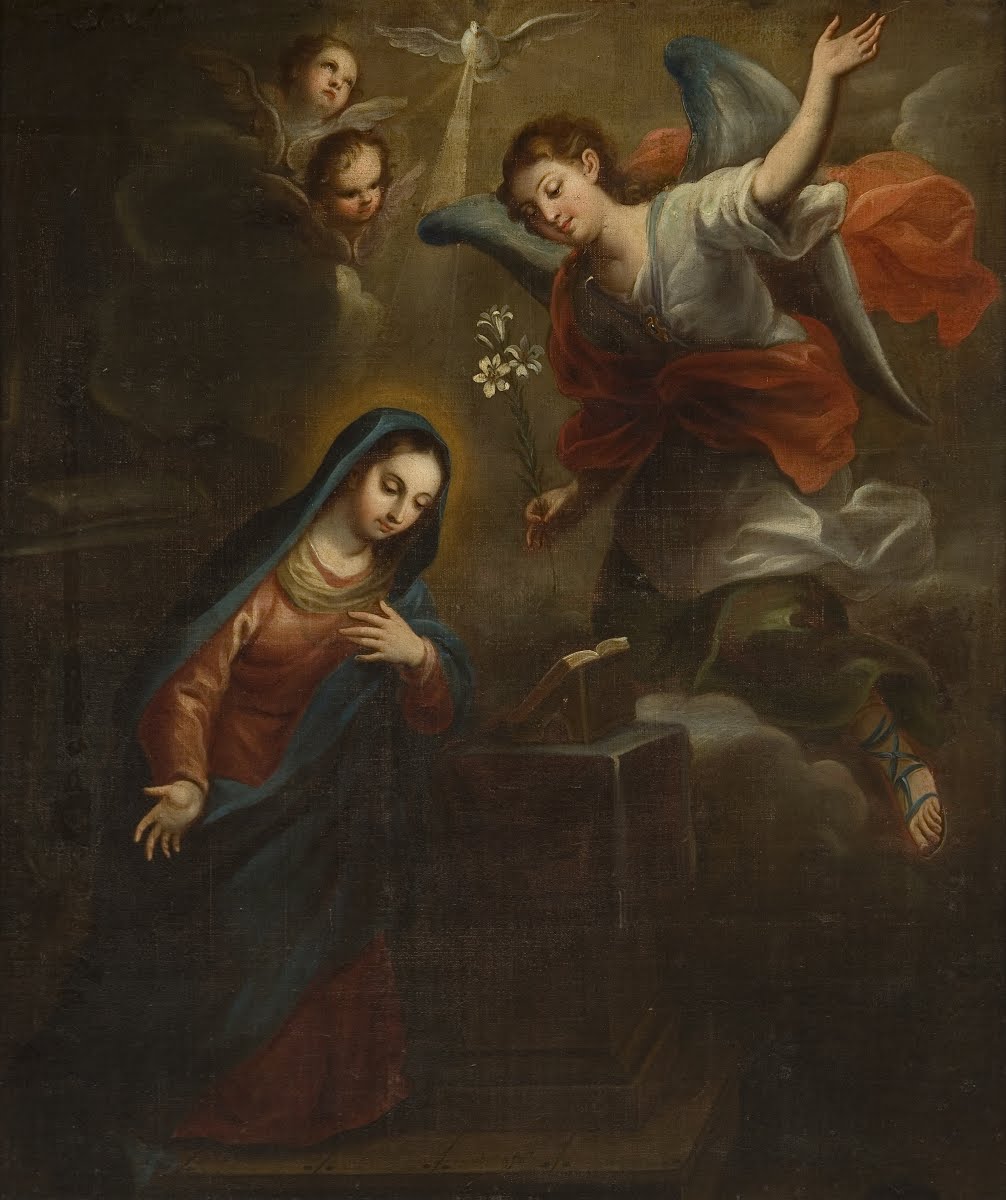
Miguel Cabrera, The Annunciation (1750), oil on canvas, Museo Arocena (Torreón, Mexico)

Today is the 4th Sunday of Advent, and this time round, Christmas is very close. And as we come for Mass today, have we ever thought of asking God for a Christmas present? And if we are, then what are we asking for? Whether or not we are asking God for a Christmas present, He has something to give us, and we don’t have to wait till Christmas Day to know what it is. And if we are guessing what it is, well none other than His Mother, the blessed Virgin Mary.  Yes, God wants to present to us the gift of Mary on this last Sunday of Advent so that we can take a moment to think about what God wants to give us at Christmas. But to begin with, the whole Christmas event began at the Annunciation, which was the account that we heard in the gospel. Mary has something to teach us. As much as she had her apprehensions and questions, she chose to listen. She listened to what the angel Gabriel had to tell her. And she believed, and blessed is she because she believed. But of course, accepting that divine present was not without challenges and difficulties. Would Joseph believe her? And then the census was held and being heavy with child, she and Joseph had to make their way to Bethlehem, only to have doors shut to their faces, and giving birth in a manger, and then almost immediately having to flee from the evil Herod. But she listened, she accepted the gift, she believed in the gift, and now Mary wants us to have that gift too. But like her, we must listen, we must believe that it is a divine gift. But today we are presented with the gift of Mary, who listened to what the angel Gabriel had to say. Mary chose to listen to what God had to say, though she had her own ideas and plans. Mary listened and received the divine gift. May we also like Mary listen to what God is saying in the depths of our hearts so that Christmas will be indeed a celebration of the divine gift of Jesus in our hearts • AE

Fr. Agustin’s Schedule for the

Fourth Sunday of Advent

Saturday, December 19, 2020.

4.00 p.m. Sacrament of Confession

5.30 p.m. English Mass @ St. Peter Prince of the Apostles.

Sunday December 20, 2020.

8.30 a.m. English Mass @ Our Lady of Grace (Outdoors mass)

10.30 a.m. English Mass @ Our Lady of Grace (Outdoors mass)

12.00 p.m. English Mass @ Our Lady of Grace (Main church)

5.30 p.m. English Mass @ St. Peter Prince of the Apostles.

IV Domingo de Adviento.

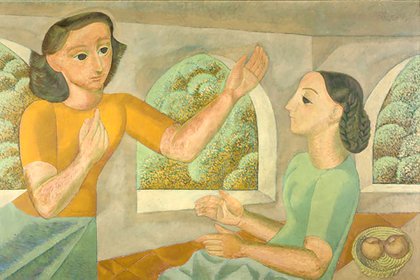
Norah Borges, La anunciacion (1945), óleo sobre tela, colección privada.

Hemos leído tantas veces este pasaje del evangelio y hemos visto tantas más el lienzo de Fray Angélico que quizá nos hemos acostumbrado a este maravilloso evento en la vida del Señor y de su Madre ¿El Ángel anuncia a una doncella que va a ser la Madre de Dios? ¡Okay! ¿María responde llena de fe? ¡Okay! Pero ¿no hay nada más? ¿Ahí termina nuestra reflexión? La encarnación del Hijo de Dios en el vientre de María es el acto de fe y confianza más grande que se haya podido dar en una criatura humana. Aquella muchacha, en medio de un mensaje tan confuso desde el punto de vista humano, respondió: «He aquí la esclava del Señor. Hágase» ¡El acto de confianza más grande que haya podido hacer una criatura humana! Vivimos en un mundo en el que reina la desconfianza. Desconfiamos de la naturaleza, que es imprevisible y arrolladora con sus tormentas y sequías, fieras y sus seísmos. Desconfiamos también del hombre que se vuelve ladrón y violento, que asesina y pone en marcha los terrorismos más increíbles, que se vale de la droga y los negocios sucios para desequilibrar las economías, aumentar las injusticias y llenar la vida de enfermedades, divisiones e inseguridades. Desconfiamos de todo: lo moderno y lo antiguo, lo natural y lo artificial, lo tecnificado y lo caduco. Y ahí está María, aquella joven muchacha que no entendió casi nada, pero que se fio de lo que se le decía y que hizo vida en su vida aquello que más tarde diría Pablo: «Yo sé muy bien de quién me he fiado»[1]. Esta es la lección del evangelio de hoy: necesitamos convencernos que en Dios vivimos, nos movemos y existimos[2], que no ocurre nada lejos de la mirada, amorosa, no escrutadora, del Padre celestial; que todo nuestro ajetreo ocurre siempre en la geografía providente de las manos de Dios. Y que, aunque caminemos por un valle oscuro, ningún mal hemos de temer[3]. Pero además debemos llevar la confianza a los demás. La Virgen, una vez que se abandonó en las manos de Dios, salió de sí misma y se fue a servir a Isabel, llevándole los frutos de su confianza. De ahí las hermosas palabras de la madre del Bautista: «Dichosa tú, porque has creído»[4]. Adviento es el momento para confiar, una vez más, que Dios viene, que Él es el Emmanuel: el Dios con nosotros; es estar convencidos que en Él tiene su origen y término nuestra esperanza. El ejemplo de María -pobre y pequeña- que nos presenta hoy el evangelio, nos está diciendo que nuestra vida puede ser fecundada si nos abrimos por completo a la acción de Dios como ella lo hizo. También en nosotros Dios quiere obrar sus maravillas[5] • AE


[1] Cfr. 2 Tim 1, 1. [2] Cfr. Act, 17, 28. [3] Cfr. Sal 23. [4] Cfr. Lc 1, 45. [5] Lc 1,49.

Fr. Agustin’s Schedule for Christmas celebrations

SOLEMNITY OF THE NATIVITY OF THE LORD

Vigil Mass. Thursday, December 24, 2020

-4:00 p.m. @ St. Peter Prince of the Apostles  

-6:00 p.m. @ St. Peter Prince of the Apostles

Christmas Day Friday, December 25, 2020

-10:00 a.m. @ St. Peter Prince of the Apostles

SOLEMNITY OF MARY, MOTHER OF GOD

Vigil Mass. Thursday December 31, 2020.

-5:30 p.m. @ St. Peter Prince of the Apostles

Mass of the day. Friday, January 1, 2021

-10:00 a.m. @ St. Peter Prince of the Apostles

Third Sunday of Advent.

Where is the joy of Jesus Christ?  Our Holy Father tried to change the tone of the preaching in the Church when he issued his great apostolic exhortation The Gospel of Joy[1]. The Pope’s exhortation took the world by storm. It committed the Church to reassess its methods and goals.  He called us to communicate the joy of the Gospel to the world.  He told us that the main concern of the Church must be to bring the joy of Jesus Christ to the entire world. For too long our Church has been associated with expounding the same moral topics over and over again. Many Bishops, Priests and Deacons have reduced the vast richness of our faith to our positions on topics such as abortion and gay marriage.  As a result, instead of being encouraged to bring the joy of the Gospel to the world, people are confronted, even harangued with these topics, sometimes as often as once a month. Sometimes every week.  How are people to experience and communicate the joy of the Gospel when all they hear from the pulpit are negatives? Pope Francis was not telling us to back down from Church teaching. He simply told us to stop pounding our positions into the people. This Sunday is Gaudete Sunday. Rejoice, this Sunday tells us. The Rose vestments remind us that this is a time of great expectations. We have every reason to be full of joy. Rejoice, Christmas is almost here.  Rejoice, not so much that we have found Christ, but rejoice that He has found us. There are times that each of us feel lost.  There are times that we feel alone.  But we are not lost.  He has found us.  We are not alone.  He is with us.  With Jesus in our lives, the crises we face become challenges, but not devastating events.  A loved one becomes sick, or even dies.  We become sick and receive the diagnosis that our condition is terminal.  A marriage falls apart.  A job is lost.  A friend is lost.  Whatever the crisis, we know that the final result will be union with God.  Jesus is with us always, particularly in the worst of our times.  Rejoice in the Lord.  Jesus is there.  He has found us. Now, the whole focus of our lives has changed. With Jesus in our lives, we are mature adults, living in His Love. Rejoice in the Lord. We were all lost, but He found us.  His Grace is Amazing. How can we be anything other than positive? Let us Rejoice! • AE


[1] http://www.vatican.va/content/francesco/en/apost_exhortations/documents/papa-francesco_esortazione-ap_20131124_evangelii-gaudium.html

Fr. Agustin’s Schedule for the

Third Sunday of Advent.

Saturday, December 12, 2020.

4.00 p.m. Sacrament of Confession

5.30 p.m. English Mass @ St. Peter Prince of the Apostles Catholic Church.

Sunday December 13, 2020.

9.00 a.m. English Mass @ St. Peter Prince of the Apostles Catholic Church.

11.00 a.m. English Mass @ St. Peter Prince of the Apostles Catholic Church.

5.30 p.m. English Mass @ St. Peter Prince of the Apostles Catholic Church.

III Domingo de Adviento


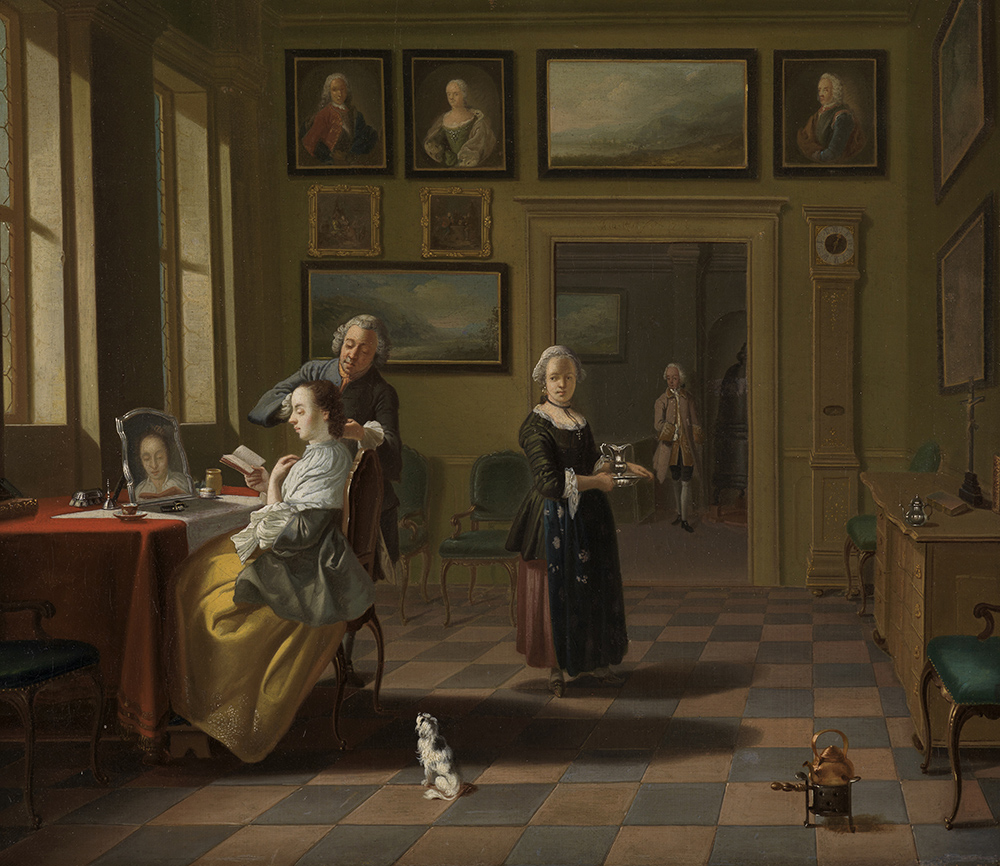
Justus Juncker, En el baño de la mañana (1752), óleo sobre tela, Galería de arte de Karlsruhe.

Decía Chesterton que la alegría es el gigantesco secreto del cristiano.  Verdad vieja. Tan vieja como las cartas de san Ignacio de Antioquía que aun cuando ya se sabía trigo de Cristo y próximo al martirio se dirigía a sus fieles deseándoles «muchísima alegría»[1]. En el mundo también hay alegría, sí, pero es una alegría que a veces resulta falsa, y que dura poco. La fuente de nuestra alegría debe brotar más hondo. El motivo de nuestra alegría es porque Dios está cerca, y porque viene a nosotros como Salvador. Esta es la razón de nuestro gozo: en que hemos sido rescatados del poder del maligno y trasladados a un mundo inundado por la gracia. En que Dios se ha hecho de nuestra carne y de nuestra sangre. En que su madre es nuestra madre y su vida es nuestra vida. En que somos pequeños y miserables, y llenos de defectos, pero al mismo tiempo en nosotros resplandecen el poder y la misericordia de Dios. El evangelio de este domingo, el tercero del tiempo de Adviento, nos presenta la figura del Bautista. Toda su vida -áspera y dura- está comprendida por dos soledades: la del desierto y la soledad de la prisión, donde termina su vida. Pero si hemos puesto atención, la Sagrada Escritura nos dice que su vida estuvo también marcada por el júbilo y la alegría. Dice su madre Isabel: «Apenas llegó a mis oídos la voz de tu saludo saltó de gozo el niño en mi seno»[2]. Años más tarde, en su predicación, él mismo afirma: «El que tiene a la novia es el novio; pero el amigo del novio, el que asiste y le oye, se alegra mucho con la voz del novio. Esta es, pues, mi alegría que ha alcanzado su plenitud»[3]. La Navidad ya está cerca, y todos corremos el riesgo de quedar atrapados por el trajín de los días previos a las fiestas y dejar que la auténtica alegría se marchite. Podríamos dedicar un tiempo más largo al silencio, a la oración, para poder vivir lo que vamos a celebrar. Hoy, al escuchar el anuncio de Juan, podríamos también echar un vistazo al termómetro de la alegría. ¿Hay rincones de nuestra vida espiritual en los que aún hay miedo, donde la desconfianza se niega a ser desalojada, donde permanece agazapada la tristeza de quien nada espera de nadie? Cuando nos miramos a solas al espejo, sin maquillaje, sin máscara de forzada sonrisa, cuando nos vemos tal y como somos, ¿qué imagen es la que vemos? O, ¿qué imagen damos hacia fuera?, Los demás ¿qué ven en nosotros? Los sacerdotes, ¿rebosamos el gozo de una vida ofrecida a Dios y a los hermanos? Los laicos, ¿somos puntos de luz, de esperanza, en el mundo del trabajo, de la política, de la familia? Las personas consagradas, ¿damos la impresión de ser inmensamente felices porque el Señor, sólo Él, es la porción de nuestra herencia? ¡Que los cristianos demos testimonio de ser lo más alegres, los partidarios del optimismo, del gozo compartido, de la entrega feliz y generosa • AE


[1] http://www.vatican.va/content/benedict-xvi/es/audiences/2007/documents/hf_ben-xvi_aud_20070314.pdf

[2] Lc 1, 44.

[3] Jn 3, 29.