
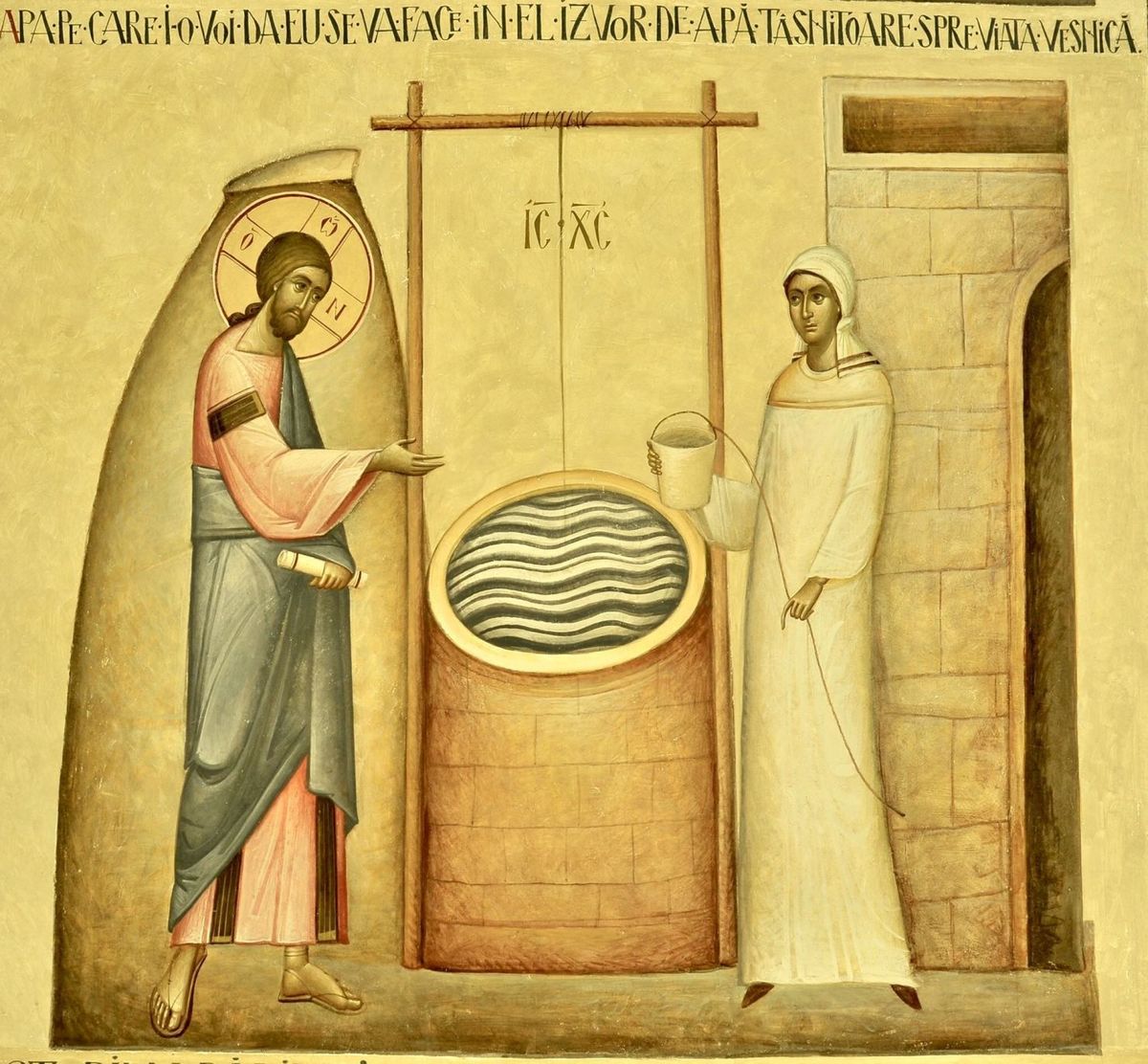
Christ and the Samaritan Woman at the Well. Contemporary sacred iconography
At the hottest hour of the day — when the light is harsh and the soul feels most exposed — Jesus is already there, waiting beside a well, asking for a drink; and in that simple request something immense begins, because the One who will one day whisper “I thirst” meets a woman who has come at noon, at the hour of avoidance and solitude, and what starts as a conversation about water slowly opens into the deeper thirst that runs beneath every life, the same longing Augustine once named as the restlessness of the heart and that Dante traced through shadow toward living light, a thirst that still finds its echo in the quiet plea of Bach’s Ich ruf zu dir, where yearning itself becomes prayer; Jesus does not shame her past but illumines it, not to condemn but to free, speaking of a water that does not erase struggle yet begins to flow within, like a hidden spring beneath dry ground; Lent returns us to our own wells, to the places where fatigue and desire meet, and there Christ waits — not to accuse but to invite — asking first for our honesty so that He may give what truly satisfies; and the question that remains is both simple and unsettling: when we feel that quiet thirst within us, do we keep drawing from the same familiar sources, or do we allow Him to lead us toward the deeper water? •
This piece, Ich ruf zu dir, Herr Jesu Christ by Bach, is not simply beautiful music — it is a prayer shaped in sound. Its quiet, steady longing mirrors the deep thirst we hear in this Sunday’s Gospel: a soul calling out, not with drama, but with trust, from a place of need. Just as the Samaritan woman comes to the well at noon, carrying an unspoken ache, this music gives voice to that same interior cry — the humble reaching of the heart toward the One who alone can give living water •

St. Joseph Catholic Church (Dilley, TX) • Weekend Schedule

Fr. Agustin E. (Parish Administrator)
Saturday, March 7, 2026
5.00 p.m. Sacramento de la Confesión
6.00 p.m. Santa Misa.
Sunday, March 8, 2026
8.00 a.m. Sacrament of Reconciliation
8.30 a.m. Holy Mass.
10.30 a.m. Sacrament of Reconciliation.
11.00 a.m. Holy Mass.
III Domingo de Cuaresma (Ciclo A)
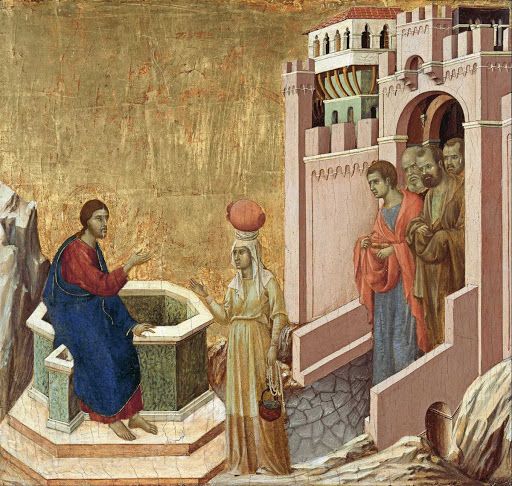
Duccio di Buoninsegna, Cristo y la Samaritana (1310), Tempera y oro sobre tabla, Museo Nacional Thyssen-Bornemisza, (Madrid)
Junto al brocal, al sol del mediodía,
se sienta el Señor, cansado del andar;
llega una mujer buscando sin hallar
agua que calme su sed y su porfía.
“Dame de beber”, le dice el Mesías,
y en su voz comienza otro manantial;
no de la tierra, ni del pozo igual,
sino del fondo que el alma vacía.
Él no la juzga: la mira en verdad,
nombra su historia sin herir su honor,
y abre en su pecho una fuente escondida.
Ella deja el cántaro y la soledad,
pues ha encontrado en aquel Señor
el agua viva que despierta vida.
Hay encuentros que suceden cuando nadie mira, al mediodía, cuando el sol no perdona y uno preferiría pasar desapercibido; así comienza el Evangelio de este domingo, no con un milagro sino con una petición: “Dame de beber”. Jesús no empieza enseñando, empieza necesitando, se presenta vulnerable y así abre una puerta, porque la sed no es solo física sino existencial: no se trata solo de agua, sino de sentido. No es casual que este encuentro sea con una mujer —y que ocurra precisamente en un tiempo en que el mundo recuerda, desde distintos ángulos, la dignidad y el aporte femenino—, pues el Evangelio muestra a Jesús confiando en su interlocución, escuchando su historia y revelándose a ella de un modo que transforma; como tantas veces recordó el Papa Francisco, el “genio femenino” no es una consigna sino una capacidad real de custodiar la vida, incluso cuando esta parece fragmentada. La mujer ha vivido intentando saciar algo que no se sacia, no por maldad sino por cansancio, y Jesús no corrige primero, escucha, luego revela; lo que ofrece no es una solución inmediata, sino una fuente que brota desde dentro, que no depende del clima, del momento ni de la mirada ajena. Toda vida humana conoce ese desierto donde lo que antes funcionaba ya no basta; los antiguos supieron nombrarlo, como san Juan de la Cruz al hablar de la noche que purifica no como castigo sino como camino, y algo de esa misma hondura serena —esa sed que no desespera pero tampoco se conforma— se percibe en el Intermezzo Op. 118 n.º 2 de Brahms, donde la música parece caminar con dignidad entre fragilidad y esperanza. La mujer deja el cántaro, no porque el agua ya no importe, sino porque ha descubierto algo mayor; esta Cuaresma no nos pide negar nuestra sed, sino reconocerla y dejarnos encontrar en ese lugar preciso donde creemos que nadie nos ve •
Compuesto en la madurez de Brahms, este Intermezzo pertenece a un conjunto de piezas breves que él mismo describía como “canciones de cuna para mis dolores”. No buscan el brillo virtuoso, sino una hondura recogida, propia de quien ha atravesado ya muchas estaciones de la vida. En su atmósfera contenida —entre nostalgia y serenidad— se percibe la sensibilidad de una Europa fin de siglo que comenzaba a mirar hacia el interior más que hacia la conquista. Por eso acompaña bien este Evangelio: como la mujer junto al pozo, esta música no dramatiza la sed ni la disimula, sino que la reconoce con sobriedad, dejando que el silencio que la rodea sugiera que el anhelo humano puede ser también un lugar de encuentro •

¿Qué lees estos dias?


 LA MEDITACION DE LA ESPOSA