
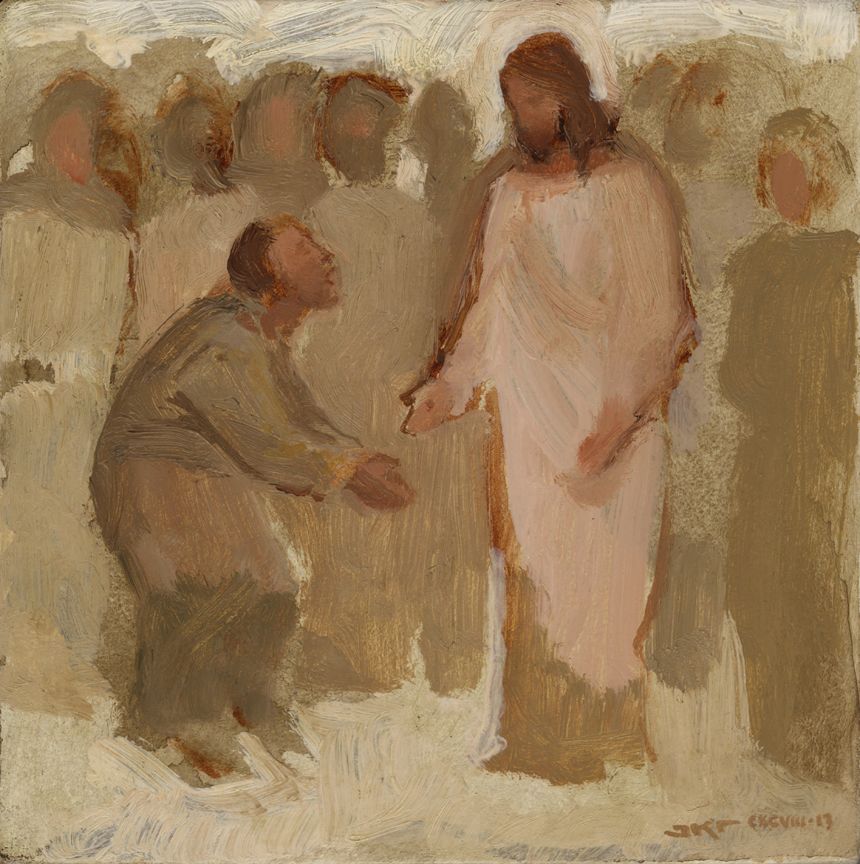
Unknown artist, Doubting Thomas, 20th century. Oil on board.
It happened behind closed doors. Not in triumph, but in fear. The disciples were gathered together, carrying the weight of everything that had just happened—the cross, the silence, the uncertainty. The resurrection had been announced, but not yet understood. And then, without warning, Jesus stood in their midst. No knocking. No explanation. Just presence. “Peace be with you.” Not as a polite greeting, but as a gift spoken into hearts still trembling. He shows them His wounds—not erased, but transformed. The marks of suffering remain, now radiant with meaning. It is one of the most tender and unsettling moments in the Gospel: the Risen Christ does not come back to erase the past, but to redeem it. Thomas was not there. And when he hears, he cannot accept it easily. He wants to see, to touch, to be certain. There is something deeply honest in that. Faith is not always immediate. It often feels like standing at the edge of something we cannot yet explain, like the quiet unfolding of Mahler’s Adagietto from his Fifth Symphony, where longing and trust slowly learn to breathe together. And when Jesus returns, He meets Thomas exactly there—not with reproach, but with invitation. “Do not be afraid. Believe.” This is how Easter continues: not in perfect clarity, but in encounters that unfold within our doubts. The mercy of God does not wait for us to be ready. It enters anyway. And once it does, nothing remains the same •
Mahler’s Adagietto from his Fifth Symphony is one of the most intimate pieces ever written—quiet, suspended, almost fragile. Scored only for strings and harp, it unfolds slowly, without urgency, as if searching for something just beyond reach. Often interpreted as a love letter, it carries a sense of longing that does not rush to resolution, but learns to trust in what it cannot yet fully grasp. That is why it resonates so deeply with this Gospel: like Thomas, we stand between doubt and faith, between absence and presence. The Adagietto teaches us that sometimes the heart must remain in that tension… until it finally learns to believe •

St. Joseph Catholic Church (Dilley, TX) • Weekend Schedule

Fr. Agustin E. (Parish Administrator)
Saturday, April 11, 2026
5.00 p.m. Sacramento de la Confesión
6.00 p.m. Santa Misa, Coronilla de la Divina Misericordia
y Bendición con el Santísimo Sacramento.
Sunday, April 12, 2026
8.00 a.m. Sacrament of Reconciliation
8.30 a.m. Holy Mass.
10.30 p.m. Sacrament of Reconciliation.
11.00 a.m. Holy Mass, Divine Mercy Chaplet
and Benediction with the Most Blessed Sacrament.
II Domingo de Pascua (Domingo de Divina Misericordia)
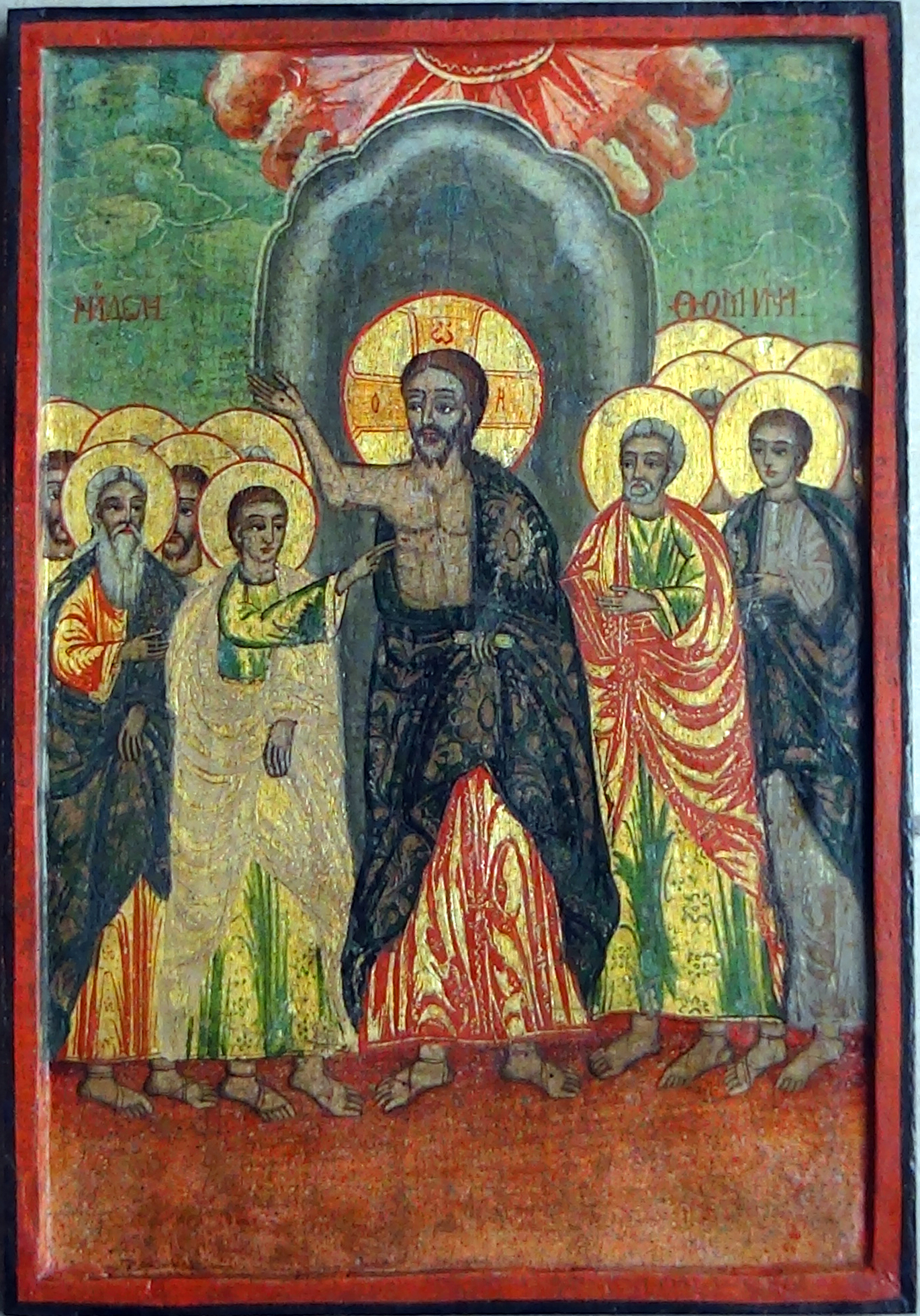
Iconógrafo anónimo, La incredulidad de Santo Tomás (La semana de Tomás), s. XVIII–XIX. Temple sobre tabla. Tradición eslava.
No fue un día luminoso. Fue en una habitación cerrada. El Evangelio de este domingo no nos lleva a multitudes ni a proclamaciones, sino a un pequeño grupo herido, reunido más por miedo que por esperanza. Han visto demasiado. Han perdido demasiado. Y, sin embargo, allí, en ese espacio estrecho donde todo parece detenido, sucede lo impensable: Jesús se hace presente. No atraviesa la puerta como quien invade, sino como quien conoce el interior del corazón humano; Jesus, lleno de ternura y de paciencia. Aparece sin pedir explicaciónes, regalando una palabra que reconstruye desde dentro: paz. No la paz ingenua que ignora el dolor, sino la que nace precisamente en medio de él. Les muestra las heridas. No han desaparecido. Permanecen, pero ya no son signo de derrota. Son memoria transformada. Tomás, ausente, se convierte en voz de todos nosotros. No se conforma con palabras prestadas. Quiere certeza. Quiere tocar. Y Jesús no lo rechaza. Vuelve, se acerca, y lo invita a cruzar ese umbral donde la duda deja de ser obstáculo y se convierte en camino. Así avanza la fe: no como una luz que lo ilumina todo de golpe, sino como una presencia que, poco a poco, nos enseña a confiar • AE

Lecturas (y música) para el tiempo de Pascua


 LA MEDITACION DE LA ESPOSA