Third Sunday of Easter (Cycle B)

St. Albans Psalter, Mary Magdalene announces the Risen Christ (12th century), illuminated manuscripit, St. Albans Abbey (Hertfortshire, England)

During the season of Lent, much of the focus of the liturgy is on sin and forgiveness. We hear about the many ways that people reject God and sin. We read about the effects of sin upon mankind. Now, at Easter time, as we celebrate the new life of the Lord, we, perhaps surprisingly, come upon a Sunday when all three readings reflect upon sin. Peter in the Acts of the Apostles tells the leaders of the Jews that Jesus’ death and resurrection had been predicted by the prophets. John in the second reading says that Jesus is our offering for sin, ours and everybody’s. Luke in the Gospel gives his account of the first meeting of the Resurrected Lord with the Eleven as concluding with the mandate: In the name of Jesus penance for the remission of sins is to be preached to all nations.

The reflections of Easter on sin and penance differ from those of Lent. The focus during Easter is not on the evils of sin but on redemption from sin. With the resurrection of Christ, the world has been transformed. We are no longer mired down by darkness, by evil. The world is being restored to God’s original plan. He has given us life. He has conquered sin, which is death, so that we may be united to his Resurrected Life. There are people in our world who do not know this. There are people in the world who have heard about Christ, about religion, about forgiveness, but have not been led to an experience of the Lord’s forgiveness. These may be the people of the deep, dark night suffering in the world of prostitution, the sex industry or the drug culture. They are exploited so others can become rich. They see their only option in life being to make the best of a terrible situation or end their lives. These people have not witnessed a transformation of life. No one has brought them the witness of the Resurrection. Perhaps the people in darkness are the people of the lonely home and lonely life. They have worked long and hard to get the most out of the world. Their lives and their houses are full of beautiful things. Now that their dreams have been fulfilled, they realize that they are not happy. They need more to life, but there is nothing left for them to buy. No one has brought them the witness of the Resurrection. Perhaps the people who have not witnessed the new life of Jesus are those who move from one new experience to another.

But we are all called to be witnesses of the faith. There are so many people whose lives are meaningless because no one has given them witness to the new and better and transformed life of the Lord. They depend on us to give this witness, us, not just in the concept of the Church, but us as each individual reflecting the New Life of the Lord in his or her life. There are people in the world who will accept your witness to Jesus Christ because they have come to know and respect you. They need you to lead them to God. They need you to lead them from a meaningless life. They need you to be a witness to freedom from darkness and sin, a witness to the New Life, a witness to the Resurrection. May we fulfill the mission that Christ gave us when he called us to tell the world that He Lives • AE

Regina Caeli

Regina caeli (Ecclesiastical Latin for Queen of Heaven) is a musical antiphon addressed to the Blessed Virgin Mary that is used in the liturgy of the Roman Rite of the Catholic Church during the Easter season, from Easter Sunday until Pentecost. During this season, it is the Marian antiphon that ends Compline (Night Prayer) and it takes the place of the traditional thrice-daily Angelus prayer. In the past, the spelling Regina coeli was sometimes used, but this spelling is no longer found in official liturgical books •


St. Dominic Catholic Church • Weekend Schedule

Saturday, April 13, 2024

3.00 p.m. Sacrament of Reconciliation – Fr. Jaime

5.00 p.m. Holy Mass (English) – Fr. Jaime

Sunday, April 14, 2024

7.30 a.m. Holy Mass (English) – Fr. Agustin E.

10.00 a.m. Holy Mass (English) – Fr. Agustin E.

12.30 p.m. Holy Mass (English) – Fr. Jaime P.

3.00 p.m. Santa Misa – P. Paco


III Domingo de Pascua (Ciclo B)

Francisco de Goya, El Entierro de la Sardina (1812), óleo sobre tela, Real Academia de San Fernando (Madrid)

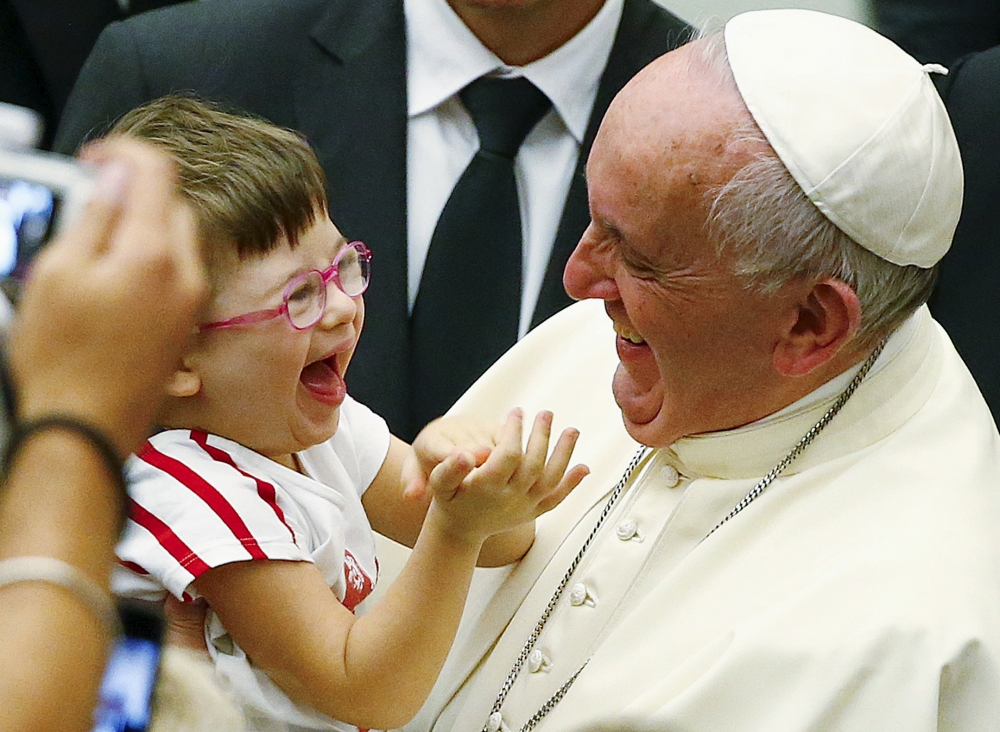
Dice el Evangelio de este domingo, el tercero de Pascua, que los apóstoles no acababan de creer por la alegría.  Reír es propio de los seres humanos. Ninguna otra criatura se ríe. La risa es la manifestación más expresiva de la alegría interior. Algo que le nace de modo natural a quien vive disfrutando de la vida. Junto con la sonrisa, puede manifestar el gozo y la jovialidad de quien vive en paz consigo mismo, con los demás y con Dios. La risa ha estado, sin embargo, muchas veces bajo sospecha entre los cristianos. Reír era considerado, en algunas tradiciones ascéticas, poco digno de la seriedad y gravedad que ha de caracterizar a quien se relaciona con Dios (así como lo lees). Una manifestación excesivamente mundana, más propia de personas de vida relajada que de cristianos de fe madura. Sin embargo, resulta sorprendente con que la Biblia alude a la alegría en todos sus matices de gozo, paz interior, exultación o júbilo. Naturalmente hay muchos tipos de risa. Todos conocemos la risa irónica y burlona que pone al otro en ridículo, la risa sarcástica que hace daño, o la vengativa que hiere y destruye. La risa sana es diferente. Nace de la alegría interior, relaja las tensiones y favorece la libertad. Es risa benevolente que aproxima a las personas, crea confianza y ayuda a vivir. Freud decía que el humor es un elemento liberador. Y hay también una risa propia del creyente. Nace como respuesta gozosa al amor de Dios. Brota de la confianza total y expresa compasión y cariño hacia toda criatura. P. Berger la llama «risa redentora». Esta risa hace la vida más saludable y llevadera. Es una victoria sobre el malhumor, la impaciencia o el desaliento. No se ríen los fanáticos, los intolerantes o amargados. Se ríen los que se enfrentan a la vida de manera sana y liberada. Pascua ha sido desde antiguo un tiempo de gozo intenso. Tertuliano lo llamaba «laetissimum spatium», un espacio de tiempo lleno de inmensa alegría. Dos palabras resumen el clima que el Resucitado crea con su presencia: gozo y paz. Los apóstoles no acaban de creer por la alegría. Entoncs una de dos: o el cristianismo es demasiado grande y hermoso para ser creído, o hemos de recordar un día y  otro también aquellas palabras tan maravillosas de san Pablo: «Estad siempre alegres en el Señor. Os lo repito: estad alegres. El Señor está cerca» • AE


¿Qué lees éstos días?


Second Sunday of Easter (Sunday of Divine Mercy)

This week’s Gospel presents us with Doubting Thomas and our annual reflection on doubts and faith. It was easy for Thomas to believe in Jesus when he experience his healing, and when the words of the Lord burned within his own heart. It was difficult for Thomas to believe when his own world appeared to fall apart on Good Friday. Thomas doubted the Resurrection because he could not get pass the crucifixion. It is often the same with us. We are so torn up by many crises in our lives, that sometimes we cannot get pass those crises to an experience of the new life of Christ that is offered on Easter. We can be so torn up by the physical events of our lives that we close the door to the possibility of the spiritual. That is essentially what Thomas did. That is what we tend to do. It is a normal human reaction to suffering. It really does not mean that we do not believe in God. We are not even questioning his goodness, even when we shake our fist at heaven and shout, «How could you?» We just are being held back by the pain of physical life from recognizing the joy of the spiritual life. Many people persecute themselves for having these thoughts and wonder if God will forgive them. When you love someone, you are more concerned about their pain then you are about the way they express their pain. God loves us too much to be concerned with anything other than our pain. At the same time, he tells us to give him our pain and take a step out of physical suffering and a step into spiritual joy. That is really what Easter is about. Easter is all about entering into the spiritual. Easter is about the conquest of the physical by the spiritual. Easter is about life conquering death, love conquering hate, Jesus rising from a tomb, and us taking a step out of the physical and into the spiritual. Doubting is part of the human condition. It will exist in all our lives to some extent or other until the time that we see our God face to face. At that time the whole concept of doubt will be pointless. But until then, we recognize our humanity, and we humbly ask God to admit us as we are, human beings with human limitations, into his divinity.

Faith is the one gift that God promises will be given to all who seek it. But even if we were to have the faith of a saint, we would still have doubts. When Doubting Thomas made his act of faith, Jesus responded, «You believe because you have seen. Blessed are those who have not seen but believe.» Jesus was talking about us. He was calling us blessed because we have often taken a leap of faith and left the limitations of the physical for the infinite gifts of the spiritual. Remember Thomas had an experience of the Resurrected Jesus. We only have an experience of an empty tomb. We have not seen, but we believe. At the conclusion of his Gospel, John wrote: “All these things have been recorded to help you believe that Jesus is the Messiah, the Son of God, so that through this faith you might have life in his name.” Perhaps there are some people reading this who are experiencing intense doubt. The doubts that we suffer at various times of our lives, are not all that bad after all. The experience of doubt can lead us to take a more determined step into faith. No, not a step, a leap, a leap into the arms of the Lord who loves us with all our human limitations, including those that might question his very love • AE


St. Dominic Catholic Church

Second Sunday of Easter

Saturday, April 6, 2024

3.00 p.m. Sacrament of Reconciliation – Fr. Agustin

5.00 p.m. Holy Mass (English) – Fr. Agustin

Sunday, March 24, 2024

7.30 a.m. Holy Mass (English) – Fr. Agustin E.

10.00 a.m. Holy Mass (English) – Fr. Agustin E.

12.30 p.m. Holy Mass (English) – Fr. Jaime P.

3.00 p.m. Santa Misa – Fr. Jaime P.


II Domingo de Pascua

B. Strozzi, La Incredulidad de Tomás (1620), óleo sobre lienzo, Museo de Arte de Ponce (Puerto Rico)

En una carta escrita pocos meses antes de ser ejecutado por los nazis, Dietrich Bonhoeffer comentaba a un amigo el encuentro que había tenido en cierta ocasión con un joven pastor protestante. Ambos se planteaban qué es lo que querían hacer con su vida. El pastor afirmó con convicción: «Yo quisiera ser santo.» Bonhoeffer, por su parte, le escuchó con atención y dijo su deseo: «Yo quisiera aprender a creer.» Estas palabras del pueden ser en estos tiempos, una buena definición de un cristiano responsable: un hombre o mujer que desea aprender a creer, día a día, hasta el final de su vida.

Hoy en dia hay muchos que siquiera saben por dónde podrían encaminarse hacia Dios. Piensan que la única manera de consolidar su fe sería contando con pruebas verificables que los llevarían a comprobar científicamente a Dios. De lo contrario, la fe les parece un salto al vacío, propio de hombres y mujeres que, no se sabe bien por qué extraña ingenuidad, aceptan lo invisible como algo real. No entienden al grupo de apóstoles que creen a partir de la experiencia del encuentro con el Señor. Se identifican más con el discípulo Tomás que pide comprobar con sus propias manos y dedos la verdad del Resucitado. Pero Dios se vale también de ésto. Dios siempre nos sale al encuentro.

Dice Manaranche que los cristianos no creemos por razones, pero tenemos razones para creer. Es verdad. No creemos porque hemos logrado comprobar científicamente un dato al que llamamos Dios, sino porque conocemos la experiencia de sabernos absolutamente fundamentados, amados y perdonados… por ese Dios en el que nos atrevemos a creer.

Al final del día no sabemos si Tomás metió o no sus dedos en el costado de Jesús, lo que sí sabemos es que su fe despierta cuando se siente reclamado, amado y entendido por el misterio de su Maestro y Señor, por el misterio de Jesús Resucitado • AE

Adoro te devote es uno de los cinco himnos que Santo Tomás de Aquino compuso en honor de Jesús en el Santísimo Sacramento, a solicitud del Papa Urbano IV, con motivo de la Fiesta del Corpus Christi establecida en 1264. P. Cantalamesa afirma que existe una laude de Jacopone de Todi, compuesta en torno al año 1300, que contiene una clara alusión a la segunda estrofa del Adoro te devote: «Visus, tactus, gustus…». En ella Jacopone de Todi imagina una especie de «contienda» entre los distintos sentidos humanos a propósito de la Eucaristía: tres de ellos (la vista, el tacto y el gusto) dicen que aquello es solo pan, «solo el oído» se resiste, asegurando que «bajo estas formas visibles está escondido Cristo». El himno hace también una aliusión -preciosa por cierto- al apóstol Tomás, a propósito de la lectura del evangelio de éste Domingo ​• AE


Easter Sunday (2024)

F. de Ribalta, Mary Magdalene before Christ´s Tomb (1612), oil on canvas, Museo Nacional del Prado (Madrid)

According to the gospel this morning Mary Magdalen is the first to discovers that the tomb is empty. She is missing Jesus. She really wants to see again her Master whom she had faithfully followed to the end. Who will she follow now? So, she cries: «They have taken the Lord from the tomb, and we do not know where they have put him» . We do not know where they have put him. These words of Mary Magdalen express so well our feelings in our time: What have we done with Jesus? Who has taken him?  Where have we put him? The Lord in whom we believe… is He a Christ full of life, or a Christ whose memory is disappearing from hearts?

Today is more urgent than ever to seek Jesus And, you know, we cannot look for more «evidence» to believe more firmly. We cannot rely only into the Magisterium of the Church to find answers. It is useless to look only into the lectures of scholars, or Bible experts. To meet the Risen Lord, it is necessary to have a daily up close and personal communication with Him. This morning, we only hear the first part of the narrative of resurrection, I invite you to read the second part, because there you will see how Mary Magdalen is from one place to another looking for her Master.  That is what we should do: That’s what we should do: Search without rest. Maybe it happens that we do not see Him, or we do not recognize Him, but we can be sure that he will be shown. At some point Mary thinks he is the landscape gardener. And then Jesus asks two questions. Only two. «Woman, why are you crying? Who are you looking for? ».

Well, today is the right time to ask ourselves same questions: What is it that I am looking for so anxiously? Where is the origin of my sadness? What does my heart really want? Mary Magdalene does not recognize Jesus. She is very focused on her own pain, on her own problems.  It is then that Jesus calls her by name, He does it with tenderness and affection, «Mary! », he says, and she responded quickly: «Rabbuni, Teacher».  Mary Magdalen recognizes Jesus when she feels personally called by him.

This is the point! Two thousand years later, the Lord continues doing exactly the same:  calling each of us personally. Calling us by name. He did it at the day of our Baptism.  He does it at the Sacrament of Confession. And he keeps calling us by name at Holy Communion.

It is easter Sunday.  Today we have a wonderful opportunity to renew our faith; to revive our commitment; to restore our covenant of love with Him. Today is a great chance to tell the Lord that despite our fatigue, boredom, our sins… we want to keep walking; we want to keep trying; we want to do our best to be with Him. So, today let us ask the Lord for one gift. Only one: A brave, passionate heart like the one of Mary Magdalen.  She searched and searched for Jesus, until she found him, and then she announced him to the others. That is the model of the Christian:  a man, a woman, who constantly seeks Christ, and when he or she finds Him, he speaks of Him to others. We are invited to do the same. We have already found the Lord here, in the celebration of the Eucharist, in listening to His Word.  What else should we do? We must continue to seek him in ordinary life; in the tasks of each day; in the stuff what we usually do, and for this we need a passionate, burning heart, and clear eyes.  So, let us ask for this exactly:  May ay the Lord Jesus give us a heart on fire, full of determination, full of love, so like Mary Magdalen, we can recognize Him every day of our lives and in all situations:  in joy, in pain, in sadness, in success, in family life. In everything and always. And let us not forget the other Mary.  The Mother of the Lord. Mary was the only light that remained lit in the Passion. That is why we call her: «Our Life, our sweetness and our hope». May she also intercede for us today. Happy Easter to each and every one •


Secuencia (Victimae paschali laudes)

Ofrezcan los cristianos
ofrendas de alabanza
a gloria de la Víctima
propicia de la Pascua.

Cordero sin pecado
que a las ovejas salva,
a Dios y a los culpables
unió con nueva alianza.

Lucharon vida y muerte
en singular batalla
y, muerto el que es la Vida,
triunfante se levanta.

¿Qué has visto de camino,
María, en la mañana?
A mi Señor glorioso,
la tumba abandonada,
los ángeles testigos,
sudarios y mortaja.

¡Resucitó de veras
mi amor y mi esperanza!

Venid a Galilea,
allí el Señor aguarda;
allí veréis los suyos
la gloria de la Pascua.

Primicia de los muertos,
sabemos por tu gracia
que estás resucitado;
la muerte en ti no manda.

Rey vencedor, apiádate
de la miseria humana
y da a tus fieles parte
en tu victoria santa.


Domingo de Pascua de la Resurrección del Señor (2024)

Artista anónimo, Descendimiento de la Cruz (s. XI) Monasterio de Santo Domingo de Silos (Burgos)

«Ustedes lo mataron, pero Dios lo resucitó». Esto es lo que predican con fe los discípulos de Jesús por las calles de Jerusalén a los pocos días de la muerte del Señor. Para ellos, la resurrección es la respuesta de Dios a la acción injusta y criminal de quienes han querido callar para siempre su voz y anular de raíz su proyecto de un mundo más justo. No lo hemos de olvidar jamás. En el corazón de nuestra fe hay un crucificado al que Dios le ha dado la razón. En el centro mismo de la Iglesia hay una víctima a la que Dios ha hecho justicia. Por tanto, una vida crucificada, pero motivada y vivida con el espíritu de Jesús, no terminará en fracaso sino en resurrección.

Esto cambia totalmente el sentido de nuestros esfuerzos, penas, trabajos y sufrimientos por un mundo más humano y una vida más dichosa para todos. Vivir pensando en los que sufren, estar cerca de los más desvalidos, echar una mano a los indefensos.., seguir los pasos de Jesús no es algo absurdo. Es caminar hacia el Misterio de un Dios que resucitará para siempre nuestras vidas.

Los pequeños abusos que podamos padecer, las injusticias, rechazos o incomprensiones que podamos sufrir, son heridas que un día cicatrizarán para siempre. Hemos de aprender a mirar con más fe las cicatrices del resucitado. Así serán un día nuestras heridas de hoy. Cicatrices curadas por Dios para siempre. Esta fe nos sostiene por dentro y nos hace más fuertes para seguir corriendo riesgos. Poco a poco hemos de ir aprendiendo a no quejamos tanto, a no vivir siempre lamentándonos del mal que hay en el mundo y en la Iglesia, a no sentirnos siempre víctimas de los demás. ¿Por qué no podemos vivir como Jesús diciendo: «Nadie me quita la vida, sino que soy yo quien la doy»? Seguir a Jesús crucificado hasta compartir con él la resurrección es, en definitiva, aprender a dar la vida, el tiempo, nuestras fuerzas y tal vez nuestra salud por amor. No nos faltarán heridas, cansancio y fatigas. Una esperanza nos sostiene: Un día Dios enjugará las lágrimas de nuestros ojos, y no habrá ya muerte ni habrá llanto, ni gritos ni fatigas porque todo este mundo viejo habrá pasado •


Exultate, Jubiulate (W.A. Mozart)

Exultate, jubílate (K 165/158ª) es un motete religioso de Wolfgang Amadeus Mozart escrito en 1773. Fue compuesto durante la visita del compositor austríaco a Milán, en la época en la que viajó a Italia y fue escrito para el castrato Venanzio Rauzzini, el favorito de Mozart para sus óperas. En las representaciones modernas, es interpretado normalmente por una soprano. Está dividido en tres partes: Allegro, Andante Allegro; el allegro final es un destacado y alegre Alleluia •


Easter Vigil in the Holy Night of Easter (2024)

Exult, let them exult, the hosts of heaven,
exult, let Angel ministers of God exult,
let the trumpet of salvation
sound aloud our mighty King’s triumph!

Be glad, let earth be glad, as glory floods her,
ablaze with light from her eternal King,
let all corners of the earth be glad,
knowing an end to gloom and darkness.

Rejoice, let Mother Church also rejoice,
arrayed with the lightning of his glory,
let this holy building shake with joy,
filled with the mighty voices of the peoples.

(Therefore, dearest friends,
standing in the awesome glory of this holy light,
invoke with me, I ask you,
the mercy of God almighty,
that he, who has been pleased to number me,
though unworthy, among the Levites,
may pour into me his light unshadowed,
that I may sing this candle’s perfect praises.)

(V. The Lord be with you.
R. And with your spirit.)
V. Lift up your hearts.
R. We lift them up to the Lord.
V. Let us give thanks to the Lord our God.
R. It is right and just.

It is truly right and just, with ardent love of mind and heart
and with devoted service of our voice,
to acclaim our God invisible, the almighty Father,
and Jesus Christ, our Lord, his Son, his Only Begotten.

Who for our sake paid Adam’s debt to the eternal Father,
and, pouring out his own dear Blood,
wiped clean the record of our ancient sinfulness.

These, then, are the feasts of Passover,
in which is slain the Lamb, the one true Lamb,
whose Blood anoints the doorposts of believers.

This is the night,
when once you led our forebears, Israel’s children,
from slavery in Egypt
and made them pass dry-shod through the Red Sea.

This is the night
that with a pillar of fire
banished the darkness of sin.

This is the night
that even now, throughout the world,
sets Christian believers apart from worldly vices
and from the gloom of sin,
leading them to grace
and joining them to his holy ones.

This is the night,
when Christ broke the prison-bars of death
and rose victorious from the underworld.

Our birth would have been no gain,
had we not been redeemed.

O wonder of your humble care for us!
O love, O charity beyond all telling,
to ransom a slave you gave away your Son!
O truly necessary sin of Adam,
destroyed completely by the Death of Christ!
O happy fault
that earned so great, so glorious a Redeemer!

O truly blessed night,
worthy alone to know the time and hour
when Christ rose from the underworld!

This is the night
of which it is written:
The night shall be as bright as day,
dazzling is the night for me,
and full of gladness.

The sanctifying power of this night
dispels wickedness, washes faults away,
restores innocence to the fallen, and joy to mourners,
drives out hatred, fosters concord, and brings down the mighty.  
On this, your night of grace, O holy Father,
accept this candle, a solemn offering,
the work of bees and of your servants’ hands,
an evening sacrifice of praise,
this gift from your most holy Church.

But now we know the praises of this pillar,
which glowing fire ignites for God’s honor,
a fire into many flames divided,
yet never dimmed by sharing of its light,
for it is fed by melting wax,
drawn out by mother bees
to build a torch so precious.

O truly blessed night,
when things of heaven are wed to those of earth,
and divine to the human.

Therefore, O Lord,
we pray you that this candle,
hallowed to the honor of your name,
may persevere undimmed,
to overcome the darkness of this night.

Receive it as a pleasing fragrance,
and let it mingle with the lights of heaven.

May this flame be found still burning
by the Morning Star:
the one Morning Star who never sets,
Christ your Son,
who, coming back from death’s domain,
has shed his peaceful light on humanity,
and lives and reigns for ever and ever.

R. Amen.


Easter Sunday 2024

The Resurrection of the Lord

Anonymous artist, Greek Icon with Myrrhbearers Women (XVIII century). particular collection.

The main protagonists of tonight are… women!  Brave woman. Wonderful woman. Of course, that Jesus is the main Protagonist, the real hero of everything and always. The central character of the whole story. But today the gospel tells us something else. The gospel narrative tonight it is simply fascinating.  We just heard about three ladies: Mary Magdalene, Mary, the mother of James, and Salome[1]. Theology has called them the Myrrh carriers[2], those that get the myrrh,   myrrh is the ointment to embalm the dead body of the Lord Jesus…

These women we could say are crazy … yes, crazy. Totally crazy. But crazy with love, crazy with passion, crazy with courage. These three women are doing something that no one had arranged: the embalming of the body of the Lord. Those were their initial thoughts, but the angel changes what was planned: “You seek Jesus of Nazareth, the crucified. He has been raised; he is not here», he says.  And the moral is very simple: It is a mistake to look for Him in the world of the dead. Jesus is not just another deceased. It is not necessary to mourn and cry, in fact, it is a waste of time. He is risen. He is alive forever!  And this is exactly what we are celebrating tonight, This is why we are gathered together tonight, doing the same thing that Christians have done for over two thousand years on Easter night.

We can celebrate with joy because the tomb is empty; because death was not more powerful, and because we can expect exactly the same. Yes: in the same way that He resurrected, so, we are going to resurrect each one of us, but for that there is still a long way.

Jesus is not in the tomb, so…. where can he be seen?  Where can we meet him? Again, that angel gives us a clue: “He is going before you to Galilee; there you will see him, as he told you»[3].Jesus cannot be seen without making a journey. We all must do a journey; Actually, we are all doing that trip right now; Our Christian life is that journey. All of us must go to Galilee! For what exactly? To see the Lord, as the gospel says [4], to experience the presence, company and friendship of Jesus.

Tonight, is the perfect time to renew our faith, to return to our commitment of love to Him; to resolve that we must keep walking, trying, doing our best. When we stop, when we give up, when we stop asking questions, … that’s when our faith starts to grow cold and die, and then the Resurrection is just a sublime doctrine, a sacred dogma… but nothing else! So, let us ask Jesus tonight to give us a gift. Only one. That same courage, passion and determination of those three women who were looking for him on the morning of the resurrection. Mary Magdalene, Mary, the mother of James, and Salome.  They went to the tomb to anoint the body Jesus, and they ended up being anointed by the Resurrection. If we are open, the same thing could happen to us: that we go on the road looking for Jesus and suddenly we realize that, before, he was looking for us, anxious to fill our hearts, our life, our families, our projects… our everything with his love, his joy and his peace

[1] Cf. Mark 16:1-7 [2] In Orthodox Christian tradition the Myrrh bearers (Greek: Μυροφόροι, Latin: Myrophorae;) are the individuals who were directly involved in the burial or who discovered the empty tomb following the resurrection of Jesus. The term traditionally refers to the women with myrrh who came to the tomb of Christ early in the morning to find it empty. In Western Christianity, the two women at the tomb, the Three Marys or other variants are the terms normally used. Also included are Joseph of Arimathea and Nicodemus, who took the body of Jesus down from the cross, embalmed it with myrrh and aloes, wrapped it in clean linen, and placed it in a new tomb. (Matthew 27:55–61, Matthew 28:1–10, Mark 15:40–16:11, Luke 23:50–24:10, John 19:38–20:18). [3] Cf. Mark 16:1-7 [4] Ídem.


This is one of four Marian antiphons, with following versicles and prayers, traditionally said or sung after night prayer, immediately before going to sleep. It is said throughout Eastertide. (That is, from Easter Day through Pentecost, the seventh Sunday after Easter. The Regina caeli is also said in place of the Angelus during Eastertide.

Queen of Heaven

V. Queen of Heaven, rejoice, alleluia. 
R. For He whom you did merit to bear, alleluia. 
V. Has risen, as he said, alleluia. 
R. Pray for us to God, alleluia.
V. Rejoice and be glad, O Virgin Mary, alleluia. 
R. For the Lord has truly risen, alleluia.

Let us pray. O God, who gave joy to the world through the resurrection of Thy Son, our Lord Jesus Christ, grant we beseech Thee, that through the intercession of the Virgin Mary, His Mother, we may obtain the joys of everlasting life. Through the same Christ our Lord. Amen.

Regina caeli

V. Regina caeli, laetare, alleluia. 
R. Quia quem meruisti portare, alleluia. 
V. Resurrexit, sicut dixit, alleluia. 
R. Ora pro nobis Deum, alleluia.

V. Gaude et laetare, Virgo Maria, alleluia. 
R. Quia surrexit Dominus vere, alleluia.

Oremus. Deus, qui per resurrectionem Filii tui, Domini nostri Iesu Christi, mundum laetificare dignatus es: praesta, quaesumus; ut per eius Genetricem Virginem Mariam, perpetuae capiamus gaudia vitae. Per eundem Christum Dominum nostrum. Amen.


Sábado Santo de la Pasión del Señor (2024)

B. Bermejo, Descenso de Cristo a los infiernos (1474), óleo sobre tabla, Museo Nacional de Arte de Cataluña (España)

Qué es lo que hoy sucede? Un gran silencio envuelve la tierra; un gran silencio porque el Rey duerme. «La tierra temió sobrecogida» porque Dios se durmió en la carne y ha despertado a los que dormían desde antiguo. Dios en la carne ha muerto y el Abismo ha despertado.

Va a buscar a nuestro primer padre como si fuera la oveja perdida. Quiere absolutamente visitar «a los que viven en tinieblas y en sombra de muerte». El, que es al mismo tiempo Hijo de Dios, hijo de Eva, va a librar de su prisión y de sus dolores a Adán y a Eva. El Señor, teniendo en sus manos las armas vencedoras de la cruz, se acerca a ellos. Al verlo nuestro primer padre Adán, asombrado por tan gran acontecimiento, exclama y dice a todos: Mi Señor esté con todos. Y Cristo, respondiendo, dice a Adán: Y con tu espíritu. Y tomándolo por la mano le añade: «Despierta tú que duermes, levántate de entre los muertos y Cristo será tu luz».

Yo soy tu Dios que por ti y por todos los que han de nacer de ti me he hecho tu hijo; y ahora te digo: tengo el poder de anunciar a los que están encadenados: Salid; y a los que se encuentran en las tinieblas: iluminaos; y a los que dormís: levantaos.

A ti te mando: «despierta tú que duermes», pues no te creé para que permanezcas cautivo en el Abismo; «levántate de entre los muertos», pues yo soy la vida de los muertos. Levántate, obra de mis manos; levántate, imagen mía, creado a mi semejanza. Levántate, salgamos de aquí porque tú en mí, y yo en ti, formamos una sola e indivisible persona.

Por ti yo, tu Dios, me he hecho tu hijo; por ti yo, tu Señor, he revestido tu condición servil; por ti yo, que estoy sobre los cielos, he venido a la tierra y he bajado al Abismo; por ti me he hecho hombre, «semejante a un inválido que tiene su cama entre los muertos»; por ti que fuiste expulsado del huerto he sido entregado a los judíos en el huerto, y en el huerto he sido crucificado. Contempla los salivazos de mi cara que he soportado para devolverte tu primer aliento de vida; contempla los golpes de mis mejillas que he soportado para reformar de acuerdo con mi imagen tu imagen deformada.

Contempla los azotes en mis espaldas que he aceptado para aliviarte del peso de los pecados que habían sido cargados sobre tu espalda. Contempla los clavos que me han sujetado fuertemente al madero; por ti los he aceptado, que maliciosamente extendiste una mano al árbol.

Dormí en la cruz y la lanza atravesó mi costado por ti, que en el paraíso dormiste y de tu costado diste origen a Eva. Mi costado ha curado el dolor del costado. Mi sueño te saca del sueño del Abismo. Mi lanza eliminó aquella espada que te amenazaba en el paraíso.

Levántate, salgamos de aquí. El enemigo te sacó del paraíso; yo te coloco no ya en el paraíso, sino en el trono celeste. Te prohibí que comieras del árbol de la vida, que no era sino imagen del verdadero árbol; yo soy el verdadero árbol, yo que soy la vida y que estoy unido a ti. Coloqué un querubín que fielmente te vigilará; ahora te concedo que el querubín, reconociendo tu dignidad, te sirva. El trono de los querubines está preparado, los portadores atentos y preparados, el tálamo construido, los alimentos prestos, se han embellecido los eternos tabernáculos y las moradas, los tesoros abiertos y el reino de los cielos que existe antes de los siglos está preparado.» • De una homilía antigua sobre el grande y santo Sábado (PG 43, 439. 451. 462-463)