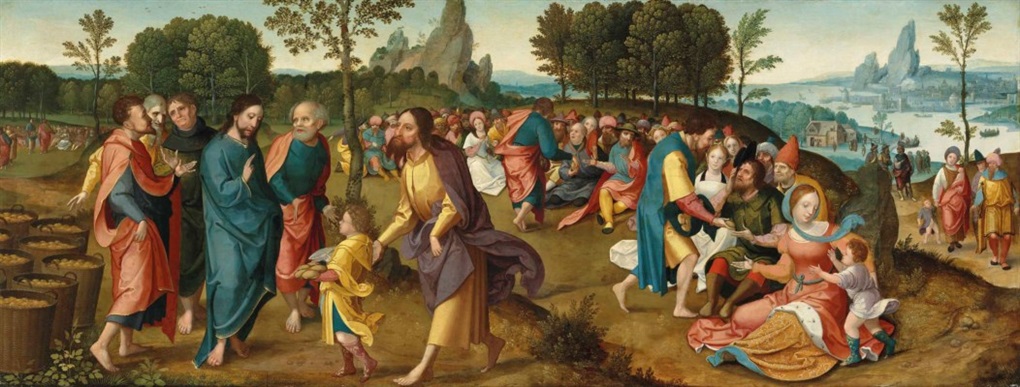
Fifth Sunday of Lent (Cycle B)

F. de Ribalta, Embrace of Saint Francis of Assisi to the Crucified (1620), oil on canvas, Convent of the Blood of Christ (Valencia, Spain)

Jesus spoke about time in today’s Gospel. He called it His Hour and he did not run from it. He embraced it. This was His Time. It was what He was put on earth to do. He would stand against evil. We all have hours, and we have our hour. We have many times in our lives when we have to stand up for God and be whom we are. All during Lent we have been asking ourselves, «Am I the person that God wants me to be? Do I try to reflect the image of God within me, or am I untrue to my very self? There are many temptations, many ways that we are tempted to hedge on our commitment to Christ. The cost of being true to the law written within our hearts can sometimes be quite heavy. We might find ourselves excluded from that society, that sport, or those people with whom we really want to belong. It hurts to have someone say, «What, are you too good to join us?» But the peace of Christ surpasses all things. Nothing is more important than living in this peace, then living united to the Lord. We all have our hours, and we have our hour. There are continual choices for God that we make throughout our lives. Those are our hours. There is also that one choice that is the reason why God placed us one earth. That is our hour. Our hour is the action that expresses whom we are deep within ourselves. It is the fundamental expression of our Christian life.

When we read about the saints, we learn about people who chose to suffer rather than deny Christ. But these are people about whom we read or heard. There are others whom we do not know. There is that girl with the unexpected pregnancy. It is her hour. Does she stand for Christ and bring this baby into the world regardless of what would happen to the plans she had for her future, or does she walk away from her hour and walk into that abortion clinic? There is that elderly man who chooses to care for his slowly dying wife because he could and because she wanted to stay at home. It is his hour. We know many others who are confronted with the choice of their lives, their hour, and embrace the law written within their hearts.

Maybe something so radical will not happen to us. Perhaps our hour will only be the sum total of the choices we have made in our lives which we present to the Lord when this life is over. The big question is: Are we ready? Are we ready to embrace the moment of our lives when all of our existence proclaims our union with Christ? Are we ready at all times to embrace all that we can be? All the little yeses we make to Christ, all those times that we deny ourselves what others say we should have or do, all these affirmations of our Christianity strengthen us for the total affirmation of our life, strengthen us for our hour. So, we are called to live and die for Christ. This is our time. This is our hour • AE


Soul of Christ, sanctify me.
Body of Christ, save me.
Blood of Christ, inebriate me.
Water from the side of Christ, wash me.
Passion of Christ, strengthen me.
O Good Jesus, hear me.
Within your wounds hide me.
Permit me not to be separated from you.
From the wicked foe, defend me.
At the hour of my death, call me
and bid me come to you
That with your saints I may praise you
For ever and ever. Amen.


St. Dominic Catholic Church • Weekend Schedule

Saturday, March 16, 2024

3.00 p.m. Sacrament of Reconciliation – Fr. Agustin E.

5.00 p.m. Holy Mass (English) – Fr. Agustin. E.

Sunday, March 17, 2024

7.30 a.m. Holy Mass (English) – Fr. Agustin E.

10.00 a.m. Holy Mass (English) and 3rd Scrutiny for RCIA – Fr. Agustin E.

12.30 p.m. Holy Mass (English) – Fr. Jaime P.

3.00 p.m. Santa Misa – Fr. Jaime P.


V Domingo de Cuaresma (Ciclo B)

Nos cuenta san Juan en su evangelio que unos peregrinos griegos que vinieron a celebrar la Pascua judía se acercaron a Felipe con una petición muy concreta: «Queremos ver a Jesús». Quizá es curiosidad. Quizá es un deseo sincero de conocer qué hay de aquel hombre. A Jesús se le ve preocupado. Dentro de unos días será crucificado. Cuando le hablan de aquellos hombres dice algo más bien desconcertante: «Llega la hora de que sea glorificado el Hijo del Hombre». Y es que cuando sea crucificado, todos podrán ver con claridad dónde está su verdadera grandeza y su gloria.

Probablemente nadie comprendió bien. Pero Jesús, pensando en la forma de muerte que le espera, insiste: «Cuando yo sea elevado sobre la tierra, atraeré a todos hacia mí». ¿Qué es lo que se esconde en el crucificado para que tenga ese poder de atracción? Sólo una cosa: su amor increíble a todos.

El amor es invisible. Sólo lo podemos ver en los gestos, los signos y la entrega de quien nos quiere bien. Por eso, en Jesús crucificado, en su vida entregada hasta la muerte, podemos percibir el amor insondable de Dios. En realidad, sólo empezamos a ser cristianos cuando nos sentimos atraídos por Jesús. Sólo empezamos a entender algo de la fe cuando nos sentimos amados por Dios. Para explicar la fuerza que se encierra en su muerte en la cruz, Jesús emplea una imagen sencilla que todos podemos entender: «Si el grano de trigo no cae en tierra y muere, queda infecundo; pero si muere, da mucho fruto». Si el grano muere, germina y hace brotar la vida, pero si se encierra en su pequeña envoltura y guarda para sí su energía vital, permanece estéril. Esta imagen nos descubre una ley que atraviesa misteriosamente la vida entera. No es una norma moral. No es una ley impuesta por la religión. Es la dinámica que hace fecunda la vida de quien sufre movido por el amor. Es una idea repetida por Jesús en diversas ocasiones: Quien se agarra egoístamente a su vida, la echa a perder; quien sabe entregarla con generosidad genera más vida. No es difícil comprobarlo. Quien vive exclusivamente para su bienestar, su dinero, su éxito o seguridad, termina viviendo una vida mediocre y estéril: su paso por este mundo no hace la vida más humana. Quien se arriesga a vivir en actitud abierta y generosa, difunde vida, irradia alegría, ayuda a vivir. No hay una manera más apasionante de vivir que hacer la vida de los demás más humana y llevadera. ¿Cómo podremos seguir a Jesús si no nos sentimos atraídos por su estilo de vida? • AE


Lecturas para la Semana Santa y el Triduo Pascual


Fourth Sunday of Lent (Laetare Sunday)

Anonymous, Christ and Nicodemus (c. 1600), pen and brush over paper, Museum Boijmans Van Beuningen

This Sunday is called Laetare Sunday. The word Laetare is Latin for joy and we are reminded of how much we are loved. The people of the first reading were suffering. They had been brought into exile by the Babylonians. Their Temple had been wrecked. Their palaces burned. They brought all this on themselves. The reading details how they committed one abomination after another. The psalms tell us that they even committed child sacrifice. God punished the people, or allowed the Babylonians to punish them. In exile in Babylon, the Jews were completely helpless. They had no army. They had no political clout. But what they did have was their determination to return to follow God. They became adamant in the practice of their faith. They formed a way of life, a system where they expressed their determination to live for God. And God had mercy on them. They were, after all, his people. He loved them, and this is the main teaching of that Gospel reading we have heard so often. We really need the reminder that we live in the joy of the Lord. This has been a heavy year. There are wars throughout the world. There are continual concerns on how to treat immigrants to our country with dignity while at the same time upholding our laws. And to make matters worse, this is a presidential election year. That would make any year difficult. Yet, through it all we still have the joy that the Lord sees, the Lord knows, and the Lord heals.

St. Ireneaus of Lyon, an early doctor of the church, is credited as writing “The Glory of God is man fully alive.” Human beings are the summit of God’s creation. When we reverence the Lord with all that we are, when the fear of the Lord becomes the core of our lives, then we become all God has created us to be. We are fully alive because we are not just physical. We are physical and spiritual. Again, St. Irenaeus, “The Glory of God is man fully alive.” And we are loved. We are loved by God. The love of God is deeper than the love a husband and wife have for each other. The love of God is stronger than the love parents have for their children. The love of God is so powerful that it leads us to conquer anything that is attacking us, outside of us, among us, or within us. As we come to a deeper understanding of how much God loves us, we experience joy. So, Laetare. For God so loved the world that he sent his only Son. He sent him for all of us, and he sent him for each of us. We are loved. Laetare • AE


Rejoice, O Jerusalem; and gather round, all you who love her; rejoice in gladness, after having been in sorrow; exult and be replenished with the consolation flowing from her motherly bosom. I rejoiced when it was said unto me: «Let us go to the house of the Lord.


St. Dominic Catholic Church • Weekend Schedule

Saturday, March 9, 2024

1.00 p.m. Memorial Mass for + Rosa Guerrero – Fr. Agustin E.

3.00 p.m. Sacrament of Reconciliation – Fr. Agustin. E.

5.00 p.m. Holy Mass and 2nd Scrutiny for RCIA 2024– Fr. Agustin. E.

Sunday, March 10, 2024

7.30 a.m. Holy Mass (English) – Fr. Agustin E.

10.00 a.m. Holy Mass (English) – Fr. Agustin E.

12.30 p.m. Holy Mass (English) – Fr. Jaime P.

3.00 p.m. Santa Misa – Fr. Jaime P.


IV Domingo de Cuaresma (Domingo Laetare)

R. Van der Weyden, El descendimiento de la cruz (De Kruisafneming)(1436), Óleo sobre tabla, Museo del Prado (Madrid)

El evangelio de hoy relata el extraño encuentro entre Jesús y un fariseo llamado Nicodemo. Según el texto, es Nicodemo quien toma la iniciativa y va a donde Jesús de noche. Intuye que Jesús es un hombre venido de Dios, pero no esta muy claro. Jesús lo irá conduciendo hacia la luz. Nicodemo representa en el relato a todo aquel que busca sinceramente encontrarse con Jesús. Por eso, en cierto momento, Nicodemo desaparece de escena y Jesús prosigue su discurso para terminar con una invitación general a no vivir en tinieblas, sino a buscar la luz. Según Jesús, la luz que lo puede iluminar todo está en el Crucificado. La afirmación es atrevida: «Tanto amó Dios al mundo que entregó a su Hijo único para que no perezca ninguno de los que creen en él, sino que tengan vida eterna». ¿Podemos ver y sentir el amor de Dios en ese hombre torturado en la cruz? Acostumbrados desde niños a ver la cruz por todas partes, no hemos aprendido a mirar el rostro del Crucificado con fe y con amor. Nuestra mirada distraída no es capaz de descubrir en ese rostro la luz que podría iluminar nuestra vida en los momentos más duros y difíciles. Sin embargo, Jesús nos está mandando desde la cruz señales de vida y de amor. En esos brazos extendidos que no pueden ya abrazar a los niños, y en esa manos clavadas que no pueden acariciar a los leprosos ni bendecir a los enfermos, está Dios con sus brazos abiertos para acoger, abrazar y sostener nuestras pobres vidas, rotas por tantos sufrimientos. Desde ese rostro apagado por la muerte, desde esos ojos que ya no pueden mirar con ternura a pecadores y prostitutas, desde esa boca que no puede gritar su indignación por las víctimas de tantos abusos e injusticias, Dios nos está revelando su «amor loco» a la Humanidad. «Dios no mandó su Hijo al mundo para juzgar al mundo, sino para que el mundo se salve por él». Podemos acoger a ese Dios y lo podemos rechazar. Nadie nos fuerza. Somos nosotros los que hemos de decidir. Pero «la Luz ya ha venido al mundo». ¿Por qué tantas veces rechazamos la luz que nos viene del Crucificado? Él podría poner luz en la vida más desgraciada y fracasada, pero «el que obra mal… no se acerca a la luz para no verse acusado por sus obras». Cuando vivimos de manera poco digna, evitamos la luz porque nos sentimos mal ante Dios. No queremos mirar al Crucificado. Por el contrario, «el que realiza la verdad, se acerca a la luz». No huye a la oscuridad. No tiene nada que ocultar. Busca con su mirada al Crucificado. Él lo hace vivir en la luz • AE


¿Quieres algo para leer?


Third Sunday of Lent (Year B)

S. Spencer, Christ Overturning the Money Changers (1921), Oil on canvas, Stanley Spencer Gallery.

These are mysterious readings today on this third Sunday of Lent. Especially the gospel proclamation. There is the story of the cleansing of the temple—a truly remarkable episode in the life of Jesus! The whole Christian tradition does not generally think of Jesus as having anger at all, and so Christians thinkers have to find ways to justify these angry actions of Jesus. But the Gospel today does not describe Jesus as angry, only as determined that the temple will be a place of prayer.

One of the challenges of today’s readings is whether we are able simply to accept behavior that is inappropriate, or do we do something about it? So very often most of us try to avoid such situations. Today, there are tough questions: what do we think about the possibility of war? What is my position on the death penalty? What do we think about abortion? What do we think about birth control? What do we think about the goodness or badness of the economic policies of our country? There are so many issues on which we must have a clear and Christian position! Of course, we must remember that whatever our opinion, at least some others will be opposed to it. And we humans don’t like that kind of opposition. That is why there was a saying: don’t discuss religion or politics! But we are followers of Christ and so we must seek for ways to live that will pass on a truly divinely blessed life to those who come after us. We are Christians and so we want to embrace a crucified Christ and the notion that the salvation of the world comes about by embracing death. We are a people that accepts that life must be purified, just as the temple was purified. Within ourselves, we must get rid of all that keeps us away from God and all the works of the world that do not give glory to God. In that way, our lives become more and more focused on the one thing necessary: doing the will of God! Let us ask today that the temple of our own being may be cleansed by the grace and presence of our Lord • AE


St. Dominic Catholic Church • Weekend Schedule

Saturday, March 2, 2024

8.30 a.m. Sacrament of Reconciliation for CCD – Fr. Agustin E.

3.00 p.m. Sacrament of Reconciliation – Fr. Agustin E.

5.00 p.m. Holy Mass (English) – Fr. Agustin. E.

Sunday, March 3, 2024

7.30 a.m. Holy Mass (English) – Fr. Agustin E.

10.00 a.m. Holy Mass (English) & First Scrutiny of RCIA 2024 – Fr. Agustin E.

12.30 p.m. Holy Mass (English) – Fr. Jaime P.

3.00 p.m. Santa Misa – Fr. Jaime P.


III Domingo de Cuaresma (Ciclo B)

M. Laurencin, Dos hermanas con un cello (1913), óleo sobre tela, colección privada.

Cuando Jesús entra en el templo de Jerusalén no encuentra a personas buscando encontrarse con Dios sino comercio religioso. Su actuación violenta frente a vendedores y cambistas es la reacción del Profeta que se topa con la religión convertida en mercado. Aquel templo llamado a ser el lugar en que se había de manifestar la gloria de Dios y su amor fiel al hombre, se convirtió en lugar de engaño y abusos donde reinaba el afán de dinero y el comercio interesado. La indignación del Señor no debería extrañarnos. El corazón del mensaje de Jesús es la gratuidad de Dios que ama a los hombres sin límites y sólo quiere ver entre ellos amor fraterno y solidario. Por eso, una vida convertida en mercado donde todo se compra y se vende, incluso la relación con el misterio de Dios, es la perversión más destructora de lo que Jesús quiere promover entre los hombres. Es cierto que nuestra vida sólo es posible desde el intercambio y el mutuo servicio. Todos vivimos dando y recibiendo. El riesgo está en reducir todas nuestras relaciones a comercio interesado, pensando que en la vida todo consiste en vender y comprar, sacando el máximo provecho a los demás. Casi sin damos cuenta, nos podemos convertir en vendedores y cambistas que no saben hacer otra cosa sino negociar. Hombres y mujeres incapacitados para amar, que han eliminado de su vida todo lo que sea dar. Es fácil entonces la tentación de negociar incluso con Dios. Le regalamos un poco de tiempo, un poco de atención, unas cuántas monedas para quedar bien con él; pagamos algunas misas o hacemos promesas para obtener de él algún beneficio. Aún peor: cumplimos ciertos ritos para tenerlo a nuestro favor. Lo grave es olvidar que Dios es amor y el amor no se compra. Por algo repetía Jesús que Dios «quiere amor y no sacrificios». Deberíamos volver una y otra vez a la idea  -y este tercer domingo de cuaresma es un buen momento-de que el amor de Dios es gratuito. Total y absolutamente gratuito. Es gracia. En un mundo convertido en mercado donde todo es exigido, comprado o ganado, sólo lo gratuito puede seguir fascinando y sorprendiendo pues es el signo más auténtico del amor. Los creyentes hemos de estar más atentos a no desfigurar a un Dios que es amor gratuito, haciéndolo a nuestra medida, tan triste, egoísta y pequeño como nuestras vidas mercantilizadas. Quien conoce la sensación de la gracia y ha experimentado alguna vez el amor sorprendente de Dios, se siente invitado a irradiar su gratuidad y, probablemente, es quien mejor puede introducir algo bueno y nuevo en esta sociedad donde tantas personas mueren de soledad, aburrimiento y falta de amor •  


¿Y qué vamos a leer?

HOLY WEEK 2024

ST. DOMINIC CATHOLIC CHURCH HOLY WEEK 2024

PALM SUNDAY OF THE PASSION OF THE LORD, MARCH 24, 2024

5.00 p.m. Vigil mass (Saturday March 23)

7.30 a.m., 10.00 a.m. and 12.30 p.m. English Mass

3.00 p.m. Misa en Español

HOLY MONDAY, MARCH 25, 2024.

8.30 a.m. English Mass

HOLY TUESDAY, MARCH 26, 2024.

8.30 a.m. Misa en Español

HOLY WEDNESDAY, MARCH 27, 2024.

8.30 a.m. English Mass

The Sacred Paschal Triduum

HOLY THURSDAY OF THE LORD´S SUPPER, MARCH 28, 2024.

7.00 p.m. Mass of the Lord´s Supper

(Adoration of the Blessed Sacrament until Midnight @Eucharistic Chapel)

FRIDAY OF THE PASSION OF THE LORD (Good Friday), MARCH 29, 2024.

8.30 a.m. Seven Sorrowful Stations of the Blessed Virgin Mary

1.00 p.m. Living Stations of the Cross

3.00 p.m. Liturgical Celebration of the Lord´s Passion (Bilingual)

HOLY SATURDAY, MARCH 30, 2024.

8.30 p.m. The Easter Vigil in the Holy Night

EASTER SUNDAY OF THE RESURRECTION OF THE LORD, MARCH 31, 2024.

7.30 a.m., 10.00 a.m. and 12.30 p.m. English mass

3.00 p.m. Misa en Español


Second Sunday of Lent (Cycle B)

M. Chagall, The Sacrifice of Isaac (1966), oil on canvas, Particular Collection.

Why was Abraham called to kill Isaac? The Jewish people never practiced human sacrifice, so it appears only as a demonstration of how deep his faith in God needed to be. Well, as we know, he did have faith. He had faith in God’s promise that he would build him into a nation even though the only way that would happen would be through his son Isaac, the very son he was asked to sacrifice. As you know, God did not allow him to kill his son, and his faith was rewarded by a covenant with him saying that his descendants would be as countless as the stars of the sky and the sands of the seashore.

The point for us today is that God is aware of our faith. He knows the struggles we have to believe. Abraham did not want to sacrifice his son, but trusted in God. Jesus cried during the agony in the garden for his Father to free him from the terrible suffering he was going to endure, but he still trusted in God. How about us? God sees us praying to him. He knows we want to grow closer to him. At the same time he sees how our faith is continually tested by the turmoil of our lives. It is easy for us to believe and be people of faith when all is going well and we are happy. It is easy to believe, be people of faith, when we are enjoying our family, our children, our lives. It’s easy to believe, be people of faith, when we leave Church feeling warm and deeply moved. But faith is difficult when we are in turmoil. When relationships meant to be growing and nurturing, such as marriage, become bitter and end up destructive, when jobs that we don’t even like are in jeopardy, then faith is difficult. It is difficult to believe in God when we or a loved one is sick, or worse, when a loved one has passed away. God knows how often we are just plain angry, angry with him for the difficulties of our lives. He knows that sometimes we become so angry that we even doubt his existence. He knows that sometimes we wonder if he really cares. God knows how often we feel weak in our faith, but he also knows that we do want to have faith. God sees us as people of faith who are begging him to help us grow in faith. When times of turmoil take over our lives, we have to focus in on the covenant with Abraham, the covenant of faith. Abraham trusted that God would find a way to reward him for his faith. And God did reward him. And he does reward us for our faith. When the disciples, Peter, James, and John saw Jesus transfigured on the Mountain and Elijah and Moses with him, they wanted to stay there. We all feel the same way when we have a religious experience. We no not want it to end. But glory comes only after we understand what to rise from the dead means. We cannot fully celebrate the Glory of the Lord until we share in his passion, his death, his sacrifice. Our faith is tested like Abraham’s faith and like Jesus’ faith. We are called to give our best to the Lord and trust him to transform the sacrifice into a new covenant far greater than we could ever imagine. If God is for us, St. Paul tells the Romans and us, who can be against us? He who did not spare his own son for us, will prevent the forces of evil from attacking us. This includes those forces within us tearing at our psyche, leading us away from the Lord. God is for us. God is with us. May we have the faith of Abraham to trust in God even in the most difficult situations • AE


St. Dominic Catholic Church Weekend Schedule

Saturday, February 24, 2024

3.00 p.m. Sacrament of Reconciliation – Fr. Agustin E.

5.00 p.m. Holy Mass (English) – Fr. Agustin. E.

Sunday, February 25, 2024

7.30 a.m. Holy Mass (English) – Fr. Agustin E.

10.00 a.m. Holy Mass (English) – Fr. Agustin E.

12.30 p.m. Holy Mass (English) – Fr. Jaime P.

3.00 p.m. Santa Misa – Fr. Jaime P.


II Domingo de Cuaresma (Ciclo B)

Randolph Rogers, Nydia (1856), mármol, Museo de Bellas Artes de Boston (EEUU)

Cada vez tenemos menos tiempo para escuchar. No sabemos acercamos con calma y sin prejuicios al corazón del otro. No acertamos a escuchar el mensaje que todo ser humano nos puede comunicar. Encerrados en nuestros propios problemas, pasamos junto a las personas, sin apenas detenemos a escuchar realmente a nadie. Se nos está olvidando el arte de escuchar.

A los cristianos se nos ha ido olvidando que en buena parte ser creyente es vivir escuchando a Jesús. Más aún. Sólo desde esta escucha nace la verdadera fe cristiana. Cuando en la montaña los apóstoles se asustan al sentirse envueltos por las sombras de una nube, sólo escuchan estas palabras: Este es mi Hijo amado: escúchenlo.

La experiencia de escuchar a Jesús hasta el fondo puede ser dolorosa, pero apasionante. No es el que nosotros habíamos imaginado desde nuestros esquemas piadosos. Su misterio se nos escapa. Casi sin damos cuenta, nos va arrancando de seguridades que nos son muy queridas, para atraernos hacia una vida más auténtica. Nos encontramos, por fin, con alguien que dice la verdad última. Alguien que sabe por qué vivir y por qué morir. Algo nos dice desde dentro que tiene razón. En su vida y en su mensaje hay verdad. Si perseveramos en una escucha paciente y sincera, nuestra vida empieza a iluminarse con una luz nueva. Comenzamos a verlo todo con más claridad. Vamos descubriendo cuál es la manera más humana de enfrentarnos a los problemas de la vida y al misterio de la muerte. Nos damos cuenta de los grandes errores que podemos cometer los humanos, y de las grandes infidelidades de los cristianos.

Quizá deberíamos de cuidar más en nuestras parroquias la escucha fiel a Jesús. Escucharle a él nos puede curar de cegueras, nos puede liberar de desalientos y cobardías, puede infundir nuevo vigor a nuestra fe. Vale la pena intentarlo. Estamos en Cuaresma, qué mejor tiempo para comenzar • AE