Second Sunday in Ordinary Time (Cycle C)

A. van Noort, Wedding at Cana (c. 1590), oil on canvas, Hampel Fine Art Auctions (München, Germany)

At the wedding feast of Cana Jesus turned water into wine. This was the beginning of the hour, the time of the Lord’s passion, death and resurrection. Events would now rush towards that evening when instead of changing water into wine, Jesus would change wine into His Blood, Holy Thursday. Events would rush to that afternoon when the Body and Blood of the Lord would be sacrificed on the cross, Good Friday. Events would rush to that morning when all would be offered the New Life of Lord, Easter Sunday. This is the Lord’s hour, his time to redeem us. The changing of water into wine, the beginning of the hour, teaches us about sacrifice and its meaning in our Christian life. Those marriages that seek the Lord as their Center are seeking to love as He loved, to love with a sacrificial love. The husband must put his wife before himself. The wife must put her husband before herself. The needs of their children must come before the needs of the parents. This is sacrificial love, expressed countless times in the daily routine of the Catholic family. All Christians are called to sacrificial love whether this love is expressed within a marriage or within the life of the committed Catholic single. The great gift of marriage is that the married are continually challenged with ways to love sacrificially. Occasions present themselves daily whether it is doing the shopping or laundry, changing the baby, getting the child to soccer or dance and working harder to provide better. All are expressions of sacrificial love which are the routine of marriage. All are ways of living the sacrament of marriage. Today, as we remember the presence of the Lord at the wedding feast of Cana, we pray that all of our married couples may celebrate the Presence of Christ in the little churches that are their Catholic homes • AE


Fr. Agustin Schedule for the Second Sunday in Ordinary Time 

Sunday, January 16, 2022.

12.30 a.m. English Mass 

3.00 p.m. Misa en Español


II Domingo del Tiempo Ordinario (Ciclo C) 

Maestro anónimo, Las bodas de Caná, vitral de la iglesia de Sin Amanduskerk (Amberes, Bélgica)

El evangelio de éste domingo, el segundo del Tiempo Ordinario, habla de una boda en Caná de Galilea, una pequeña aldea de montaña, a quince kilómetros de Nazaret. Sin embargo, la escena tiene un carácter claramente simbólico. Ni la esposa ni el esposo tienen rostro: no hablan ni actúan. El único importante es un invitado que se llama Jesús. Las bodas eran en Galilea la fiesta más esperada y querida entre las gentes del campo. Durante varios días, familiares y amigos acompañaban a los novios comiendo y bebiendo con ellos, bailando danzas de boda y cantando canciones de amor. De pronto, la madre de Jesús le hace notar algo terrible: no les queda vino. ¿Cómo van a seguir con la celebración? El vino es indispensable en una boda. Para aquellas personas el vino era además el símbolo más expresivo del amor y la alegría. «Lo decía la tradición: el vino alegra el corazón del hombre». Lo cantaba la novia a su amado en un precioso canto de amor: «Tus amores son mejores que el vino». ¿Qué puede ser una boda sin alegría y sin amor?, ¿qué se puede celebrar con el corazón triste y vacío de amor? En aquel sitio había seis tinajas de piedra. Están colocadas allí, de manera fija. En ellas se guarda el agua para las purificaciones. Representan la piedad religiosa de aquellas personas que trataban de vivir puros ante Dios. Jesús transforma el agua en vino. Su intervención va a introducir amor y alegría en aquella religión. Esta es su primera aportación. Los cristianos de hoy ¿Cómo podemos pretender seguir a Jesús sin cuidar más entre nosotros la alegría y el amor?, ¿qué puede haber más importante que esto en la Iglesia y en el mundo?, ¿hasta cuándo podremos conservar en tinajas de piedra una fe triste y aburrida?, ¿para qué sirven todos nuestros esfuerzos, si no somos capaces de introducir amor en nuestra religión? Nada puede ser más triste que decir de una comunidad cristiana: no les queda vino • AE


Sacrament of Reconciliation

I am available to celebrate the Sacrament of Confession. A good time can be before or after the celebration of the Eucharist at our parish community of St. Dominic; it could be along the week or during the weekends, however, if you need another time due to your schedule, the easiest way to arrange a good time for both of us is by sending me an e-mail (agusestrada@gmail.com); I will reply as soon as possible with some options. Peace! • AE

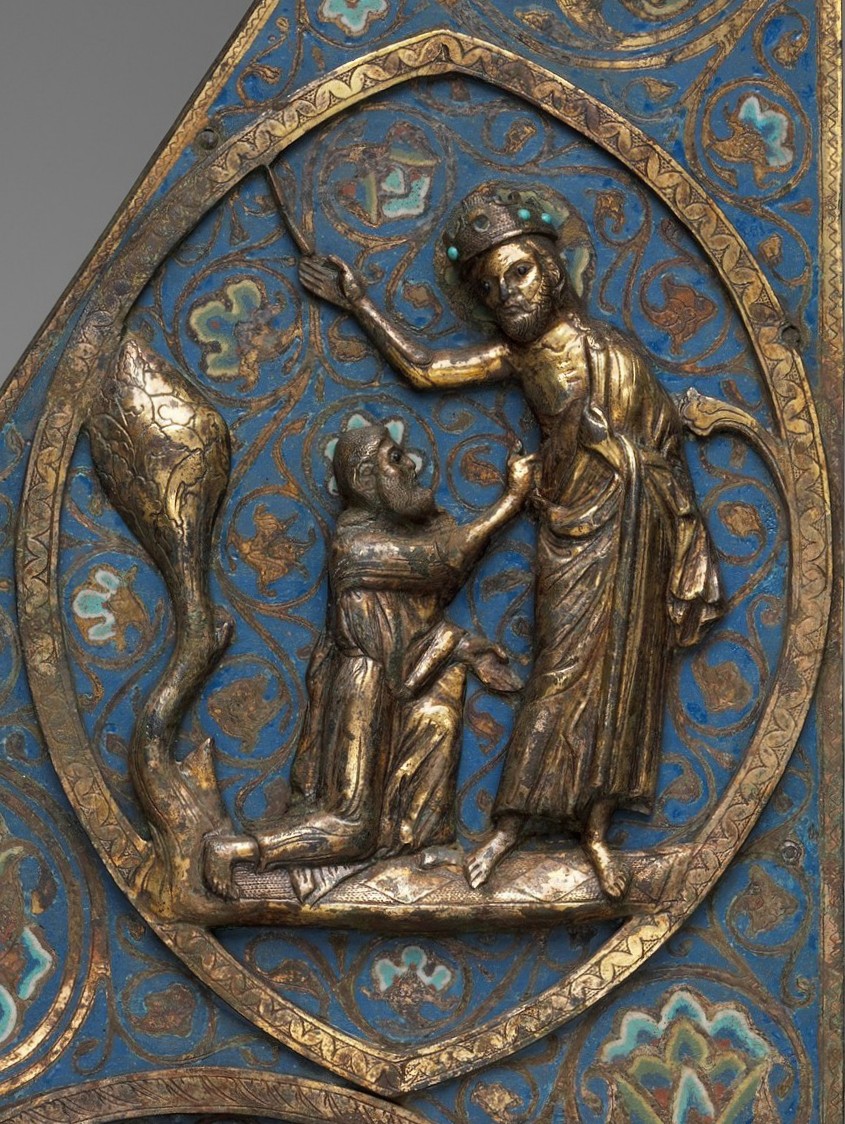
The Baptism of the Lord (2022)

June 4, 1973, Parroquia de Nuestra Señora de la Paz (Guadalajara, México)

It is somewhat ironic, that for most of us as Catholics, the day of our baptism, is not something that we remember.  Most of us were infants when we were baptized.  Our parents brought us to church.  Usually we were dressed up in some special, white baptismal garments.  And almost always, lots of pictures were taken.  They took pictures of us with our godparents.  They took pictures of us with our grandparents.  They took pictures of us with the priest or deacon that baptized us.  We may not remember the actual event.  But thanks to Kodak, and Polaroid, and Nikon, and now the cameras on our phones, we’ve got pictures to prove the event took place. The pictures make the event that much more real for us, who can’t remember that far back. Of course, as we just heard, at Jesus’ Baptism, they didn’t need to take any pictures to make the event memorable. We know, of course, that Jesus didn’t need Baptism.  Baptism is for us.  Sinners need Baptism.  The Son of God did not. By His Baptism though, Jesus makes holy the water of every Baptism that will take place following His. Because of Jesus’ Baptism, we are baptized!  And we also know how important Baptism is really is. Baptism is our way of beginning our walk with Jesus Christ.  It all starts with water, and oils, and fire, and promises. That is the way that we begin the walk that eventually will lead all of us to Heaven.  It all starts with Baptism. And yet, how important it is that all of us remember our baptisms!  As we come to the end of our Christmas season, before we head into Ordinary Time, we take the time to remember that we ARE baptized people. From the moment that all that water poured off our heads, we were a new creation in Christ.  We were born again.  Everything started a new! How important it is for us to NOT forget that! Today we celebrate Jesus’ Baptism and the beginning of His public ministry. But today demands that we also remember our own baptisms and the beginnings of our own walks with Christ.  Our Baptisms not only buy us a whole new way of life, but our Baptisms also get us the job and responsibility of carrying the Good News of Jesus Christ out to many others. May we bear witness to our Baptisms with our lives, not just with our words. May we live out our Faith every day.  And may we put into action, Jesus’ good news, by the way that we care and get involved! • AE


Fr. Agustin Schedule for the Feast of the Baptism of the Lord  (2022)

Saturday, January 8, 2022. 

3.30 p.m. Sacrament of Confession 

5.00 p.m. English Mass 

Sunday, January 9, 2022.

7.30 a.m. English Mass 

10.00 a.m. English Mass 


Fiesta del Bautismo del Señor (2022)

Maestro de Miraflores, El Bautismo de Cristo (c. 1490), técnica mixta sobre tabla, Museo Nacional del Prado (Madrid)

Los hombres y las mujeres de hoy hemos dejado de valorar lo que es la bendición y el sentido profundo que encierra. Los padres ya no bendicen a sus hijos. Las bendiciones litúrgicas han perdido su sabor original. Ya no se sabe lo que es la bendición nupcial, este texto tan bonito que prevee el ritual del Sacramento del Matrimonio. Poco a poco hemos ido olvidando que bendecir (del latín benedicere) significa literalmente «hablar bien», decirle cosas buenas a alguien. Y, sobre todo, decirle nuestro amor y nuestro deseo de que sea feliz. Y sin embargo todos necesitamos oír cosas buenas. Hay entre nosotros demasiada condena. Son muchos los que se sienten maldecidos más que bendecidos. Algunos se maldicen incluso a sí mismos. Se sienten malos, inútiles, sin valor alguno. Bajo una aparente arrogancia se esconde con frecuencia un ser inseguro que, en el fondo, no se aprecia a sí mismo. El problema de muchos no es si aman o no aman, si creen en Dios o no creen. El problema está en que no se aman a sí mismos. Y no es fácil sanar este tipo de heridas. Amarse a sí mismo cuando uno sabe cómo es, puede ser de las tareas más difíciles. Lo que hoy necesitamos escuchar son palabras de bendición. Sabenos amados, a pesar de nuestras caídas y errores. Pero, ¿dónde está la bendición? ¿cómo puede estar uno seguro de que es amado? Una de las mayores desgracias del cristianismo contemporáneo es haber olvidado, en buena parte, esta experiencia nuclear de la fe cristiana: somos amados, no porque seamos buenos, santos y sin pecado, sino porque Dios es bueno y nos ama de manera incondicional y gratuita en su Hijo Jesucristo. Cada uno es amado por Dios ahora mismo, tal como es, antes de empezar a cambiar. Cada uno de los evangelios narra que Jesús, al ser bautizado por Juan, escuchó la bendición de Dios: «Tú eres mi Hijo, el amado». También a nosotros nos alcanza esa bendición de Dios sobre Cristo. Cada uno de nosotros puede escucharla en el fondo de su corazón: «Tú eres mi hijo amado». Eso será también este año lo más importante. Cuando las cosas se pongan difíciles y la vida parezca de un peso insoportable, cosa buena y útil es recordar que Dios nos ama  con amor eterno. Esto es el principio y el fin de todo. Nuestra Alfa y nuestra Omega, la roca sólida sobre la que podemos construir nuestra vida cristiana • AE


The Epiphany of the Lord (2022)


Master of the Strauss Madonna, The Adoration of the Magi (ca. 1400), tempera and gold on panel, Seattle Museum of Art.

G. K. Chesterton, wrote a wonderful essay on three modern wise men. These three heard that there was a city of peace, a city where there would never be wars or disturbances. The men wanted to live in that city, but to do so, they had to past a test. They had to present themselves at the gates of the city with gifts to demonstrating that they belonged there because they were men who would ensure the continual peace of the city. So they journeyed to this wondrous city with what, they were sure, would be gifts that would guarantee peace and earn them admission into the city. When they got to the gates of the city, St. Joseph was there to judge their gifts. The first modern wise man brought gold. He suggested that money was the root of all wars. With the gold that he bought, people could buy all the pleasures of the world and have no need to fight. He was convinced that gold would bring peace. The second modern wise man did not bring frankincense. He brought chemistry. He brought modern science. With his science he could drug the minds of people into a state of perpetual bliss. With his chemistry, he could seed the soil and control the population. People would then have all that they would need so they would never go to war again. The story was developed to present the third modern wise man bringing a split atom, a new myrrh, a new symbol of death. His message was that anyone who opposed the way of peace would face death. This wise man was the father of nuclear deterrence. After they showed him their gifts, St. Joseph refused to let any of them enter. «What more could we have brought to demonstrate that we are men of peace,» they protested. «We carry with us means to provide affluence, control nature and destroy enemies.» St. Joseph whispered something into the ear of each man. Then they turned and went away with heavy hearts. He told them that they had forgotten the child. With all our technology, with all our affluence, with the power we have shown to dominate many forces of nature, we moderns are convinced that we are wise. We are convinced that we can find ways to ensure peace and happiness for everyone. We are convinced that we are wise. This might all seem good, but we have forgotten the child. Peace only comes through the Prince of Peace. Men cannot create peace apart from God. A century ago, the Pope, Benedict XV, decried the Treaty of Versailles. He said that God was not even mentioned in the treaty. The Treaty of Versailles ended WWI the so-called “war to end all wars.” How well did that treaty work? Nineteen years later World War II began. Are we wise? Do we seek him? Or do we have all the answers in our technological pockets? Do Siri, or Alexa or Google hold the answers we really need? Technology cannot answer the deep questions of life. It can only deal with relatively surface issues. The true answer to our big questions is beyond the realm of technology, but one of the first answers provided by faith. We must be convinced that unless our thoughts are Christo-centric, revolve around Jesus Christ, our Way to the Father, not only do we not have the answers about life, we don’t even know the questions that need to be asked. Although the advance of technology continues and this can and does benefit humankind, we have to ask, “Is the unbridled use of technology acceptable? Is AI, Artificial Intelligence, the solution to all problems? Do we need to apply ethics to technology? If, so, how? We seek peace, but we forget the child. First we have to find the child. Then we can enter the City of Peace. There are many messages carried in this feast day. There is the message of the Word of God manifested to the Gentiles. There is the message of God’s secret plan now revealed. There is the message that God calls all people from all nations to Himself. There is a message against prejudice and bigotry. There is also the message that seeking Christ means wanting Him to transform our lives. This transformation will temper our acceptance of advancements in technology and materialism. The Christian way of thinking molds us into wise men and women. And the wise still seek him • AE


Un relato de la Natividad


Solemnidad de la Epifanía del Señor (2022)

Autor anónimo, La Adoracion de los Magos, detalle de un sarcófago del siglo IV, Museos Vaticanos (Roma)

Es tal el ruido en que vivimos y tan grande la ola de materialismo, que casi hemos quedado atrofiados para descubrir a Dios en el día a día. No es que seamos ateos, es que nos hemos vuelto incapaces de relacionarnos con Dios. Cuando buscamos o conocemos el amor bajo formas degeneradas y cuando la vida está movida exclusivamente por intereses egoístas de beneficio o ganancia, algo se seca en nuestro corazón, y perdemos esa capacidad de relacionarnos con Él. Delp, ejecutado por los nazis, veía en este endurecimiento interior el mayor peligro para el hombre moderno: «Entonces deja el hombre de alzar hacia las estrellas las manos de su ser. La incapacidad del hombre actual para adorar, amar, venerar, tiene su causa en su desmedida ambición y en el endurecimiento de la existencia». Es así. Esta incapacidad para adorar a Dios se ha apoderado también de muchos creyentes que sólo buscan un Dios útil. Sólo les interesa un Dios que sirva para sus proyectos privados o sus programas socio-políticos. Dios queda así convertido en un artículo de consumo del que podemos disponer según nuestras conveniencias e intereses. Pero Dios es otra cosa. Dios es Amor infinito, encarnado en nuestra propia existencia, encarnado en la persona -real- de Jesús. Y ante ese Dios, lo primero es adoración, adoración profunda y de rodillas, y también júbilo, acción de gracias. Cuando olvidamos esto el cristianismo corre peligro de convertirse en un esfuerzo gigantesco de humanización, y la Iglesia en una institución eternamente agobiada, con la conciencia de no lograr el éxito moral por el que lucha y se esfuerza, terminando en una agencia que aboga más por el cambio climático que ayudando a sus hijos a alcanzar la salvación. Nuestra fe cristiana, antes que nada, es el descubrimiento de la Bondad de Dios; la certza de que sólo Dios salva. El gesto que nos presenta hoy el evangelio -los Magos arrodillados delante el Niño de Belén- expresa la actitud primera de todo creyente ante Dios. Dios existe. Está ahí, en el fondo de nuestra vida. Somos acogidos por Él. Amados por Él. Constantemente perdonados por Él. No sabemos con exactitud qué nos espera detrás de la muerte, pero hoy podemos vivir con confianza ante el misterio. Ante un Dios del que sólo sabemos que es Amor, no cabe sino el gozo, la adoración y la acción de gracias. El Espíritu nos conceda comenzar el añ nuevo con éstas tres actitudes en nuestro corazón: gozo, la adoración y la acción de gracias • AE


¡Changos y chinitas duérmansen!

Llegaron ya los reyes eran tres

Melchor, Gaspar y el negro Baltasar.

Arrope y miel, le llevaran,

y un poncho blanco de alpaca real.

Changos y chinitas duerman sen

que ya Melchor Gaspar y Baltasar,

todos los regalos traerán

para jugar mañana al despertar.

El Niño Dios muy bien lo agradeció

comió la miel y el poncho lo abrigó

y fue después, que sonrió,

y a media noche el Sol relumbró •

The Octave Day of Christmas Solemnity of the Blessed Virgin Mary, the Mother of God (2022)

So, how can Mary, a human being, be the mother of the Infinite One? This mystery is best understood when we focus on Jesus Christ. He is the Eternal Second Person of the Trinity, and a human nature, He took on humanity through the Blessed Virgin Mary. Mary is the mother of his human nature, not his divine nature. Mary is not a goddess. She is a human being who was prepared to be the vessel through which the Word would become flesh. 

That is why we say Mary is the Mother of God. This is what we are celebrating today. What must it have been like for the Eternal Word, to take on the nature of a human within the Blessed Virgin? He had to feel her heart beating. He had to be aware of the experience of being a human when he was only a microscopic zygote, then an embryo, then a fetus. When during her pregnancy Mary prayed to God, the child within her heard and answered her prayers. The Incarnation began at the Annunciation. Life outside of His Mother began on Christmas. There is a Christmas hymn that explains the mystery Jesus and Mary in a very simple way. 

The baker woman in her humble lodge received a grain of wheat from God. For nine whole months the grain she stored. Behold the handmaid of the Lord. Make us the bread, Mary, Mary. Make us the bread, we need to be fed. The baker woman took the road which led to Bethlehem, the house of bread. To knead the bread she labored through the night, and brought it forth about midnight. Bake us the bread, Mary, Mary. Bake us the bread, we need to be fed. 

She baked the bread for thirty years by the fire of her love and the salt of her tears, by the warmth of a heart so tender and bright, and the bread was golden brown and white. Bring us the bread, Mary, Mary. Bring us the bread, we need to be fed. 

After thirty years the bread was done. It was taken to town by her only son; the soft white bread to be given free to the hungry people of Galilee. Give us the bread, Mary, Mary. Give us the bread, we need to be fed. 

For thirty coins the bread was sold, and a thousand teeth so cold, so cold, tore it to pieces on Friday noon when the sun turned black and red the moon. Break us the bread, Mary, Mary, Break us the bread, we need to be fed. 

And when she saw the bread so white, the living bread she had made at night, devoured as wolves might devour a sheep, the baker woman began to weep. Weep for the bread, Mary, Mary. Weep for the bread, we need to be fed. 

But the bakerwoman’s only son appeared to his friends when three days had run on the road which to Emmaus led, and they knew him in the breaking of bread. Lift up your head, Mary, Mary. Lift up your head, for now we’ve been fed. 

How beautifully this captures today’s Solemnity. Mary, Mother of God, baked the Bread of God within her, delivered this bread in Bethlehem, the city that means House of Bread, and watches as we are fed by the Bread. She is the Mother of Jesus, the Son of God. She is the Mother of God. So, Oh Holy Mary, Mother of God, pray for us sinners, now and at the hour of our death, Amen • AE


Fr. Agustin Schedule for

The Octave Day of Christmas: Solemnity of the Blessed Virgin Mary, the Mother of God (2022)

The Solemnity of the Epiphany of the Lord (2022)

Friday, December 31, 2021. 

Saturday, January 1, 2022. 

Sunday, January 2, 2022

TBD


ALMA REDEMPTORIS MATER

Alma Redemptoris Mater (Loving Mother of our Redeemer in English) is a Marian hymn, written in Latin hexameter, and one of four seasonal liturgical Marian antiphons sung at the end of the office of Compline (the other three being Ave Regina Caelorum, Regina Caeli and Salve Regina)

Alma Redemptoris Mater (Madre del Redentor) es un himno Mariano, escrito en latín, y una de las cuatro Antífonas Marianas que se cantan al final de la liturgia de las horas. Las otras tres son: Ave Regina Caelorum, Regina cœli y Salve Regina. Se cree que su autor fue Hermannus Contractus (“Herman el Cojo”; 1013–1054) quien se basaría en los escritos de los santos Fulgencio, Epifanio, e Irineo de Lyon.1​Este himno se menciona en «el cuento de la priora», uno de los relatos de Geoffrey Chaucer en los (preciosos) Cuentos de Canterbury. Antiguamente se recitaba en las completas sólo desde el primer domingo de Adviento hasta la Fiesta de la Candelaria o fiesta de la purificación de la Virgen (2 de febrero) •


Solemnidad de María Santísima, Madre de Dios (2021) 

Autor anónimo, Eva y María, ilustración del Misal de Bernhard von Rohr, Arzobispo de Salzburgo (ca.1481), tempera sobre papel.

LA VISITADORA

Era Belén y era Nochebuena la noche. Apenas si la puerta crujiera cuando entrara. Era una mujer seca, harapienta y oscura con la frente de arrugas y la espalda curvada. Venía sucia de barro, de polvo de caminos. La iluminó la luna, y no tenía sombra. Tembló María al verla; la mula no, ni el buey, rumiando paja y heno igual que si tal cosa. Tenía los cabellos largos color ceniza, color de mucho tiempo, color de viento antiguo. En sus ojos se abría la primera mirada, y cada paso era tan lento como un siglo. Temió María al verla acercarse a la cuna. En sus manos de tierra, ¡oh Dios!, ¿qué llevaría…? Se dobló sobre el Niño, lloró infinitamente y le ofreció la cosa que llevaba escondida. La Virgen, asombrada, la vio al fin levantarse. ¡Era una mujer bella, esbelta y luminosa! El Niño la miraba. También la mula. El buey mirábala y rumiaba igual que si tal cosa. Era en Belén y era Nochebuena la noche. Apenas si la puerta crujió cuando se iba. María al conocerla gritó y la llamó: «¡Madre!» Eva miró a la Virgen y la llamó: «¡Bendita!». ¡Qué clamor, qué alborozo por la piedra y la estrella! Afuera aún era pura, dura la nieve y fría. Dentro, al fin, Dios dormido sonreía teniendo, entre sus dedos niños, la manzana mordida • A. Murciano