
R. Rogers (1825–1892), Nydia, the Blind Flower Girl of Pompeii, 1859, Marble, Detroit Institute of Arts, Detroit (Michigan)
Most of us would like to think that, if Jesus Himself were standing in front of us, we would listen carefully to every word He said. The Gospel suggests otherwise. In the Parable of the Sower, the problem is not the seed, nor is it the sower. The seed is good, and the sower is remarkably generous, scattering it everywhere. The difference lies in the soil. Some hearts are hard and closed. Some are enthusiastic but shallow. Some are so crowded with worries, distractions, and ambitions that God’s word never has room to grow. Only a few receive it deeply enough to bear fruit. It is tempting to read this parable and think about other people, but Jesus’ parables are rarely about other people; they are invitations to examine ourselves. The real question is not whether God is speaking. He is. The real question is whether we are listening. Every Sunday the seed is sown. Every time we open the Scriptures, the seed is sown. Every time we encounter a truth that calls us closer to God, the seed is sown again. The challenge is not finding the seed but preparing the soil. Prayer softens the heart. Confession removes the weeds. Silence allows roots to grow. Perseverance helps faith survive the heat of trials. The encouraging part of this Gospel is that Jesus never stops sowing. Even knowing that some seed will be lost, He continues to scatter His word with extraordinary generosity. This Sunday, perhaps the best prayer is a simple one: Lord, make my heart good soil, remove whatever prevents Your word from taking root, and help me bear the fruit You desire, thirty, sixty, or a hundredfold •
Many of us remember the great Tears for Fears and their song Sowing the Seeds of Love. While the song was written for a very different purpose, its title provides a fitting image for this Sunday’s Gospel. Every day, whether we realize it or not, we are sowing something. Through our words, decisions, and actions, we plant seeds that will eventually bear fruit. Jesus takes that familiar image and turns it into a question: not only what are we sowing, but what kind of soil have we become? •

St. Joseph Catholic Church (Dilley, TX) • Weekend Schedule

Fr. Agustin E. (Parish Administrator)
Saturday, July 11, 2026.
5.00 p.m. Sacramento de la Confesión
6.00 p.m. Santa Misa.
Sunday, July 12, 2026
8.00 a.m. Sacrament of Reconciliation
8.30 a.m. Holy Mass.
10.30 a.m. Sacrament of Reconciliation.
11.00 a.m. Holy Mass.
XV Domingo del Tiempo Ordinario (Ciclo A)
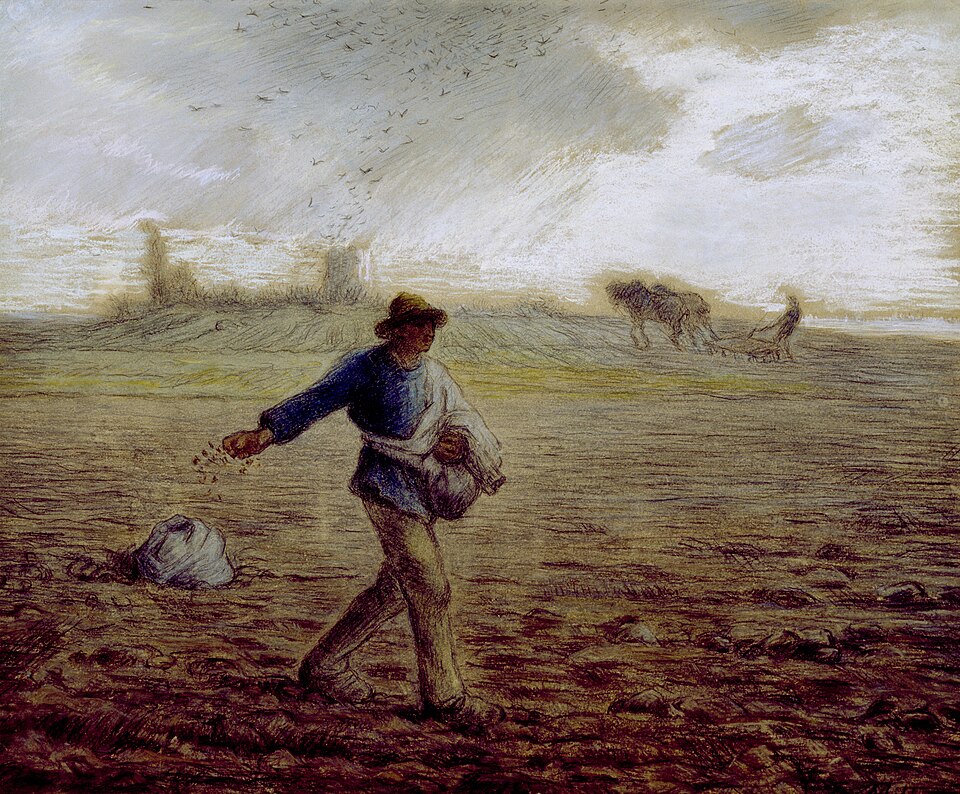
Jean-François Millet, El sembrador (c. 1850–1865), pastel sobre papel, Museo de Arte Walters, Baltimore (Maryland)
Si un agricultor sembrara como el del Evangelio, probablemente no tardaría en arruinarse. La semilla cae en el camino, entre piedras, entre espinos y sólo una parte llega a tierra buena. Desde el punto de vista de la eficiencia, parece un método desastroso. Sin embargo, Jesús describe precisamente así la acción de Dios. Dios no calcula como nosotros. No reserva su gracia para los perfectos ni su palabra para quienes parecen más prometedores. La derrama con una generosidad que, vista desde fuera, resulta casi excesiva. La ofrece al santo y al pecador, al creyente convencido y al indiferente, al que la recibirá con alegría y al que la rechazará. A veces nos impacienta esa forma de actuar. Nos gustaría que Dios distinguiera mejor, que seleccionara más cuidadosamente el terreno, que concentrara sus esfuerzos donde hubiera más probabilidades de éxito. Pero el Evangelio muestra a un Dios que prefiere correr el riesgo del rechazo antes que privar a una sola persona de la oportunidad de escuchar su voz. Quizá esa sea una de las razones por las que la parábola sigue siendo tan actual. Todos podemos recordar momentos en los que fuimos camino, roca o espino. Y, sin embargo, la semilla siguió llegando. La esperanza cristiana descansa precisamente ahí: no en la calidad del terreno, sino en la perseverancia del Sembrador. Dios nunca se cansa de sembrar •
Muchos recordamos a Joan Manuel Serrat cantando Cantares en esta inolvidable grabación de 1970 en Chile. Aunque la canción habla del camino más que de la siembra, comparte con el Evangelio de este domingo una intuición profunda: la vida se construye poco a poco, con decisiones aparentemente pequeñas que terminan dejando huella. En la parábola del evangelio el Señor utiliza otra imagen igualmente sencilla y poderosa: la de un sembrador que sale a esparcir la semilla. Lo que sucede después depende del terreno. Y ahí comienza la pregunta que el Evangelio dirige a cada uno de nosotros •

¿Más lecturas para el verano?