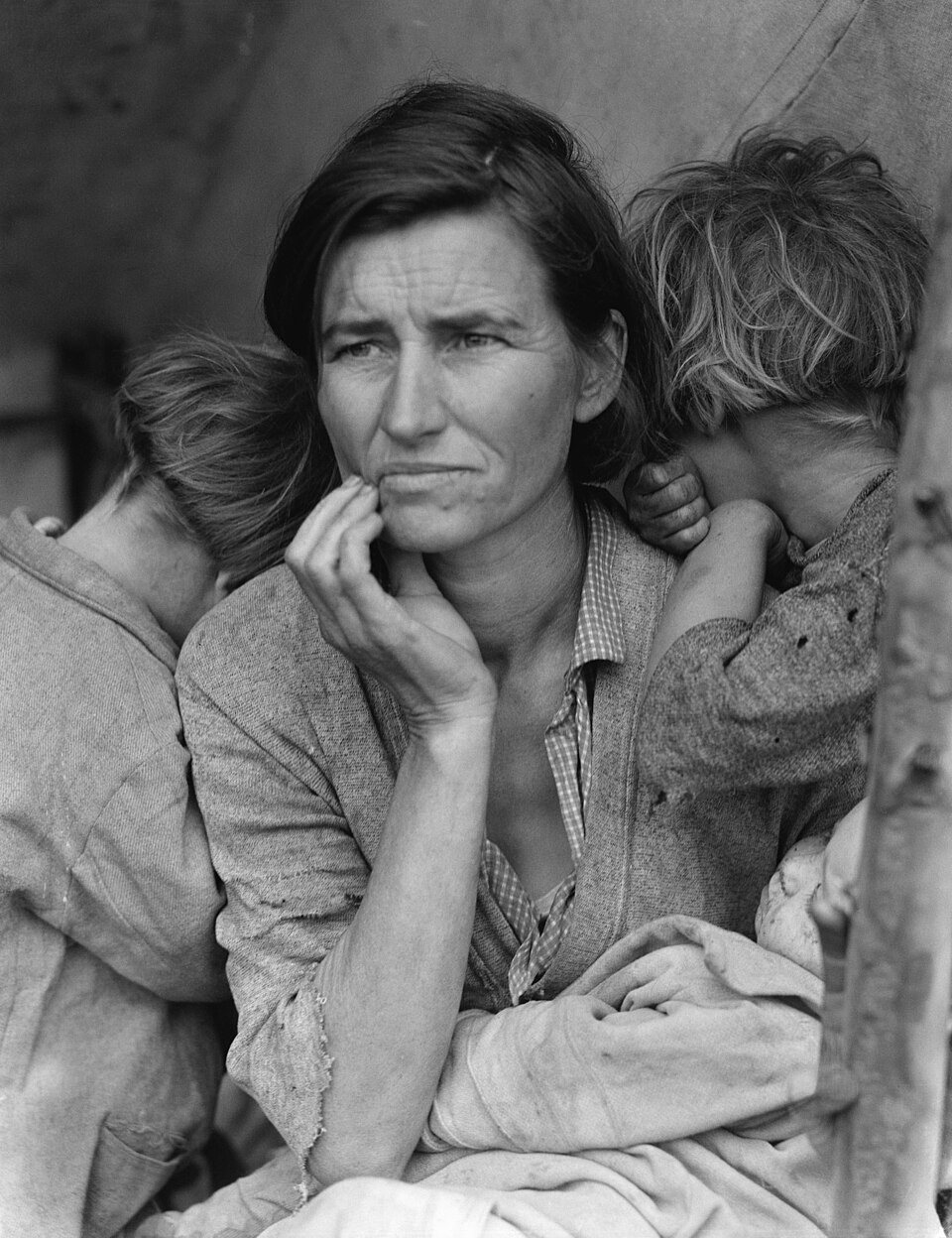
D. Lange, Migrant Mother (1936), Gelatin silver print, Museum of Moder Art (New York)
During the Great Depression, many families learned to think in terms of scarcity. Every loaf of bread mattered. Every coin was counted twice. Historians have often noted that even decades later, those who lived through those difficult years never completely lost the habit of asking, «Will there be enough?» The disciples seem to ask the very same question in this Sunday’s Gospel. Faced with thousands of hungry people, they see only five loaves and two fish, and their conclusion appears perfectly reasonable: «Dismiss the crowds so that they can buy food for themselves.» Jesus sees the same reality, yet reaches an entirely different conclusion. «There is no need for them to go away.» The miracle of the multiplication of the loaves is not simply about providing food. It reveals how God acts whenever human limitations are entrusted to Him. The disciples measure their resources; Christ measures the generosity of the Father. What seems insufficient in human hands becomes abundant in God’s hands. This Gospel also reveals something beautiful about the Heart of Christ. Before feeding the crowds, Jesus is moved with compassion and heals the sick. The miracle begins not with bread, but with mercy. Divine generosity always flows from divine love. The twelve baskets left over remind us that God does not merely provide enough. His grace is never calculated to the minimum. Again and again throughout Scripture, the Lord gives in abundance—not to encourage excess, but to reveal the immeasurable richness of His love. Every age has its own forms of scarcity. Some fear there will not be enough money, enough time, enough opportunities, enough hope. The Gospel gently reminds us that Christians are not called to ignore reality, but neither are they called to be imprisoned by it. Faith begins precisely where fear insists that nothing more can be done. The disciples offered everything they had, even though it seemed insignificant. Christ did the rest. He still does • AE
Written in 1932, at the height of the Great Depression, Brother, Can You Spare a Dime? became the anthem of a nation asking a painful question: Will there be enough? That same question echoes quietly in this Sunday’s Gospel. Faced with five loaves, two fish, and a hungry multitude, the disciples see only scarcity. Jesus, however, sees something else entirely.

St. Joseph Catholic Church (Dilley, TX) • Weekend Schedule

Fr. Agustin E. (Parish Administrator)
Saturday, August 1, 2026
5.00 p.m. Sacramento de la Confesión
6.00 p.m. Santa Misa.
Sunday, August 2, 2026
8.00 a.m. Sacrament of Reconciliation
8.30 a.m. Holy Mass.
10.30 a.m. Sacrament of Reconciliation.
11.00 a.m. Holy Mass.
XVIII Domingo del Tiempo Ordinario (Ciclo A)
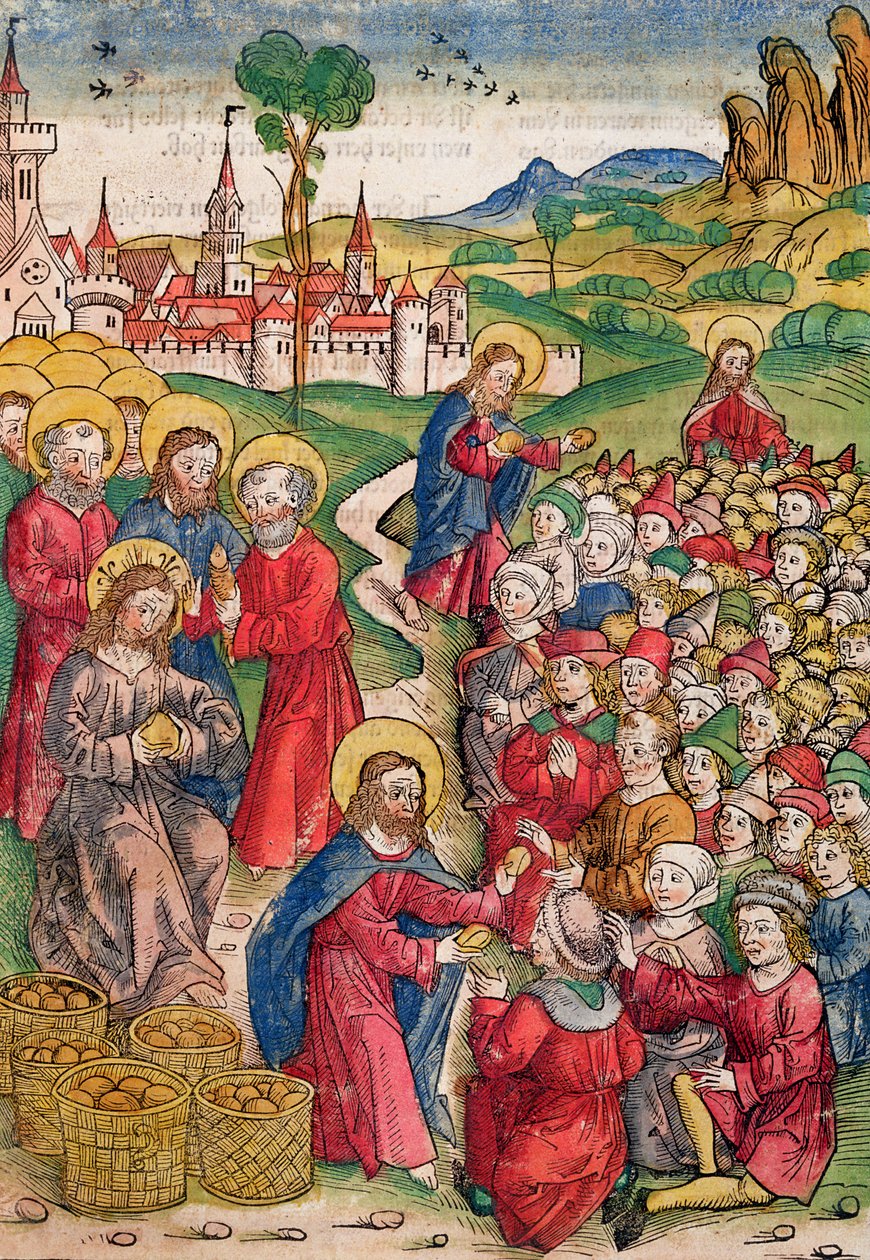
M. Wolgemut, La multiplicación de los panes y los peces (1491), Xilografía coloreada. Reproducción: MeisterDrucke.
Hay un personaje en este Evangelio del que nunca sabremos el nombre. Alguien llevó cinco panes y dos peces. Nada más. San Mateo no nos dice quién era, qué hacía, ni qué fue de él después. Sin embargo, aquel pequeño gesto anónimo terminó formando parte de uno de los milagros más conocidos de toda la historia. Así suele actuar Dios. A menudo pensamos que el Reino se construye gracias a figuras extraordinarias, cuando, en realidad, avanza gracias a personas cuyo nombre casi nadie recuerda: quien abre la iglesia cada mañana, quien prepara el altar, quien visita a un enfermo, quien enseña a un niño a hacer la señal de la cruz, quien reza en silencio por su familia. Sus gestos parecen tan modestos como cinco panes y dos peces. Pero cuando son puestos en las manos de Cristo, adquieren una fecundidad que nadie podría haber imaginado. Tal vez esa sea una de las enseñanzas más hermosas de este Evangelio: Dios no necesita acciones espectaculares para cambiar el mundo. Le bastan corazones dispuestos a ofrecer, con humildad, lo poco que tienen. Y, casi siempre, quienes hacen posible los mayores milagros son precisamente aquellos cuyo nombre sólo Dios conoce • AE
El Boléro de Maurice Ravel comienza con un sencillo ritmo de caja que se repite incansablemente mientras la orquesta crece poco a poco hasta alcanzar toda su grandeza. La caja nunca interpreta la melodía ni ocupa el centro de la escena. Sin embargo, sin ella, la obra simplemente no existiría. Algo parecido sucede en el Evangelio de este domingo. Nunca sabremos quién puso en manos de Jesús aquellos cinco panes y dos peces. Su nombre quedó en el anonimato, pero aquel pequeño gesto hizo posible uno de los milagros más recordados de la historia. Así actúa también Dios: el Reino suele sostenerse gracias a personas que pasan desapercibidas, que sirven sin buscar reconocimiento y que ofrecen, con sencillez, lo poco que tienen. Tal vez los mayores milagros de la Iglesia no lleven firma humana, porque quienes los hacen posibles son precisamente aquellos cuyo nombre sólo Dios conoce AE

+ vEraNo + LiBRos