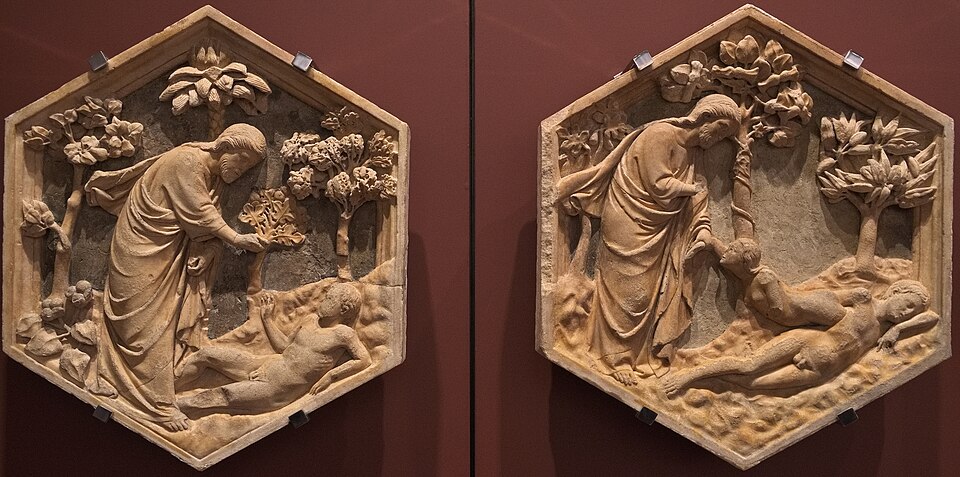
A. Pisano, The work of Adam and Eve, (1334), from the west side of the campanile, Florence, Museo dell’Opera del Duomo (2005)
The most interesting thing about the coin in this Sunday’s Gospel may not be its value, but its image. Jesus asks whose face is engraved on it, and everyone knows the answer: Caesar’s. Give it back to him, then. But Jesus leaves another question unspoken: whose image is engraved on us? The Book of Genesis tells us that human beings were created in the image and likeness of God. Unlike Caesar’s image on a coin, that image cannot be erased by poverty, failure, illness, age, or even sin. We spend much of our lives deciding what belongs to whom: our money, our time, our possessions, our responsibilities. Yet beneath all those questions lies something far more important. Before we belonged to a country, a profession, or even to ourselves, we bore the image of Someone else. And through Baptism, that belonging takes on another beautiful dimension: we become members of Christ’s Body, the Church. Our faith is never entirely a private possession. We receive it, share it, and live it in communion with others. This is something of what the ancient expression sentire cum Ecclesia means: learning to think, believe, and love with the Church, even when doing so asks us to look beyond our own preferences. Perhaps that is the quiet brilliance of Jesus’ answer. He does not simply tell us what to give Caesar. He reminds us, without saying it directly, that we ourselves belong to God. And belonging to God is never merely a matter of what we believe in private, but also of how we live in communion with the people He has gathered • AE
In the fourth movement of Johannes Brahms’ A German Requiem, Wie lieblich sind deine Wohnungen (“How Lovely Is Thy Dwelling Place”), the words of Psalm 84 express a profound longing to dwell in the presence of God. There is something deeply comforting in this music: the sense that we are not strangers in the world, searching endlessly for a place to belong. We have a home in God. Perhaps this is the deeper invitation hidden in this Sunday’s Gospel. Beyond the question of what belongs to Caesar lies a far more beautiful truth: we belong to God, and in Him we are at home.

St. Joseph Catholic Church (Dilley, TX) • Weekend Schedule

Fr. Agustin E. (Parish Administrator)
Saturday, October, 17, 2026
10.00 a.m. Sacrament of Baptism
5.00 p.m. Sacramento de la Confesión
6.00 p.m. Santa Misa.
Sunday, October 18, 2026
8.00 a.m. Sacrament of Reconciliation
8.30 a.m. Holy Mass.
10.30 a.m. Sacrament of Reconciliation.
11.00 a.m. Holy Mass.
Xxix Domingo Del tiempo Ordinario (Ciclo A)
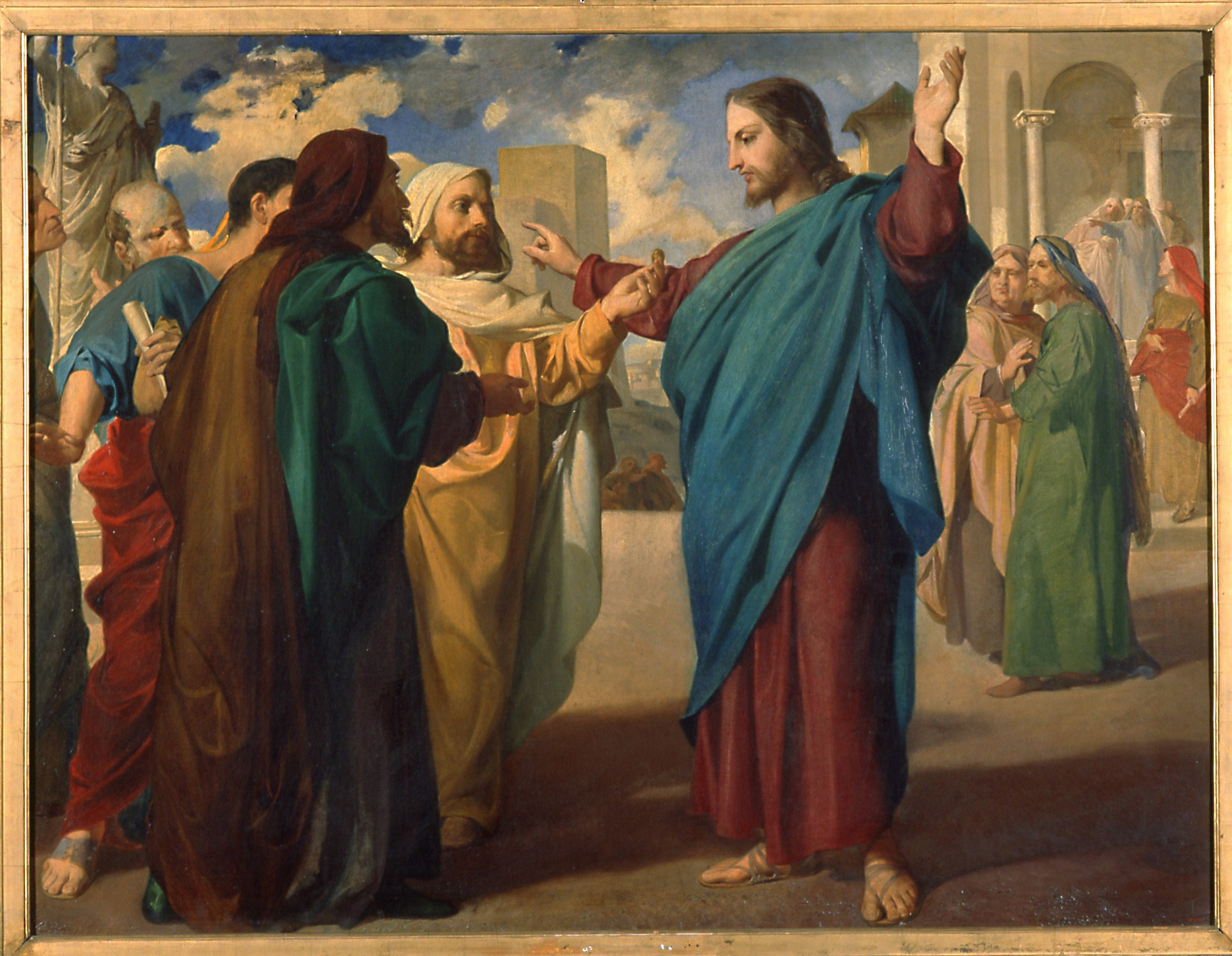
A. Caba, El tributo del César (1863). Óleo sobre lienzo. Reial Acadèmia Catalana de Belles Arts de Sant Jordi, Barcelona.
Hay algo sorprendente al comienzo del Evangelio de este domingo. Los fariseos envían a unos discípulos para tender una trampa a Jesús, pero antes de hacerle la pregunta sobre el impuesto al César, comienzan elogiándolo: «Sabemos que eres sincero y que enseñas el camino de Dios conforme a la verdad». Y tienen razón. Jesús es sincero, enseña la verdad y no se deja impresionar por las apariencias. Lo inquietante es que están diciendo la verdad sin tener ninguna intención de ser sinceros. Quizá ésta sea una de las formas más sutiles de la hipocresía: utilizar palabras verdaderas con intenciones falsas. También nosotros podemos hacerlo. Podemos decir algo amable para conseguir un favor, hacer una pregunta cuando en realidad sólo queremos poner a alguien en evidencia, ofrecer un elogio que esconde una crítica o utilizar incluso el lenguaje de la fe para justificar nuestras propias ambiciones. Las palabras pueden ser impecables y, sin embargo, el corazón estar muy lejos de ellas. Jesús no se deja atrapar por aquella cortesía calculada. Conoce la intención que se esconde detrás de la pregunta. Tal vez el Evangelio nos invite hoy a examinar algo que rara vez llevamos a la confesión: no solamente si lo que decimos es verdad, sino para qué lo decimos. Porque la sinceridad cristiana no consiste únicamente en evitar la mentira. Consiste también en aprender a decir la verdad con un corazón limpio • AE
En Everybody’s Talkin’, Harry Nilsson canta sobre esa extraña experiencia de estar rodeados de voces y, sin embargo, no escuchar realmente lo que nos dicen. Algo parecido sucede en el Evangelio de este domingo: los adversarios de Jesús le hablan con exquisita cortesía, pero no desean escucharlo. Ya han decidido lo que quieren conseguir de aquella conversación. Quizá la canción nos recuerde algo que olvidamos con facilidad: no toda conversación es un encuentro, ni todas las palabras buscan comprender al otro. A veces hablamos tanto que ya no queda espacio para escuchar •

¿Qué lees estos días?