Second Sunday of Lent (Cycle B)

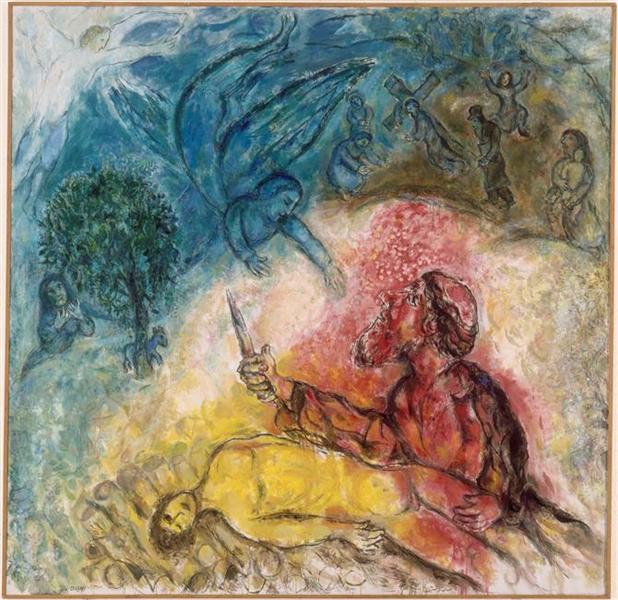
M. Chagall, The Sacrifice of Isaac (1966), oil on canvas, Particular Collection.

Why was Abraham called to kill Isaac? The Jewish people never practiced human sacrifice, so it appears only as a demonstration of how deep his faith in God needed to be. Well, as we know, he did have faith. He had faith in God’s promise that he would build him into a nation even though the only way that would happen would be through his son Isaac, the very son he was asked to sacrifice. As you know, God did not allow him to kill his son, and his faith was rewarded by a covenant with him saying that his descendants would be as countless as the stars of the sky and the sands of the seashore.

The point for us today is that God is aware of our faith. He knows the struggles we have to believe. Abraham did not want to sacrifice his son, but trusted in God. Jesus cried during the agony in the garden for his Father to free him from the terrible suffering he was going to endure, but he still trusted in God. How about us? God sees us praying to him. He knows we want to grow closer to him. At the same time he sees how our faith is continually tested by the turmoil of our lives. It is easy for us to believe and be people of faith when all is going well and we are happy. It is easy to believe, be people of faith, when we are enjoying our family, our children, our lives. It’s easy to believe, be people of faith, when we leave Church feeling warm and deeply moved. But faith is difficult when we are in turmoil. When relationships meant to be growing and nurturing, such as marriage, become bitter and end up destructive, when jobs that we don’t even like are in jeopardy, then faith is difficult. It is difficult to believe in God when we or a loved one is sick, or worse, when a loved one has passed away. God knows how often we are just plain angry, angry with him for the difficulties of our lives. He knows that sometimes we become so angry that we even doubt his existence. He knows that sometimes we wonder if he really cares. God knows how often we feel weak in our faith, but he also knows that we do want to have faith. God sees us as people of faith who are begging him to help us grow in faith. When times of turmoil take over our lives, we have to focus in on the covenant with Abraham, the covenant of faith. Abraham trusted that God would find a way to reward him for his faith. And God did reward him. And he does reward us for our faith. When the disciples, Peter, James, and John saw Jesus transfigured on the Mountain and Elijah and Moses with him, they wanted to stay there. We all feel the same way when we have a religious experience. We no not want it to end. But glory comes only after we understand what to rise from the dead means. We cannot fully celebrate the Glory of the Lord until we share in his passion, his death, his sacrifice. Our faith is tested like Abraham’s faith and like Jesus’ faith. We are called to give our best to the Lord and trust him to transform the sacrifice into a new covenant far greater than we could ever imagine. If God is for us, St. Paul tells the Romans and us, who can be against us? He who did not spare his own son for us, will prevent the forces of evil from attacking us. This includes those forces within us tearing at our psyche, leading us away from the Lord. God is for us. God is with us. May we have the faith of Abraham to trust in God even in the most difficult situations • AE


St. Dominic Catholic Church Weekend Schedule

Saturday, February 24, 2024

3.00 p.m. Sacrament of Reconciliation – Fr. Agustin E.

5.00 p.m. Holy Mass (English) – Fr. Agustin. E.

Sunday, February 25, 2024

7.30 a.m. Holy Mass (English) – Fr. Agustin E.

10.00 a.m. Holy Mass (English) – Fr. Agustin E.

12.30 p.m. Holy Mass (English) – Fr. Jaime P.

3.00 p.m. Santa Misa – Fr. Jaime P.


II Domingo de Cuaresma (Ciclo B)
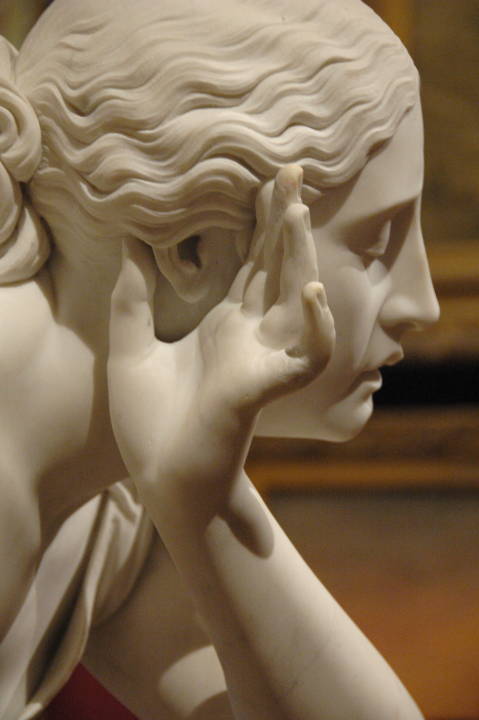
Randolph Rogers, Nydia (1856), mármol, Museo de Bellas Artes de Boston (EEUU)

Cada vez tenemos menos tiempo para escuchar. No sabemos acercamos con calma y sin prejuicios al corazón del otro. No acertamos a escuchar el mensaje que todo ser humano nos puede comunicar. Encerrados en nuestros propios problemas, pasamos junto a las personas, sin apenas detenemos a escuchar realmente a nadie. Se nos está olvidando el arte de escuchar.

A los cristianos se nos ha ido olvidando que en buena parte ser creyente es vivir escuchando a Jesús. Más aún. Sólo desde esta escucha nace la verdadera fe cristiana. Cuando en la montaña los apóstoles se asustan al sentirse envueltos por las sombras de una nube, sólo escuchan estas palabras: Este es mi Hijo amado: escúchenlo.

La experiencia de escuchar a Jesús hasta el fondo puede ser dolorosa, pero apasionante. No es el que nosotros habíamos imaginado desde nuestros esquemas piadosos. Su misterio se nos escapa. Casi sin damos cuenta, nos va arrancando de seguridades que nos son muy queridas, para atraernos hacia una vida más auténtica. Nos encontramos, por fin, con alguien que dice la verdad última. Alguien que sabe por qué vivir y por qué morir. Algo nos dice desde dentro que tiene razón. En su vida y en su mensaje hay verdad. Si perseveramos en una escucha paciente y sincera, nuestra vida empieza a iluminarse con una luz nueva. Comenzamos a verlo todo con más claridad. Vamos descubriendo cuál es la manera más humana de enfrentarnos a los problemas de la vida y al misterio de la muerte. Nos damos cuenta de los grandes errores que podemos cometer los humanos, y de las grandes infidelidades de los cristianos.

Quizá deberíamos de cuidar más en nuestras parroquias la escucha fiel a Jesús. Escucharle a él nos puede curar de cegueras, nos puede liberar de desalientos y cobardías, puede infundir nuevo vigor a nuestra fe. Vale la pena intentarlo. Estamos en Cuaresma, qué mejor tiempo para comenzar • AE



First Sunday of Lent (Cycle B)

Michelangelo, The Temptation of Saint Anthony (c. 1487), oil and tempera on panel, Kimbell Art Museum (Forth-Worth, Texas)

Usually on this Sunday we hear about three different temptations the Lord endured: turn rocks into bread, demand that your Father work a miracle to save you and trade His love for all the power of the world. We do not come upon these this year because they are in the Gospels of Matthew and Luke. Today’s reading is from the Gospel of Mark. Mark just states that Jesus went into the desert for 40 days, was confronted with temptations, beat off the devil and then began his mission. To prepare for Easter we spend forty days confronting temptation.

Sometimes people think that they must be very sinful because they have all sorts of temptations. People who are tempted are not sinful. They are alive. If any of us stops having temptations in our lives, we should check our pulse, we are probably dead. Temptations are difficult to overcome. If they were easy to fight off, then there would be no sin in the world, and we would be living in Utopia. No, temptations are difficult. Every temptation contains elements of attractiveness and has deep within it an aspect of goodness. Here is what I mean by that. All of God’s creation contains beauty. However, we can pervert that beauty and turn something that is good into something that is bad. For example, the human body is beautiful; pornography is a perversion of this beauty. All sin is attractive. If it were not attractive, we would not be tempted by it. Some people live by the saying, “If it feels good, do it.» What are they really saying? What they are saying is that anything is acceptable as long as they are getting pleasure from it. That is the way of the world. It is the way of selfishness, not the way of love. That is not the way of Jesus. Nor can it be our way. Jesus is the conqueror of sin. But His battle was not a simple task. Jesus was tempted to save His own life, give up and not go along with the Father’s plan. We are told to fight temptation with the Lord. When we choose Christ, the devil really does not stand a chance. In the battle for the Kingdom, Jesus fights with us, finding a way for us to win. Our weakness becomes a source of our strength because it leads us to depend on the Lord.

The 40 days of Lent are really about loving Jesus. We spend this time looking for ways to grow in our love for our Savior. We fight off temptation with Him. We give Him our sins in confession. We unite ourselves to Him through the Eucharist and many other ways of praying. We do everything possible to allow His grace into our lives. He is the Victor over sin. We are His. And He is ours • AE


Music for Lent

Canticum Canticorum is a cycle of 29 motets by Giovanni Pierluigi da Palestrina. Originally titled Motettorum – Liber Quartus, this Renaissance work is one of Palestrina’s largest collections of Sacred motets. The work is in Latin and based upon excerpts from the book in the Song of Songs of the Old Testament. The Song of Songs is thought to be an allegorical representation of the relationship of God and the faithful as husband and wife. The text uses the main image of a man and wife almost throughout, the poem suggesting movement from courting to consummation. Canticum Canticorum was written in the year 1584. This work, as with many of Palestrina’s works around this time, was dedicated to Pope Gregory XIII •


St. Dominic Catholic Church • Weekend Schedule

Saturday, February 17, 2024

3.00 p.m. Sacrament of Reconciliation – Fr. W. Zapalac.

5.00 p.m. Holy Mass (English) – Fr. W. Zapalac

Sunday, February 18, 2024

7.30 a.m. Holy Mass (English) – Fr. Jaime P.

10.00 a.m. Holy Mass (English) – Fr. W. Zapalac.

12.30 p.m. Holy Mass (English) – Fr. W. Zapalac

3.00 p.m. Santa Misa en Español – Fr. Jaime P.


PRIMER DOMINGO DE CUARESMA (CICLO B)

Caravaggio, Narciso (1597), óleo sobre tela, Galería Nacional de Arte Antiguo (Roma)

En su libro titulado La era del vacío, Gilles Lipovetsky dice que uno de los rasgos característicos del momento actual es el clima de seducción, algo que se produce no sólo en las relaciones interpersonales, sino que además es un elemento que poco a poco va regulando el consumo, la organización de la vida, la educación, las costumbres. Todo. La profusión de productos y la necesidad de captar al posible comprador ha llevado a la publicidad a extremar la estrategia de la seducción por medio de ofertas cada vez más tentadoras, imágenes más excitantes. Las relaciones autoritarias dejan paso a relaciones de seducción. Los jefes se han de mostrar cercanos y cordiales. La disciplina es sustituida por un estilo cálido y sugerente. La educación, antes autoritaria, se vuelve más permisiva y atenta a los deseos de los niños y adolescentes. Crece por todas partes el deseo de crear un clima más tranquilo y seductor. Se trabaja con hilo musical, se conduce escuchando el estéreo, se oye música desde la mañana a la noche como si el individuo tuviera necesidad de vivir transportado y envuelto en un ambiente relajado. El mismo lenguaje pretende crear un mundo suave y tolerante. Ya no hay ciegos y lisiados, sino invidentes y minusválidos. Los viejos se han convertido en “personas de la tercera edad». El aborto es solamente «una interrupción voluntaria del embarazo». Sin duda, es fácil detectar en este fenómeno de nuestro tiempo el deseo y la necesidad de humanizar la dureza de la vida moderna introduciendo un aire más cálido, cordial y tolerante.

Pero, como advierte el autor, esta sociedad seductora está generando un hombre de voluntad débil, seducido y esclavo de mil impulsos y deseos cambiantes. Cada vez son más los que viven a la carta, confeccionándose su propio menú según lo que se antoje en el momento, en medio de una búsqueda interminable de sí mismos, sin saber exactamente dónde enraizar su existencia, de ahí la proliferación de influencers, upstanders, y una gran variedad de conductas enraizadas en un profundo narcisismo. Basta asomarse a las redes sociales.

Los cristianos ¿dónde estamos? ¿hacia dónde miramos? ¿cuál es es nuestro punto de referencia? Una vida digna de este nombre -cristiano- exige no ceder a seducciones que pueden destruirnos como personas, de ahí la enorme importancia del evangelio de este domingo, el primero en el tiempo de Cuaresma, donde encontramos la figura sobria, fuerte, sencilla, de Jesús enfrentándose a la tentación, e invitándonos a hacer lo mismo, manteniendo despierto el oído interior, conservando limpio el corazón, estando atentos a la voz de nuestra conciencia. En seis sencillísimas palabras el Señor traza el camino que deberíamos recorrer: “Arrepiéntanse y crean en el Evangelio” • AE


lEctUrAS paRa lA cUaResMa


Ash Wednesday (2024)

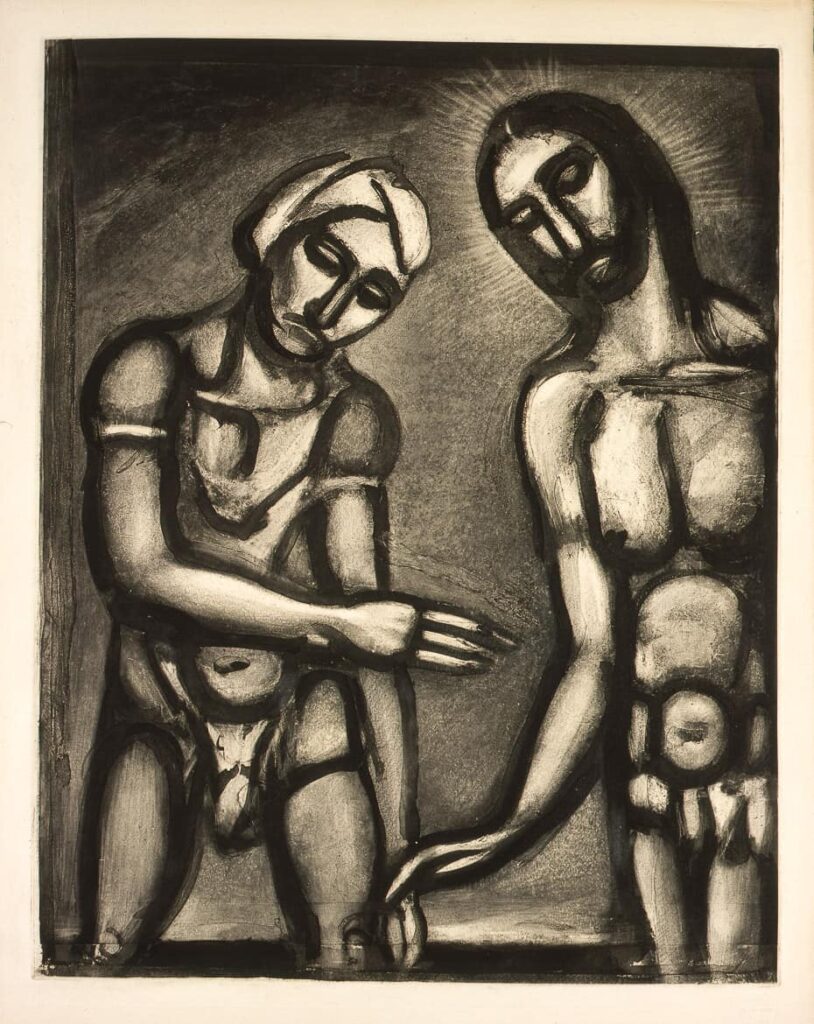
G. Rouault, Seigneur, c’est vous, je vous reconnais, de su obra Miserere, Fundación Georges Rouault (Paris)

Dios no se cansa de nosotros. Acojamos la Cuaresma como el tiempo fuerte en el que su Palabra se dirige de nuevo a nosotros: «Yo soy el Señor, tu Dios, que te hice salir de Egipto, de un lugar de esclavitud» (Ex 20,2). Es tiempo de conversión, tiempo de libertad. Jesús mismo, como recordamos cada año en el primer domingo de Cuaresma, fue conducido por el Espíritu al desierto para ser probado en su libertad.

Durante cuarenta días estará ante nosotros y con nosotros: es el Hijo encarnado. A diferencia del Faraón, Dios no quiere súbditos, sino hijos. El desierto es el espacio en el que nuestra libertad puede madurar en una decisión personal de no volver a caer en la esclavitud.

En Cuaresma, encontramos nuevos criterios de juicio y una comunidad con la cual emprender un camino que nunca antes habíamos recorrido. Esto implica una lucha, que el libro del Éxodo y las tentaciones de Jesús en el desierto nos narran claramente. A la voz de Dios, que dice: «Tú eres mi Hijo muy querido» (Mc 1,11) y «no tendrás otros dioses delante de mí» (Ex 20,3), se oponen de hecho las mentiras del enemigo. Más temibles que el Faraón son los ídolos; podríamos considerarlos como su voz en nosotros. El sentirse omnipotentes, reconocidos por todos, tomar ventaja sobre los demás: todo ser humano siente en su interior la seducción de esta mentira. Es un camino trillado. Por eso, podemos apegarnos al dinero, a ciertos proyectos, ideas, objetivos, a nuestra posición, a una tradición e incluso a algunas personas. Esas cosas en lugar de impulsarnos, nos paralizarán. En lugar de unirnos, nos enfrentarán.

Existe, sin embargo, una nueva humanidad, la de los pequeños y humildes que no han sucumbido al encanto de la mentira. Mientras que los ídolos vuelven mudos, ciegos, sordos, inmóviles a quienes les sirven (cf. Sal 115,8), los pobres de espíritu están inmediatamente abiertos y bien dispuestos; son una fuerza silenciosa del bien que sana y sostiene el mundo. Es tiempo de actuar, y en Cuaresma actuar es también detenerse. Detenerse en oración, para acoger la Palabra de Dios, y detenerse como el samaritano, ante el hermano herido. El amor a Dios y al prójimo es un único amor. No tener otros dioses es detenerse ante la presencia de Dios, en la carne del prójimo. Por eso la oración, la limosna y el ayuno no son tres ejercicios independientes, sino un único movimiento de apertura, de vaciamiento: fuera los ídolos que nos agobian, fuera los apegos que nos aprisionan. Entonces el corazón atrofiado y aislado se despertará. Por tanto, desacelerar y detenerse. La dimensión contemplativa de la vida, que la Cuaresma nos hará redescubrir, movilizará nuevas energías. Delante de la presencia de Dios nos convertimos en hermanas y hermanos, percibimos a los demás con nueva intensidad; en lugar de amenazas y enemigos encontramos compañeras y compañeros de viaje •

(Extracto del Mensaje para la Cuaresma del 2024 del Santo Padre Francisco; el texto completo puede leerse AQUI)


St. Dominic Catholic Church • Ash Wednesday 2024 Schedule

MORNING

6.30 a.m. Liturgy of the Word and distribution of Ashes

8.30 a.m. Holy Mass and distribution of Ashes

AFTERNOON

12.15 p.m. Liturgy of the Word and distribution of Ashes

5.00 p.m. Liturgia de la Palabra e imposición de la ceniza (Español)

6.00 p.m. Liturgy of the Word and distribution of Ashes

7.00 p.m. Liturgia de la Palabra e imposición de la ceniza (Español)

8.00 p.m. Liturgy of the Word and distribution of Ashes


Attende Domine

Attende, Domine is a Christian liturgical chant for the season of Lent, referred to in English as the Lent Prose. The themes of this hymn are the sinfulness of man and the mercy of God, a theological concept emphasised during Lent. The text is Mozarabic in origin and dates to the 10th century, and is sung to a Mode V Gregorian melody • AE

℟. Hear us, O mighty Lord,show us your Mercy: Sinners we stand before you.

  1. To thee, Redeemer, on thy throne of glory:
    lift we our weeping eyes in holy pleadings:
    listen, O Jesu, to our supplications. ℟.
  2. O thou chief cornerstone, right hand of the Father:
    way of salvation, gate of life celestial:
    cleanse thou our sinful souls from all defilement. ℟.
  3. God, we implore thee, in thy glory seated:
    bow down and hearken to thy weeping children:
    pity and pardon all our grievous trespasses. ℟.
  4. Sins oft committed now we lay before thee:
    with true contrition, now no more we veil them:
    grant us, Redeemer, loving absolution. ℟.
  5. Innocent, captive, taken unresisting:
    falsely accused and for us sinners sentenced,
    save us, we pray thee, Jesu our Redeemer. ℟.

Sixth Sunday in Ordinary Time (Cycle B)

Ilyās Rāhib, Jesus Cleanses a Leper, Arabic Gospels (1684), Walters Art Museum (Baltimore)

This Sunday’s first reading from the Book of Leviticus gives just a few of the horrible rules established by the Mosaic community to protect itself from leprosy. Lepers were ostracized by their families and neighbors and forced to live outside the villages and towns. As today’s reading says, they had to cover their mouths with one hand and call out “Unclean, unclean” as they walked. Anyone who came into any contact whatsoever with a leper was considered to be unclean like the leper. And Jesus, moved with pity, stretched out his hand, touched the leper, and said to him, “Be made clean.” Jesus did not see the unclean leper, or his disease. He was not concerned with the strict prohibitions of Jewish society. Jesus did not see a leper at all; he saw a human soul in desperate need. He stretched out his hand and touched him. He healed him with his touch. Jesus gave this power to his disciples.

At the conclusion of the Gospel of Mark, Jesus proclaims the signs of the members of his people. Among these signs is this one: they will lay their hands on the sick, and they will recover. We possess the wonderful capacity to be instruments of the healing power of Christ. Therefore, we have the duty not only to pray for the sick and to help them get effective medical help, but also to pray over them and extend the touch of Christ to them.

In the second reading for today Paul challenges us to imitate Christ. We are to be ministers of healing. We are to touch not just the physically sick, but all those whose lives are hurting and need healing in any way possible. It is simply not Christian to ostracize anyone for any reason whatsoever. In the Christian society, even those with the most contagious diseases are cared for in a way that gives them dignity and love. How about those who are spiritually sick? How about those who have left the Church, left Christianity? Are they to be cared for as those who are very sick? Absolutely! The Gospels often note that Jesus was moved with pity for the people as he preached the Kingdom of God. When he faced the troubled, the abandoned, the sick, when stirred by the blind, when crossing paths with the widow of Nain, and today, when face to face with a leper, Jesus was moved not by disgust, not by antagonism, but by compassion. Having compassion and showing mercy are the Christian qualities of great minds and large hearts. Today we are called to allow our hearts to be enlarged by Christianity • AE


St. Dominic Catholic Church • Weekend Schedule

Saturday, February 10, 2024

3.00 p.m. Sacrament of Reconciliation – Fr. Jaime.

5.00 p.m. Holy Mass (English) – Fr. Jaime.

Sunday, February 11, 2024

7.30 a.m. Holy Mass (English) – Fr. Jaime P.

10.00 a.m. Holy Mass (English) – Fr. W. Zapalac.

12.30 p.m. Holy Mass (English) – Fr. W. Zapalac

3.00 p.m. Santa Misa en español – Fr. Jaime P.


VI Domingo del Tiempo Ordinario (Ciclo B)

En la sociedad judía el leproso no era sólo un enfermo, era antes que nada un peligro, alguien estigmatizado y sin lugar en la sociedad. El libro del Levítico era contundente: «El leproso llevará las vestiduras rasgadas y la cabeza desgreñada. Irá avisando a gritos: “Impuro, impuro “. Mientras le dura la lepra será impuro. Vivirá aislado y habitará fuera del poblado». La actitud correcta y santa -para más oprobio- sancionada por la Sagrada Escritura, era clara: excluir a los leprosos. Era lo mejor para todos. Para nuestra fortuna, Jesús se rebela ante esta situación. El evangelio de hoy nos presenta el relato del leproso que se le acerca. Aquel hombre no pide ser curado sino quedar limpio. Son dos cosas que parecen lo mismo pero que en realidad no lo son. Lo que ese hombre buscaba era verse liberado de la impureza y del rechazo social. Jesús queda conmovido, extiende su mano, toca al leproso y se le dice claramente «Quiero. Queda limpio». Desde entonces Jesús no acepta una sociedad que excluye a leprosos e impuros. No admite el rechazo social hacia los peligrosos. Jesús toca a aquel hombre para liberarlo de miedos y prejuicios. Lo limpia para decirnos a todos que Dios no excluye ni castiga a nadie con la marginación. Es la sociedad la que pensando sólo en su seguridad levanta barreras y excluye a quienes no considera dignos. Qué fácil es olvidarnos del sufrimiento de delincuentes, drogadictos, prostitutas, vagabundos y desarraigados. Muchos de ellos no han conocido el calor de un hogar, ni la seguridad de un trabajo, ni han tenido amigos que los quieran sin más. Atrapados para siempre, ni saben ni pueden salir de su triste destino. Y nosotros, cristianos tan de golpe de pecho y vela chorreada ¡cuántas veces los miramos sí, con compasión, pero de lejos, sin relacionarnos con ellos y sin hacer nada por ellos! ¿No será este el momento de hacer algo por ellos? • AE

¿Quieres hacer algo por los demás? ¡Echanos una mano en Catholic Charities en la Arquidiócesis de San Antonio! AQUI puedes empezar el proceso para ser voluntario y echar la mano en alguno de los muchos ministerios


¿Qué andamos leyendo? ¿Qué vamos a leer?


Fifth Sunday of Ordinary Time (Cycle B)

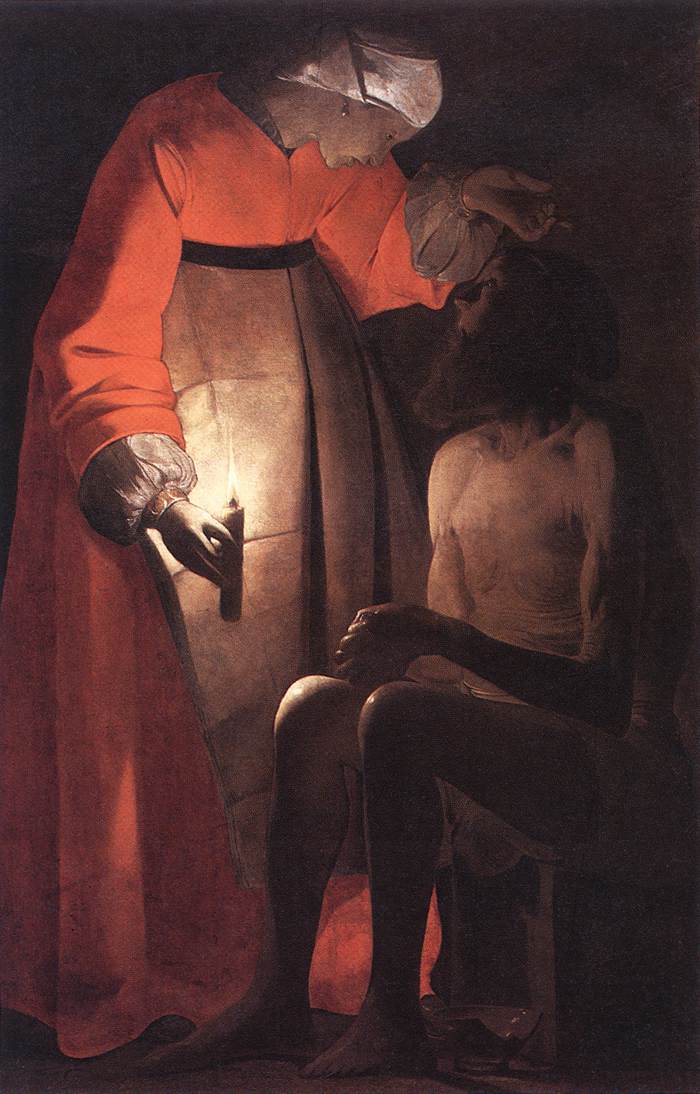
G. De La Tour, Job Mocked by his Wife (1630), Oil on canvas, Musée des Vosges, Épinal (France)

We need Job to remind us that there is so much more to existence than the physical here and now. The main section of the Book of Job concludes with Job recognizing that he will never have the answers to his problems. He has to place his trust in God. Jesus lived in a world of sickness. There was so much sickness, so much misery. We read in the Gospels people suffering from leprosy, paralysis, epilepsy. We hear about the blind and the deaf. It is no wonder that large crowds of people continually pressed on Jesus pleading with Him to heal them. And Jesus did heal many people, lepers, a man with a withered arm, cripples, and many, many more. Notice, though, what Jesus did before he healed people. He prayed. He prayed to His Father. His human nature stayed in touch with his divine nature as he went off to a deserted place to pray. And His prayers were answered with such power that he could heal. We do not know the reasons why there are so many problems in the world. We do not know why good people suffer. We do not know why children die. We do not even know the extent of suffering around us. What we do know is that if we keep a union with God, we can see all difficulties for what they are, temporary. “This too will pass,” the wise say. And so we meet challenges head on knowing that God will fight with us, helping us win the battle here so we can join him in the eternal celebration of His victory. And so, we pray. We welcome the spiritual into our lives. We welcome the Presence of God into our lives and witness Him strengthening our faith life. And we witness the power of prayer.

Jesus heals. He heals the pain not just of the people of the past,  those people we hear about in the Gospels. Jesus heals the pain of the people of today. Some receive physical healing immediately. Others receive healing in stages. All who call out to the Lord are healed. Some are healed physically. Some are healed emotionally, able to accept their condition in life. All receive spiritual healing as they unite their pain to the Cross of Christ. We who carry Christ within us, carry within us the one who heals. If we believe in Him, if we trust in Him, then we refuse to join Job’s cry of despair. We recognize that Christ is present when we need Him the most, healing our internal and our external turmoil. We need to remember: we are not alone. Jesus is always with us. The last words of the Gospel of Matthew are so important: “Know that I am with you always until the end of time.” He is here to protect us from the doubts and despair that plagued Job. He is here to give us the courage to walk with Him over the threshold to a new life • AE


St. Dominic Catholic Church • Weekend Schedule

Saturday, February 3, 2024

3.00 p.m. Sacrament of Reconciliation – Fr. Jaime.

5.00 p.m. Holy Mass (English) – Fr. Jaime.

Sunday, February 4, 2024

7.30 a.m. Holy Mass (English) – Fr. Jaime P.

10.00 a.m. Holy Mass (English) – Fr. Jaime P.

12.30 p.m. Holy Mass (English) – Fr. Agustin E.

3.00 p.m. Santa Misa – Fr. Agustin E.


V Domingo del Tiempo Ordinario (Ciclo B)

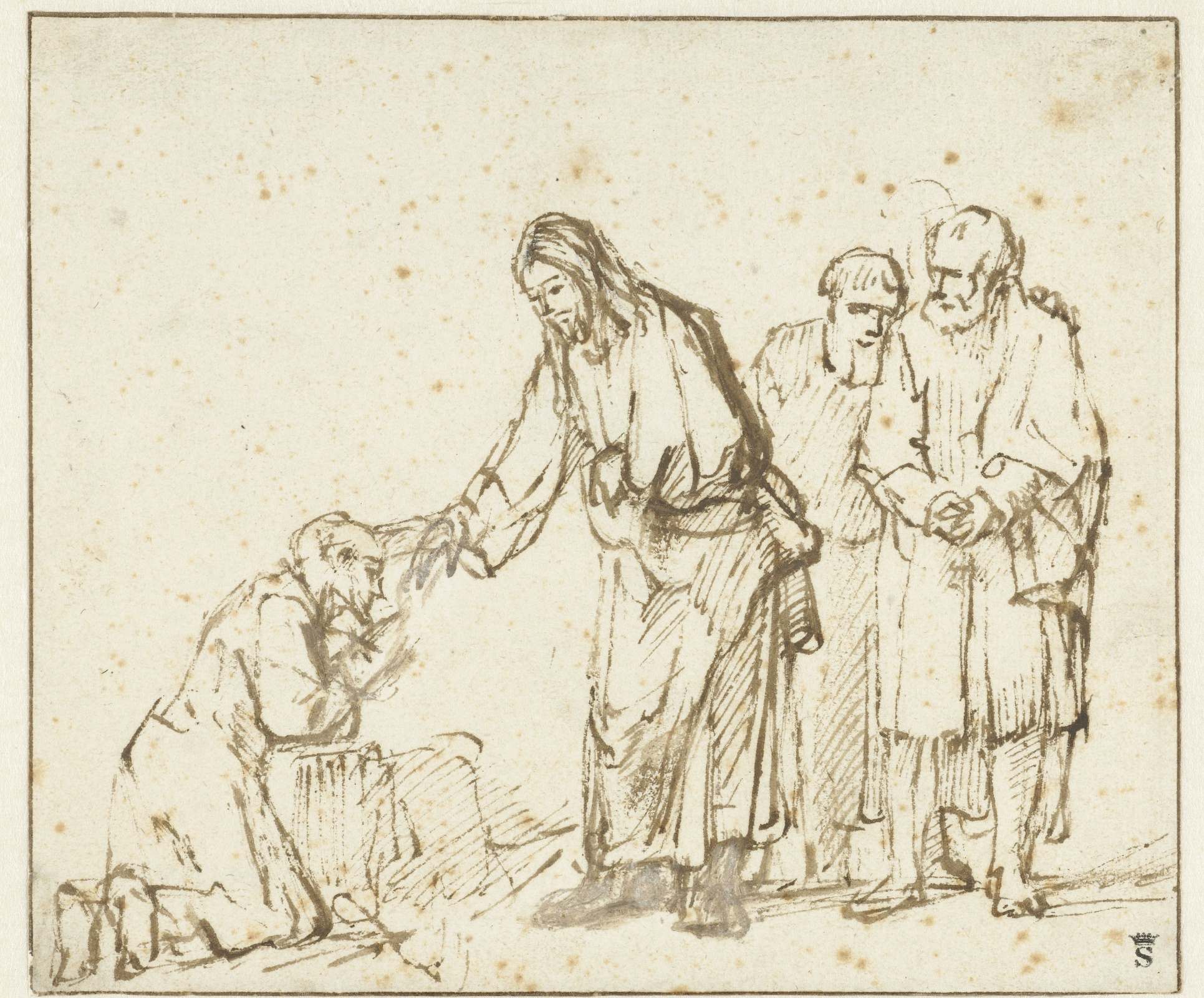
Rembrandt, Jesús cura a un leproso (1655), estudio preparatorio, Rembrandthuis (Amsterdam)

La enfermedad es una de las experiencias más duras del ser humano. No sólo padece el enfermo que siente su vida amenazada y sufre sin saber por qué, para qué y hasta cuándo. Sufre también su familia y quienes están cerca. De poco sirven las palabras y explicaciones. ¿Qué hacer cuando ya la ciencia no puede detener lo inevitable? ¿Cómo afrontar de manera humana el deterioro? ¿Cómo estar junto al familiar o el amigo gravemente enfermo? ¡Qué difícil responder!

Lo primero es acercarse. Al que sufre no se le puede ayudar desde lejos. Hay que estar cerca. Sin prisas, con discreción y respeto total. Ayudarle a luchar contra el dolor. Darle fuerza para que colabore con los que tratan de curarlo. Esto exige acompañarlo en las diversas etapas de la enfermedad y en los diferentes estados de ánimo. Ofrecerle lo que necesita en cada momento. No incomodarnos ante su irritabilidad. Tener paciencia. Permanecer junto a él. Es importante escuchar. Que el enfermo pueda contar y compartir lo que lleva dentro: las esperanzas frustradas, sus quejas y miedos, su angustia ante el futuro. Es un respiro para el enfermo poder desahogarse con alguien de confianza. No siempre es fácil escuchar. Requiere ponerse en el lugar del que sufre y estar atento a lo que nos dice con sus palabras y, sobre todo, con sus silencios, gestos y miradas. La verdadera escucha exige acoger y comprender las reacciones del enfermo. La incomprensión hiere profundamente a quien está sufriendo y se queja. «Animo», resignación»… son palabras inútiles cuando hay dolor. De nada sirven consejos, razones o explicaciones, “choros mareadores”, como dicen los chavos. Sólo la comprensión de quien acompaña con cariño y respeto alivia. La persona puede adoptar ante la enfermedad actitudes sanas y positivas o puede dejarse destruir por sentimientos estériles y negativos. Muchas veces necesitará ayuda para mantener una actitud positiva, para confiar y colaborar con los que le atienden, para no encerrarse solo en sus problemas, para tener paciencia consigo mismo o para ser agradecido.

El enfermo puede necesitar también reconciliarse consigo mismo, curar las heridas del pasado, dar un sentido más hondo a su dolor, purificar su relación con Dios. El creyente puede ayudarle a orar, a vivir con paz interior, a creer en el perdón y confiar en su amor salvador.

El evangelio de hoy nos dice que las personas acercaban sus enfermos y poseídos hasta Jesús. Él sabía acogerlos con cariño, despertar su confianza en Dios, perdonar su pecado, aliviar su dolor y sanar su enfermedad. Su actuación ante el sufrimiento humano siempre será para los cristianos el ejemplo a seguir en el trato a los enfermos, ¿al menos intentamos imitar al Señor? • AE


Música que sana