
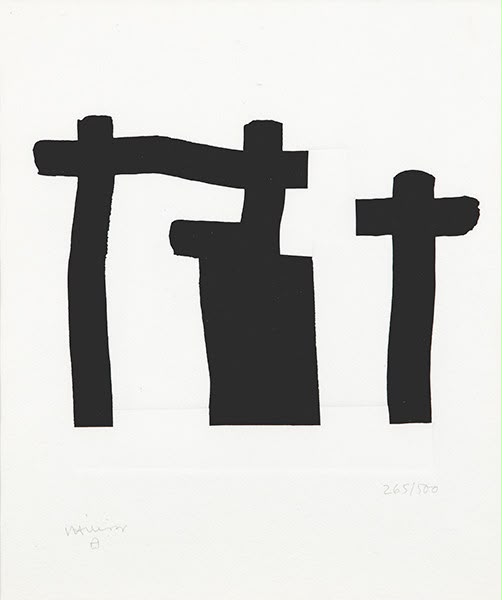
E. Chillida, El Buen Ladrón (The Good Thief), 1994. Silkscreen with embossing on Paperki paper, ed. 265/500.
Peter’s mistake in this Gospel is born, strangely enough, from love. He cannot bear the thought of Jesus suffering, and so he tries to protect him: «God forbid, Lord! No such thing shall ever happen to you.» It sounds almost tender—until Jesus answers with startling severity: «Get behind me, Satan.» Peter loves Jesus, but at that moment he loves him according to Peter’s plans, not the Father’s. Perhaps we do the same more often than we realize. We ask God to remove what is difficult, to spare us the road we would rather not travel, to arrange life according to what seems good and reasonable to us. Yet some roads cannot be avoided without losing something deeper along the way. Faith is not asking Christ to follow the life we have planned; it is finding the courage to follow him into the life he gives us. The cross is never beautiful because it hurts. It becomes beautiful only when love passes through it—and discovers, on the other side, that what looked like loss was sometimes the mysterious beginning of life • AE
Something in Couperin’s Les Barricades Mystérieuses, played here by Jean Rondeau, seems to move forward while gently resisting its own movement. Perhaps that is why it accompanies this Gospel so beautifully. Peter wants to place a barrier before the road to Jerusalem; Christ asks him instead to follow. Faith sometimes begins when we stop trying to clear the road ahead and simply walk behind the One who knows the way • AE

St. Joseph Catholic Church (Dilley, TX) • Weekend Schedule

Fr. Agustin E. (Parish Administrator)
Saturday, August 29, 2026.
4.00 p.m. Sacramento de la Confesión
6.00 p.m. Santa Misa.
Sunday, August 30, 2026.
7.30 a.m. Sacrament of Reconciliation
8.30 a.m. Holy Mass.
10.00 a.m. Sacrament of Reconciliation.
11.00 a.m. Holy Mass.
XXII Domingo del Tiempo Ordinario (Ciclo A)
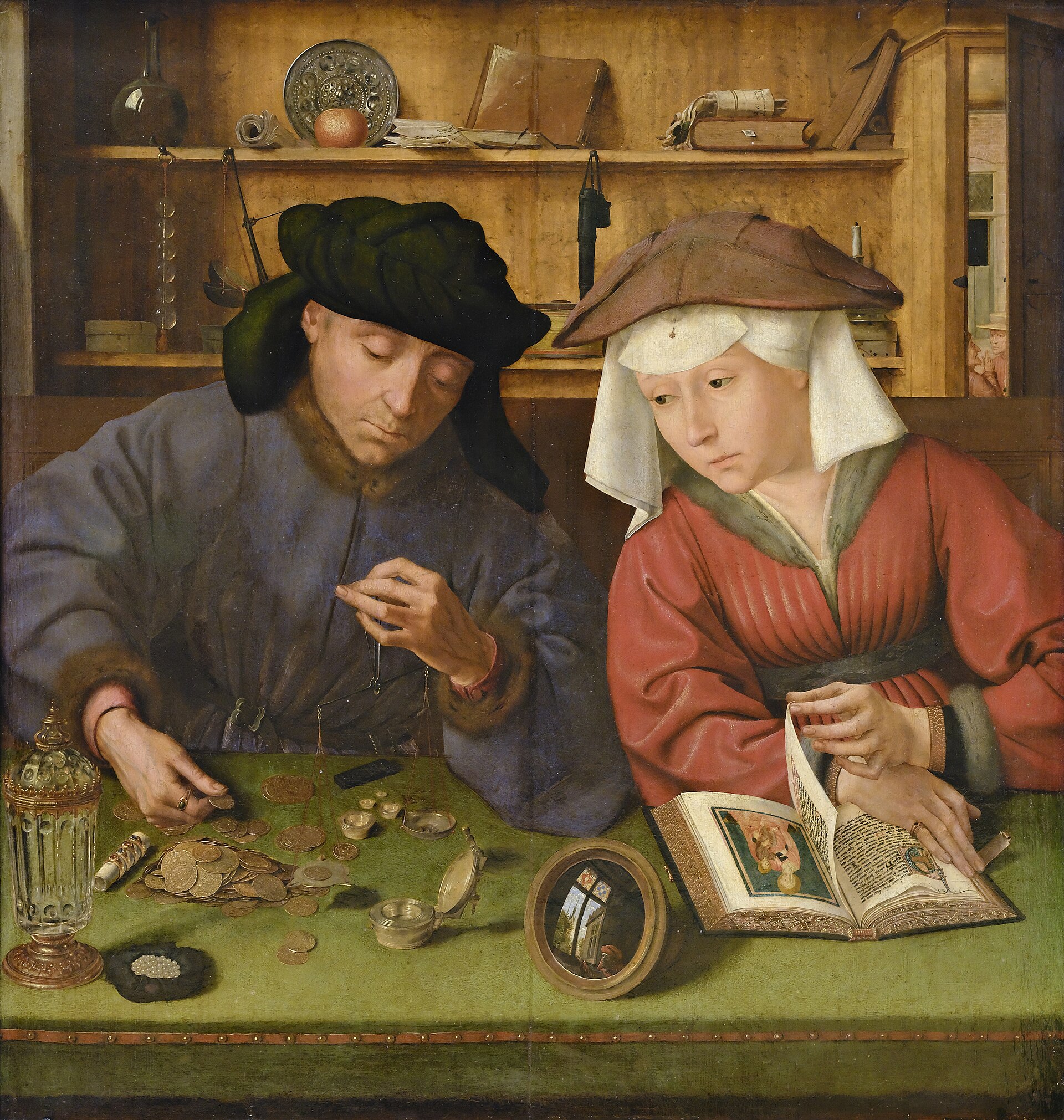
Quentin Massys, El cambista y su mujer, 1514. Óleo sobre tabla. Museo del Louvre, París.
Hay pérdidas que hacen ruido y otras que suceden casi en silencio. Jesús hace hoy una pregunta inquietante: «¿De qué le sirve al hombre ganar el mundo entero si pierde su vida?» Quizá nadie pierde el alma de golpe. A veces simplemente la vamos dejando atrás: cuando ya no tenemos tiempo para el silencio, cuando dejamos para mañana una reconciliación, cuando acumulamos cosas pero perdemos la capacidad de agradecer, cuando estamos rodeados de gente y hace mucho que no miramos verdaderamente a nadie. Podemos tener la agenda llena, la casa llena, el teléfono lleno de mensajes… y descubrir que por dentro algo se ha ido quedando vacío. Hay éxitos que cuestan demasiado si para alcanzarlos tenemos que convertirnos en alguien que ya no reconocemos. Tal vez por eso la pregunta de Jesús no pretende asustarnos, sino despertarnos: entre tantas cosas que buscamos, cuidamos y defendemos cada día, ¿estamos cuidando también aquello que ningún dinero, prestigio ni éxito podrá devolvernos una vez perdido? • AE
No Surprises, de Radiohead, suena casi como una canción de cuna, y quizá por eso resulta tan inquietante: bajo su aparente serenidad se esconde el cansancio de una vida ordenada por fuera y vacía por dentro. Junto a la pregunta de Jesús —«¿De qué le sirve al hombre ganar el mundo entero si pierde su vida?»— la canción nos deja otra, mucho más cercana: ¿y si un día descubrimos que estuvimos demasiado ocupados viviendo para darnos cuenta de lo que realmente hacía valiosa la vida? •

+ Verano + Lecturas


 LA MEDITACION DE LA ESPOSA