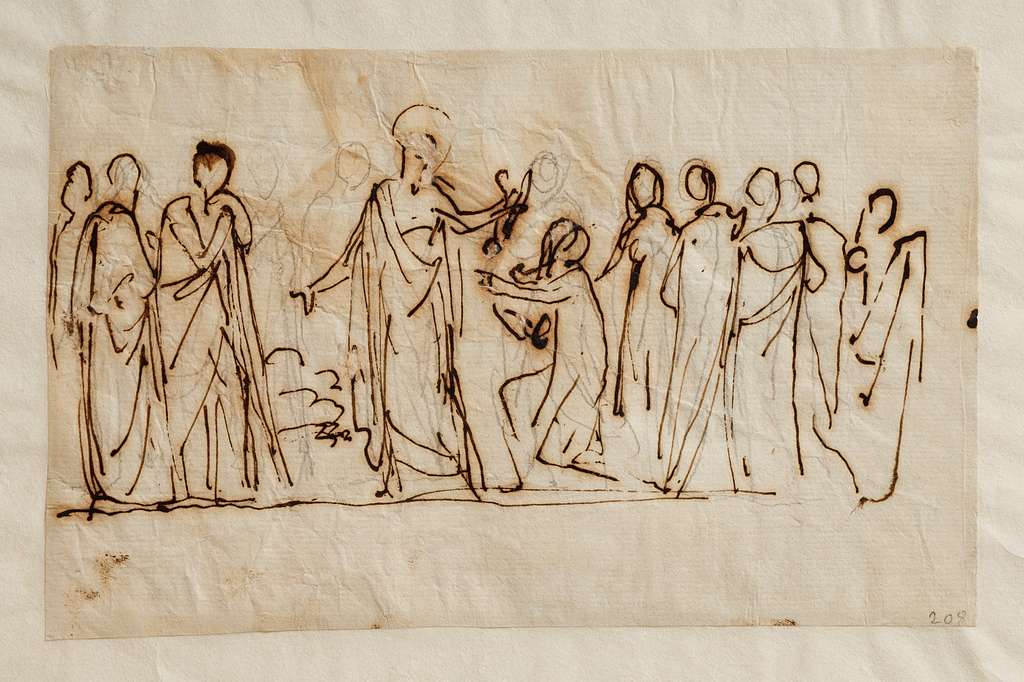
B. Thorvaldsen, Christ Giving the Keys to St. Peter (1818), graphite and ink on paper. Thorvaldsens Museum (Copenhagen).
There are two small words in this Gospel that are easy to overlook: «my Church.» Jesus does not speak of the Church as a project the apostles must invent after he is gone, nor as an institution that will depend upon their talent or perfection. She is his. And perhaps that changes the way we look at her. Peter, after all, is hardly an ideal foundation: he is generous and impulsive, courageous and afraid, capable of confessing Christ beautifully and, later, of denying that he even knows him. Jesus knows all of this—and still places the keys in his hands. The mystery of the Church has always contained this strange contrast: the treasure belongs to Christ, but he entrusts it to fragile human hands, including ours. The Church does not endure because we are always faithful, but because Christ is. To love her, then, is not to pretend that her wounds do not exist; it is to trust that beneath all our weakness, Christ has never ceased to keep his promise: «I will build my Church.» And he is still building her • AE
The words could hardly be more fitting for this Sunday: «Tu es Petrus, et super hanc petram ædificabo Ecclesiam meam» — “You are Peter, and upon this rock I will build my Church.” In Palestrina’s setting, these words from Matthew’s Gospel become something more than a declaration of authority: they become a song of confidence. The voices rise, answer, and support one another, almost as if the Church herself were being built before our ears—not from a single voice, but from many voices held together in harmony. At the center, however, remains Christ’s promise: «I will build my Church.» Peter receives the keys, generations come and go, saints and sinners pass through her doors, but the Builder remains the same. The music sounds so secure because the promise is secure. Listen not only to the beauty of Palestrina’s polyphony, but to the faith beneath it: Christ has not abandoned his Church, and he never will •

St. Joseph Catholic Church (Dilley, TX) • Weekend Schedule

Fr. Agustin E. (Parish Administrator)
Saturday, August 22, 2026.
5.00 p.m. Sacramento de la Confesión
6.00 p.m. Santa Misa.
Sunday, August 23, 2026.
8.00 a.m. Sacrament of Reconciliation
8.30 a.m. Holy Mass.
10.30 a.m. Sacrament of Reconciliation.
11.00 a.m. Holy Mass.
XXI Domingo del Tiempo Ordinario (Ciclo A)
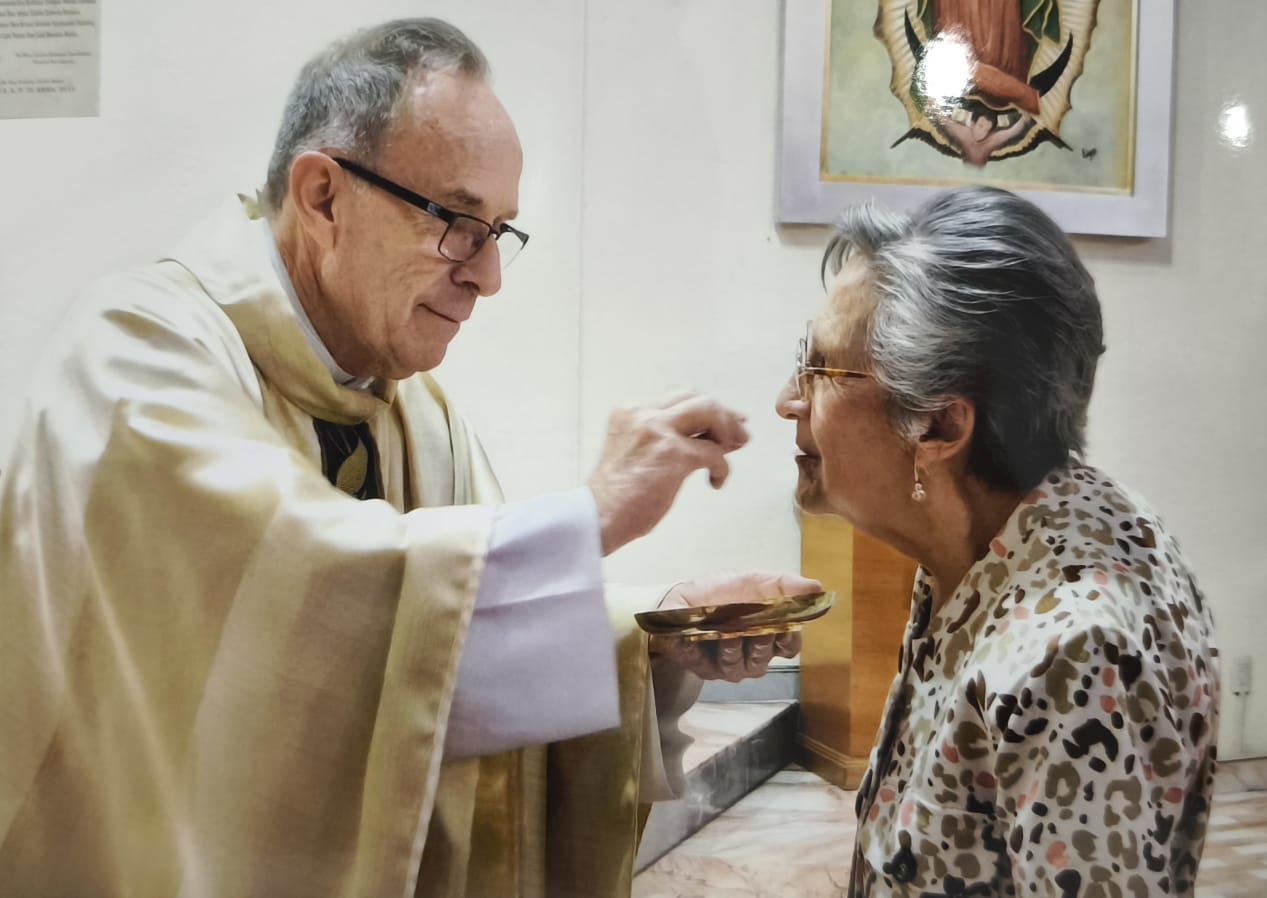
En esta fotografía vemos dos rostros desconocidos. Dios, en cambio, ve dos historias enteras: ella celebraba 90 años de vida; él, 50 años de sacerdocio. Dos vidas en las que la pregunta de Cristo —«¿quién dices que soy yo?»— llevaba muchos años encontrando respuesta.
Hay preguntas que se responden con palabras, y hay otras que necesitan toda una vida. En el Evangelio de este domingo, Jesús pregunta primero qué dice la gente acerca de él. Pero después todo parece quedar en silencio y la pregunta se vuelve personal: «Y ustedes, ¿quién dicen que soy yo?» Quizá esa pregunta nos ha acompañado desde mucho antes de que supiéramos responderla. Estaba en la oración que nos enseñó nuestra madre, en aquella primera comunión, en una vela encendida por alguien que amábamos, en el consuelo inesperado de una confesión, o en esos momentos en que, sin saber muy bien cómo, descubrimos que Dios estaba cerca. Con los años cambian muchas cosas: nosotros mismos cambiamos, algunas certezas se tambalean y otras se hacen más profundas. Pero Cristo permanece, esperando nuestra respuesta. La fe comienza muchas veces con lo que otros nos cuentan de Jesús; madura cuando podemos reconocer su paso por nuestra propia vida. Tal vez por eso Jesús sigue haciendo la misma pregunta, suavemente, en medio de todo lo que llevamos dentro: «Y tú, ¿quién dices que soy yo?» • AE
Hay preguntas que solo pueden hacerse desde el amor. «Y ustedes, ¿quién dicen que soy yo?» no suena en labios de Jesús como un examen, sino como una invitación a reconocer a Aquel que ya ha caminado con nosotros. La delicadeza de Tendre Amour, de Jean-Philippe Rameau, puede acompañar ese momento interior sin necesidad de convertir esta música en lo que no es: música sagrada. Su ternura simplemente nos presta un lenguaje para escuchar de otra manera. Quizá la fe también comienza así: cuando descubrimos que detrás de la pregunta de Cristo hay Alguien que nos ama y espera ser reconocido •

+ Verano + Lecturas