
Fifteenth Sunday in Ordinary Time (Cycle A)

The big question for this weekend could be: What we have to do to have that rich and fertile soil that Jesus mention in the gospel today? The best way is through prayer, of course. Without prayer, without a genuine prayerful life, we will be easily persuaded, tempted and finally turned away from God and His path. This warm morning of July, in the middle of Ordinary Time, in the middle of the summer … let’s go a little further; let’s take more step asking ourselves a personal, intimate, and honest question: What can I do to make my soul become rich and fertile soil? What must I do so that my heart is well prepared to receive the seed of the Word of God? We must return to a topic in which, perhaps, we have not gone deep: silence. Silence is the beginning of spiritual life. Silence is a good medicine for mind, body, And inner world. Silence is a good remedy for anxiety; silence helps improve relationships with others; silence helps, above all, to listen to the voice of conscience. If we do not cultivate this silence, how can we find God? Let´s be honest:  We barely have silence in our lives, from the beginning to the last hours of the day we listen to rumors, news, radio, cell phone, music, We live wrapped in noise. So, where’s the solution? How to break that addiction to noise that we have? What is the recipe for achieving silence? Well, keeping silent is not a spontaneous or natural attitude. It demands a decision and a purpose. To enter into silence, FIRST we must want it, and SECOND we must know why we want it. If we intend to become men and women of silence, we must assume responsibility for our quest. Actually silence is a peaceful listening of the heart that allows God to enter through all its doors. Again: silence is a tranquil listening of the heart that allows God to enter through all its doors. If we really want God to enter into our life, we must spend time every day in silence. That could be the opening of the soil preparation In order to receive the seed. So, let’s try this sometime this week we start today. Let us stop everything and pause for… 60 seconds. 60 seconds in silence, not looking at our phone, but simply… in silence. This is a very small action, and it may seem silly to you, but it may be the beginning of a great bonfire, a silent bonfire that warms our inner world • AE


St. Dominic Catholic Church •

Fifteenth Sunday in Ordinary Time

Saturday July 15, 2023

2.30 p.m. Sacrament of Matrimony for Alessandra and Abram (Fr. Agustin)

4.00 p.m. Sacrament of Reconciliation (Confessional) Fr. Agustin

5. 00 p.m. Fr. Agustin

Sunday July 9, 2023

7.30 a.m. Fr. Agustin

10.00 a.m. Fr. Agustin

12.30 p.m. Fr. Jaime

3.00 p.m. Fr. Jaime (Misa en Español)


XV Domingo Del Tiempo Ordinario (Ciclo A)
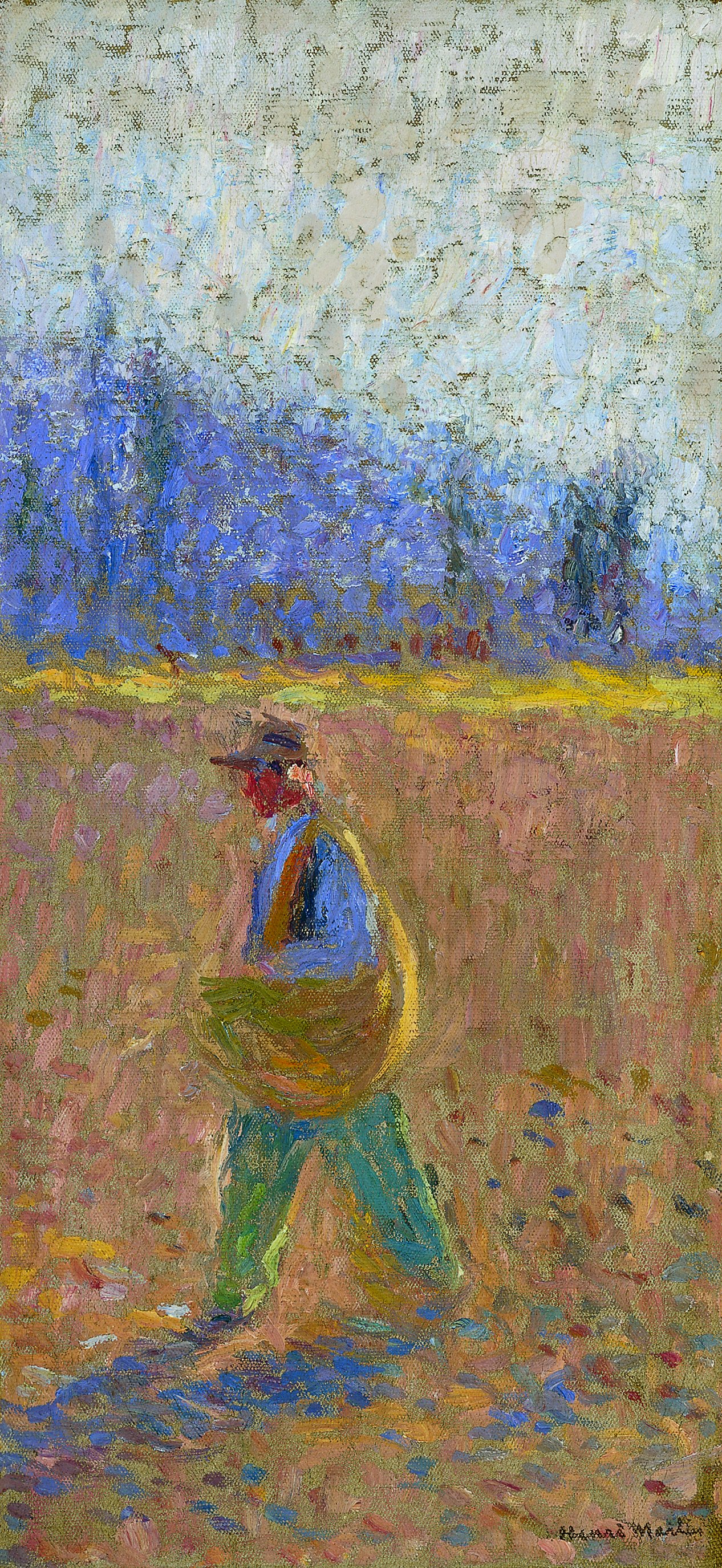
H. Martin, El Sembrador (1914), óleo sobre tela, Museo Nacional Tyssen-Bornemiza (Madrid)

Al terminar el relato de la parábola del sembrador, Jesús hace esta llamada: “El que tenga oídos para oír, que oiga”. Se nos pide que prestemos mucha atención a la parábola. Pero, ¿en qué hemos de reflexionar? ¿En el sembrador? ¿En la semilla? ¿En los diferentes terrenos? Tradicionalmente, los cristianos nos hemos fijado casi exclusivamente en los terrenos en que cae la semilla, para revisar cuál es nuestra actitud al escuchar el Evangelio. Sin embargo es importante prestar atención al sembrador y a su modo de sembrar. Es lo primero que dice el relato: “Salió el sembrador a sembrar”. Lo hace con una confianza sorprendente. Siembra de manera abundante. La semilla cae y cae por todas partes, incluso donde parece difícil que la semilla pueda germinar. Así lo hacían los campesinos de Galilea, que sembraban incluso al borde de los caminos y en terrenos pedregosos. A la gente no le es difícil identificar al sembrador. Así siembra Jesús su mensaje. Lo ven salir todas las mañanas a anunciar la Buena Noticia de Dios. Siembra su Palabra entre la gente sencilla que lo acoge, y también entre los escribas y fariseos que lo rechazan. Nunca se desalienta. Su siembra no será estéril. Desbordados por una fuerte crisis religiosa, podemos pensar que el Evangelio ha perdido su fuerza original y que el mensaje de Jesús ya no tiene garra para atraer la atención del hombre o la mujer de hoy. Ciertamente, no es el momento de “cosechar” éxitos llamativos, sino de aprender a sembrar sin desalentarnos, con más humildad y verdad. No es el Evangelio el que ha perdido fuerza humanizadora, somos nosotros los que lo estamos anunciando con una fe débil y vacilante. No es Jesús el que ha perdido poder de atracción. Somos nosotros los que lo desvirtuamos con nuestras incoherencias y contradicciones. El Santo Padre Francisco dice que, cuando un cristiano no vive una adhesión fuerte a Jesús, pronto pierde el entusiasmo y deja de estar seguro de lo que transmite, le falta fuerza y pasión. Y una persona que no está convencida, entusiasmada, segura, enamorada, no convence a nadie. Evangelizar no es propagar una doctrina, sino hacer presente en medio de la sociedad y en el corazón de las personas la fuerza humanizadora y salvadora de Jesús. Y esto no se puede hacer de cualquier manera. Lo más decisivo no es el número de predicadores, catequistas y enseñantes de religión, sino la calidad evangélica que podamos irradiar los cristianos. ¿Qué contagiamos? ¿Indiferencia o fe convencida? ¿Mediocridad o pasión por una vida más humana? • AE


+ lEcTurAs para el vErAno


Fourteenth Sunday in Ordinary Time (Cycle A)

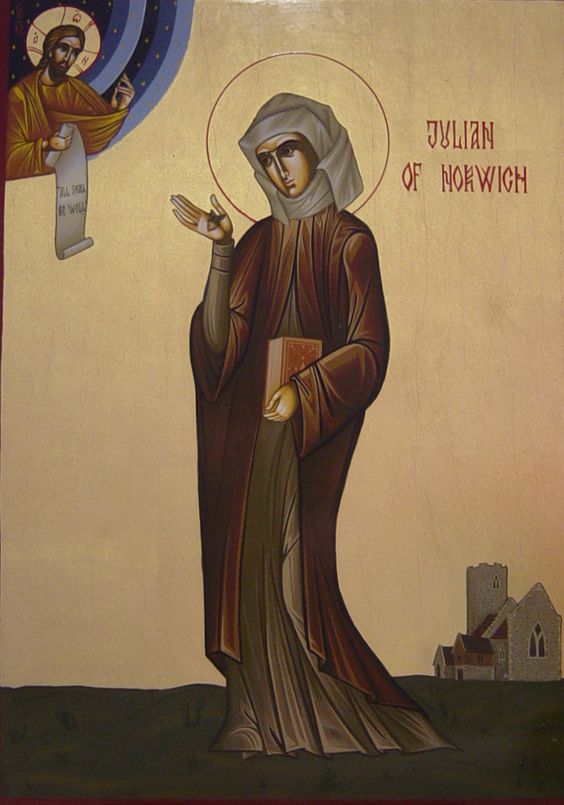
The Gospel tells us to be united to the Lord, to turn our burdens over to him and to allow him to refresh us. We need to turn everything over to the Lord: our feelings of being overwhelmed with financial burdens, the down times in our relationships, the boring aspects of our jobs, our continual concern for our children, our concern for our parents or our children or our own health. We need to turn it all over to the Lord and be at peace. We need to have faith that no matter what happens, if we have union with the Lord, as Julian of Norwich, that mystic of the late fourteenth and early fifteenth century wrote, «All shall be well, and all shall be well, and all manner of things shall be well.» The first reading, from the prophet Zechariah, tells us to rejoice because the Savior has come. God is not far away from us. He is right here, in our hearts. The saints, even the martyrs, especially the martyrs, were people of joy. It is said that the martyrs marched into the Coliseum singing. No matter what happened to them, they died at peace. St. Ignatius of Antioch, who lived from 32 to 120, was the bishop of what was at that time the second largest city in the Roman Empire. He wrote to the various Christian communities to be strong and courageous in the faith. When Ignatius was quite elderly, he was arrested and put to the test. Either offer incense to the Emperor and deny Christ, or be killed. He would not turn from the Lord. Ignatius was found guilty of being a Christian, and sentenced to be killed by the wild animals in the Colosseum in Rome. Rome was far away from Antioch, so it would be a long trip of two to three years for the elderly Ignatius and the soldiers guarding him. There were many Christians who wanted to save him. The Roman soldiers could easily be bribed to release him. A judge could be bought to overturn the verdict. But Ignatius wrote to those Christians and told them not to interfere. He valued it a gift to be allowed to suffer for being a Christian. He pleaded with them to allow him to die in joy. We believe that God became one of us to join us in our turmoil so he could lead us to the joy of his peace. «But, Father,» you might say. «You have no idea of the grief I have. A loved one has died recently. Am I not to grieve, not to cry?» No, grieve, cry! That is a sign of the love you have. No one cries over the death of someone they did not love. But remember, in your grief, your inner turmoil, remember that the life of your loved one is transformed, not ended. Mourn missing him or her here, but know that your loved one is in the peace and love of Jesus Christ. Even in sorrow we Christians have fundamental joy. The Lord says, «Come to me all you who are weary with life, and I will give you rest.» Yes, we commemorate the Passion of the Lord solemnly during Lent. But the tears of Good Friday magnify the joy of Easter Sunday. We are the Easter people, filled with the joy of the Risen Lord! Death has been defeated by eternal life. We should not be so somber, so serious, so negative, so out and out gloomy. Maybe some of us, beginning with priests, need this reminder: if your heart is filled with the joy of the Lord, kindly tell it to inform your face. The presence of the Lord brings joy, peace and refreshment to the soul • AE


St. Dominic Catholic Church •

Fourteenth Sunday in Ordinary Time

Saturday July 8, 2023

3.30 p.m. Sacrament of Reconciliation (Confessional) Fr. Agustin

5. 00 p.m. Fr. Jaime Paniagua

Sunday July 9, 2023

7.30 a.m. Fr. Jaime

10.00 a.m. Fr. Jaime

12.30 p.m. Fr. Agustin

3.00 p.m. Fr. Agustin (Misa en Español).


XIV Domingo del Tiempo Ordinario (Ciclo A)

G. Seurat, Tarde de domingo en la isla de la Grande Jatte (1884), óleo sobre tela, Art Institute (Chicago)

Hay cansancios típicos en la sociedad actual que no se curan con las vacaciones. No desaparecen por el mero hecho de irnos a descansar unos días. La razón es sencilla. Las vacaciones pueden ayudar a rehacemos un poco, pero no pueden darnos el descanso interior, la paz del corazón y la tranquilidad de espíritu que necesitamos. Hay un primer cansancio que proviene de un activismo agotador. No respetamos los ritmos naturales de la vida. Hacemos cada vez más cosas en menos tiempo. De un día queremos sacar dos. Vivimos acelerados, en desgaste permanente, deshaciéndonos cada día un poco más. Ya llegarán las vacaciones para «cargar pilas». Es un error. Las vacaciones no sirven para resolver este cansancio. No basta desconectar de todo. A la vuelta de vacaciones todo seguirá igual. Lo que necesitamos es no acelerar más nuestra vida, imponernos un ritmo más humano, dejar de hacer algunas cosas, vivir más despacio y de manera más descansada. Hay otro tipo de cansancio que nace de la saturación. Vivimos un exceso de actividades, relaciones, citas, encuentros, comidas. Por otra parte, el contestador automático, el móvil, el ordenador, el correo electrónico facilitan nuestro trabajo, pero introducen en nuestra vida una saturación. Estamos en todas partes, siempre localizables, siempre conectados. Ya llegarán las vacaciones para desaparecer y perdernos. Otro error. Lo que necesitamos es aprender a ordenar nuestra vida: elegir lo importante, relativizar lo accidental, dedicar más tiempo a lo que nos da paz interior y sosiego. Hay también un cansancio difuso, difícil de precisar. Vivimos cansados de nosotros mismos, hartos de nuestra mediocridad, sin encontrar lo que desde el fondo anhela nuestro corazón. ¿Cómo nos van a curar unas vacaciones? No es superfluo escuchar las palabras del Señor este domingo (domingo de verano, por cierto): «Vengan a mí los que están cansados y agobiados y yo los aliviaré». Hay una paz y un descanso que sólo se puede encontrar en el misterio de Dios acogido en Jesús • AE


Lecturas para el Verano


Thirteenth Sunday in Ordinary Time (Cycle A)

Rembrandt, Head of Christ (1648), oil on panel, Gemaldegalerie (Berlin)

Today’s second reading, from the sixth chapter of St. Paul’s Letter to the Romans is the new Testament reading during the Solemn Easter Vigil, and emphasizes our role in the Easter Mystery. We are not just observers of the historical event of the Lord’s death and resurrection. We are participants. Our baptism is a baptism into his death. The water poured over us signifies a death to the world without God. As Christ rose from the dead, we, at our baptism, embrace a new life, His Life. The resurrection of the Lord has changed everything for us. Through Baptism we have a spiritual life. Our physical lives are temporary. We all die. But our spiritual life that is eternal. It cannot be taken from us. It can only be surrendered by us. Our lives have been transformed. We are intimately united to Jesus Christ. We need to keep this in mind when we find ourselves getting all caught up in the events taking place around us. We have to view everything from the perspective of Jesus Christ. We need to ask ourselves, “How can we transform the mundane events of the world into celebrations of the Lord’s love?” Our relationship to the Lord must be the center and the foundation of all the relationships of our lives. Next to it, all other relationships are secondary, even those relationships that carry the greatest impact in our lives. Jesus Christ must be the center and goal of these relationships. If He is not, then even our most cherished relationships are destructive instead of life giving.  It is what Jesus is saying in the Gospel reading, “Whoever loves father or mother more than me is not worthy of me, and whoever loves son or daughter more than me is not worthy of me.” The love we experience in our families has to reflect the deep love we have for our Lord. If it does not, then that love is not real love. Any love that does not make Jesus Christ present, is not true love. It ultimately is a selfish love. So what Jesus is saying in that difficult passage is that he must be at the center of our love, our love for our parents, our love for our children, the love of husbands and wives, and our love for each other. Furthermore, the love of Jesus Christ is sacrificial love. It is a love that puts the other before the self. If we do not love that way, then we are really not loving at all, but are taking for ourselves. But when we put others before ourselves, then the Presence of Christ becomes real in our world. It is easy for us to slip into selfishness. So, what is the reason for the living of your life, of my life? What is the reason for being of your life, of my life? What motivates us? What give meaning to our lives? The answer to these questions is Jesus Christ. Are we not aware of what happened at our baptism and what continues to happen as we live the Christian life? We are transformed by the Love of God! • AE


Schedule for the Thirteenth Sunday in Ordinary Time

Saturday July 1, 2023

3.30 p.m. Sacrament of Reconciliation (Confessional; Fr. Agustin Estrada)

Sunday July 2, 2023

7.30 a.m. Fr. Agustin Estrada

10.00 a.m. Fr. Agustin Estrada

12.30 p.m. Fr. Jaime Paniagua, new pastor.

3.00 p.m. (Misa en Español), Fr. Jaime Paniagua, new pastor.


XIII Domingo del Tiempo Ordinario (Ciclo A)

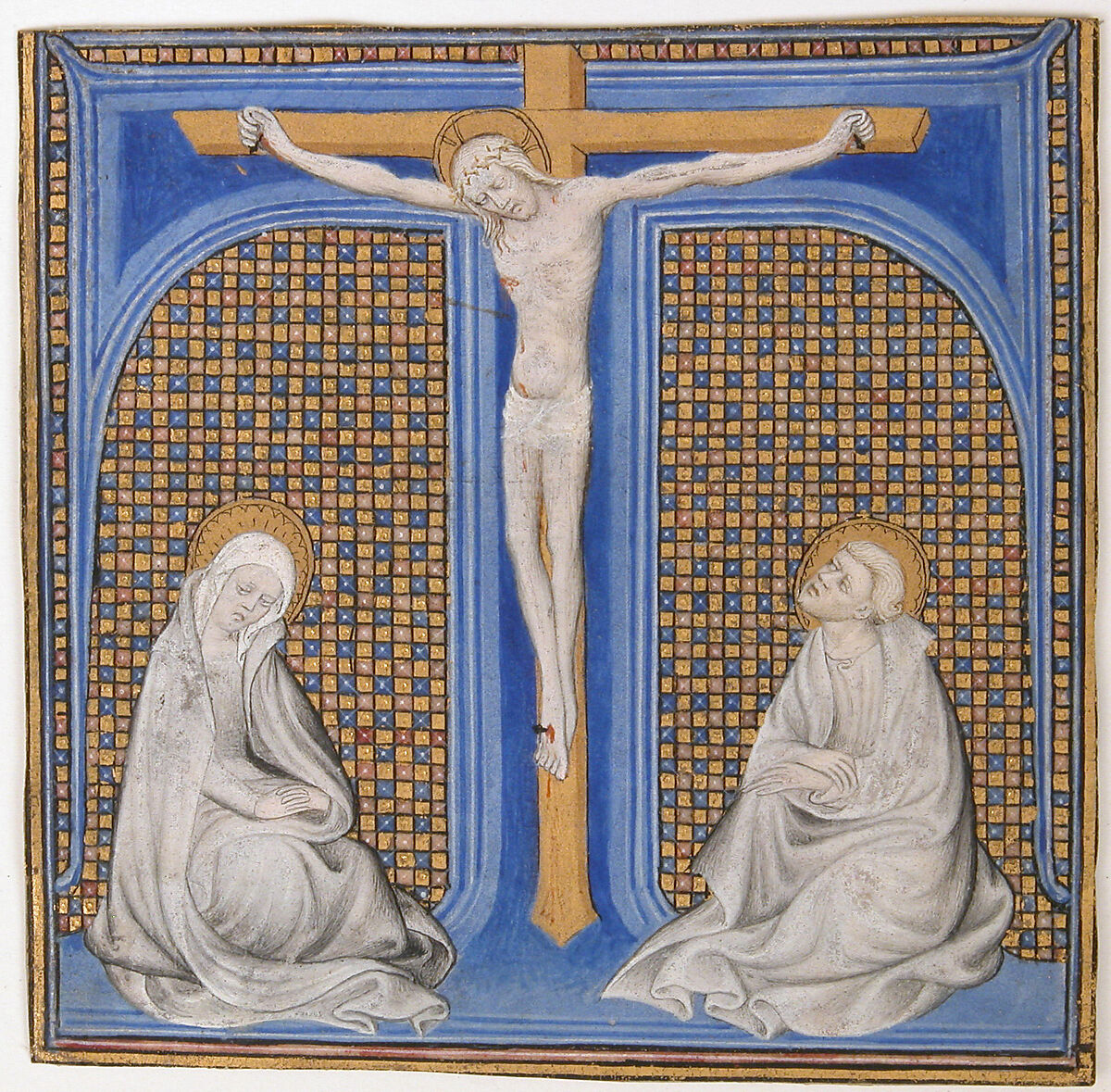
Autor anónimo, Cristo en la Cruz, manuscrito iluminado S. XV, Metropolitan Museum of Art (New York)

El gran riesgo de hoy es que los cristianos pasemos de una religión que tiene su centro en la cruz de Cristo una especie de espiritualidad del bienestar. Decía Reinhoid Niebuhr que corremos el riesgo de vivir una fe sin agujón, que predica a un Dios sin cólera que conduce a unos hombres sin pecado hacia un reino sin juicio por medio de un Cristo sin cruz. El peligro es real y lo hemos de evitar. Insistir en el amor incondicional de un Dios Amigo no ha de significar nunca fabricarnos un Dios a nuestra conveniencia, el Dios permisivo que legitime una religión burguesa, como decía Metz. Ser cristiano no es buscar el Dios que me conviene y me dice que sí a todo, sino el Dios que, precisamente por ser Amigo, despierta mi responsabilidad y, más de una vez, me hace sufrir, gritar y callar. Descubrir el evangelio como fuente de vida y estímulo de crecimiento sano no significa entender la fe cristiana como una inmunización frente al sufrimiento. El evangelio no es un complemento tranquilizante para una vida organizada al servicio de nuestros fantasmas de placer y bienestar. Cristo hace gozar y hace sufrir, consuela e inquieta, apoya y contradice. Sólo así es camino, verdad y vida. Creer en un Dios Salvador que, ya desde ahora y sin esperar al más allá, busca liberamos de lo que nos hace daño, no ha de llevarnos a entender la fe cristiana como una religión de uso privado al servicio de los propios problemas y sufrimientos. El Dios de Jesucristo nos pone siempre mirando al que sufre. El evangelio no centra a la persona en su propio sufrimiento sino en el de los otros. Sólo así se vive la fe como experiencia de salvación. En la fe como en el amor todo suele andar muy mezclado: la entrega confiada y el deseo de posesión, la generosidad y el egoísmo. Por eso, no hemos de borrar del evangelio esas palabras de Jesús que, por duras que parezcan, nos ponen ante la verdad de nuestra fe: «El que no toma su cruz y me sigue, no es digno de mí. El que encuentre su vida, la perderá y el que pierda su vida por mí la encontrará» • AE


Twelfth Sunday in Ordinary Time (Cycle A)

In the Gospel reading for this Sunday Jesus says, “Do not let others intimidate you.” He tells us to keep our priorities straight. He tells us that we shouldn’t even be afraid of people who could kill us when we stand for his truth. «Do not fear those who deprive the body of life but cannot destroy the soul.” In one of the most beautiful passages in the New Testament Jesus says, “Are not two sparrows sold for next to nothing? Yet not a single sparrow falls to the ground without your Father’s consent. As for you, every hair of your head has been counted; so do not be afraid of anything. You are worth more than an entire flock of sparrows.” The Lord also says in that passage, “Fear Him who can throw body and soul into Gehenna.” This is not a popular concept in our society. We have emphasized God’s compassion and mercy, and this is good. But we tend to refuse to acknowledge his justice. In our minds we have transformed God into a sort of Barney figure that will not respond to our rejection of his life and laws. So a man commits adultery, leaves his wife and children, and then says, “God understands.” Well maybe the “Barney God” of his imagination might forgive, but the real God who was present when marriage vows were made and who sees the turmoil a selfish man has thrust upon a good wife and beautiful children, his family, maybe the Just God has to consider justice as well as mercy. If we sin but refuse to acknowledge our sins and seek forgiveness, we are, in effect, denigrating God. This reminds me of the old movie, Dead Man Walking, with Susan Sarandan and Sean Penn. That was the true story about a nun, Sr. Helen Prejean, ministering to a man on death row, Matthew Poncelet. The climax of the movie came when the man refused to acknowledge his crime, but said instead, “I know God loves me and forgives me.” Sister responded, something to the effect, “You cannot presume God’s mercy when you refuse to acknowledge your sinfulness and seek the forgiveness both of God and of the families of the two young people you killed.” He feared death, but he did not fear God. His salvation could only result from his fear of the Lord. In the movie he acknowledged his sinfulness immediately before his death and gave himself over to God’s mercy. If we live with a reverence and respect for the Lord, the biblical Fear of the Lord, then we do not have to be afraid of anything. If we live with a reverence and respect for the Lord, in the biblical Fear of the Lord, then all those concerns of ours that the evening news delights in frightening us with diminish. Will the world end this year? Maybe, probably not. But it does not matter as long as we are united to God. Will World War III erupt when we lest expect? Maybe, probably not. But it does not matter as long as we are united to God. Will Hurricane Tutsi-Frutsi devastate the west coast of Florida destroying our homes and futures? Maybe, probably not. But it does not matter as long as we are united to God. Will people attack us for being Christian? Will we be disparaged because we our against abortion, against capital punishment, against warfare? We probably will be, but it does not matter as long as we are united to God. We have nothing to fear as long as we fear the Lord. Are not two sparrows sold for a small coin? Yet not one of them falls to the ground without your Father’s knowledge. Even all the hairs of your head are counted. So do not be afraid; you are worth more than many sparrows • AE


Fr. Agustin´s Schedule for Twelfth Sunday in Ordinary Time

Saturday June 24, 2023

2.30 p.m. Sacrament of Matrimony for Alyssa and Greg (Main church)

3.30 p.m. Sacrament of Reconciliation (Confessional)

Sunday June 25, 2023

12.30 p.m. Holy Mass (English)

3.00 p.m. Misa en Español


XII Domingo del Tiempo Ordinario (Ciclo A)

E. Hopper, Cape Cod Morning (1950), óleo sobre tela, Smithsonian American Art Museum (Washington)

Nuestro corazón está lleno de inquietudes, miedos e inseguridades, quién lo duda. Rilke decía que hemos de tener paciencia con todo cuanto queda aún por resolver en nuestros corazones, pero lo cierto es que nuestro ser busca un descanso, una serenidad y armonía que difícilmente pueden proporcionar unas buenas vacaciones. La experiencia de Dios tal como se ofrece y comunica en Jesús puede contribuir a conocer la paz y el sosiego, pero esta experiencia es absolutamente personal. Cada uno ha de escuchar la llamada de Jesús: «No tengáis miedo, no hay comparación entre vosotros y los gorriones». Tal vez, lo primero sería detenernos en experimentar a Dios sólo como amor. Todo lo que nace de él es amor. De él sólo nos llega vida, paz y bien. Yo me puedo apartar de él y olvidar su amor, pero él no cambia. El cambio se produce sólo en mí. Él nunca deja de amarme. Hay algo todavía más conmovedor. Dios me ama incondicionalmente, tal como soy. No tengo que ganarme su amor. No tengo que conquistar su corazón. No tengo que cambiar ni crecer ni ser bueno para ser amado por él. Más bien, sabiendo que me ama así, puedo cambiar, crecer y ser mejor. Desde esto puedo entonces pensar en mi vida: ¿Qué me pide Dios?, ¿qué espera de mí? ¡Que aprenda a amar! No sé en qué circunstancias me puedo encontrar, y qué decisiones tendré que tomar, pero Dios sólo espera de mí que ame a las personas y busque su bien, que me ame a mí mismo y me trate bien, que ame la vida y me esfuerce por hacerla siempre más digna y más humana para todos. Que sea sensible al amor. Amando acertaré. Finalmente, hay algo que no debo olvidar. Nunca estaré solo. Todos vivimos, nos movemos y existimos en Dios, como nos recuerda el libro de los Hechos. Él será siempre esa presencia comprensiva y exigente que necesito, esa mano fuerte que me sostendrá en la debilidad, esa luz que me guiará por sus caminos. Él me invitará siempre a caminar y decir sí a la vida. Un día, cuando termine mi peregrinación por este mundo, conoceré junto a Dios la paz y el descanso, la vida y la libertad. Allí Él enjugará las lágrimas de nuestros ojos, porque, al contemplarlo seremos para siempre semejantes a Él, y cantaremos eternamente sus alabanzas • AE


Eleventh Sunday in Ordinary Time (Cycle A)

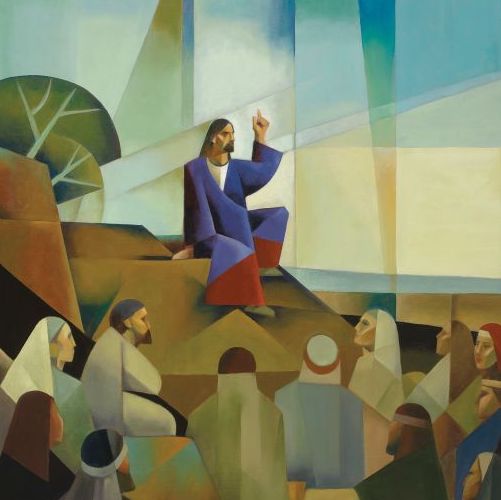
Jorge Cocco, Jesus instructing his disciples, oil on canvas, private collection

Today’s gospel reading presents the Lord filled with grief when he saw how much the crowds need him and how few people there were to continue his work. Jesus then begins the Apostolic Church. He calls the Twelve apostles to carry his presence to the world. This Sunday is Father’s Day. All Fathers, birth fathers, adoptive fathers and priests, are reminded of their mission to bring the caring protective love of the Lord to their families. There have been both negative and positive concepts regarding Fathers in our papers recently. On the negative side, there is a direct relationship between the number of homes without fathers and the number of children who are in trouble with the law. The legalization of abortion has become the greatest anti-woman action of the century. Many future fathers tell the girls they have impregnated that they have no responsibility beyond the providing of the fee for an abortion. Those courageous girls with moral integrity that will not allow themselves to be compromised are treated as though it was their choice to have a fatherless child. On the positive side, many men are taking fatherhood very seriously. Fathers are taking an active role in their families. The good father provides a Christian life for the child to grasp integrate into his or her life. The good father makes real the caring, protective love of the Lord. He cares for his children with the sacrifice of his day knowing that his life is richer when it is given for others, particularly for his own family. The good father is sent to proclaim the Gospel of Christ, and he begins with his children. Let us pray today for our Fathers. May they continue to be good fathers. May they provide for our children the care of the Father of us all • AE


Eleventh Sunday in Ordinary Time

Fr. Agustin will be out of the parish this weekend.

St. Dominic Catholic Church continues with its usual weekend schedule.

Saturday June 17, 2023

5.00 p.m. English Mass

Sunday June 18, 2023

7.30 a.m. English Mass

10.00 a.m. English Mass

12.30 p.m. English Mass

3.00 p.m. Misa en Español


Undécimo Domingo del Tiempo Ordinario (Ciclo A)

Muchos cristianos pensamos que vivimos bien nuestra fe cristiana porque cumplimos ciertas prácticas religiosas. Quizá las comunidades cristianas piensan lo mismo: que están estar cumpliendo su misión porque en ellas hay catequesis y se celebra el culto cristiano, pero ¿Es esto lo que Jesús quería poner en marcha cuando envió a sus apóstoles como nos cuenta el evangelio de hoy? ¿Es ésta la vida que quería para los cristianos y para el mundo entero?  Quizá deberíamos escuchar de nuevo las palabras de Jesús para redescubrir la verdadera misión de los creyentes del siglo XXI. El evangelio pone en boca del Señor estas palabras: «Vayan y proclamen por el camino que ya se acerca el Reino de los cielos. Curen a los leprosos y demás enfermos; resuciten a los muertos y echen fuera a los demonios». No lo olvidemos: nuestra primera tarea es proclamar que Dios está cerca del hombre y que quiere que seamos felices. Pero este anuncio de un Dios salvador no se hace a través de discursos y palabras sugestivas. No se vuelve efectivo únicamente en redes sociales. No se asegura sólo con catequesis o retiros. Sólo hay una manera de proclamar a Dios, y es ofreciendo la nueva vida que nos trae Cristo: Curar enfermos, es decir, liberar a las personas de todo lo que las paraliza, les roba vida y hace sufrir. Sanar el alma y el cuerpo de todos los que se sienten destruidos por el dolor y angustiados por la dureza despiadada de la vida diaria. Resucitar muertos, es decir, liberar a las personas de todo aquello que bloquea sus vidas y mata su esperanza. Despertar de nuevo el amor a la vida, la confianza en Dios, la voluntad de lucha y el deseo de libertad de tantos hombres y mujeres en los que la vida se ha ido muriendo. Limpiar leprosos, o sea limpiar esta sociedad de tantas mentiras y convencionalismo, ayudando a vivir con más verdad, sencillez y honradez. Jesús habla de arrojar demonios, lo cual hemos de entender como echar una mano para liberar a las personas de tantos ídolos que esclavizan, poseen y pervierten. Cuando tratamos de hacer algo de esto,  aun cuando sea pequeño, podemos tener la certeza de que estamos anunciando a Dios y viviendo el evangelio • AE


A summer full of reading