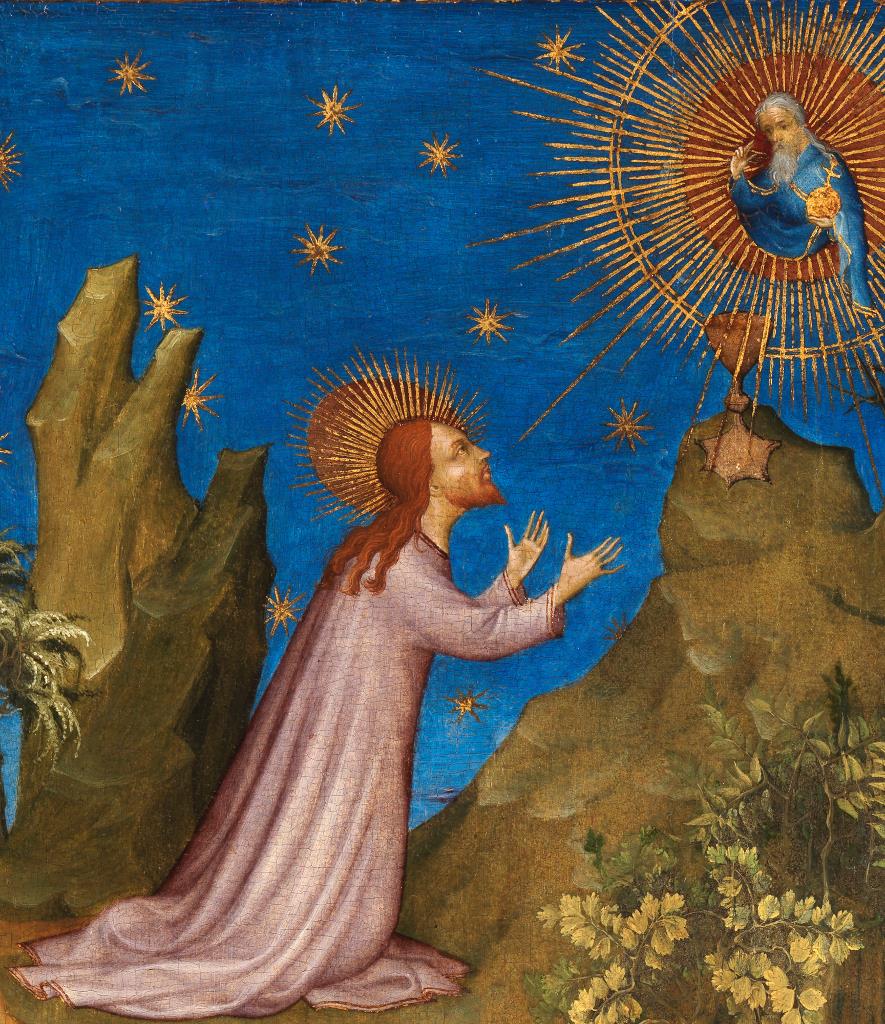
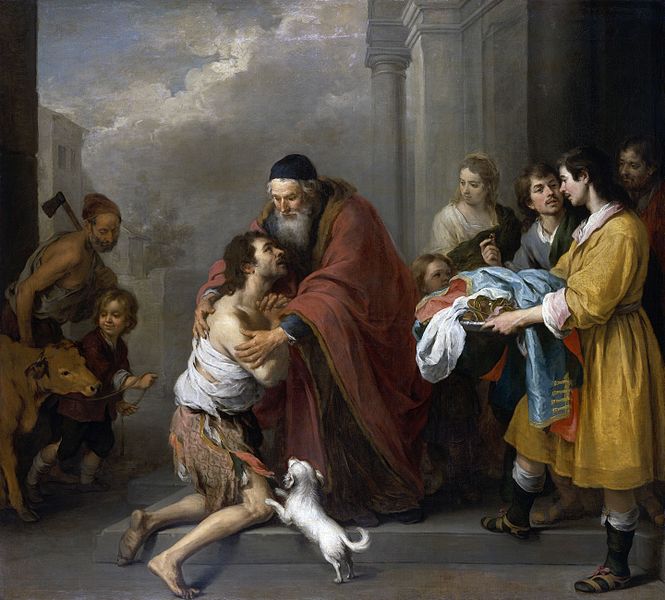
The Agony in the Garden with the Donor Louis d’Orléans, Museo Nacional del Prado (Madrid)
In today’s Gospel Jesus announces that the hour is upon him. Today’s Gospel also contains the Johannine equivalent of the Agony in the Garden, during which time Jesus says, “What should I say, ‘Father save me from this hour?’ No, it is for this reason that I have come to this hour”[1]. John introduces the Passion of the Lord by saying, “Jesus knew that his hour had come to depart from this world and go to the Father. Having loved his own in the world, he loved them to the end”[2]. Jesus concludes the Great Discourse of the Last Supper by praying to his Father, “the hour has come, glorify your Son so that your Son may glorify you”[3]. Obviously, when Jesus uses the phrase, hour, he isn’t merely referring to the time of day it might be. No, he is speaking about a central moment of human history. The hour is the moment that the world will be transformed. The hour is the point of human history when spiritual life will be restored. The hour is the moment when death and evil will be defeated by Love. The hour is the moment when the mortal will receive immortality. And Jesus said in today’s Gospel, “When I am lifted up from the earth, I will draw everyone to myself”[4]. The power of the cross. The power of the love of God. The central moment of human history. The hour. We Christians live in this moment, this hour. Whether we stood at the foot of the cross like Mary and John or whether we were born two thousand years later, the hour is real to us. We are there. We are always before the Lord on the cross. We kneel during the Eucharistic Prayer of the Mass and pray to the Father with the Lord as he offers his Body and Blood for us. Every Mass renews the hour. We exalt when a baby, a child or an adult is baptized because we have witnessed that person being directed into the hour, the hour where spiritual joins physical. We weep when a loved one dies, but our faith is full of hope for now the hour becomes the physical joining the spiritual. The hour of the Lord is real for us when we feel ourselves united to him on his cross, drawn to him as the Gospel prophesied, and lifted up from the burdens of this life into the realm of the spiritual. When we celebrate a funeral, the priest will often incense the body at the final commendation as a sign of our prayers rising up to God for the deceased and as a sign that the body is holy, because God dwelt there. It is all the hour of the Lord. Through the sacrificial love of Jesus Christ, his hour has become our hour, his death has become our life, our deaths have become his life, his love. In the Paradisio, the third book of Dante’s Divine Comedy the poet speaks about the whirl of love that is heaven as each person unites his or her love to the Love of God, all becoming one in love yet each remaining an individual lover. Death and life are united. Sacrifice and gift are merged. Love Conquers All! This is why we honor the cross. This is why we wear crosses around our necks. This is why the purpose of our lives is to realize, to make real, the love of Christ in our homes and in our lives. We have to allow Christ’s love to direct our lives. His hour is our hour. And his hour is upon us • AE
[1] Cf Jn 12:20-33 [2] Id 13:1 [3] Id 17:1 [4] Cfr. 12:20-33
Fr. Agustin’s Schedule for the Fifth Sunday of Lent (2021)
Saturday, March 20, 2021.
4.00 p.m. Sacrament of Confession
5.30 p.m. English Mass (Third Scrutiny for RCIA)
@ St. Peter Prince of the Apostles Catholic Church.
Sunday, March 21, 2021.
8.30 a.m. English Mass @ Our Lady of Grace Catholic Church (Outdoors mass)
10.30 a.m. English Mass @ Our Lady of Grace Catholic Church (Outdoors mass)
5.30 p.m. English Mass @ St. Peter Prince of the Apostles Catholic Church.
V DOMINGO DE CUARESMA (2021)
En este quinto y último domingo de Cuaresma la liturgia nos pone delante una serie de textos que podrían ayudarnos a entender, entre otras cosas, que con el final de este tiempo penitencial pasamos de la vieja a la nueva alianza. La antigua alianza se había quedado pequeña; pequeña y muerta. Ahogada en los límites estrechos de un solo pueblo, y recargada de normas y ritos que le habían ido quitando la vida. La nueva sería una alianza de amor y de perdón, consumada en el sacrificio, y a esa alianza –lo dice el Señor- no se llega sino por la muerte: «Si el grano de trigo, sembrado en la tierra, no muere, queda infecundo; pero si muere, producirá mucho fruto»[1]. La muerte como prueba suprema de amor es dar la vida por el amigo… y por el enemigo. Y la vida empieza a brotar del centro mismo de esa muerte: como arranca el tallo nuevo, con fuerza inesperada, del interior de la vieja cáscara ya inútil… Pero primero hay que apurar el cáliz hasta el final; hay que tocar fondo. ¡Qué duro de aceptar es esto! Nuestra naturaleza se rebela; pide a gritos no tener que pasar por ahí; no podemos olvidar que él también tuvo miedo: «Padre ¿Por qué me has abandonado?» Es el mismo grito que resuena en tantos hospitales, que sale de la boca de tantos enfermos desahuciados… Es el misterio del dolor. El dolor inevitable. El dolor inexplicable. Es del silencio y de la oración –como las del Señor- de donde empieza a manar un venero de agua vivificante, una fuerza para confiar y para aceptar, de ahí es de donde podríamos tomar fuerzas para decir, con Jesús «No se haga mi voluntad, sino la tuya»[2]. Aun más: «A tus manos encomiendo mi espíritu»[3]. Ciertamente no es una respuesta al misterio del sufrimiento, es apenas un pequeño hilo de luz que apunta, allá lejos, diciéndonos que el largo túnel tiene un final y la pesada noche una aurora. Es algo parecido a la esperanza, que empieza a abrirse paso entre la duda. Es así, y solo así que nuestra cruz, unida a la de Él, tenga también valor redentor • AE
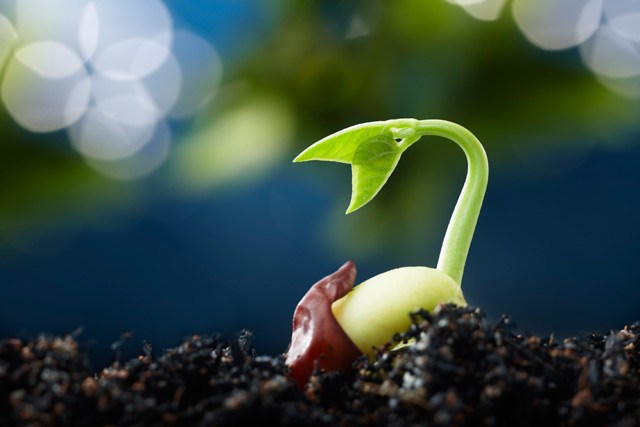
There are few phrases in the Gospel as challenging as the Lord’s words in the Gospel reading of this last Sunday of Lent: «Unless a grain of wheat falls to the ground and dies, it remains just a grain of wheat; but if it dies, it produces much fruit»[1]. Jesus’ idea is clear: with our life the same thing happens as with the grain of wheat, which has to die to release all its energy and produce fruit one day. If it does not die, it remains alone on the ground. On the contrary, if it dies, it rises again, bringing with it new grains and new life. So, the Lord hints that his death, far from being a failure, will be precisely what will give fruitfulness to his life, and at the same time he invites us Christians to live according to this paradoxical law: to give life it is necessary to die. You cannot beget life without giving your own. You cannot help living if you are not willing to go out of your way for others. No one contributes to a more just and humane world by living attached to their own well-being. No one works seriously for the kingdom of God and his justice, if he is not willing to assume the risks and rejections, the conflict and persecution that Jesus suffered. We spend our lives trying to avoid suffering and problems. The culture of pleasure and well-being pushes us to organize ourselves in the most comfortable and pleasant way possible. That’s the highest ideal! However, there are sufferings and renunciations that it is necessary to assume if we want our life to be fruitful and creative. Hedonism is not a mobilizing force; the obsession with one’s own well-being belittles people. We are getting used to living it all, closing our eyes to the suffering of others. It seems the smartest and most sensible thing to do to be happy. Well, it’s a mistake! Surely, we will be able to avoid some problems and troubles, but our well-being will be increasingly empty, boring and sterile, our religion increasingly sad and selfish and meanwhile, the oppressed and afflicted want to know if anyone cares about their pain. Christians, will we do something for them? • AE
Fr. Agustin’s Schedule for the Fifth Sunday of Lent (2021)
Saturday, March 20, 2021.
4.00 p.m. Sacrament of Confession 5.30 p.m. English Mass @ St. Peter Prince of the Apostles Catholic Church.
Sunday March 21, 2021.
8.30 a.m. English Mass @ Our Lady of Grace Catholic Church (Outdoors mass)
10.30 p.m. English Mass @ Our Lady of Grace Catholic Church (Outdoors mass)
5.30 p.m. English Mass @ St. Peter Prince of the Apostles Catholic Church.
V Domingo de Cuaresma (2021)
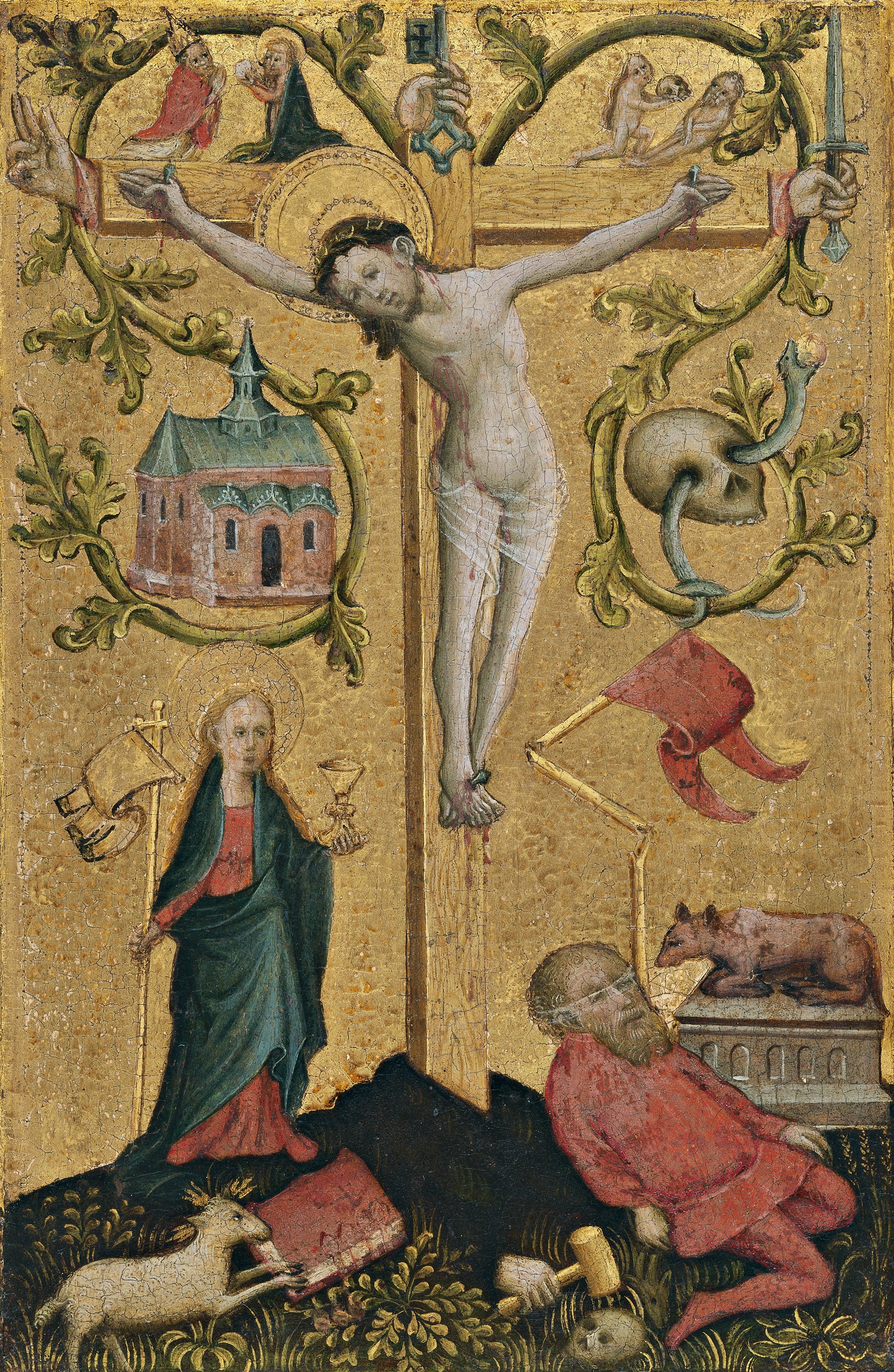
Maestro anónimo alemán activo en Westfalia, Cristo en la Cruz como Redentor del mundo (ala derecha) (ca. hacia 1410 Tabla. 28,5 x 18,5 cm, Museo Nacional Thyssen-Bornemisza (Madrid)
A propósito del evangelio de hoy, decía San Juan de la Cruz: «No quieras enviarme ya más mensajero, que no saben decirme lo que quiero». Aquellos gentiles que se acercan a Felipe con este deseo: «Quisiéramos ver a Jesús» ¡Qué maravilloso deseo! Mucha gente no tiene claro quién fue Jesús y por qué ha tenido tanta influencia en la historia. Se preguntan por qué es tan diferente de otros personajes y qué puede aportamos en nuestros días. A mi juicio, el mejor camino para sintonizar con él es acercarse personalmente a los evangelios y conocer directamente el relato de los evangelistas. Jesús no deja a nadie indiferente. Sus palabras penetrantes, sus gestos imprevisibles, su vitalidad y amor a la vida, su confianza total en el Padre, su manera de defender a los desgraciados, su libertad frente a todo poder, su lucha contra la mentira y los abusos, su comprensión hacia los pecadores, su cercanía al sufrimiento humano, su acogida a los despreciados, su interés por hacer más digna y dichosa la vida de todos… nos ponen ante la Persona -así con mayúscula- más excepcional y más maravillosa que jamás haya existido, y suscitan un interrogante: ¿qué misterio se encierra en este Hombre? Quien se acerca a Jesucristo -y podemos hacerlo a través de la lectura diaria del evangelio- y sintoniza con él descubre todo lo que él puede aportarnos para encontrar un sentido acertado a nuestra vida, para vivir con dignidad y sensatez, y para caminar día a día movidos por una esperanza indestructible • AE
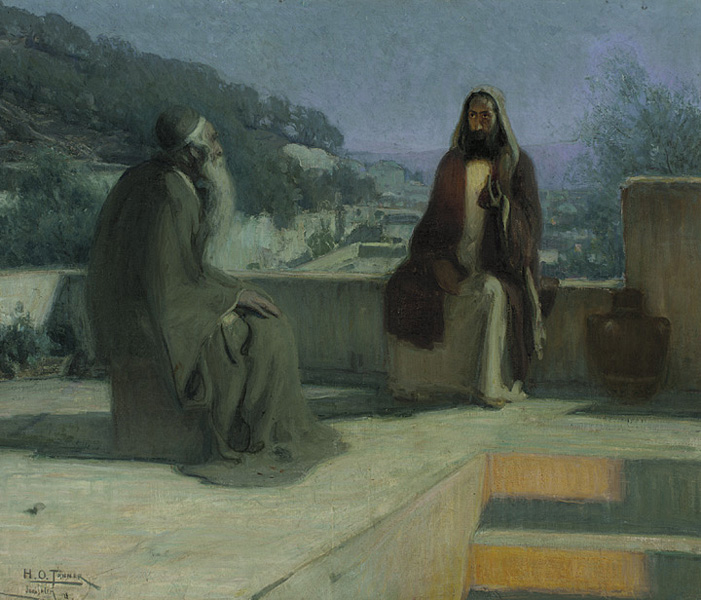
Henry Ossawa Tanner, Nicodemus Visiting Jesus (1899), oil on canvas, Pennsylvania Academy of the Fine Arts (Philadelphia)
In his conversation with Nicodemus, as we find it in this Sunday’s Gospel, you hear Jesus say: “Just as Moses lifted up the serpent in the wilderness, so must the Son of Man be lifted up, that whoever believes in him may have eternal life.” There are two other places in John’s Gospel where Jesus uses that same expression of “being lifted up”. It suggests that it was an important image for him; after all, it is mentioned three times in the same Gospel[1]. That “being lifted up”, where does that come from? It comes from the time that the Israelites were wandering in the desert[2]. They complained that God had led them out into the wilderness to die. As punishment, God sent venomous serpents among them and many die of the poisonous bite. Then God instructed Moses to make an image of the snake, put it on a pole and hold it up. Anyone who was bitten and who looked upon the image would recover and be healed. Now Jesus uses that image of Moses and the serpent to speak of his own death on the cross and the salvation that comes from God through him. So what is it about the cross that draws us, that reveals the divine presence…, that heals us when we gaze upon it? For Jesus, the cross is his hour, the cross is his glory, the cross is the ultimate expression of how God so loved the world. The cross is the face of God as we know God through Jesus Christ. By making himself a total offering Jesus expresses the radiant light of divine love. His glory is in his self-emptying. So, have you ever forgiven someone for something really serious, and done so freely and completely, as pure gift? Have you ever given yourself over to another’s need so completely that thoughts about yourself vanished entirely? Have you ever experienced love of God so completely that you seemed to disappear and what remained seemed only divine? If you answered yes to any of these, you know something of the mystery of the cross. Let us pay attetion, this holy season of Lent is the grace-filled season in which we are urged to progress on knowing the great mystery of the cross, so there is alwaysa one more chance • AE
Fr. Agustin’s Schedule for the Fourth Sunday of Lent (Year B)
On the occasion of the Spring Break of 2021, Fr. Agustín will be out of town. Our three parish communities continue their usual schedule for the weekend for the celebration of the Eucharist and the Sacrament of Confession.
IV Domingo de Cuaresma (2021)
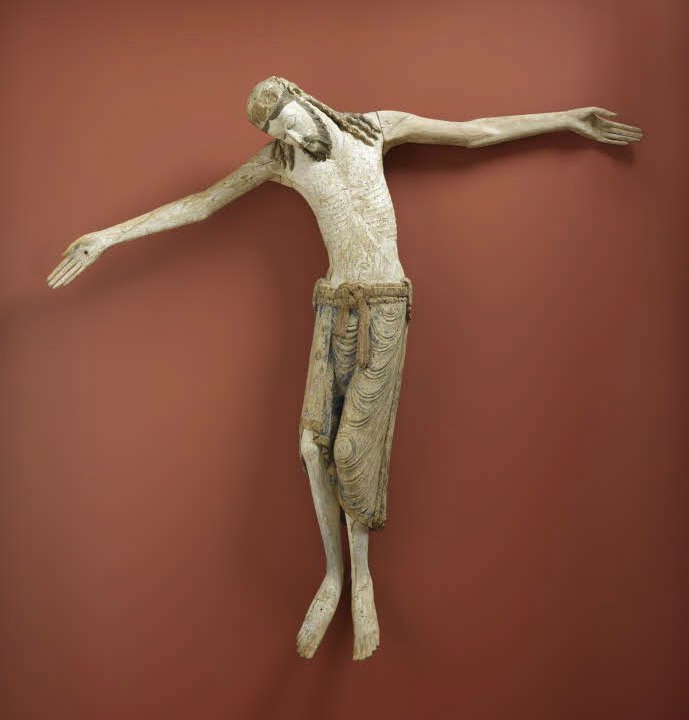
Autor anónimo, Le Christ décloué de la Croix (segunda mitad del siglo XII), Museo de Louvre (Paris)
San Juan nos habla de un extraño encuentro. Son Jesús y un fariseo llamado Nicodemo. Según el relato es Nicodemo quien toma la iniciativa y busca a Jesús, pero de noche. Intuye que Jesús es un hombre venido de Dios, pero se mueve entre tinieblas. Jesús lo irá conduciendo hacia la luz. Nicodemo representa en el relato a todo aquel que busca sinceramente encontrarse con Jesús. Por eso, en cierto momento, Nicodemo desaparece de escena y Jesús prosigue su discurso, para terminar con una invitación general a no vivir en tinieblas, sino a buscar la luz. Según Jesús, la luz que lo puede iluminar todo está en el Crucificado. La afirmación es atrevida: «Tanto amó Dios al mundo que entregó a su Hijo único para que no perezca ninguno de los que creen en él, sino que tengan vida eterna»[1]. ¿Podemos ver y sentir el amor de Dios en ese hombre clavado en una cruz? Acostumbrados desde niños a ver la cruz por todas partes quizá no hemos aprendido a mirar el rostro del Crucificado con fe y con amor. Nuestra mirada distraída no es capaz de descubrir en ese rostro la luz que podría iluminar nuestra vida en los momentos más duros y difíciles. Sin embargo desde la cruz el Señor nos envía constantemente señales de vida y de amor. En esos brazos extendidos que no pueden ya abrazar a los niños, y en esa manos clavadas que no pueden acariciar a los leprosos ni bendecir a los enfermos está Dios con sus brazos abiertos para acoger, abrazar y sostener nuestras pobres vidas, rotas por tantos pecados y sufrimientos. Desde ese rostro apagado por la muerte, desde esos ojos que ya no pueden mirar con ternura a pecadores y prostitutas, desde esa boca que no puede gritar su indignación por las víctimas de tantos abusos e injusticias, Dios nos está revelando su amor por la Humanidad. Podemos acoger a ese Dios, pero también corremos el peligro de rechazarlo. Somos libres. La gran pregunta es por qué tantas veces rechazamos la luz que nos viene del Crucificado. Quizá en un momento de silencio y meditación podríamos respondernos y, al mismo tiempo, pedir perdón y fortaleza para cambiar • AE