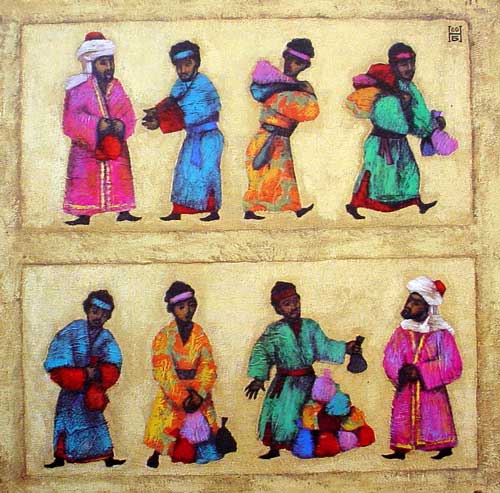
N. Bube (b. 1949), Parable of the Talents, oil on canvas. Particular collection.
We live in a world that loves to measure things. We measure success by income, achievement, recognition, and the number of people who admire what we do. Even our spiritual lives can become exercises in comparison. We look at what others accomplish, the gifts they possess, the opportunities they receive, and wonder whether our own lives amount to very much. But there is a remarkable detail in this Sunday’s Gospel. One servant receives five talents, another receives two, and both put what they have been given to good use. When their master returns, he says exactly the same words to each of them: “Well done, my good and faithful servant.” Not a greater compliment for the one who received more. Not a lesser welcome for the one who received less. The master does not compare the two servants. He recognizes the faithfulness of each. Perhaps that is something we desperately need to hear. God has not given everyone the same abilities, circumstances, opportunities, or responsibilities. Some lives unfold in public, where their achievements are easily noticed. Others are lived almost entirely out of sight, in homes, hospitals, classrooms, or places where faithful service rarely receives applause. Yet the Gospel suggests that the worth of a life cannot be calculated simply by the size of its accomplishments. What matters is not how much we were given, but what we allowed God’s gifts to become in our hands. And there is another beautiful detail: the reward is not a larger fortune or a more impressive title. It is an invitation: “Come, share your master’s joy.” The destination of Christian faithfulness is not a place on some heavenly list of outstanding performers. It is communion with God. Perhaps we spend too much time wondering whether we have done as much as someone else, and too little time asking whether we have loved faithfully with what was entrusted to us. In the end, the most beautiful words we could hope to hear are not “You accomplished more than the others,” but simply, “Come, share my joy.” • AE
In Vienna, Billy Joel offers a gentle reminder to a world obsessed with achievement: life is not a race, and our worth cannot be measured by how much we accomplish or how quickly we get there. There is something wonderfully liberating about this song, especially alongside Sunday’s Gospel. The two faithful servants were given different amounts, yet both received exactly the same welcome. Perhaps we, too, need to stop measuring our lives against the accomplishments of others. God does not ask us to be more successful than our neighbor, but to be faithful with what we have received. And perhaps the greatest achievement of all is discovering that we never needed to compete for God’s love •
In Vienna, Billy Joel offers a gentle reminder to a world obsessed with achievement: life is not a race, and our worth cannot be measured by how much we accomplish or how quickly we get there. There is something wonderfully liberating about this song, especially alongside Sunday’s Gospel. The two faithful servants were given different amounts, yet both received exactly the same welcome. Perhaps we, too, need to stop measuring our lives against the accomplishments of others. God does not ask us to be more successful than our neighbor, but to be faithful with what we have received. And perhaps the greatest achievement of all is discovering that we never needed to compete for God’s love •

St. Joseph Catholic Church (Dilley, TX) • Weekend Schedule

Fr. Agustin E. (Parish Administrator)
Saturday, November 14, 2026
5.00 p.m. Sacramento de la Confesión
6.00 p.m. Santa Misa.
Sunday, November 15, 2026
8.00 a.m. Sacrament of Reconciliation
8.30 a.m. Holy Mass.
10.30 a.m. Sacrament of Reconciliation.
11.00 a.m. Holy Mass.
XXXIII Domingo del Tiempo Ordinario (Ciclo A)
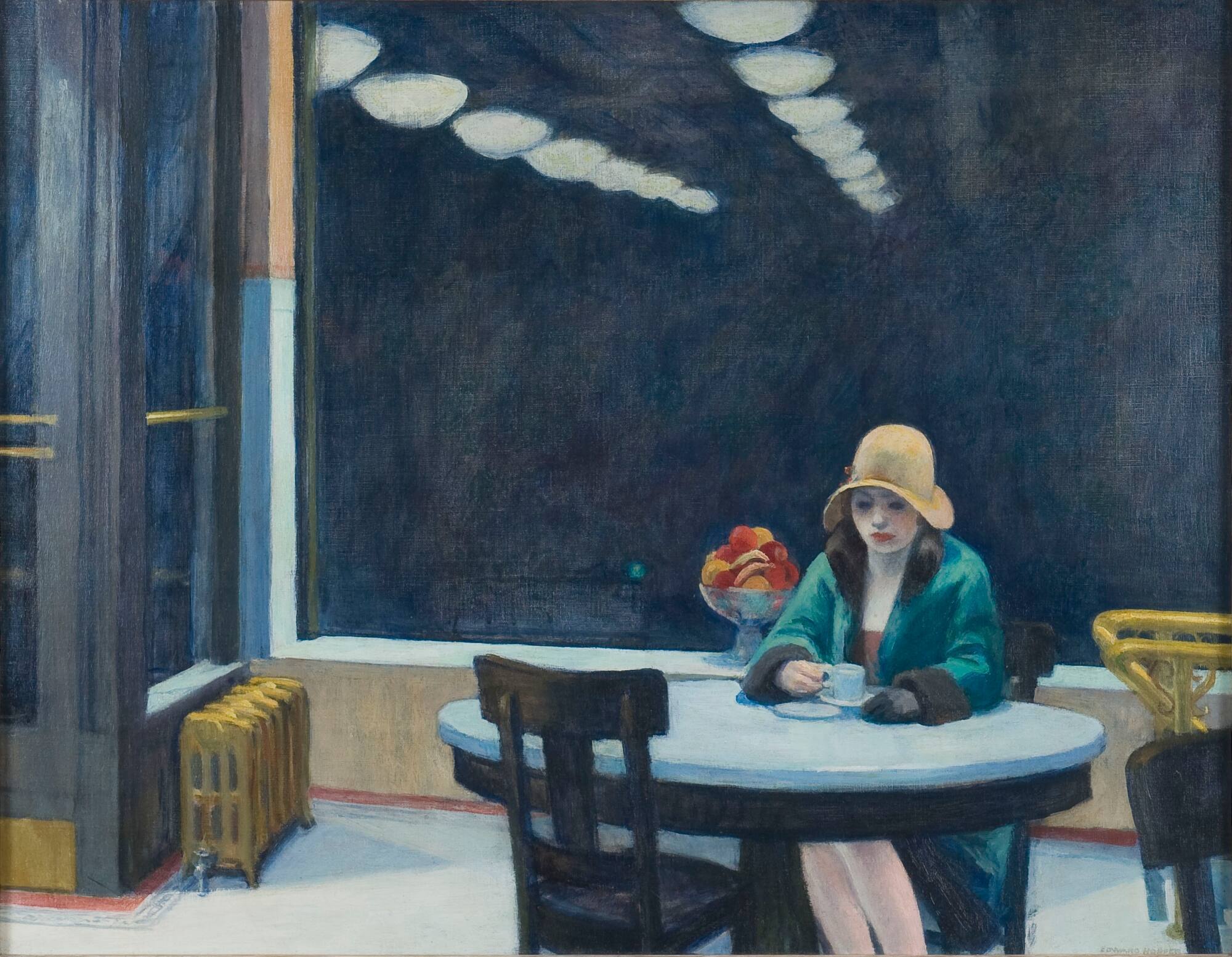
E. Hopper, Automat (1927), oil on canvas, Des Moines Art Center (Des Moines, Iowa)
Hay personas que pasan buena parte de su vida esperando sentirse seguras antes de tomar una decisión. No se atreven a comenzar algo nuevo porque podrían fracasar. No expresan sus sentimientos porque podrían ser rechazadas. No se comprometen demasiado porque saben que todo compromiso trae consigo la posibilidad de sufrir. Y así, casi sin darse cuenta, van reduciendo su mundo hasta convertirlo en un lugar donde apenas queda espacio para las sorpresas. En el Evangelio de este domingo, uno de los servidores recibe un talento y decide enterrarlo. Cuando su señor regresa, se lo devuelve intacto. No lo ha perdido, no lo ha gastado, no ha cometido ninguna imprudencia. Su explicación es desconcertantemente sencilla: «Tuve miedo». Y quizá esas sean las palabras más tristes de toda la parábola. Porque el miedo no solamente nos protege de ciertos peligros; también puede privarnos de las cosas más hermosas de la vida. Por miedo dejamos pasar oportunidades, aplazamos reconciliaciones, escondemos nuestras capacidades y renunciamos a proyectos que podrían haber dado fruto. A veces incluso confundimos la prudencia con la inmovilidad, como si vivir correctamente consistiera en no arriesgar absolutamente nada. Pero Jesús nos presenta a un hombre que ha conservado cuidadosamente lo que recibió y, sin embargo, no ha hecho nada con ello. Su tragedia no fue haber perdido el talento, sino haber permitido que el miedo decidiera por él. También nuestra relación con Dios puede verse afectada por ese temor. Podemos imaginarlo como un juez severo, siempre dispuesto a descubrir nuestros errores, y terminar viviendo la fe con más preocupación por no fallar que con alegría por amar. Quizá la parábola nos invita a preguntarnos qué imagen de Dios llevamos dentro y cuánto condiciona nuestra manera de vivir. Porque quien solamente teme equivocarse puede terminar sin hacer nada verdaderamente importante. Y sería profundamente triste llegar al final de la vida con las manos intactas, pero sin haberlas utilizado para amar • AE
Honrar la vida, de Eladia Blázquez, en esta hermosa interpretación en vivo de Sandra Mihanovich, nos invita a distinguir entre el simple transcurrir de los días y la decisión de vivir con plenitud. Hay en esta canción una invitación serena, pero exigente, a no conformarnos con pasar por el mundo sin dejar algo de nosotros en él. En el Evangelio de este domingo, el servidor que enterró su talento no perdió lo que había recibido, pero tampoco se atrevió a hacer nada con ello. A veces, por miedo a perder, terminamos renunciando a lo que verdaderamente merece la pena. Y quizá honrar la vida consista precisamente en eso: atrevernos a amar, a entregarnos y a correr el riesgo de no hacerlo todo perfectamente •

¿Qué lees?