
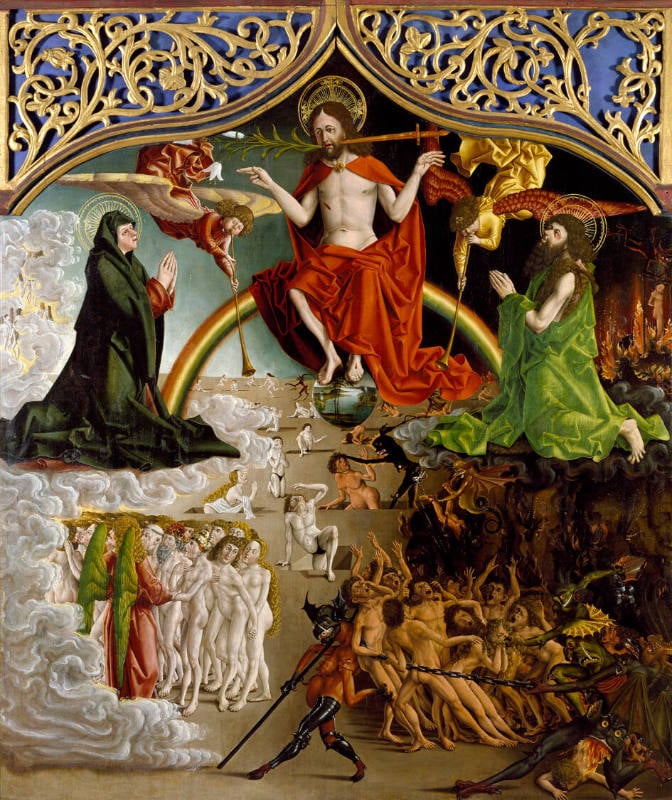
Marx Reichlich, Last Judgment, c. 1490. Oil and tempera on wood. Chrysler Museum of Art, Norfolk, Virginia.
We are not always cruel to the people we fail to love. Sometimes we are simply too busy, too distracted, or too comfortable to notice them. We pass by someone who needs help, postpone a visit to someone who is lonely, or convince ourselves that another person’s suffering is not really our responsibility. Most of the time, we do not think of these moments as particularly important. They are simply part of an ordinary day. Yet in this Sunday’s Gospel, Jesus tells us that such moments may carry an eternal significance we never imagined. When the Son of Man comes in glory to judge the nations, both those welcomed into his kingdom and those excluded from it ask exactly the same question: “Lord, when did we see you?” Neither group recognized him. And perhaps that is the most astonishing part of the story. The surprise is not that God was watching what we did. The surprise is that God was the one standing before us. He was the stranger whose presence made us uncomfortable, the sick person whose suffering interrupted our plans, the prisoner whose name we never bothered to learn. He was there, not disguised as someone important, but hidden in the very people the world finds easiest to overlook. And notice something beautiful about those who are welcomed into the kingdom: they seem genuinely surprised. They did not feed the hungry because they expected to receive a heavenly reward. They did not visit the sick because they knew they were serving the King of the universe. They simply encountered someone in need and responded with compassion. Their kindness had become so natural that they had forgotten to keep a record of it. Perhaps the most beautiful acts of love are those we perform without ever thinking of ourselves as particularly good people. But the Gospel also contains a warning we cannot soften. Those who are turned away are not accused of committing spectacular crimes. They are confronted with the suffering they chose not to see. Their failure was not necessarily cruelty, but indifference; not always an intention to harm, but an unwillingness to be disturbed. And that should make us uncomfortable, because it is possible to live a respectable, religious, even admirable life while remaining remarkably untouched by the pain of others. Jesus does not ask whether we recognized him in the faces of the poor. He knows that we often did not. He asks what we did when those faces appeared before us. And perhaps the most astonishing revelation of the Last Judgment will be discovering how many times God came into our lives, not asking to be worshiped, but simply asking to be loved • AE
In Another Day in Paradise, Phil Collins tells the story of a homeless woman asking for help while someone simply walks away. It is an ordinary encounter, easily forgotten by the person who chooses not to see. Yet Sunday’s Gospel invites us to consider its extraordinary significance. On the Solemnity of Christ the King, Jesus reveals that he identifies himself with those whom the world so often overlooks. The King we worship in glory is the same Christ we may fail to recognize in someone asking for help. And perhaps the most troubling question this song leaves us with is not whether we would recognize Jesus if he appeared before us, but whether we would stop for him •

St. Joseph Catholic Church (Dilley, TX) • Weekend Schedule

Fr. Agustin E. (Parish Administrator)
Saturday, November 21, 2026
5.00 p.m. Sacramento de la Confesión
6.00 p.m. Santa Misa.
Sunday, November 22, 2026
8.00 a.m. Sacrament of Reconciliation
8.30 a.m. Holy Mass.
10.30 a.m. Sacrament of Reconciliation.
11.00 a.m. Holy Mass.
Thursday, November 26, 2026.
10.00 a.m. Thanksgiving Mass.
Solemnidad de Nuestro Señor Jesucristo, Rey del Universo
(Último domingo del Tiempo ordinario)
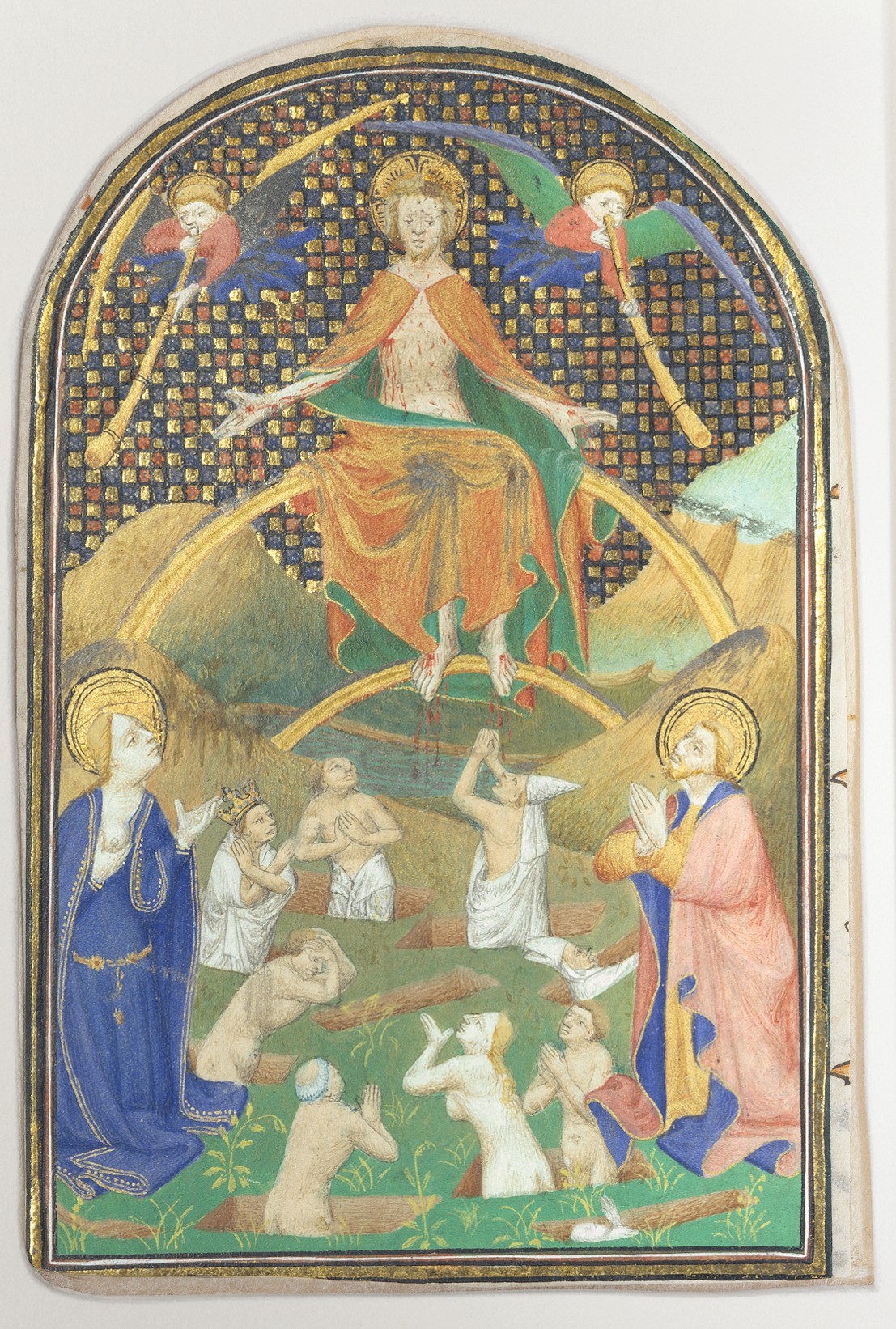
Autor desconocido, El Juicio Final, hoja de un libro de horas, ca. 1400. Témpera y oro sobre pergamino. París, Francia. The Metropolitan Museum of Art, Nueva York.
Hay personas que han hecho mucho bien a lo largo de su vida y apenas saben hablar de ello. Una madre que pasó noches enteras cuidando a su hijo enfermo. Un vecino que acompañó durante años a alguien que vivía solo. Una mujer que compartió lo poco que tenía con una familia necesitada. Si alguien les preguntara por qué hicieron todo aquello, probablemente responderían con cierta extrañeza: «¿Y qué otra cosa iba a hacer?». No se consideran personas extraordinarias. Simplemente hicieron lo que les parecía natural. En este domingo, solemnidad de Jesucristo, Rey del Universo, el Evangelio nos presenta una escena sorprendente. Cristo aparece sentado en su trono, rodeado de ángeles, con todas las naciones reunidas ante Él. Es la imagen majestuosa de un Rey que viene a juzgar la historia. Pero cuando comienza a hablar, sucede algo inesperado. No recuerda grandes ceremonias celebradas en su honor ni los homenajes que recibió. Habla de hambre, de sed, de enfermedad, de soledad y de personas encarceladas. El Rey del universo comienza a recordar las ocasiones en que alguien le dio de comer, lo acogió o lo visitó. Y los justos no entienden. «Señor, ¿cuándo te vimos?», preguntan. Han hecho el bien, pero desconocían la verdadera grandeza de lo que estaban haciendo. No sabían que detrás de aquel rostro cansado, de aquella persona enferma o de aquel desconocido que necesitaba ayuda estaba el mismo Cristo. Y quizá por eso su sorpresa resulta tan hermosa. No habían convertido la caridad en una manera de acumular méritos ni habían calculado cuánto les convenía ayudar. Habían aprendido a reconocer el sufrimiento ajeno como una razón suficiente para acercarse. Hay algo profundamente cristiano en esa espontaneidad. Cuando el amor madura, deja de preguntarse constantemente qué recibirá a cambio. Se vuelve atento, generoso, discreto. No necesita espectadores ni aplausos. A veces ni siquiera conserva el recuerdo de lo que ha hecho. Lo que para nosotros fue un gesto pequeño, para Dios puede haber sido un encuentro inolvidable. Y aquí descubrimos algo extraordinario sobre la realeza de Cristo. Su grandeza no se parece a la de los poderosos de este mundo. El Rey que un día aparecerá rodeado de gloria es el mismo que hoy se deja encontrar en la fragilidad de quienes necesitan nuestra ayuda. Su trono no lo aleja de los pequeños; su amor lo acerca a ellos hasta identificarse con su sufrimiento. Pensemos en tantas personas que han pasado por nuestra vida dejando una huella de bondad sin darse cuenta: quienes nos escucharon cuando nadie tenía tiempo, quienes nos acompañaron en una enfermedad, quienes nos ofrecieron una palabra amable en un momento difícil. Tal vez nunca imaginaron cuánto significaron aquellos gestos. Y nosotros mismos podemos haber hecho algún bien cuyo alcance desconocemos por completo. El Evangelio nos recuerda que la historia de nuestra vida contiene mucho más de lo que somos capaces de recordar. Dios no olvida el amor que nosotros hemos olvidado. Y llegará el día en que nos muestre, con una ternura que apenas podemos imaginar, todo lo que su gracia fue haciendo a través de nuestras manos. Quizá una de las mayores alegrías del cielo sea descubrir que el Rey del universo estuvo mucho más cerca de nosotros de lo que imaginábamos y que, sin saberlo, lo estuvimos abrazando cuando creíamos estar abrazando solamente a alguien que nos necesitaba • AE
En Aquellas pequeñas cosas, Joan Manuel Serrat nos recuerda que lo más valioso de la vida no siempre llega acompañado de grandes acontecimientos. A veces permanece escondido en gestos sencillos, recuerdos discretos y momentos que apenas parecían importantes cuando sucedieron. Hay una hermosa afinidad entre esta canción y el Evangelio de hoy. Los justos se sorprenden al descubrir que, en aquellas pequeñas obras de amor que quizá ya habían olvidado, habían encontrado al mismo Cristo. Porque hay cosas que parecen pequeñas solamente mientras ignoramos cuánto amor contienen. Y quizá eso sea también lo que celebraremos un día ante nuestro Rey: descubrir que nada de lo que hicimos por amor fue insignificante para Él •

¿Hoy Qué Lees?

A Musical Epilogue: Mozart’s Requiem
As November draws to a close, so does the Church’s liturgical year. Throughout this month, we have remembered our beloved dead, prayed for those who have gone before us, and reflected on the mystery of eternity. Now, on the Solemnity of Christ the King, the Gospel brings us before the throne of the Son of Man, where every human life is seen in the light of God’s truth and mercy. Few musical works express this solemn mystery as profoundly as Mozart’s Requiem. Its haunting beauty gives voice to our grief, our awareness of mortality, and our longing for salvation. In the Rex tremendae majestatis, we hear the plea of humanity before the King of glory: Salva me, fons pietatis — “Save me, O fountain of mercy.” And perhaps that is the most fitting prayer with which to close the liturgical year: not a declaration of our own goodness, but a humble surrender to the mercy of the King who knows us completely and loves us beyond measure •