Second Sunday of Advent (Cycle B)

Mattia Preti (Il Cavaliere Calabrese), Saint John the Baptist Preaching (ca. 1665), oil on canvas, Museum of Fine Arts of Boston

Comfort, comfort my people. The prophet of the first reading is told that the time of misery is coming to an end. Comfort the people. Let them know that God is going to come to free them from their sadness and their pain. Right now, we need comforting. We are living in very difficult times. Politics has polarized us. People don’t just disagree with each other; they show anger and even hatred towards those who hold a different opinion then they do. Some Republicans shout out that all Democrats are communists. Some Democrats shout out that all Republicans are fascists. Our Church is also divided between those who want a return to a traditionalist faith where Mass is celebrated in Latin and those who want the Church to continue developing with the times. Deeper than that, there are those who treat the Holy Father as a heretic, and those who treat anyone who questions Rome as being schismatic. This is very stressful for us all. Many of our families have had difficult years with tragedies. Life as they knew it will never return. They need comforting. We all need comforting. That is a great word, comfort.

The prophet of the first reading promised comfort to the people. He told them that God was aware of their pain and suffering. They had been held captive by the Babylonians for fifty years. They were totally powerless. But then, after the prophecy that God is coming to bring comfort to the people. God found a way to bring comfort to his people. People are looking for comfort. They may not realize it, but they are looking for God. It is up to us to tell them that Divine Help is near. “Prepare the way of the Lord,” John the Baptist calls out in the Gospel reading for the Second Sunday of Advent. We are called to tell people that God is in control. He is going to free us from all that is attacking us. We have got to tell people to have faith and trust in God. We are called to let others know that comfort is near. More than that, we are called to let them know that Jesus, the Divine Comforter, is here. We can do this if our faith is the very center or our lives. We can do this if our lives are motivated by the presence of the Lord within us. We can proclaim comfort by living our Christianity. The decisions that we make in life, the way that we treat other people, the very way that we approach our day, must reflect the presence of Christ within us. People need us to be men and women of faith. People need our witness to our Christianity. Others are dependent on us. We must prepare them to receive the Lord in their lives. We must bring comfort to God’s people • AE


St. Dominic Catholic Church

Weekend Schedule

Saturday, December 9, 2023

3.00 p.m. Sacrament of Reconciliation – Fr. Agustin

5.00 p.m. Holy Mass (English) – Fr. Agustin

Sunday, December 10, 2023

7.30 a.m. Holy Mass (English) – Fr. Agustin

10.00 a.m. Holy Mass (English) – Fr. Agustin

12.30 p.m. Holy Mass (English) – Fr. Jaime

3.00 p.m. Santa Misa – Fr. Jaime


Segundo Domingo de Adviento (Ciclo B)

J. de Flandes, La Crucifixión (1509), óleo sobre tabla, Museo Nacional del Prado (Madrid)

A lo largo de este nuevo año litúrgico que empezó el domingo pasado con el inicio del adviento, en la Liturgia de la Palabra iremos escuchando los domingos el evangelio de Marcos. Su pequeño escrito arranca con este título: «Comienzo de la buena noticia de Jesús, el Mesías, Hijo de Dios». Estas palabras nos permiten evocar algo de lo que encontraremos en su relato.

Con Jesús «comienza algo nuevo». Es lo primero que quiere dejar claro el evangelista. Todo lo anterior pertenece al pasado. Jesús es el comienzo de algo nuevo e inconfundible. En el relato, Jesús dirá que el tiempo se ha cumplido y que con él llega la buena noticia de Dios. Esto es lo que vivian los primeros cristianos y quien se encuentra vitalmente con Jesús y penetra un poco en su misterio sabe que con él empieza una vida nueva, algo que nunca había experimentado anteriormente. Lo que encontramos en Jesús es una autentica buena noticia. Algo nuevo y bueno. La palabra evangelio que emplea Marcos es muy frecuente entre los primeros seguidores de Jesús y expresa lo que sienten al encontrarse con él. Una sensación de liberación, alegría, seguridad y desaparición de miedos. En Jesús se encuentran con la salvación de Dios.

Cuando alguien descubre en Jesús al Dios amigo del ser humano, el Padre de todos los pueblos, el defensor de los últimos, la esperanza de los perdidos, sabe que no encontrará una noticia mejor. Cuando conoce el proyecto de Jesús de trabajar por un mundo más humano, digno y dichoso, sabe que no podrá dedicarse a nada más grande.

Esta Buena Noticia es Jesús mismo, el protagonista del relato que va a escribir Marcos. Por eso su intención primera no es ofrecernos doctrina sobre Jesús, ni aportarnos información biográfica sobre él, sino seducirnos ¡preciosa palabra! para que nos abramos a la Buena Noticia que solo podremos encontrar en él.

Marcos le atribuye a Jesús dos títulos: uno típicamente judío; el otro, más universal. Sin embargo, reserva a los lectores algunas sorpresas. Jesús es el Mesías al que los judíos esperaban como liberador de su pueblo. Pero un Mesías muy diferente del líder guerrero que muchos anhelaban para destruir a los romanos. En su relato, Jesús es descrito como enviado por Dios para humanizar la vida y encauzar la historia hacia su salvación definitiva. Es la primera sorpresa. Jesús es Hijo de Dios, pero no dotado del poder y la gloria que algunos hubieran imaginado. Un Hijo de Dios profundamente humano, tan humano que solo Dios puede ser así. Solo cuando termine su vida de servicio a todos, ejecutado en una cruz, un centurión romano confesará: «Verdaderamente este hombre era Hijo de Dios». Es la segunda sorpresa • AE


El Mesías (G.F. Haendel)

El Mesías (en inglés, The Messiah), es un oratorio en inglés compuesto por Georg Friedrich Händel en 1741, con un texto bíblico recopilado por Charles Jennens de la Biblia del rey Jacobo. Se estrenó en Dublín en 1742 y se representó casi un año después en Londres. Después de una acogida de público inicial modesta, el oratorio ganó popularidad y finalmente se convirtió en una de las obras corales más conocidas e interpretadas con mayor frecuencia en la música occidental. Lo ponemos aquí porque el aria con la que éste oratorio empieza coincide con las preciosas palabras con las que inicia la segunda lectura.

Y por cierto: el próximo martes 12 de Diciembre, 2023, a las 10 de la mañana, en la parroquia, vamos a escuchar una estupenda grabación de esta obra musical al tiempo que iremos leyendo el texto para apreciarlo mejor, ¡estás cordialmente invitado!


DECEMBER 2023

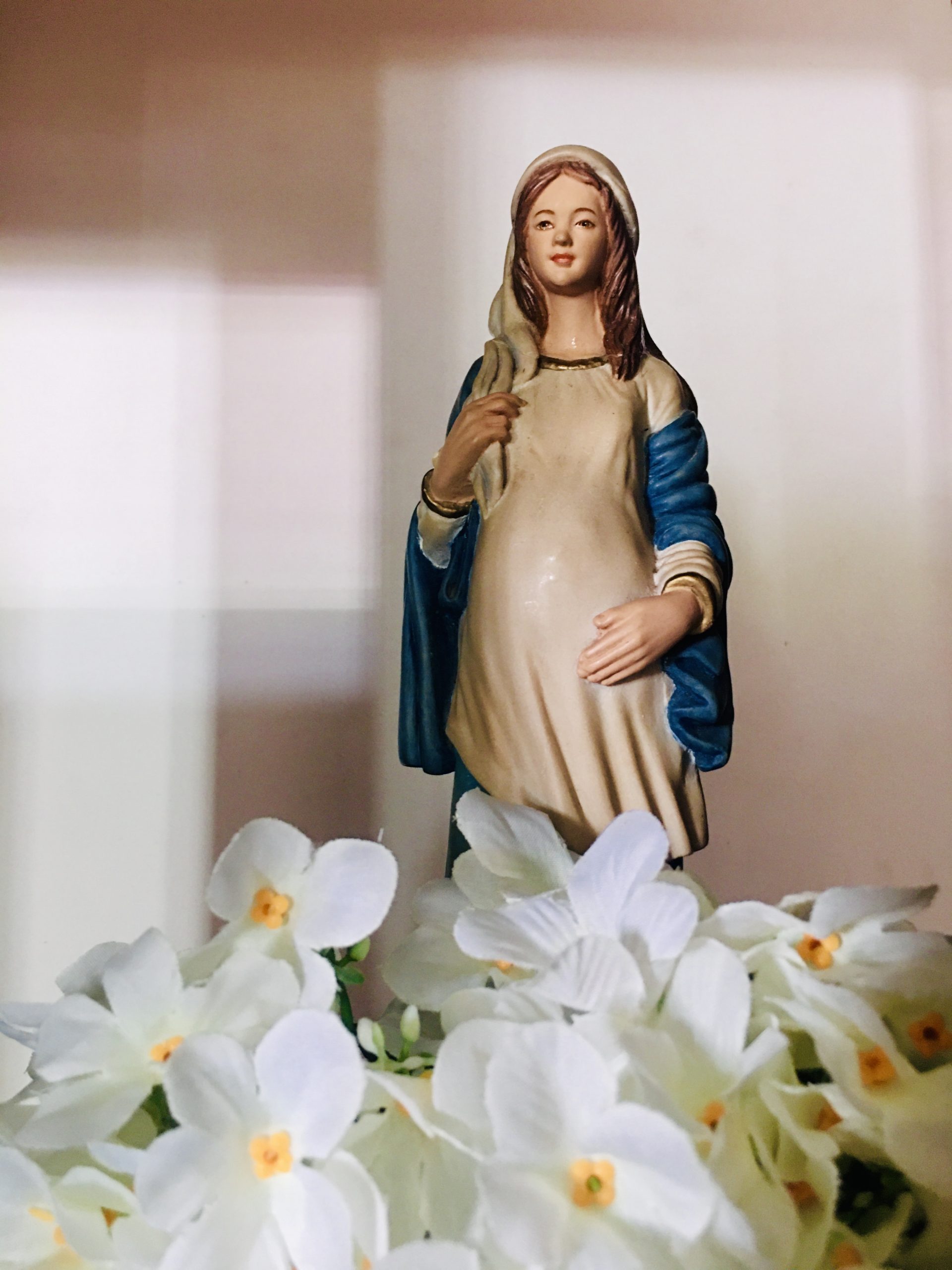
Solemnity of the Immaculate Conception of the Blessed Virgin Mary (2023)

Spanish Colonial School, 18th Century, The Young Virgin with St. Joachim and St. Anne (ca. 1775), oil on canvas.

The season of Advent is a time of preparation and a time of anticipation.  We are preparing to welcome our Lord and we celebrate this season in anticipation of his birth.  Today, we celebrate the solemnity of the Immaculate Conception of the Blessed Virgin Mary, the day that Mary was conceived in the womb of St. Ann, the fact that she was conceived without original sin. From the first moment of her conception, from the moment when her life began, our Lady belonged entirely to God. The grace of the Immaculate Conception of the Blessed Virgin Mary is a grace of preparation. From the first moment of her life, when she can do nothing for herself, it is the grace of God that saves her. The work of salvation and the work of sanctification always begin with the action of God.

In the Immaculate Conception, the Blessed Virgin Mary is prepared to be the mother of the Messiah. She is given the grace to be able to give herself completely to the will of the Lord. It is the grace of her Immaculate Conception the enables her to respond to the words of the Archangel: “Let it be done unto me according to your word.”  So, the Blessed Virgin Mary is prepared by her Immaculate Conception to be the first tabernacle of the Lord Jesus.

The grace of the Immaculate Conception is a grace given in anticipation. This special grace is given to her in anticipation of the redemptive work of her Son, in whom alone and through whom alone is the salvation of the world.  Our Lady is the first to receive the grace that will be won on the cross of Calvary. So, today we celebrate the mighty work of Almighty God in this time of preparation and this time of anticipation. We join with all creation and with every generation and name Mary as the one who is blessed, and we ask God for another grace, another gift, the ability to prepare to receive with open heart and arms our Lord Jesus at Christmas Eve • AE


Solemnity of the Immaculate Conception of the Blessed Virgin Mary (Holiday of Obligation)

Thursday, December 7, 2023

6.00 p.m. (Vigil Mass) – Fr. Agustin E.

Friday, December 8, 2023

8.30 a.m. Holy Mass (English) – Fr. Jaime P.

6.00 p.m. Holy Mass (English) – Fr. Agustin E.


Salve Regina!


Solemnidad de la Inmaculada Concepción de la Santísima Virgen María

Dos casas tuvo Dios en este mundo señaladas entre todas las otras. La Una fue la humanidad de Jesucristo, en la cual mora la divinidad de Dios corporalmente, como dice el Apóstol [1] y la otra, las entrañas virginales de Nuestra Señora, en las cuales moró por espacio de nueve meses. Estas dos casas fueron figuradas en aquellos dos templos que hubo en el Viejo Testamento, uno de ellos que hizo Salomón [2] y el otro que se edificó en tiempo de Zorobabel, después del cautiverio de Babilonia [3]. Estos dos templos concuerdan en una cosa y difieren en dos. Concuerdan en ser ambos templos de un mismo Dios, y difieren, lo primero, en la riqueza y primor de las labores, porque mucho más rico fue el primero que el segundo, y lo segundo, en la fiesta de la dedicación de ellos[4].

Porque en la dedicación del primero todos cantaban y otros lloraban: cantaban los que veían ya acabada aquella obra que tanto deseaban y lloraban los que se acordaban de la riqueza y hermosura del templo pasado, viendo cuán baja obra era ésta en comparación de aquélla. Pues esto mismo nos acontece ahora en el día de la dedicación de estos dos templos místicos de que hablamos. Y por el día de la dedicación entendemos el día de la concepción; porque este día fueron estos dos templos dedicados y consagrados. Pues en el día de la concepción del Hijo, todos cantan, todos alaban a Dios, todos dicen que fue concebido del Espíritu Santo, y por eso su concepción fue santa y limpia de todo pecado, y donde no hay pecado, no hay materia de lágrimas, sino de alegría y de alabanza. Mas en la concepción de la madre, unos cantan, otros lloran; unos cantan y dicen: Toda eres hermosa, amiga mía y en ti no hay mancha [5]. Otros lloran y dicen: Todos pecaron en Adán [6] y tienen necesidad de la gracia de Dios. Mas todos concuerdan en que la sacratísima Virgen, antes que naciese, fue llena de todas las gracias y dones del Espíritu Santo, porque así convenía que fuese que ab eterno era escogida para ser madre del Salvador del mundo.

Cuán grande fuese esta gracia y estas virtudes, no hay lengua humana que lo pueda declarar. La razón es porque Dios hace todas las cosas conformes a los fines para que las escoge, y así las provee perfectísimamente de lo que para ellas es necesario. Escogió a Dios Oliab para maestro de su arca[7], escogió a San Pablo y a todos los otros apóstoles para maestros de su Iglesia. Pues, conforme a esto, los proveyó perfectísimamente de todas aquellas habilidades y facultades que para eso se requerían. Y porque a esta sacratísima Virgen escogió para la mayor dignidad que se puede conceder a pura criatura, de aquí viene que la adornó y engrandeció con mayor gracia, con mayores dones y virtudes que jamás se concedieron a ninguna pura criatura • Fray Luis de Granada (S. XVI)

[1] Col 2, 9 [2] 1R 7,1 [3] Esd 6,17 [4] 1R 8,1 [5] Ct 4, 7 [6] Rm 3, 23 [7] Ex 36,1


Holy Season of Advent 2023

O come, O come, Emmanuel,
And ransom captive Israel;
That mourns in lonely exile here,
Until the Son of God appear.
Rejoice! Rejoice! Emmanuel
Shall come to thee, O Israel •


First Sunday of Advent (Cycle B)

An essential part of the ministry of a parish priest is to care for people in hospitals. There is one room that is really important: the critical care waiting room. This is the room where family and friends wait while the doctor’s care for their loved ones who have suffered a devastating stroke, a serious heart attack, a horrible car accident or some other catastrophic event. I hope you have never had occasion to be in that waiting room, but if you have, you know that it is a place very different from any other place in the world. The people who wait there are bound together like no other people in the world. Family members and friends can’t do enough for each other. No one is proud. No one stands on ceremony or protocol. Petty disputes and hurts are nowhere to be found. Perhaps there are several patients whose family and friends are waiting in that room. These complete strangers feel bound in their shared hope for their loved ones. Class and race melt away. Each person in that room is a parent or spouse or child or close friend of the suffering one first. He or she is a white, black or Asian, a blue collar or white collar worker second. Everyone in the waiting room pulls for each other. If one family receives good news, there is hope and joy for all. If another family hears sad news, everyone in the room feels their grief. In the critical care waiting room, the world changes. Vanity and pretense vanish. The entire universe is focused on the doctor’s next report. All eyes continually glance at the door. The critical care waiting room is a place of hoping. It is a place of anticipating, a place of expecting. It is a place of Advent. We live in this waiting room. We keep an eye out for the doctor, the Divine Healer, to come. We hope to experience his good news. We long for him to say, “the patient, your loved one, is fine. He or she is going to recover, is going to live.” Who is this Loved One about whom we are so concerned? The Loved One is not another person. The Loved One is that part of each of us and all of us that is right when all else seems wrong. The Loved One is that which is good when all else seems malicious. The Loved One is that within us that is spiritual in a materialistic world. The Loved One is our sharing in the Life of Jesus Christ himself. The Loved One is our soul. But the Loved One is in critical care. Evil forces are trying to destroy this presence. We sit in the waiting room of life, longing for the Divine Doctor to come and tell us that the presence of the Lord is well and strong within us and among us. We call out, “Come! Rend the heavens and come! We are the clay. You are the potter. Mold us back into your own. Come!” And so we watch. We watch for the Divine Healer to come and lead us into His Love. We watch for the times, more than we could imagine, when God extends His Love to us. We watch for the times when we can serve His Love by serving others. We watch for the opportunities to unite ourselves closer to His Love through prayer and sacrifice. We wait. We watch. We watch for opportunities to grow. Advent, the time of watching, reminds us that our entire lives must be a watching for ways that we can grow more spiritual, grow closer to Christ. We have to watch • AE


Music to feed the soul

The Messiah is an English-language oratorio composed in 1741 by George Frideric Handel. The text was compiled from the King James Bible and the Coverdale Psalter by Charles Jennens. It was first performed in Dublin on 13 April 1742 and received its London premiere a year later. After an initially modest public reception, the oratorio gained in popularity, eventually becoming one of the best-known and most frequently performed choral works in Western music. The autograph manuscript of the oratorio is preserved in the British Library •


St. Dominic Catholic Church

Weekend Schedule

Saturday, December 2, 2023

Rehearsal for RCIA Rite of Welcoming and Acceptance, 9.00 a.m. – Fr. Agustin E.

3.00 p.m. Sacrament of Reconciliation – Fr. Jaime P.

5.00 p.m. Holy Mass (English) – Fr. Jaime P.

Sunday, December 3, 2023

7.30 a.m. Holy Mass (English) – Fr. Jaime P.

10.00 a.m. Holy Mass (English) – Fr. Jaime P.

12.30 p.m. Holy Mass (English) – Fr. Agustin E.

3.00 p.m. Santa Misa – Fr. Agustin E.


Primer Domingo de Adviento (Ciclo B)

Hay un grito que se repite en el mensaje evangélico y se condensa en una sola palabra: «Vigilad!». Es una llamada a vivir de manera lúcida, sin dejarnos arrastrar en medio del torrente de esta sociedad liquida, como nos ha advertido el Santo Padre Francisco. Una invitación a mantener despierta nuestra resistencia y rebeldía, a no actuar como todo el mundo, a ser diferentes, a no identificamos con tal mediocridad. ¿Es posible?

Lo primero, tal vez, es aprender a mirar la realidad con ojos nuevos. Las cosas no son sólo como aparecen en los medios de comunicación. En el corazón de las personas hay más bondad y ternura que lo que captamos a primera vista. Hemos de reeducar nuestra mirada, hacerla más positiva y benévola. Todo cambia cuando miramos a las personas con más simpatía, tratando de comprender sus limitaciones y sus posibilidades.

Es importante, además, no dejar que se apague en nosotros el gusto por la vida y por la bondad. Aprender a vivir con corazón y querer a las personas buscando su bien. No ceder a la indiferencia. Vivir con pasión la pequeña aventura de cada día. No desentendernos de los problemas de la gente: sufrir con los que sufren y gozar con los que gozan, como animaba san pablo a los cristianos de Roma. También es importante dar su verdadera importancia a esos pequeños gestos que aparentemente no sirven para nada, pero que sostienen la vida de las personas. Yo no puedo cambiar el mundo pero puedo hacer que junto a mí la vida sea más amable y llevadera, que las personas respiren y se sientan menos solas y más acompañadas.

¿Es tan difícil abrirse al misterio de Dios? La Iglesia nos pone delante un tiempo precioso. Tiempo de búsqueda serena, de oración, de silencio y contemplación; un tiempo para decirle al Señor ¡Ven; no tardes más! Con esa disposición interior se puede alcanzar mucho. Según pasan los años, tengo la impresión de que uno se va haciendo más hondamente creyente y, al mismo tiempo, tiene cada vez menos creencias • AE


¿Qué vamos a leer?


The Solemnity of Our Lord Jesus Christ, King of the Universe (Cycle A)

Joos van Cleve, The Last Judgment (1525), Oil on wood, Metropolitan Museum of Art (New York)

Today’s feast concludes the Church year with this exclamation: Jesus Christ is King. He is the King of Kings. His Kingdom does not follow the model of kingdom we might have in our minds. He is a conquering Messiah, but his army is spiritual, not physical. He battles to restore life, not destroy life. He came down from heaven to bring us to heaven. What will we find when we get there, when we get to heaven? We really do not know. We only know that it will be radically different than our fondest expectations. “What eye has not seen, and ear has not heard, and what has not entered the human heart, God has prepared for those who love him,” we read in 1 Corinthians 2:9.

C. S. Lewis wrote a humorous essay about what we would experience if we were admitted into heaven. He wrote that there would be a triple surprise, more than this, a triple shock. First, Lewis wrote, we would be surprised at the people in heaven. We would be shocked that there are people there we never would have thought would be there. The second surprise would be the shock at realizing there were people we expected to be in heaven who were not there. The third surprise would be that we would be astonished that we were there. We Catholics have only recently moved away from our rather arrogant and self-centered view that we have exclusive rights to heaven. Sadly there are still some Christians who are ready to exclude others from the reward of the Father. They hear about the goodness of Mahatma Gandhi, but they cannot get their heads around this. They cannot get themselves to believe that there might be a Hindu in heaven, let alone millions, billions, of good people who were never Christians. That would not follow the rules that the arrogant have made up for determining the Who’s Who in heaven. Yes, there is no way to the Father except through the Son, but the Son’s obedience to the Father sacrificing his life for us resulted in the Father and the Son sending the Holy Spirit to all people of good will. These people of good will are those who reach out to others in charity, and in so doing, reach out to the very presence of Christ in others, even if, like the sheep in today’s Gospel, they do not recognize Christ. There will be many who have been saved by Christ who did not know Him by that name but who reached out to Him in others. There will be many in heaven whom we would not expect to be there.

C. S. Lewis’s second conjecture is that there will be people missing from heaven whom we expected to be there. In our American denial of death, we try to ease our grief of death by canonizing our Loved Ones who have died. No matter who a person may be, we decide that they are in heaven after their death. For example, someone steal a car and then are killed in a horrible car accident. Alcohol and drugs are involved. Yet, their friends are told that they are with God now. Their presence in heaven will be determined by the Just Judge who recognizes those who loved him throughout their lives. This same Just Judge will listen to others pleading that their Loved Ones be fully united to Him. It is a good thing to pray for the dead.

Finally, Lewis says that the third surprise we would have if we took stock of the souls in heaven would be learning that we are there. When we are honest with ourselves, we are well aware of the many times that we have turned from God. Our sins are very clear to us. He allows us to replace with love that which we have destroyed with selfishness and sin. We live in His mercy. During the last twelve months we have followed the life of Jesus our Lord from the prophesies of last Advent, through his birth, mission, death and resurrection. We have prayed over the message of His life as well as His teachings. Now, at the conclusion to the year we beg Him to help us recognize Him in our world and to acknowledge His presence by reaching out to Him on others. We seek the mercy of His continual grace drawing us out of ourselves and into His presence in the need of his Kingdom. Christ is our King. May we be true members of his Kingdom • AE


Music for the soul

A German Requiem, to Words of the Holy Scriptures, Op. 45 by Johannes Brahms, is a large-scale work for chorus, orchestra, and soloists, composed between 1865 and 1868. It comprises seven movements, which together last 65 to 80 minutes, making this work Brahms’s longest composition. A German Requiem is sacred but non-liturgical, and unlike a long tradition of the Latin Requiem, A German Requiem, as its title states, is a Requiem in the German language.


St. Dominic Catholic Church

Weekend Schedule

Saturday, November 25, 2023

12.00 p.m. XV Celebration for Kaylee Camacho – Fr. Agustin E.

3.00 p.m. Sacrament of Reconciliation – Fr. Agustin E.

5.00 p.m. Holy Mass (English) – Fr. Agustin E.

Sunday, November 26, 2023

7.30 a.m. Holy Mass (English) – Fr. Enda McKenna

10.00 a.m. Holy Mass (English) – Fr. William Zapalac

12.30 p.m. Holy Mass (English) – Fr. Enda McKenna

3.00 p.m. Santa Misa – Fr. Agustin E.


Solemnidad de Nuestro Señor Jesucristo, Rey del Universo
Último domingo del Tiempo ordinario

J. Correa de Vivar, El Juicio Final (1545), óleo sobre tabla, Museo Nacional del Prado (Madrid)

El texto del evangelio de este domingo se conoce popularmente como la parábola del juicio final, pero en realidad es más bien una descripción grandiosa del veredicto final sobre la historia humana. Allí están personas de todas las razas y pueblos, de todas las culturas y religiones. En aquel día se va a escuchar la última palabra que lo esclarecerá todo. Dos grupos van emergiendo de aquella muchedumbre. Unos son llamados a recibir la bendición de Dios: son los que se han acercado con compasión a los necesitados y han hecho por ellos lo que podían. Otros son invitados a apartarse: han vivido indiferentes al sufrimiento de los demás.

Lo que va a decidir la suerte final no es la religión en la que uno vivió. Lo decisivo será si uno vivió con compasión, ayudando al que sufría y necesitaba ayuda. Lo que hicimos a personas hambrientas, inmigrantes indefensos, enfermos desvalidos o encarcelados olvidados por todos, se le hicimos al mismo Dios.

En esta escena evangélica no se pronuncian grandes palabras como justicia, solidaridad o democracia. Sobran todas si no hay una ayuda real a los que sufren. Jesús habla de comida, ropa, algo de beber, un techo para resguardarse. Es muy sencillo de entender. Tampoco se habla tampoco de amor. A Jesús quizá le resultaba un lenguaje demasiado abstracto. No lo usó prácticamente casi nunca. El descendió a lo concreto: dar de comer, vestir, hospedar, visitar, salir al encuentro. No podemos olvidar que en el atardecer de la vida no se nos examinará del amor; se nos preguntará más bien hicimos frente a aquellos que necesitaban ayuda, sin importar que nos hayamos manchado o hasta deshilachado la vida. Sin duda una de las ideas más grandes que el santo padre Francisco nos ha regalado es aquella que dejó en su exhortación apostólica Evangelii Gaudium (La alegría del evangelio): «Prefiero una Iglesia accidentada, herida y manchada por salir a la calle, antes que una Iglesia enferma por el encierro y la comodidad de aferrarse a las propias seguridades. No quiero una Iglesia preocupada por ser el centro y que termine clausurada en una maraña de obsesiones y procedimientos. Si algo debe inquietarnos santamente y preocupar nuestra conciencia, es que tantos hermanos nuestros vivan sin la fuerza, la luz y el consuelo de la amistad con Jesucristo, sin una comunidad de fe que los contenga, sin un horizonte de sentido y de vida. Más que el temor a equivocarnos, espero que nos mueva el temor a encerrarnos en las estructuras que nos dan una falsa contención, en las normas que nos vuelven jueces implacables, en las costumbres donde nos sentimos tranquilos, mientras afuera hay una multitud hambrienta y Jesús nos repite sin cansarse: «¡Dadles vosotros de comer!» • AE


¿Y ahora qué vamos a leer?


Thanksgiving 2023

It is so easy to fall in love with the gift and forget all about the giver; to admire a painting and never think of the painter; to enjoy music and never know the heart from which it came; to accept and love ourselves and not to care for the one from whom we came.

We like to think of ourselves as doers and achievers, but the basic fact of life is that we are primarily receivers and transmitters not achievers. We all started out as zero, zip, nada. We did not ask to be. We did nothing to get here. Our very existence is a huge and beautiful gift of God. So our most basic relationship with God therefore should be one of gratitude, and this week is a great moment to do so.

God gave us a memory so that we can remember and give thanks. The memory enables us to bring forth from the storeroom of the past the wonderful moments of success, love and happiness, so that we can re-live, re-enjoy them and be grateful. “Lord, give me a grateful heart to remember and give thanks”. That is what the Holy Scripture is all about. The Bible is the written history of many of the wonderful gifts God has given us from the very creation of the world and the promise of even greater gifts in the future. In the beginning the memory of these gifts was handed on orally to each succeeding generation and then under the inspiration of the Holy Spirit written down so that all could remember and give thanks. “Lord, give me a grateful heart to remember and give thanks” That is what the Mass is all about. The Mass is the perfect act of thanksgiving that Jesus commanded us to, “Do this in memory of me.” It is the perfect sacrifice Malachi foretold which would be offered up from the rising of the sun to the going down thereof. “Lord, give me a grateful heart. To remember and give thanks”. That is why we have a Thanksgiving Day, and in so doing we grow in the love of God. It is in gratitude for the gifts that we grow in the love of the Giver. As we say in the preface at Mass, “Our act of thanksgiving adds nothing to your greatness but makes us grow in grace through Jesus Christ, or Lord.”

Gifts are the language of love, the more one loves the more one gives. God will continue to look over us with His Divine Providence and then at the end of our life he will give us the greatest gift of all the gift of the Giver to be known, loved and possessed forever • AE


Thanksgiving 2023

Schedule

Thursday November 23, 2023 – 8.30 a.m. Thanksgiving Mass – Fr. Agustin E.

The parish office will be closed in observance of Thanksgiving Day from Wednesday, November 22 to Friday, November 24, resuming its regular hours on Monday, November 27, 2023.


Music for the soul….and for Thanksgiving!