Thirty-second Sunday in Ordinary Time (Cycle C)

Dante and Beatrice speak to the teachers of wisdom Thomas Aquinas, Albertus Magnus, Peter Lombard and Sigier of Brabant, in the Sphere of the Sun (fresco by Phillip Veit), Canto 10.

Heaven is a reality that Jesus also speaks about in today’s Gospel when he is confronted by the Sadducees who refuse to accept the possibility of life after death. Basically he told them that their question was rather infantile. He said that the reality of life after death is beyond human comprehension. “They are like angels and are children of God.” Many of us view heaven as though it were earth done right. This is due to our staying on the concrete level of thinking of the little child, where everything needs to be seen and experienced. We consider those who have gone before us, and are looking forward to once more having a good laugh with them. But the spiritual is so much more, infinitely more, than our minds can grasp. We do not know what it is like to be “like the angels,” because we cannot comprehend angelic life, but we do know that it will be better than our fondest imagination. In the third book of Dante’s Divine Comedy, the Paradisio, Dante ascends through the ten spheres of heaven. He comes upon various souls who inhabit each sphere. The inhabitants are able to tolerate deeper and deeper am ounts of God’s love than those of the sphere below them. This is all still envisioning heaven in very concrete terms, but then Dante changes the level of thinking. He is led by St. Bernard to Mary, Queen of Heaven. St. Bernard asks her to pray to God that Dante may look upon Him. She does, and Dante looks into the Eternal Light. He sees the image of the Holy Trinity and ponders the mysteries of God. All of a sudden there is a brilliant flash of light as God bestows all the answers to all questions upon Dante. At that point Dante’s soul is at one with God. Now, this is merely Dante’s explanation of heaven. I see its value in the way it ends. There are times in our lives when we feel a deep peace. These are the times that we are one with God. We were created to know, love and serve God in this life and to be happy with Him forever in the next. Heaven is that place, that state of being, where we are happily united with God forever. St. Paul tells the Corinthians that if our hope is in this world only we are the most pitiable of men (1 Cor 15:19). There is far more to life than the physical. There are wonders beyond our imagination waiting for us! The Almighty Creator of the universe loves us so much that he sent his son to become one of us and die for us. Now when we love someone, we want to give him or her everything we can to express our love. God gave us His Son in this life. What must he have in store for us in the next life? The answer to that question can merely be summarized in the term, heaven. We are only on this world for a brief time. We have to make the most of the period of our lives that is both physical and spiritual. We do this by leading the physical to the spiritual. That is why we are called to nurture the Presence of Christ within ourselves. That is why we are called to make Christ present to others. We only have one life. We pray today for the courage to allow God to perfect this life. May we always be united to Him, here and hereafter • AE


Fr. Agustin’s Schedule for the

Thirty-second Sunday in Ordinary Time

St Dominic Catholic Church

Saturday November 4, 2022

3.30 p.m. Sacrament of Reconciliation (Confessional)

5.00 p.m. (English Mass @ Main Church)

Sunday November 5, 2022

7.30 a.m. Holy Mass (English Mass @ Main Church)

10.00 a.m. Holy Mass (English Mass @ Main Church)

3.00 p.m. Santa Misa en Español (iglesia principal)


XXXII Domingo del Tiempo Ordinario (Ciclo C)

Escena de la película El Festín de Babette (1987), escrita y dirigida por Gabriel Axel.

Hay muchas formas de imaginar el cielo. A veces se ha considerado el paraíso como una especie de país de las maravillas situado más allá de las estrellas, el happy end de la película terrestre, olvidando prácticamente a Dios como fuente del cumplimiento definitivo del ser humano. Otras veces, por el contrario, se ha insistido casi exclusivamente en la visión beatífica de Dios, como si la contemplación de la esencia divina excluyera o hiciera superflua toda otra felicidad o experiencia placentera que no fuera la comunión de Dios con las almas. Se habla también con frecuencia de la paz eterna que expresa bien el fin de las fatigas de esta vida, pero que quizá lleva a pensar en el cielo como algo inerte, monótono y desde luego poco atractivo. La teología es sobria al hablar del cielo. Los teólogos se cuidan mucho de describirlo con representaciones ingenuas. Nuestra plenitud final está más allá de cualquier experiencia terrestre aunque la podemos evocar, esperar y anhelar como el fascinante cumplimiento en Dios de esta vida que hoy alienta en nosotros. Lo mejor es acudir al lenguaje del amor y de la fiesta. El amor es la experiencia más honda y plenificante del ser humano. Poder amar y poder ser amado de manera íntima, plena, libre y total: ésa es la aspiración más radical que espera cumplimiento pleno. Si el cielo es algo, ha de ser experiencia plena de amor: amar y ser amados, conocer la comunión gozosa con Dios y con las criaturas, experimentar el gusto de la amistad y el éxtasis del amor en todas sus dimensiones. Pero, «donde se goza el amor, nace la fiesta». Sólo en el cielo se cumplirán plenamente esas palabras de san Ambrosio de Milán. Allí será «la fiesta del amor reconciliador de Dios». La fiesta de una creación sin muerte, rupturas ni dolor; la fiesta de la amistad entre todos los pueblos, razas, religiones y culturas; la fiesta de las almas y de los cuerpos; la plenitud de la creatividad y de la belleza; el gozo de la libertad total. Los cristianos de hoy miramos poco al cielo. No sabemos levantar nuestra mirada más allá de lo inmediato de cada día. No nos atrevemos a esperar mucho de nada ni de nadie, ni siquiera de ese Dios revelado como Amor infinito y salvador en Cristo resucitado. Se nos olvida que Dios, como nos dice hoy el Señor en el evangelio, «no es un Dios de muertos, sino de vivos». Un Dios que sólo quiere una vida dichosa y plena para todos y por toda la eternidad • AE


The Commemoration of All the Faithful Departed 2022

H. Simberg, The Garden of Death (1896), watercolor and gouache, Atheneum (Helsinki)

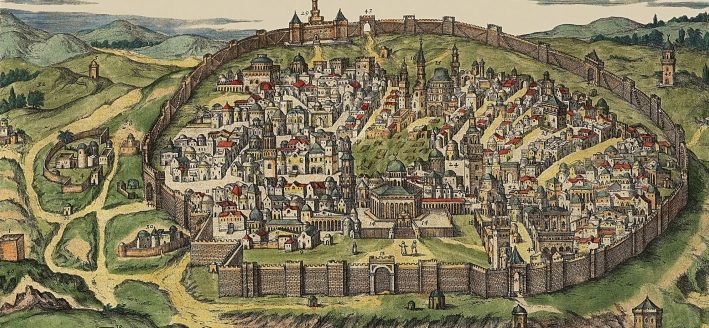
Today’s liturgy is realistic; it is tangible. It shows us the three-dimensional framework of life, three dimensions that even children understand: the past, the future, the present. Today is a day to commemorate the past, a day to remember those who have walked before us, who have also accompanied us, have given us life. To remember, to commemorate. Remembrance is what makes a people strong, because it feels rooted in a journey, rooted in a history, rooted in a people. Remembrance helps us understand that we are not alone, we are a people: a people with a history, with a past, with a life. Remembering so many who have shared a journey with us. It is not easy to remember. We often struggle to turn our thoughts back to what has happened in my life, in my family, in my people…. But today is a day of remembrance, the remembrance that takes us to the roots: to my roots, to the roots of my people. Today is also a day of hope: the book of Revelation talks about what awaits us. A new heaven, a new earth, and the holy city, new Jerusalem. A beautiful image which it uses to help us understand what awaits us: “I saw the holy city … coming down out of heaven from God, prepared as a bride adorned for her husband” (cf. Rev 21:2). Beauty awaits us…. Remembrance and hope, the hope of meeting each other, the hope of arriving where there is the Love that created us, where there is the Love that awaits us, a Father’s love. And between remembrance and hope there is the third dimension, that of the path that we must and do take. And how do we take the path without making mistakes? Which are the lights that will help me avoid taking the wrong path? What is the ‘navigating system’ #GPS that God himself gave us, so as not to take the wrong path? It is the Beatitudes that Jesus taught us in the Gospel. These Beatitudes — meekness, poverty of spirit, justice, mercy, purity of heart — are the lights that accompany us so as not to lose our way: this is our present. Life’s three dimensions are in cemeteries: remembrance, we can see it there, hope, we will celebrate it now in faith, not in visions; and the lights to guide us on the journey so as not to lose our way. We have heard them in the Gospel: they are the Beatitudes. Let us ask the Lord today to give us the grace to never lose remembrance, never suppress remembrance — remembrance of the person, remembrance of family, remembrance of people — and to give us the grace of hope because hope is one of his gifts: being able to hope, to look to the horizon, not to be closed before a wall. Always look to the horizon and to hope. And may he give us the grace to understand which are the lights that will accompany us on the path so as not to make mistakes, and thus to arrive where we are awaited with so much love • AE


Requiem in D minor (K. 626)

by Wolgang Amadeus Mozart (1756–1791). 

I. Introïtus 02:00 – Requiem 05:46 – II. Kyrie 08:13 – III. Sequentia. Dies Irae 10:09 – Tuba mirum 13:29 – Rex tremendae 15:31 – Recordare 20:27 – Confutatis 22:49 – Lacrimosa 25:52 – IV. Offertorium Domine Jesu Hostias 32:52 – V. Sanctus 34:30 – VI. Benedictus 38:52 – VII. Agnus Dei 41:45 – VIII. Communio – Lux Aeterna.


Conmemoración de Todos los Fieles Difuntos (2022)

Pieter Bruegel el Viejo, El triunfo de la Muerte (1560), óleo sobre tela, Museo del Prado (Madrid)

Podemos ignorarla. No hablar de ella. Vivir intensamente cada día y olvidarnos de todo lo demás. Pero no lo podemos evitar. Tarde o temprano la muerte va visitando nuestros hogares, arrebatándonos a nuestros seres queridos. ¿Cómo reaccionar ante ese accidente que se nos lleva para siempre a nuestro hijo? ¿Qué actitud adoptar ante la agonía del esposo que nos dice su último adiós? ¿Qué hacer ante el vacío que van dejando en nuestra vida tantos amigos y personas que se han ido marchando? La muerte es como una puerta que traspasa cada persona a solas. Una vez cerrada la puerta, el muerto se nos oculta para siempre. No sabemos qué ha sido de él. Ese ser tan querido y cercano se nos pierde ahora en el misterio. ¿Cómo vivir esa experiencia de impotencia, desconcierto y pena inmensa? No es fácil. Durante estos años hemos ido cambiando mucho por dentro. Nos hemos hecho más críticos, pero también más vulnerables. Más escépticos, pero también más necesitados. Sabemos mejor que nunca que no podemos darnos a nosotros mismos todo lo que en el fondo anhelamos. Por eso es bueno recordar aquellas palabras de Jesús, palabras que sólo podremos comprender si somos capaces de abrirnos con humildad al misterio último que nos envuelve a todos: «No se turbe vuestro corazón. Creed en Dios. Creed también en mí». Creo que casi todos, creyentes, poco creyentes, menos creyentes o malos creyentes, podemos hacer dos cosas ante la muerte: llorar y rezar. Cada uno y cada una, desde su pequeña fe. Una fe convencida o una fe vacilante y casi apagada. Nosotros tenemos muchos problemas con nuestra fe, pero Dios no tiene problema alguno para entender nuestra impotencia y conocer lo que hay en el fondo de nuestro corazón. Él es siempre un Padre que comprende. Ante la muerte de aquella persona que tanto queríamos, ante esa partida que nos llena de tristeza e incluso de dolor, no hay mucho qué decir; quizá algo así como «Estoy aquí porque te sigo queriendo, pero ahora no sé qué hacer por ti. Mi fe es pequeña y débil. Te confío al misterio de la Bondad de Dios. Él es para ti un lugar más seguro que todo lo que nosotros te podríamos ofrecer. Dios te quiere como quizá algunos nosotros no supimos quererte; te dejamos  en Sus manos y en Su paz» • AE


Tú, Señor, que asumiste la existencia,
la lucha y el dolor que el hombre vive,
no dejes sin la luz de tu presencia
la noche de la muerte que lo aflige.

Te rebajaste, Cristo, hasta la muerte,
y una muerte de cruz, por amor nuestro;
así te exaltó el Padre, al acogerte,
sobre todo poder de tierra y cielo.

Para ascender después gloriosamente,
bajaste sepultado a los abismos;
fue el amor del Señor omnipotente
más fuerte que la muerte y que su sino.

Primicia de los muertos, tu victoria
es la fe y la esperanza del creyente,
el secreto final de nuestra historia,
abierta a nueva vida para siempre.

Cuando la noche llegue y sea el día
de pasar de este mundo a nuestro Padre,
concédenos la paz y la alegría
de un encuentro feliz que nunca acabe. Amén.


Solemnity of All Saints (2022)

Today, at the celebration of All Saints, the Beatitudes show us the path that leads to the Kingdom of God and to happiness: the path of humility, compassion, meekness, justice and peace. To be a saint is to walk on this road. Let us now focus on two aspects of this way of life. Two aspects that are proper to this saintly way of life: joy and prophecy. Joy. Jesus begins with the word “Blessed”. It is the principal proclamation, that of an unprecedented happiness. Beatitude, holiness, is not a life plan made up only of effort and renunciation, but is above all the joyful discovery of being God’s beloved sons and daughters. And this fills you with joy. It is not a human achievement, it is a gift we receive: we are holy because God, who is the Holy One, comes to dwell in our lives! It is He who gives holiness to us. For this we are blessed! The joy of the Christian, then, is not a fleeting emotion or a simple human optimism, but the certainty of being able to face every situation under God’s loving gaze, with the courage and strength that come from Him. The saints, even in the midst of many tribulations, have experienced this joy and have borne witness to it. Without joy, faith becomes a rigorous and oppressive exercise, and risks ailing with sadness. Let us consider this word: ailing with sadness. Evagrius Ponticus, a desert Father, said that sadness is “a worm that burrows into the heart”, which corrodes life. Today is a great time to do examination of conscience; time to ask ourselves this: are we joyful Christians? Am I a joyful Christian or not? Do we spread joy or are we dull, sad people, with a funeral face? Remember that there is no holiness without joy! The second aspect: prophecy. The Beatitudes are addressed to the poor, the afflicted, those who hunger for justice. It is a message that goes against the grain. Indeed, the world says that in order to have happiness you must be rich, powerful, always young and strong, and enjoy fame and success. Jesus overturns these criteria and makes a prophetic proclamation – and this is the prophetic dimension of holiness – the true fullness of life is achieved by following Jesus, by putting His Word into practice. And this means another poverty, that is, being poor inside, hollowing oneself to make room for God. Those who believe themselves to be rich, successful and secure base everything on themselves and close themselves off from God and their brothers and sisters, while those who know that they are poor and not self-sufficient remain open to God and to their neighbour. And they find joy. The Beatitudes, then, are the prophecy of a new humanity, of a new way of living: making oneself small and entrusting oneself to God, instead of prevailing over others; being meek, instead of seeking to impose oneself; practising mercy, instead of thinking only of oneself; committing oneself to justice and peace, instead of promoting injustice and inequality, even by connivance. Holiness is accepting and putting into practice, with God’s help, this prophecy that revolutionises the world. So, today we can ask ourselves: do I bear witness to the prophecy of Jesus? Do I conform to the comforts of life and to my own laziness, assuming that everything is fine if it is fine with me? Do I bring to the world the joyful newness of Jesus’ prophecy or the usual complaints about what is wrong? Questions that are good for us to ask ourselves. May our Lady, the blessed Virgin Mary, Queen of All Saints, give us something of her soul, that blessed soul that joyfully magnified the Lord, who “has put down the mighty from their thrones, and exalted those of low degree” • AE


Fr. Agustin Schedule for the Solemnity of All Saints (2022)

& The Commemoration of All the Faithful Departed (2022)

Candles with Cempasuchil flower (Marigol; Tagetes erecta) and Papel Picado. Decoration traditionally used in altars for the celebration of the day of the dead in Mexico.

Monday October 31, 2022

8.30 a.m. Regular (daily) Mass

6.00 p.m. Vigil Mass

Tuesday November 1, 2022

8.30 a.m. Regular (daily) Mass

6.00 p.m. Mass

Wednesday November 2, 2022

8.30 a.m. Regular (daily) Mass

6.00 p.m. Mass


SOLEMNIDAD DE TODOS LOS SANTOS (2022)

Nadie sabemos dar una respuesta demasiado clara cuando se nos pregunta por la felicidad. ¿Qué es de verdad la felicidad? ¿En qué consiste realmente? ¿Cómo alcanzarla? ¿Por qué caminos? Ciertamente no es fácil acertar a ser feliz. No se logra la felicidad de cualquier manera. No basta conseguir lo que uno andaba buscando. No es suficiente satisfacer los deseos. Cuando uno ha conseguido lo que quería, descubre que está de nuevo buscando ser feliz. También es claro que la felicidad no se puede comprar. No se la puede adquirir en ninguna tienda, y lo mismo sucede con la alegría, la amistad o la ternura. Con dinero sólo podemos comprar apariencia de felicidad #fake Por eso, hay tantas personas tristes en nuestras calles. La felicidad ha sido sustituida por el placer, la comodidad y el bienestar. Pero nadie sabe cómo devolverle al hombre de hoy el gozo, la libertad, la experiencia de plenitud. Quizá es que tenemos nuestras propias bienaventuranzas pero que no son las de Jesús. Suenan así: Dichosos los que tienen una buena cuenta corriente, los que se pueden comprar el último modelo, los que siempre triunfan, a costa de lo que sea, los que son aplaudidos, los que disfrutan de la vida sin escrúpulos, los que se desentienden de los problemas. Pero Jesús tiene otra manera de pensar y de ver las cosas. Jesus ha dado un vuelco total a nuestra manera de entender la vida y nos ha descubierto que estamos corriendo en dirección contraria. Hay otro camino verdadero para ser feliz, que a nosotros nos parece falso e increíble. La verdadera felicidad es algo que uno se la encuentra de paso, como fruto de un seguimiento sencillo y fiel a Jesús. ¿En qué creer? ¿En las bienaventuranzas de Jesús, o en los reclamos de felicidad de nuestra sociedad? Tenemos que elegir entre estos dos caminos. O bien, tratar de asegurar nuestra pequeña felicidad y sufrir lo menos posible, sin amar, sin tener piedad de nadie, sin compartir… O bien, amar… buscar la justicia, estar cerca del que sufre y aceptar el sufrimiento que sea necesario, creyendo en una felicidad más profunda. Uno se va haciendo creyente cuando va descubriendo prácticamente que el hombre es más feliz cuando ama, incluso sufriendo, que cuando no ama y por lo tanto no sufre por ello. Es una equivocación pensar que estamos llamados a vivir fastidiados o siendo profundamente infelices. Ser cristiano es buscar la verdadera felicidad por el camino señalado por Jesús. Una felicidad que comienza aquí, aunque alcanza su plenitud en el encuentro final con Dios. Hoy celebramos a todos aquellos que están justo ahí: junto a Dios y felices para siempre • AE


Thirty-first Sunday in Ordinary Time (Cycle C)

Traditional Greek Orthodox icon depicting the meeting between Jesus and Zacchaeus the publican

Zacchaeus, the little tax collector of today’s Gospel was lost. He was rejected by his own people for cashing in on the Roman occupation and collecting taxes for the enemy, keeping an ample amount for himself. He hid behind his riches. But he was a lost soul. And then one day he heard a crowd coming. They were there to greet this Jesus, this Messiah. Zacchaeus was initially nothing more than curious. He climbed a tree to get a glimpse of the great man. But then Jesus stopped under the tree and called him. The Good Shepherd found the lost sheep and Zacchaeus was lost no longer. Jesus had found him, and he responded. He now found himself in Jesus Christ. Perhaps some of us have had times that we have been lost. We go to Church every week, and that is a very good thing. But sometimes we are just going through the motions. We stand and sit and kneel and sing. The hardest times for us are often the quiet times. That is a sure sign that something is very wrong. It is hard to hide non Christian behavior when it is only ourselves and the Lord. Those are the times when our consciences are telling us: I’m lost. Maybe, I shouldn’t even be here. But we are here. We are in Church. Perhaps when we walked through the doors of the Church we have taken the first step to see who this Jesus is. Walking through the doors of the Church is, for many, like climbing the sycamore tree to get a glimpse of Jesus. We certainly don’t expect Jesus to single us out from the crowd of worshipers. But he does. He stands under the tree that every single person has climbed in his life, the tree that many of us are still looking down from, and he says, «Judy, Frank, Shirley, Bill, Agustin, Zacchaeus, come down from there. I want to stay in your house tonight and from now on.» Now, we are faced with what is really an easy decision: do we want Him in our house, in our soul? It is going to cost us. We are going to have to abandon that which has no place in our house, in our lives. But it is an easy decision. Nothing can surpass the all encompassing joy of having the Lord in our lives. We may have been lost in a crowd. But he searched for us and called to us, by name. And we responded. And we have found ourselves in Jesus Christ. This is simply an amazing Grace! • AE


Fr. Agustin Schedule for the Thirty-first Sunday in Ordinary Time

ST. DOMINIC CATHOLIC CHURCH

Saturday, October 29, 2022.

2.30 p.m. Sacrament of Matrimony Ramirez-Flores

3.30 p.m. Sacrament of Reconciliation

5.00 p.m. Holy Mass (English)

Sunday, October 30, 2022.

7.30 a.m. Holy Mass (English)

10.00 a.m. Holy Mass (English)


XXXI Domingo del Tiempo Ordinario (Ciclo C)

François Dubois, La Noche de San Bartolomé (1572) óleo sobre tela, Museo Cantonal de Bellas Artes de Lausana (Suiza)

El evangelio no se puede transmitir de cualquier forma. Jesús lo hacía con un estilo inconfundible. La escena del evangelio de este domingo, el XXXI del Tiempo Ordinario es un ejemplo maravilloso. Zaqueo es un tipo al que todos juzgan sin piedad: es un pecador, per para Jesús es sencillamente una persona que anda perdida y justo por eso lo busca con su mirada, le llama por su nombre y le ofrece su amistad personal: comerá en su casa, le escuchará, podrán dialogar. Acogido, respetado y comprendido por Jesús, aquel hombre decide reorientar su vida. La actuación de Jesús es sorprendente. Nadie veía en él al representante de la Ley, sino al profeta compasivo que acogía a todos con el amor entrañable del mismo Dios. No parecía preocupado por la moral, sino por el sufrimiento concreto de cada persona. No se le veía obsesionado por defender su doctrina, sino atento a quien no acertaba a vivir de manera sana. No caminaba por Galilea en actitud de conquista. No imponía ni presionaba. Se ofrecía, invitaba, proponía un camino de vida sana. Sabía que la semilla podía caer en terreno hostil y su mensaje ser rechazado. No se sentía agraviado. Seguía sembrando con la misma actitud de Dios que envía la lluvia y hace salir su sol sobre todos sus hijos, sin importar si son buenos y malos. ¿A dónde con todo esto? A una idea sencilla pero compleja: Ya no podremos ser una Iglesia poderosa, segura y autoritaria, que pretende imponerse a todos. Quizá somos una Iglesia más sencilla, vulnerable y débil. Esa Iglesia deshilachada de la que tanto nos ha hablado el Santo Padre Francisco. No tendriamos que preocupamos de defender nuestro prestigio y poder sino volvernos más humanos y tratar de sintonizar mejor con los que sufren #conexión Así, estaríamos en mejores condiciones para comunicar el Evangelio. Es inútil endurecer nuestra predicación e intensificar nuestros lamentos y condenas, viviendo de puros «anatema sit!». En menos palabras: tendríamos que aprender de Jesús a conjugar tres verbos decisivos: acoger escuchar y acompañar, y así descubrir que el Evangelio lo comunican los creyentes en cuya vida resplandece el amor compasivo de Dios. Sin esto, todo lo demás es inútil. Infecundo. Y muy triste • AE


Thirtieth Sunday in Ordinary Time (Cycle C)

Anonymous, The image of pharisee and publican, illumination, Byzantine, 2nd half 12th century, Athens, National Library.

Jesus told the story today of two men. Both came to the Temple to see God. The arrogant man was convinced that it was wonderful that God and others could see him. This story leads us to consider two facets: seeing and being seen as it relates to our presence in Church. There is the aspect of other people seeing us here and our seeing who else is here, and there is the aspect of seeing God and being seen by God. If we come to Church because we want others to see us, then we are using God to advance our stature in the community. A second negative aspect that can result from seeing others is our making a judgment on others. We might see someone and in the recesses of our minds think, “What is he doing here? What is she doing here? Probably he or she is trying to make up for being so mean, for being unfaithful, for being dishonest. Well, the nerve of him or her for coming to Church.” We all know that it is wrong for us to judge others. It is doubly wrong to judge others for coming to Church. Many times, most of the time, when we judge others, we are simply transferring the negative feeling we have about ourselves onto others. Transference is an ugly thing. We have to fight off negative thoughts about others in the same way that we fight off any bad thought. I find the best way to do that is to say to myself, “Lord Jesus, have mercy on me a sinner.” Then the occasion of sin become an occasion for prayer. We beat the devil at his own game. The only person that we should come to Church to see and be seen by is God. Maybe there are times, perhaps many times, that we come before Him feeling like that man in the back of the Temple area, with a deep recognition of our sins. We want to fall on our knees, like Peter, saying “Leave me Lord, for I am a sinful man.” We need to be realistic and come before the Lord with a keen awareness of our sinfulness. This is the reason why our Masses begin with a penitential rite. We begin Mass with a reminder of our sinfulness. We express this in a beautiful way: “Lord, have mercy, Christ have mercy, Lord have mercy,” and then we continue Mass entering into a deeper relationship with Him, the Holy One. So, my brother, my sister, it is a good thing to see and be seen. It is a good thing to see God, but it is much better to be seen by the One who loves us • AE


Thirtieth Sunday in Ordinary Time

St Dominic Catholic Church (San Antonio, TX)

Fr. Agustin is out of town; the parish continues with its usual weekend schedule.

Saturday 22, 2022
4.00 p.m. Sacrament of Reconciliation (Confessional)
5.00 p.m. (English Mass @ Main Church)


Sunday October 23, 2022
7.30 a.m. Holy Mass (English Mass @ Main Church)
10.00 a.m. Holy Mass (English Mass @ Main Church)
12.00 p.m. Holy Mass (English Mass @ Main Church)
3.00 p.m. Santa Misa En Español (Iglesia principal)


XXX Domingo del Tiempo Ordinario (Ciclo C)

Esta es sin duda una de las parábolas más desconcertantes de Jesús. Un piadoso fariseo y un publicano, es decir, un recaudador de impuestos deshonesto, suben al templo a orar. ¿Cómo reaccionará Dios ante dos personas de vida moral y religiosa tan diferente y opuesta? El fariseo ora de pie, segur, sin temor alguno. Su conciencia no le acusa de nada. No es hipócrita. Además, lo que dice es verdad: cumple fielmente la ley e incluso la sobrepasa. No se atribuye a sí mismo mérito alguno, sino que todo lo agradece: «Oh Dios, te doy gracias». Si este hombre no es santo, ¿quién va a ser? Seguro que puede contar con la bendición de Dios. El otro, el publicano se queda en un rincón. No se siente cómodo en aquel lugar santo. No es su sitio. Ni siquiera se atreve a levantar los ojos del suelo. Se golpea el pecho y reconoce su pecado. No promete nada. No puede dejar su trabajo ni devolver lo que ha robado. No puede cambiar de vida. Sólo le queda abandonarse a la misericordia de Dios: «Oh Dios, ten compasión de mí que soy pecador». Nadie querría estar en su lugar. Dios no puede aprobar su conducta. De pronto, Jesús concluye su parábola con una afirmación desconcertante: «Pues bien, yo les aseguro que éste bajó a su casa justificado y aquél no». A los oyentes se les rompen todos sus esquemas. ¿Cómo puede hablar de un Dios que no reconoce al piadoso y, por el contrario, concede su gracia al pecador? ¿No está Jesús jugando con fuego? ¿Será verdad que, al final, lo decisivo no es la vida religiosa de uno, sino la misericordia insondable de Dios? Si es verdad lo que dice Jesús, ante Dios no hay seguridad para nadie, por muy santo que se crea. Todos tenemos que apelar a su misericordia. Cuando uno se siente bien consigo mismo, apela a su propia vida y no siente necesidad de más. Cuando uno se ve acusado por su conciencia y sin capacidad para cambiar, sólo siente necesidad de acogerse a la misericordia de Dios y sólo a la misericordia. Sí: hay algo fascinante en Jesús. Es tan desconcertante su fe en la misericordia de Dios que no es fácil creer en él. Los que mejor lo entendemos somos aquellos que a ratos no tenemos fuerzas para salir de un estilo de vida lejano al evangelio • AE


+ LECTURAS