La bella flor que en el suelo plantada se vio marchita ya torna, ya resucita, ya su olor inunda el cielo.
De tierra estuvo cubierto, pero no fructificó del todo, hasta que quedó en un árbol seco injerto. Y, aunque a los ojos del suelo se puso después marchita, ya torna, ya resucita, ya su olor inunda el cielo.
Toda es de flores la fiesta, flores de finos olores, más no se irá todo en flores, porque flor de fruto es ésta. Y, mientras su Iglesia grita mendigando algún consuelo, ya torna, ya resucita, ya su olor inunda el cielo.
Que nadie se sienta muerto cuando resucita Dios, que, si el barco llega al puerto, llegamos junto con vos. Hoy la cristiandad se quita sus vestiduras de duelo. Ya torna, ya resucita, ya su olor inunda el cielo
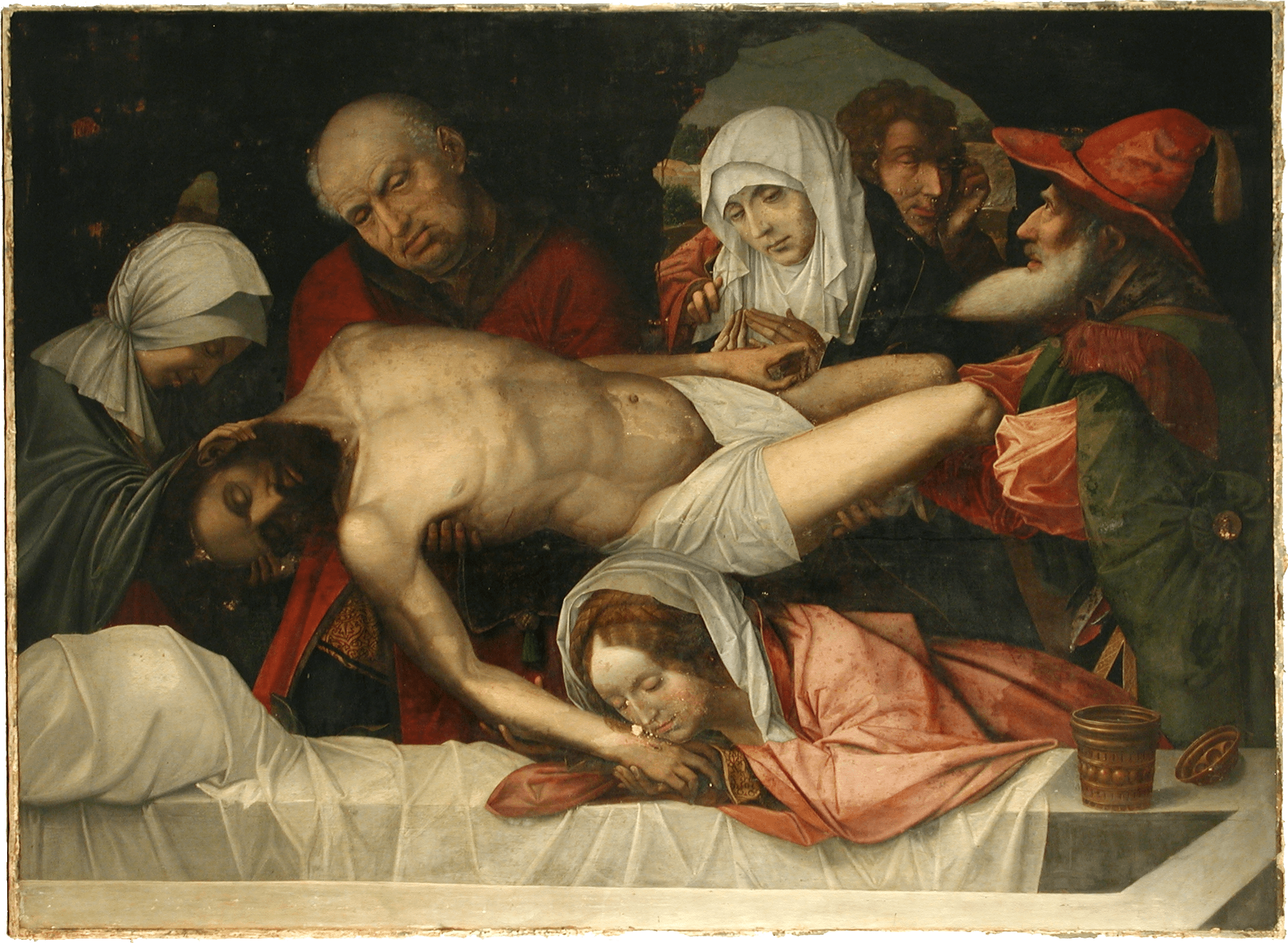
Dutch Master, Deposition of Christ (ca. 1525), oil on wood, Städel Museum, (Frankfurt)
Something strange is happening — there is a great silence on earth today, a great silence and stillness. The whole earth keeps silence because the King is asleep. The earth trembled and is still because God has fallen asleep in the flesh and he has raised up all who have slept ever since the world began. God has died in the flesh and Hell trembles with fear. He has gone to search for our first parent, as for a lost sheep. Greatly desiring to visit those who live in darkness and in the shadow of death, he has gone to free from sorrow the captives Adam and Eve, He who is both God and the Son of Eve. The Lord approached them bearing the Cross, the weapon that had won him the victory. At the sight of him Adam, the first man he had created, struck his breast in terror and cried out to everyone, ‘My Lord be with you all.’ Christ answered him: ‘And with your spirit.’ He took him by the hand and raised him up, saying: ‘Awake, O sleeper, and rise from the dead, and Christ will give you light.’
I am your God, who for your sake have become your son. Out of love for you and your descendants I now by my own authority command all who are held in bondage to come forth, all who are in darkness to be enlightened, all who are sleeping to arise. I order you, O sleeper, to awake. I did not create you to be held a prisoner in Hell. Rise from the dead, for I am the life of the dead. Rise up, work of my hands, you who were created in my image. Rise, let us leave this place, for you are in me and I in you; together we form one person and cannot be separated.
For your sake I, your God, became your son; I, the Lord, took the form of a slave; I, whose home is above the heavens, descended to the earth and beneath the earth. For your sake, for the sake of man, I became like a man without help, free among the dead. For the sake of you, who left a garden, I was betrayed to the Jews in a garden, and I was crucified in a garden.
See on my face the spittle I received in order to restore to you the life I once breathed into you. See there the marks of the blows I received in order to refashion your warped nature in my image. On my back see the marks of the scourging I endured to remove the burden of sin that weighs upon your back. See my hands, nailed firmly to a tree, for you who once wickedly stretched out your hand to a tree. I slept on the Cross and a sword pierced my side for you who slept in Paradise and brought forth Eve from your side. My side has healed the pain in yours. My sleep will rouse you from your sleep in Hell. The sword that pierced Me has sheathed the sword that was turned against you. Rise, let us leave this place. The enemy led you out of the earthly Paradise. I will not restore you to that Paradise, but will enthrone you in heaven. I forbade you the tree that was only a symbol of life, but see, I who am life itself am now one with you. I appointed cherubim to guard you as slaves are guarded, but now I make them worship you as God. The throne formed by cherubim awaits you, its bearers swift and eager. The Bridal Chamber is adorned, the banquet is ready, the eternal dwelling places are prepared, the treasure houses of all good things lie open. The Kingdom of Heaven has been prepared for you from all eternity • From an ancient homily on Holy Saturday (PG 43, 439, 451, 462-463.
Sábado Santo (2025)
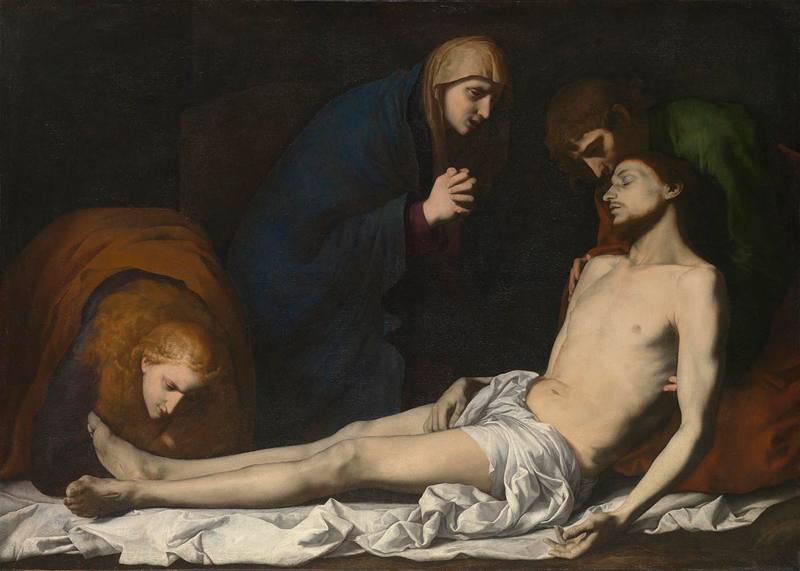
J. de Ribera, Lamentación sobre Cristo Muerto (c. 1620), óleo sobre tela, National Gallery (Londres)
Duerme la tierra en su sombra callada, grita la ausencia en la piedra sellada, todo parece final sin aurora, todo es vacío donde el Verbo mora.
Las manos que sanan y dan la vida reposan ahora en muerte vencida, los labios que hablaron del Reino eterno yacen cerrados en lecho yermo.
Los cielos retienen su luz primera, la luna no alumbra la noche entera, la brisa no canta, los montes callan, el cosmos entero detiene el alba.
Pero en lo hondo, la muerte tiembla, algo invisible sus muros quiebra, hay una chispa en la fría tumba, hay un susurro que el aire inunda.
Nada está muerto, todo es latido, nace en la sombra lo prometido, porque esta espera no es puro duelo, sino la puerta que lleva al Cielo •
Caravaggio, The Flagellation of Christ (1607), Museo di Capodimonte (Roma)
Good Friday is a wound at the heart of time. It is the hour when Love is broken, when the Innocent One is condemned, when the world’s cruelty reaches its peak. The cross, simple and brutal, stands as a sign of contradiction: the instrument of death that becomes the source of life. In Caravaggio’s The Flagellation of Christ, light and shadow carve out the moment of suffering with raw intensity. Christ stands at the center, his body bent beneath the blows, yet his face serene—a paradox of agony and acceptance. This is not just an image of torture; it is a revelation of the silent strength of sacrificial love.
Where do we see this suffering today? In the forgotten corners of war-torn cities, in the lonely hospital rooms where no visitors come, in the silent agony of those crushed by despair. The Passion is not locked in the past—it is happening now, in every neglected and abandoned soul. And yet, Good Friday is not the last word. The Cross is both an ending and a beginning. The sky darkens, the earth trembles, and the temple veil is torn—but these are not signs of despair. They are the first cracks in the old world, making way for something new. To stand at the foot of the Cross is to resist the temptation to flee from suffering. It is to remain, to watch, to wait. It is to trust that even in the silence of the tomb, God is not absent. So today, as we gaze upon the Cross, let us not look away. Let us enter into the wound, because it is there, in that brokenness, that the healing of the world begins • AE
Easter Triduum 2025
HOLY THURSDAY OF THE LORD´S SUPPER, APRIL 17
6.00 p.m. Mass of the Lord’s Supper (Bilingual)
(Adoration of the Most Holy Sacrament until 10.00 p.m. @ Chapel)
FRIDAY OF THE PASSION OF THE LORD (Good Friday), APRIL 18
10.00 a.m. Los Siete Dolores de la Santísima Virgen María
11.30 a.m. Live performance of the Passion of the Lord
(we start @ the police station, we end @ St. Joseph grounds)
6.00 p.m. Liturgical Celebration of the Lord’s Passion (Bilingual)
HOLY SATURDAY, APRIL 19
8.00 p.m. The Easter Vigil in the Holy Night (Bilingual)
EASTER SUNDAY OF THE RESURRECTION OF THE LORD, APRIL 20
8.30 a.m. English mass @ St. Mary´s Chapel
11.00 a.m. English mass @ church
12.30 p.m. Easter Egg Hunt @ St. Joseph grounds
Viernes Santo de la Pasión del Señor (2025)
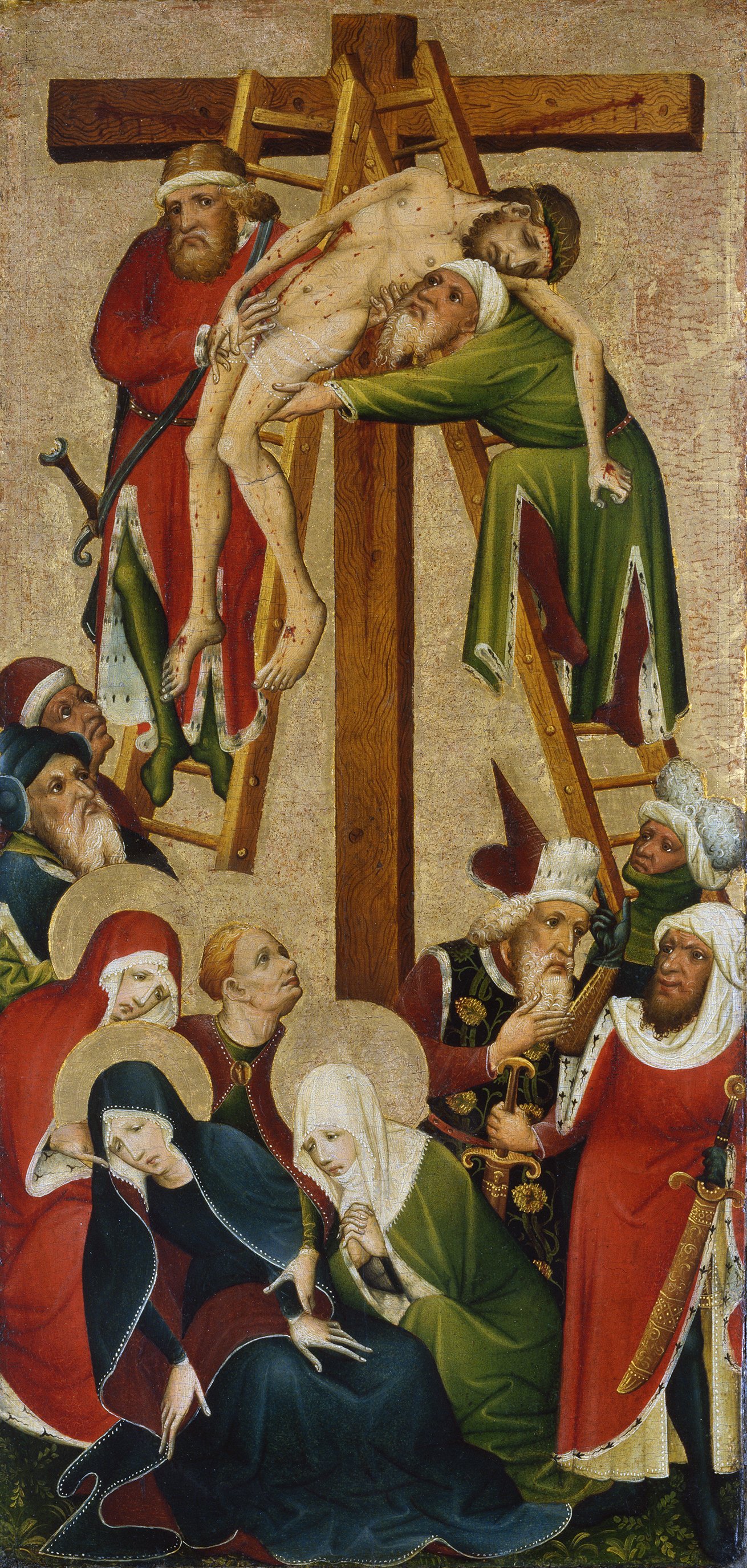
Anónimo alemán, El Descendimiento de la cruz (hacia 1420), óleo sobre tabla, Museo Nacional Thyssen-Bornemisza (Madrid).
El Viernes Santo no es solo un día en el calendario litúrgico; es el eje sobre el que gira toda la historia de la humanidad. Es el día en que el Verbo hecho carne se hunde en el abismo del sufrimiento, el día en que la Verdad es silenciada por el estruendo del poder, el día en que Dios parece perder. Los evangelios nos llevan al Gólgota, pero podríamos encontrarnos con la Cruz en cualquier otro rincón de la historia. En la literatura de Dostoievski, cuando el hombre lucha con su conciencia. En los cuadros de Goya, donde la desesperanza y la injusticia gritan sin palabras. En los versos de Celan, donde el horror de la Shoá nos recuerda que Cristo sigue siendo crucificado en los campos de exterminio de la humanidad. Y hoy, ¿dónde está la Cruz? Está en los refugiados que huyen de la guerra, en las víctimas del abuso silenciadas por el miedo, en el enfermo que agoniza solo, en la indiferencia que nos anestesia mientras el mundo arde. La Pasión no es un recuerdo; es un presente constante. Pero la cruz no es el final. La oscuridad de la tarde del Viernes Santo solo es el preludio del alba de Pascua. La historia no termina en el sepulcro. El Viernes Santo nos invita a permanecer en la herida, a mirar de frente el dolor, a no escapar del sufrimiento ajeno. Nos recuerda que, para resucitar con Cristo, primero debemos abrazar la Cruz con Él. Hoy, el desafío es el silencio. No el de la evasión, sino el de la adoración. No el de la indiferencia, sino el de la espera. Contemplar la Cruz no es detenerse en la muerte, sino prepararse para la Vida. Y tú, ¿te atreves a quedarte junto a la Cruz? • AE
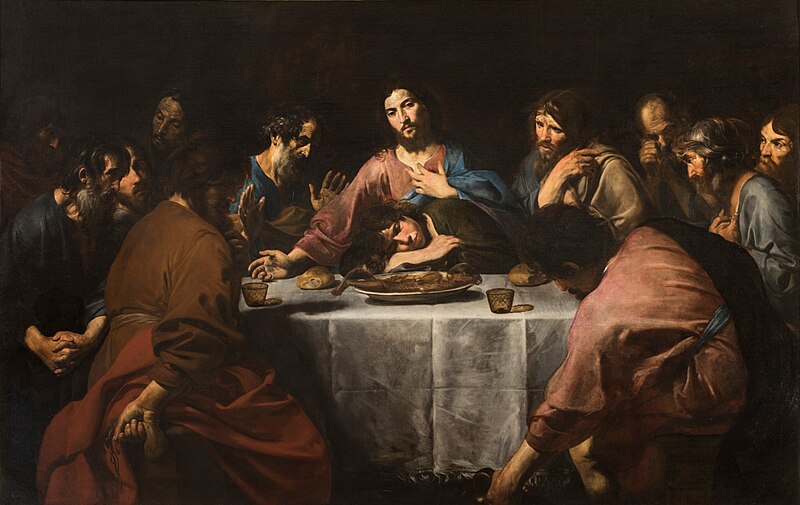
V. de Boulougne, The Last Supper (1625), oil on canvas, Galleria Nazionale d’Arte Antica (Rome)
Holy Thursday is a threshold. We enter the Paschal Triduum through a scene that is as intimate as it is overwhelming: a table, bread and wine, a Master kneeling to wash the feet of His disciples. Knowing that His hour has come, Jesus does not leave behind theological arguments or strategic plans for the future. Instead, He bends down, serves, breaks the bread, and gives Himself away. The washing of the feet is the Gospel in action. Jesus does not merely speak of love; He enacts it. He wraps a towel around Himself, kneels, and touches the dust of those who will abandon Him within hours. Peter, confused, tries to resist, but Jesus tells him, “Unless I wash you, you have no share with me” (Jn 13:8). The humility of God is so radical that even those closest to Him struggle to receive it. The Last Supper is not just a farewell, but a beginning. Jesus takes the bread, blesses it, and gives it away with words that echo through every Eucharist: “This is my body, given for you.” This is not mere metaphor or symbol. It is the ultimate act of love made presence. God does not remain in concepts—He becomes food. In art, The Last Supper by Valentin de Boulogne, housed in the Louvre Museum, offers a profound depiction of this moment. The use of chiaroscuro and the realistic portrayal of the apostles’ emotions draw the viewer into the depth of the scene, reflecting the solemnity and significance of the institution of the Eucharist. For music, Louange à l’Éternité de Jésus from Olivier Messiaen’s Quartet for the End of Time captures the mystery of Holy Thursday. Written in a concentration camp, the piece moves with an unhurried, meditative slowness, as if stretching time itself—like the silence after Jesus’ words, like the stillness of love given freely.
The wisdom of Joseph Ratzinger gives us a key insight: “The Eucharist is God’s response to the hunger of the world. It is the moment when time and eternity meet, when history and heaven touch.” The Last Supper is not just a memory—it is a reality that continues to feed the world. Holy Thursday is not just the beginning of the Passion—it is the night in which God shows us that to love is to serve, that glory is found in giving oneself away, and that His real presence in the Eucharist is the greatest miracle of all.
A quiet voice resounds within the bread, a whispered promise woven into wine, the hands that bless now break, the hands that bled will trace the cross in mercy’s grand design.
O feet once kissed, now washed with love’s embrace, the humble King who bends to serve His own, a gesture strong enough to shift and place a throne within the dust where feet have known.
And so He kneels, so we must kneel as well, to love, to serve, to bear the weight of grace, to hold the chalice and be wholly fed.
The cup is full, the silence speaks to tell: He gave, He gives, He offers still His face— the night of love, where Heaven shares its bread.
Easter Triduum 2025
HOLY THURSDAY OF THE LORD´S SUPPER, APRIL 17
6.00 p.m. Mass of the Lord’s Supper (Bilingual)
(Adoration of the Most Holy Sacrament until 10.00 p.m. @ Chapel)
FRIDAY OF THE PASSION OF THE LORD (Good Friday), APRIL 18
10.00 a.m. Los Siete Dolores de la Santísima Virgen María
11.30 a.m. Live performance of the Passion of the Lord
(we start @ the police station, we end @ St. Joseph grounds)
6.00 p.m. Liturgical Celebration of the Lord’s Passion (Bilingual)
HOLY SATURDAY, APRIL 19
8.00 p.m. The Easter Vigil in the Holy Night (Bilingual)
EASTER SUNDAY OF THE RESURRECTION OF THE LORD, APRIL 20
8.30 a.m. English mass @ St. Mary´s Chapel
11.00 a.m. English mass @ church
12.30 p.m. Easter Egg Hunt @ St. Joseph grounds
Jueves Santo de la Cena del Señor (2025)
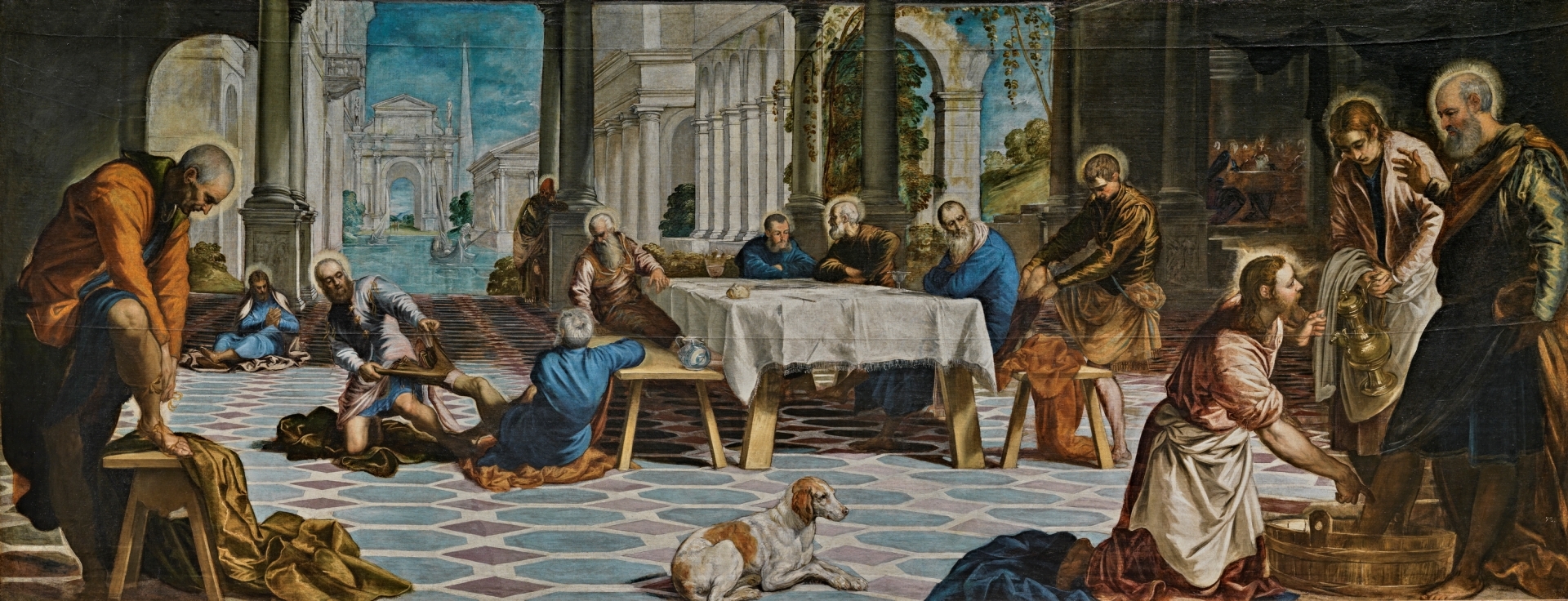
Jacopo Robusti Tintoretto, El Lavatorio (1548), óleo sobre tela, Museo Nacional del Prado (Madrid)
La noche de Jueves Santo es un umbral. Nos adentramos en el Triduo Pascual con una escena tan íntima como sobrecogedora: una mesa, pan y vino, un Maestro que lava los pies a sus discípulos. Jesús, sabiendo que ha llegado su hora, no deja discursos teológicos ni estrategias para el futuro. En lugar de ello, se inclina, sirve, parte el pan y se entrega. El gesto del lavatorio de los pies es el evangelio en acción. Jesús no predica sobre el amor; lo muestra. Se ciñe una toalla, se arrodilla y toca la suciedad de los pies de aquellos que en unas horas lo abandonarán. Pedro, confundido, intenta resistirse, pero Jesús le responde con una frase que atraviesa la historia: “Si no te lavo, no tendrás parte conmigo” (Jn 13,8). La humildad de Dios es tan desconcertante que incluso los suyos no saben cómo recibirla. La última cena no es solo un adiós, sino un inicio. Jesús toma el pan, lo bendice y lo reparte con palabras que resuenan en cada Eucaristía: “Esto es mi cuerpo, que se entrega por vosotros”. No es metáfora ni símbolo. Es una realidad que atraviesa el tiempo, el acto definitivo del amor que se hace presencia. Dios no se queda en doctrinas, se hace alimento. El Lavatorio de Tintoretto, captura magistralmente este momento. La composición dinámica y el uso dramático de la luz reflejan la tensión y la profundidad del acto de servicio de Jesús. La escena, llena de movimiento y emoción, nos invita a contemplar la humildad y el amor en acción. En la música, Ubi Caritas de Maurice Duruflé es una expresión pura de lo que significa este día. Su melodía fluye como un eco de las palabras de Jesús: “Donde hay caridad y amor, allí está Dios”. El pensamiento de Raniero Cantalamessa ilumina este momento con una clave esencial: «El amor en la Eucaristía no es solo algo que recibimos, sino algo en lo que participamos. No estamos en un teatro observando un drama, sino en una mesa compartiendo un destino”. El Jueves Santo no es solo el inicio de la Pasión, sino el día en que Dios nos enseña que amar es servir, que la gloria se encuentra en la entrega y que no hay mayor milagro que su presencia real en el pan y el vino.
Te inclinaste, Señor, sobre la vida, dejaste el cielo y te ciñó la tierra, con agua y luz desarmas toda guerra, y haces del pan entrega compartida.
Bendito el día en que partiste el trigo, cuando en la mesa fue tu amor presencia, y el sacrificio abrió la puerta inmensa de un Dios que quiso ser hermano y amigo.
Hoy nos ofreces pan y amor profundo, cáliz de vida que a los hombres llama, un Dios que sirve, entregado hasta el fin.
Déjame ser contigo don fecundo, pan que alimenta, amor que nunca exclama, silencio santo en el umbral sin fin.
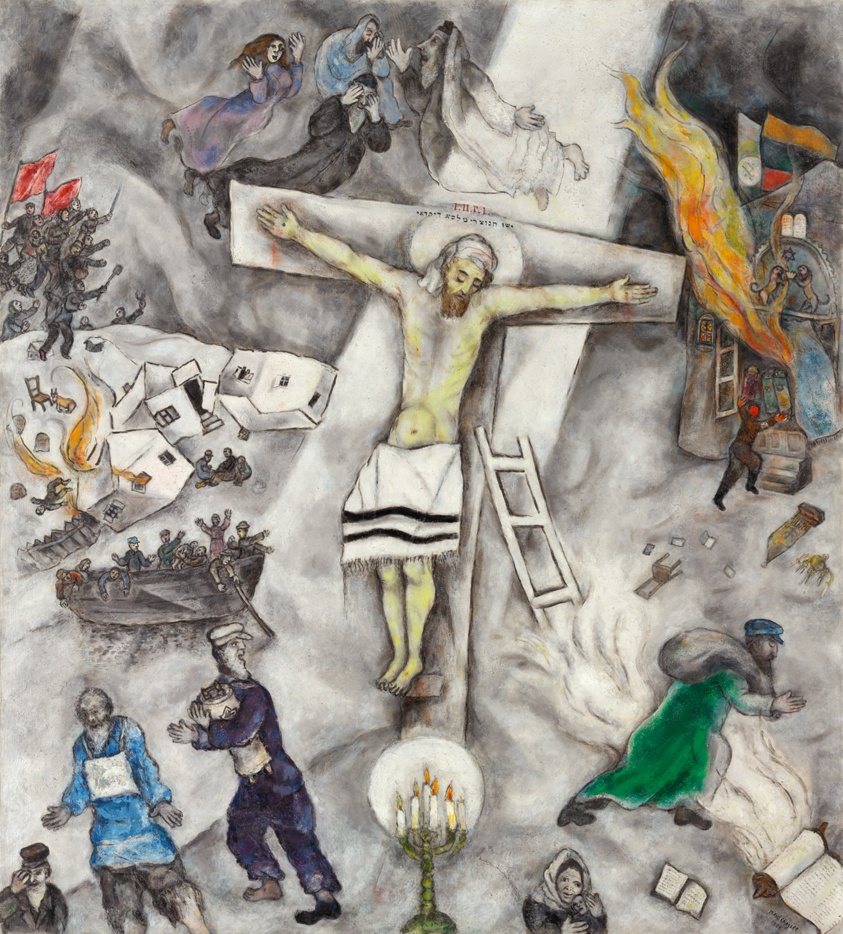
Marc Chagall, The White Crucifixion (1938), oil on canvas, The Art Institute of Chicago.
There are moments when nothing more needs to be said because the scene speaks for itself. Today´s gospel proclamation, the Passion of the Lord, is one of those moments. It is not meant to be read like a story—it is meant to be contemplated. Not with detachment, but with the kind of silence that comes when one stands before a mystery too great for words. Palm Sunday opens Holy Week with a striking contrast. It begins in joy: cloaks are laid on the ground, palms are waved, voices cry out, “Hosanna!”. But within minutes, the tone shifts. The Passion is proclaimed, and the shouts of praise turn into a demand for execution: “Crucify Him!”. The same crowd that welcomes Him will soon reject Him. Jesus does not defend Himself, does not argue, does not justify. He is silent. Before Pilate, before the soldiers who mock Him, before the insults hurled at Him from the cross. His response is not words, but surrender. In a world that demands immediate reactions, explanations, and justifications, the Passion teaches us the power of silence that reveals truth.
In art, Marc Chagall’sWhite Crucifixion offers a radically different perspective on the Passion. Christ is shown on the cross, draped in a Jewish prayer shawl, surrounded by scenes of suffering and persecution. Chagall reinterprets the crucifixion as a timeless image of innocent suffering, reminding us that the Passion of Christ continues in every human being who is unjustly condemned. The painting does not depict a distant past but an ever-present reality. For music, John Tavener’s “Song for Athene” captures the essence of the Passion’s solemnity. Though originally composed for a funeral, its haunting, ethereal harmonies create an atmosphere of reverence and contemplation. It is music that does not impose but invites, like Christ’s silent presence before His accusers. This Sunday leaves us with one certainty: everything has been spoken on the cross. No homily can add to what has already been proclaimed with nails and blood. This is not a time for explanations, but for presence. For not running away like the disciples. For holding our gaze. For making silence a prayer • AE
St. Joseph Catholic Church (Dilley, TX) • Weekend Schedule
Fr. Agustin E. (Parish Administrator)
PALM SUNDAY 2025
Saturday, April 12
5.00 p.m. Sacramento de la Confesión
6.00 p.m. Santa Misa.
Sunday, April 13
8.00 a.m. Sacrament of Reconciliation
8.30 a.m. Holy Mass.
10.30 p.m. Sacrament of Reconciliation.
11.00 a.m. Holy Mass.
Domingo de Ramos de la Pasión del Señor (2025)
Hay momentos en los que no hace falta decir nada, porque la escena lo dice todo. La Pasión del Señor que escuchamos hoy en en evangelio es uno de esos momentos. No basta con leerla, o escucharla, hay que contemplarla. No con la frialdad de un observador distante, sino con el silencio de quien entiende que está ante el misterio más grande del amor. El Domingo de Ramos abre la Semana Santa con un contraste impactante. Comienza con júbilo: el pueblo extiende sus mantos, agita palmas, canta «¡Hosanna!». Pero en cuestión de minutos, la liturgia cambia de tono. Se proclama la Pasión y la euforia se disuelve en el grito de «¡Crucifícalo!». La misma multitud que aclama, condena. Jesús no se defiende, no responde a las acusaciones, no se impone. Guarda silencio. Ante Pilato, ante los soldados que lo golpean, ante los insultos en el Calvario. Su lenguaje es otro: el de la entrega. En un mundo obsesionado con el ruido, con la reacción inmediata, con la necesidad de justificar y argumentar, la Pasión nos enseña la fuerza del silencio.
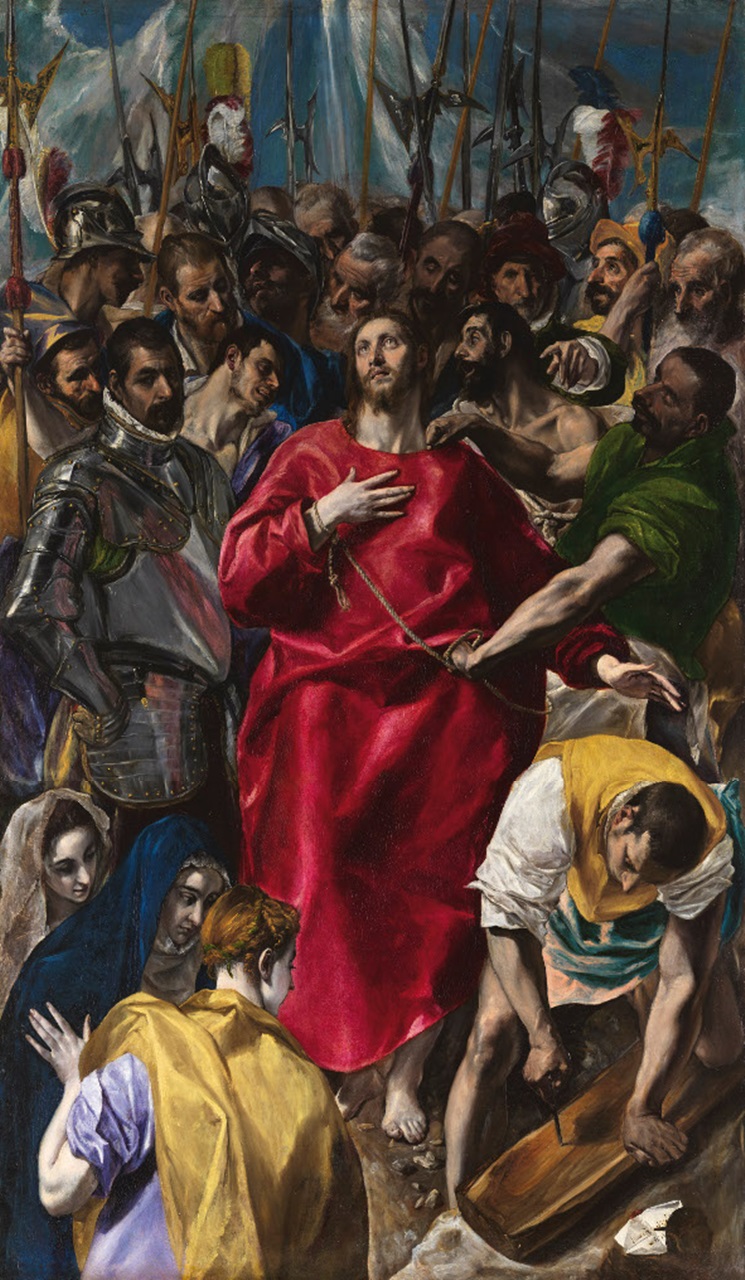
En el arte, El Expolio de El Greco nos sitúa en el momento previo a la crucifixión. Jesús, vestido de rojo intenso, es rodeado por figuras que lo despojan de su túnica. La expresión de su rostro no muestra rabia ni desesperación, sino una serenidad majestuosa, como quien ya ha aceptado el destino que le espera. La composición, con su verticalidad marcada y su luz dramática, nos introduce en la tensión del momento. En la música, O Crux, ave spes unica, un himno medieval en canto gregoriano, resuena como una plegaria de contemplación. Su melodía austera y solemne evoca el peso del sacrificio, pero también la esperanza escondida en la cruz. Este domingo nos deja ante una sola certeza: todo está dicho en la cruz. No hay discurso que pueda añadir algo a lo que ya ha sido pronunciado con clavos y sangre. No se trata de comprenderlo todo, sino de permanecer. De no huir como los discípulos. De sostener la mirada. De hacer del silencio una oración • AE