
W. Thiebaud (1920–2021), Gift Box, 1971.
There is something almost tragic about the servant in this Sunday’s Gospel: he does not seem to understand what has just happened to him. Faced with an impossible debt, he asks the king for time: “Be patient with me, and I will pay you back in full.” But the king does not give him more time. He does something far more astonishing: he erases the debt. The servant walks out a free man—and yet, only moments later, he is demanding payment from someone else. Perhaps his deepest problem is not simply cruelty. Perhaps he is still living by the old arithmetic. He has received a gift, but continues to think like an accountant. We can do the same. We quietly keep ledgers of what others owe us: a thank-you never given, a kindness never returned, a phone call never made, an apology still outstanding. Even love can become bookkeeping. The Gospel proposes another economy altogether, one in which the most important things cannot be earned, repaid, or balanced. Life itself, friendship, grace, the patience of others, the mercy of God—so much has simply been given to us. Perhaps freedom begins when we finally close the ledger and realize that we have been living, all along, on gifts • AE
Erik Satie’s Gymnopédie No. 1 seems almost indifferent to the musical instinct to accumulate, develop, and arrive somewhere. It moves slowly, with very little, leaving unusual amounts of space between its gestures. Nothing seems to be keeping score. Perhaps that is why it belongs beside this Sunday’s Gospel: some of the most important things in life begin when we stop calculating what is owed and learn simply to receive •

St. Joseph Catholic Church (Dilley, TX) • Weekend Schedule

Fr. Agustin E. (Parish Administrator)
Saturday, September 12, 2026.
4.00 p.m. Quince Celebration for Gloria C.
5.00 p.m. Sacramento de la Confesión
6.00 p.m. Santa Misa.
Sunday, September 13, 2026.
8.00 a.m. Sacrament of Reconciliation
8.30 a.m. Holy Mass.
10.30 a.m. Sacrament of Reconciliation.
11.00 a.m. Holy Mass.
XXIV Domingo del Tiempo Ordinario (Ciclo A)
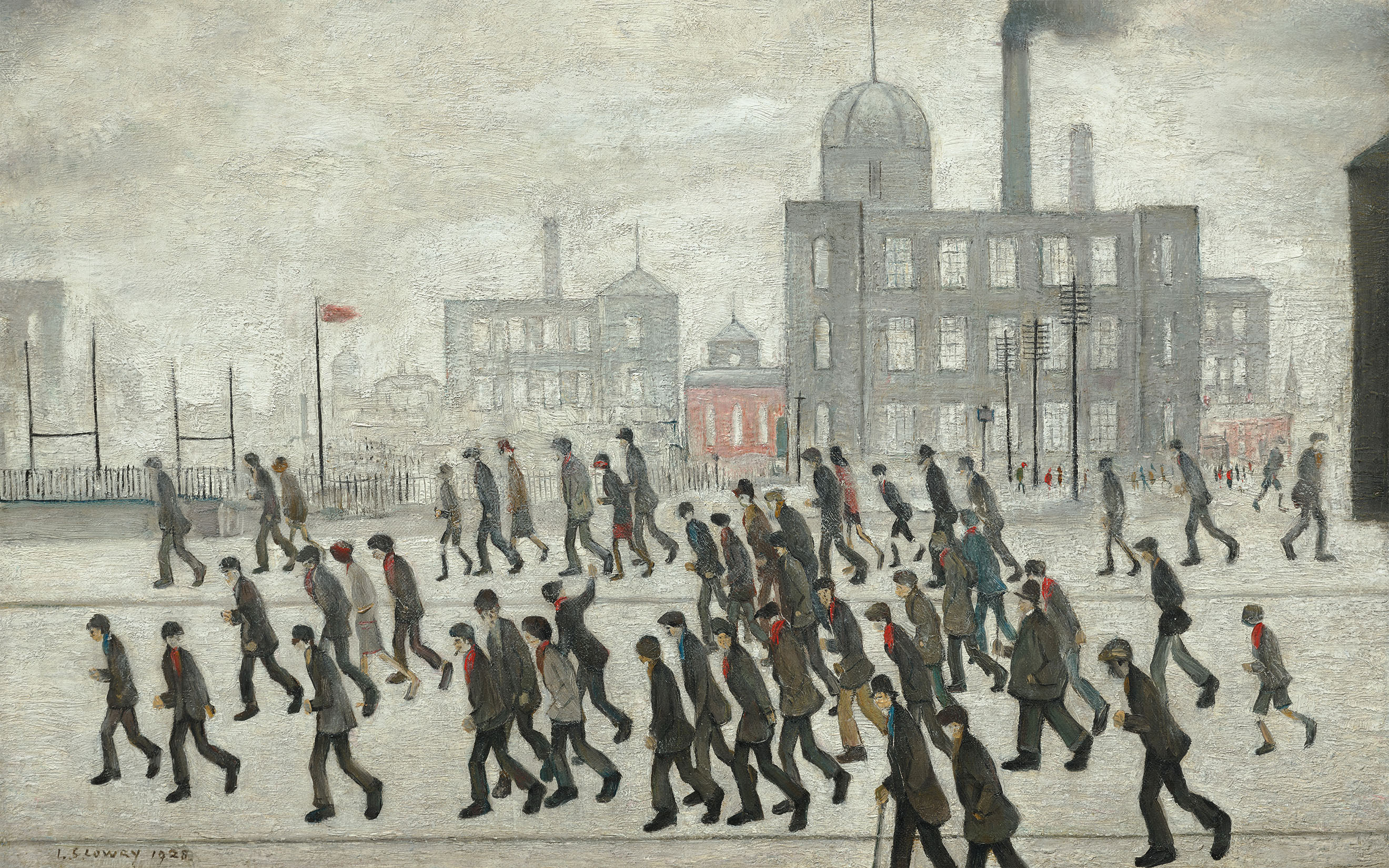
L. S. Lowry, R.A., Going to the Match (Camino al partido), 1928 (detalle). Óleo sobre lienzo. 43,4 × 53,5 cm.
Hay unos personajes en la parábola de este domingo que casi siempre pasan desapercibidos. No son el rey, ni el siervo perdonado, ni siquiera el pobre hombre al que toman por el cuello. Son los otros siervos. Jesús dice que, cuando vieron lo sucedido, «se entristecieron mucho» y fueron a contárselo a su señor. Podrían haber pensado que no era asunto suyo. Podrían haber seguido trabajando y evitarse problemas. Pero algo en ellos se negó a considerar normal lo que acababan de presenciar. Y quizá ahí se esconde una pequeña lección sobre la vida cristiana. También dentro de la Iglesia podemos encontrarnos alguna vez ante abusos de autoridad, abusos espirituales, manipulaciones de conciencia o incluso abusos cometidos en nombre de la liturgia. No todo lo que nos incomoda es un abuso, ciertamente, y la prudencia exige distinguir, escuchar y no condenar precipitadamente. Pero la prudencia tampoco consiste en aprender a mirar hacia otro lado. Los compañeros de la parábola no organizan una revuelta, no humillan públicamente al culpable ni toman la justicia por sus propias manos. Ven, se dejan afectar y acuden a quien corresponde. Tal vez ésa sea una forma muy cristiana de cuidar a los demás: conservar unos ojos capaces de ver, un corazón que todavía pueda conmoverse y el valor sereno de hablar cuando el silencio dejaría solo a quien está sufriendo • AE
The Sound of Silence, de Simon & Garfunkel, no es propiamente una canción sobre la injusticia, sino sobre algo quizá más inquietante: la posibilidad de ver y escuchar sin llegar verdaderamente a encontrarnos con el otro. Los siervos de la parábola hacen lo contrario. Ven el sufrimiento de uno de ellos, se dejan afectar por lo que han visto y rompen el silencio. A veces, el primer acto de solidaridad consiste simplemente en negarnos a que el dolor ajeno se vuelva invisible •

+ Verano y + Lecturas